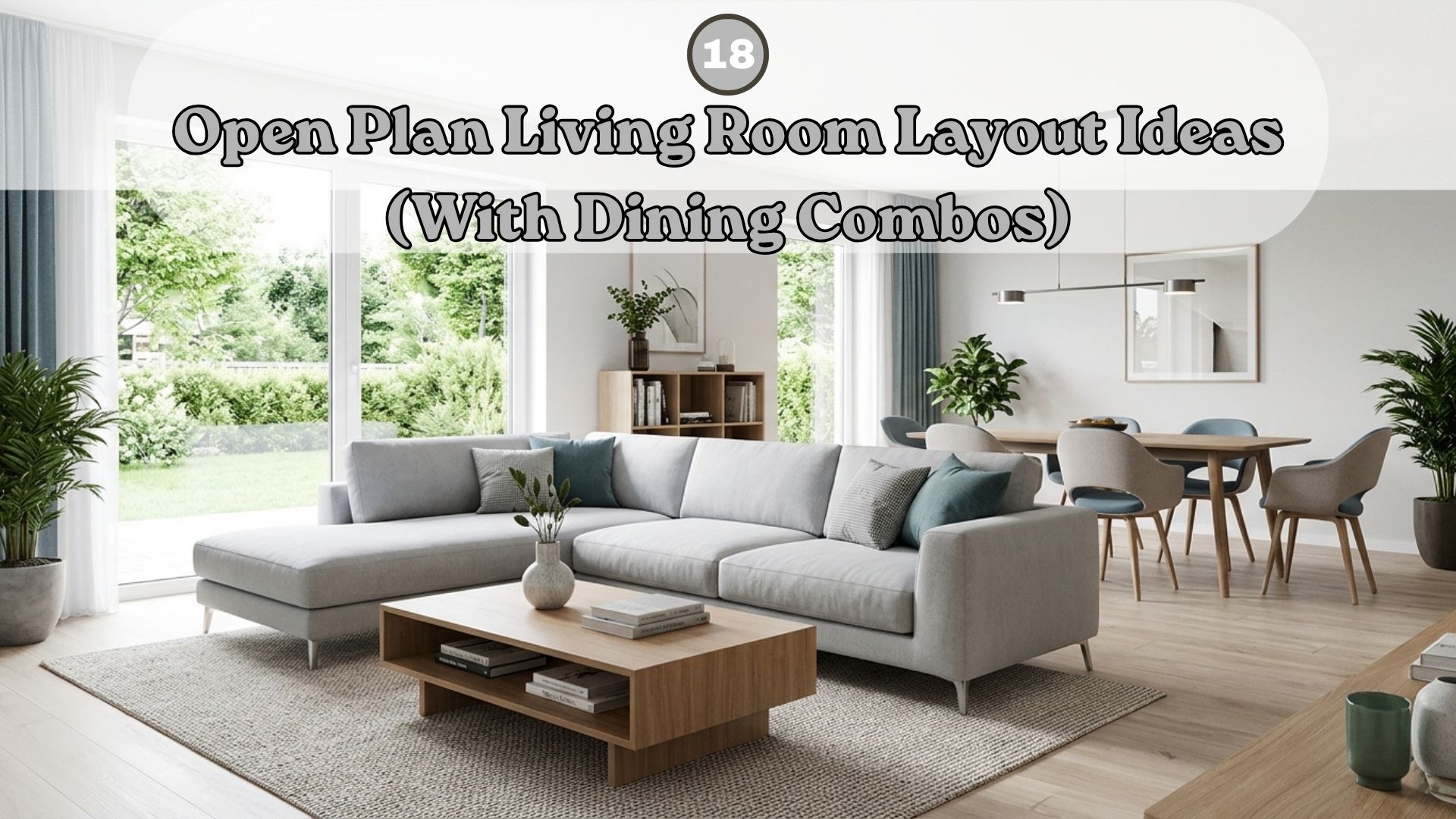
Open plan living spaces are beautiful in theory—but when you actually try to decorate one, it can feel overwhelming. Where does the living area end and the dining space begin? How do you make everything feel connected without looking cluttered or mismatched?
The truth is, you don’t need a huge budget or a designer eye to make it work. Small, thoughtful changes—like rearranging furniture, layering textures, or defining zones—can completely transform your space. The goal isn’t perfection. It’s creating a home that feels warm, inviting, and lived-in.
In this guide, you’ll discover 18 open plan living room layout ideas (with dining combos) that are practical, stylish, and totally Pinterest-worthy. These ideas focus on real homes, real comfort, and simple styling tricks you can actually use.
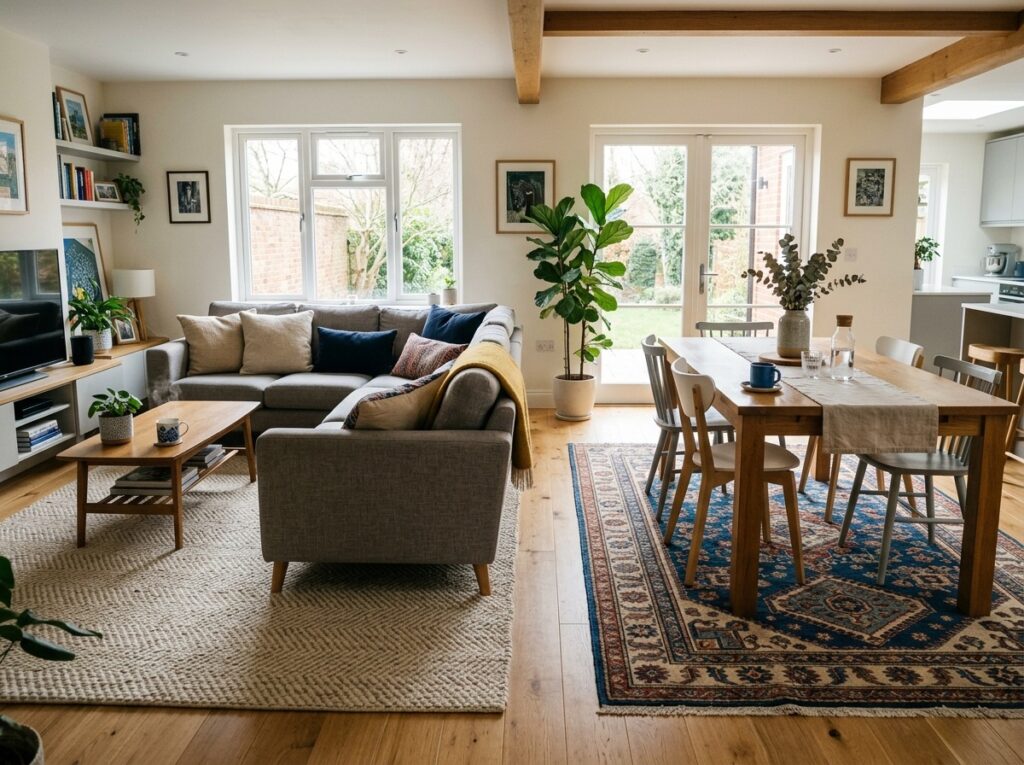
1. Defined Zones with Area Rugs
Soft rugs instantly create a sense of structure in an open plan space, gently separating the living and dining areas without breaking the visual flow. The layered textures add warmth underfoot, while the contrast between patterns or materials gives each zone its own identity. The result feels cozy, grounded, and intentionally styled rather than random.
Start by placing a large, neutral rug under your sofa to anchor the living area, then choose a slightly different but complementary rug for the dining space. Keep colors cohesive—think soft sage, warm neutrals, or muted blues—so everything feels connected. This is one of the easiest and most affordable decor updates to transform your layout.
2. Sofa as a Natural Divider
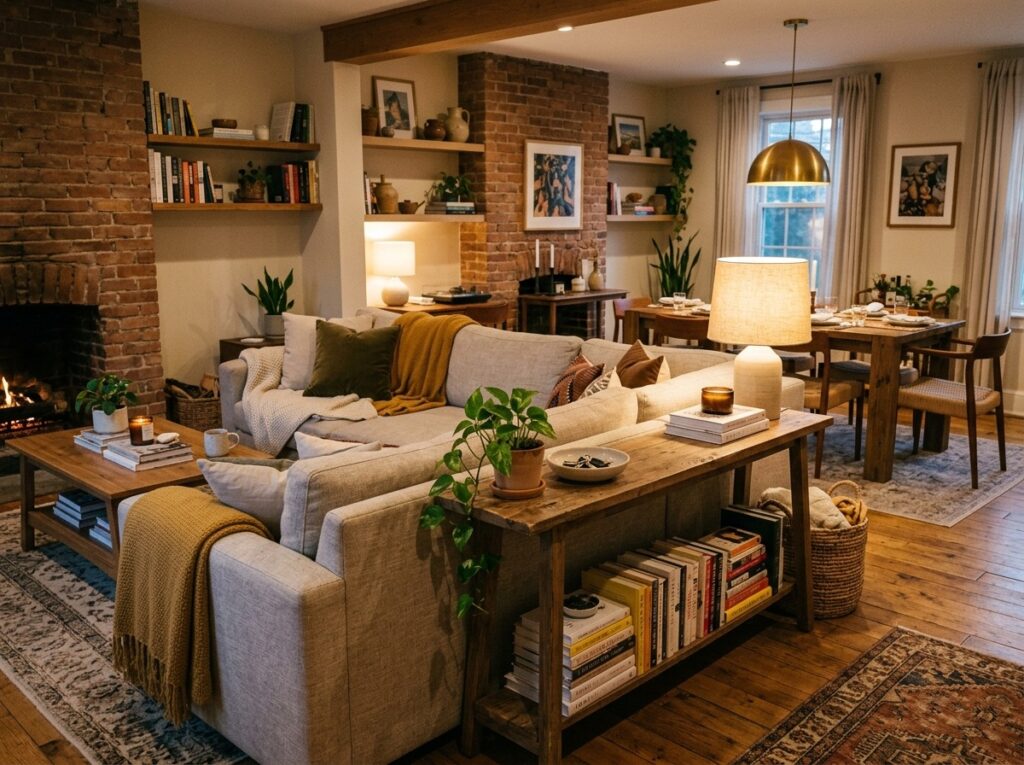
A centrally placed sofa naturally creates a boundary between spaces while still maintaining an open, airy feel. It subtly signals where the living area begins, making the layout feel intentional and balanced. The space behind the sofa can feel like a soft transition into the dining zone, giving the room a calm, organized flow.
Position your sofa with its back facing the dining area, then style the back with a slim console table. Add a small lamp, stacked books, or a tray for a polished look. This trick not only defines zones but also adds extra styling space without cluttering the room.
3. Matching Color Palette for Flow
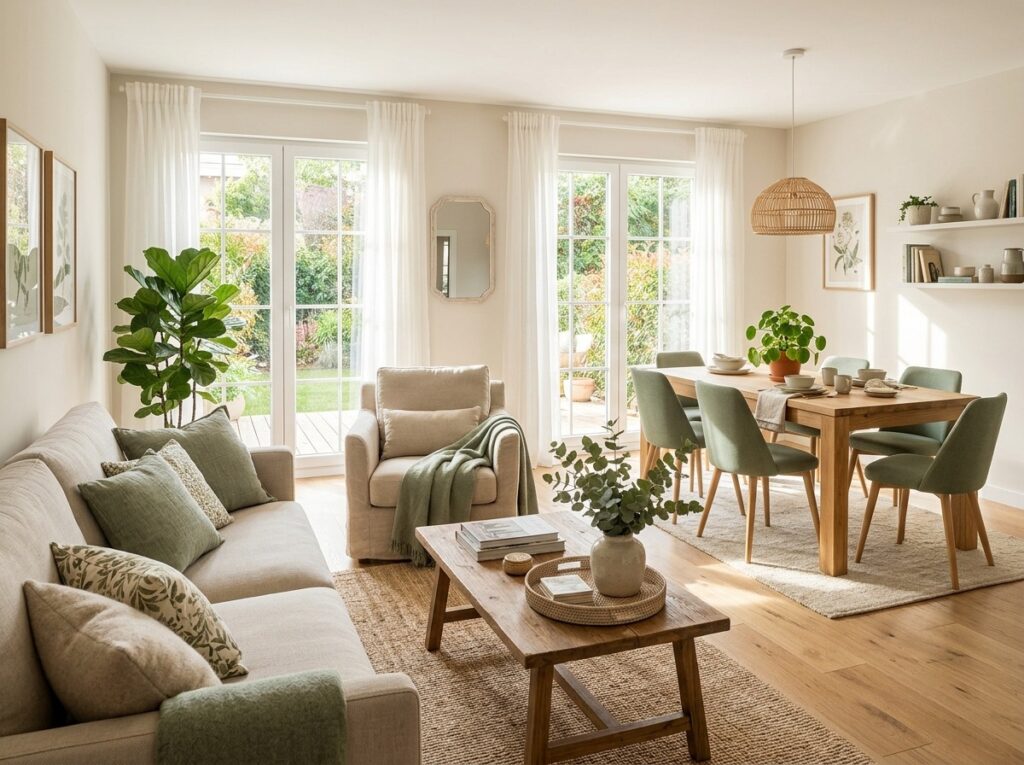
When your living and dining areas share a cohesive color palette, the entire space feels calm and visually connected. Soft tones like sage green, dusty rose, or muted blue create a soothing atmosphere, while subtle repetition of colors makes everything feel thoughtfully curated.
Choose two to three main colors and repeat them across cushions, rugs, dining chairs, and decor accents. You don’t need perfect matching—just harmony. This simple styling trick makes even small or awkward layouts feel like a well-designed, Pinterest-worthy home.
4. Statement Lighting Over Dining Area
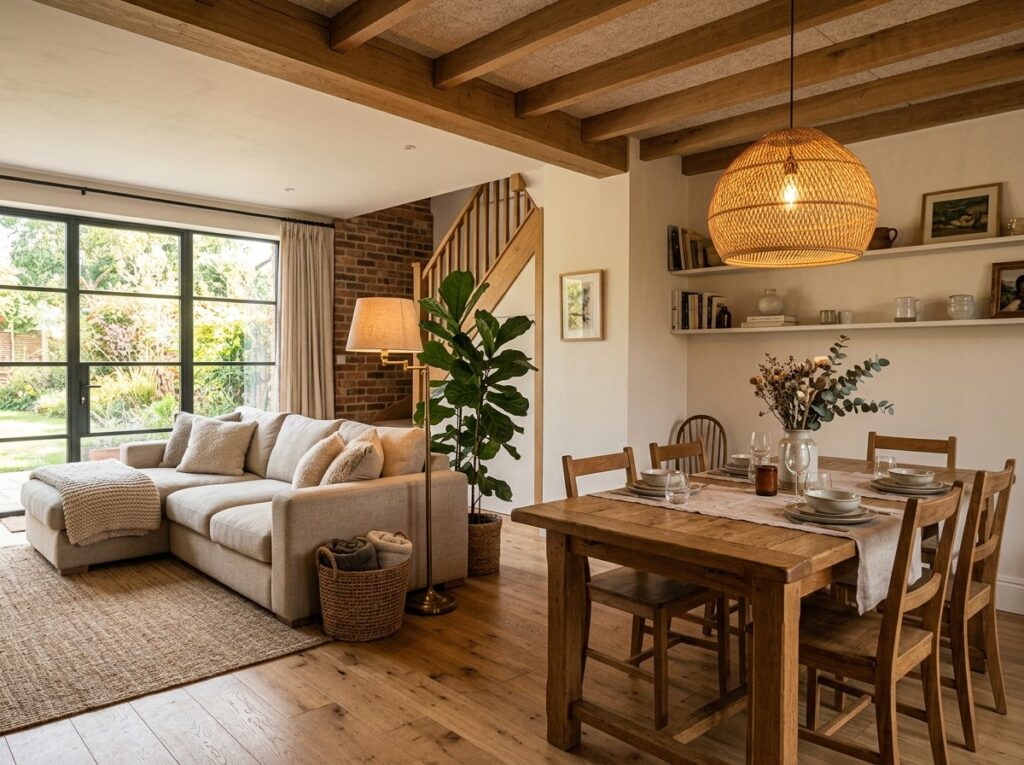
Lighting can completely transform how your open plan space feels. A statement pendant above the dining table creates a focal point that visually anchors the dining zone, making it feel distinct yet connected to the living area.
Choose a light fixture that complements your overall decor style—whether modern, rustic, or minimal. Keep the rest of your lighting layered and soft with lamps in the living area. This balance ensures your space feels warm and inviting, especially in the evenings.
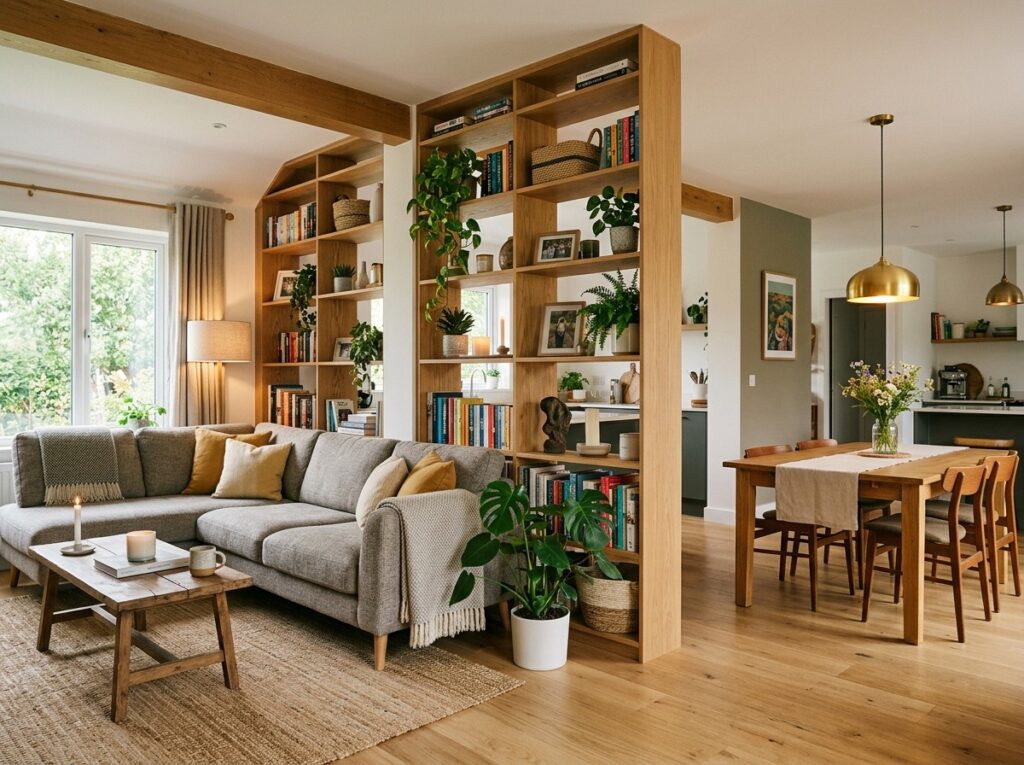
5. Open Shelving as a Soft Divider
Open shelving offers the perfect balance between separation and openness. It gently divides your living and dining areas while still allowing light to pass through, keeping the space airy and connected. Styled shelves also add personality and depth to your home.
Use shelves to display books, plants, and simple decor pieces. Keep styling minimal and intentional—avoid overcrowding. This approach creates a relaxed, lived-in look that feels curated but not staged.
6. Dining Bench for Space Saving
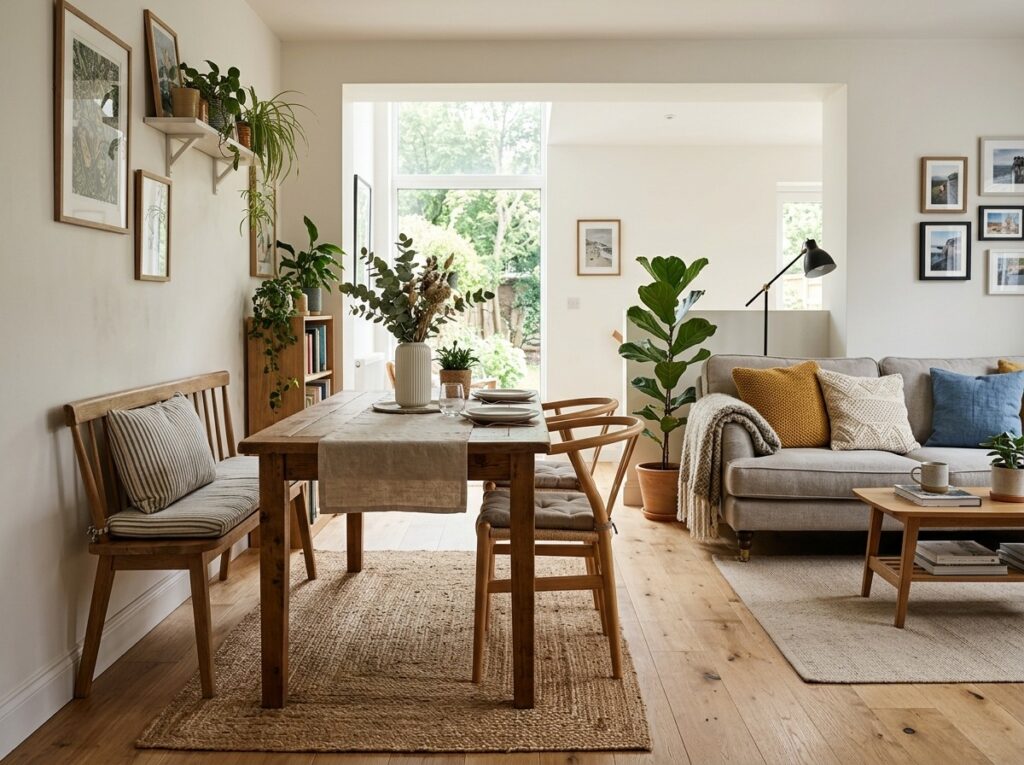
A dining bench instantly makes your dining area feel more relaxed and approachable. It softens the look compared to bulky chairs and creates a casual, cozy vibe that blends beautifully with a living space.
Pair the bench with a couple of chairs for balance, and slide it neatly under the table when not in use. This is especially helpful in smaller homes where maximizing space is key without sacrificing style.
7. Layered Lighting for Cozy Evenings
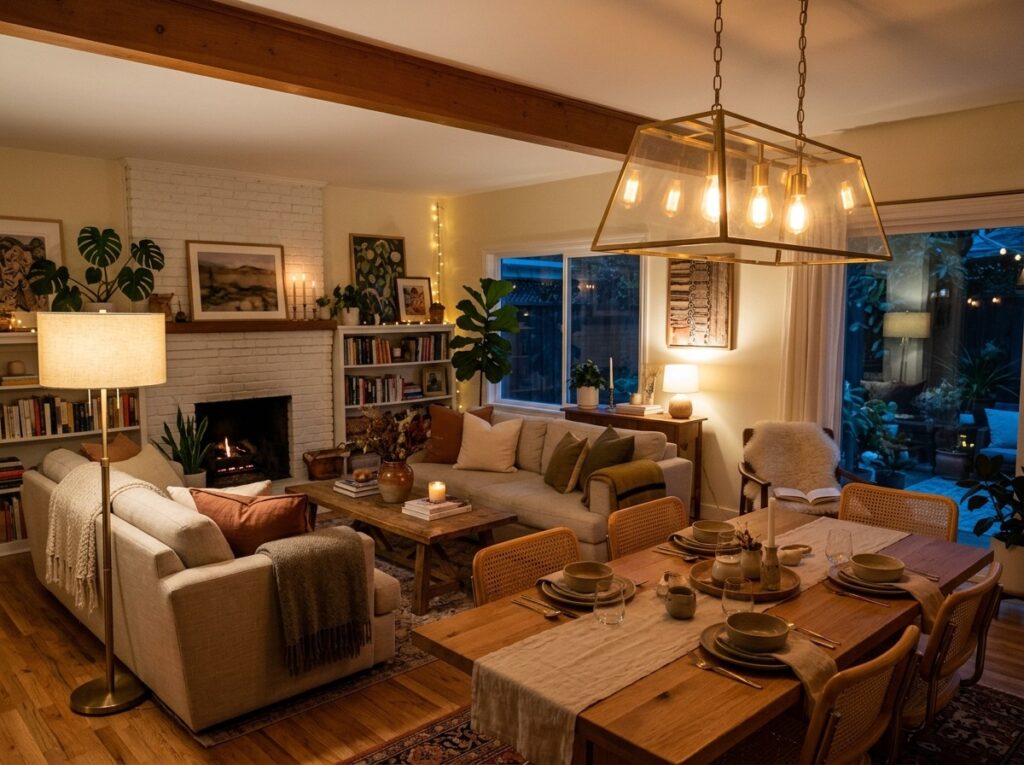
Layered lighting transforms your space from flat and functional to warm and inviting. A mix of soft light sources creates depth, highlights textures, and makes your open plan layout feel intimate during evenings.
Combine floor lamps, table lamps, and overhead lighting to build layers. Stick to warm-toned bulbs to create a cozy glow that enhances both your living and dining areas without harsh brightness.
8. Round Dining Table for Better Flow
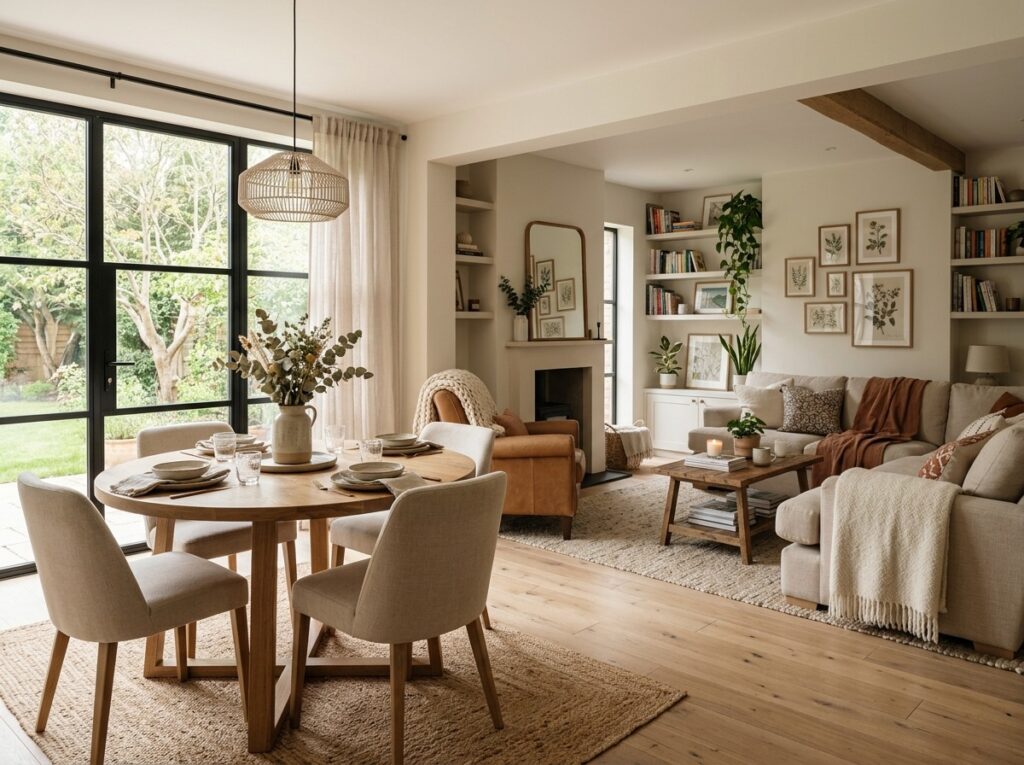
Round dining tables naturally improve movement in open plan spaces. Their curved edges soften the layout and make the room feel less rigid, creating a more social and welcoming atmosphere.
Choose a compact round table if your space is small, and pair it with lightweight chairs to keep things airy. This layout trick helps maintain flow while still giving your dining area a clear identity.
9. Accent Wall to Define Living Area
An accent wall instantly grounds your living area, giving it a focal point that draws the eye. It creates a sense of depth and identity without adding physical barriers, making your space feel both open and structured.
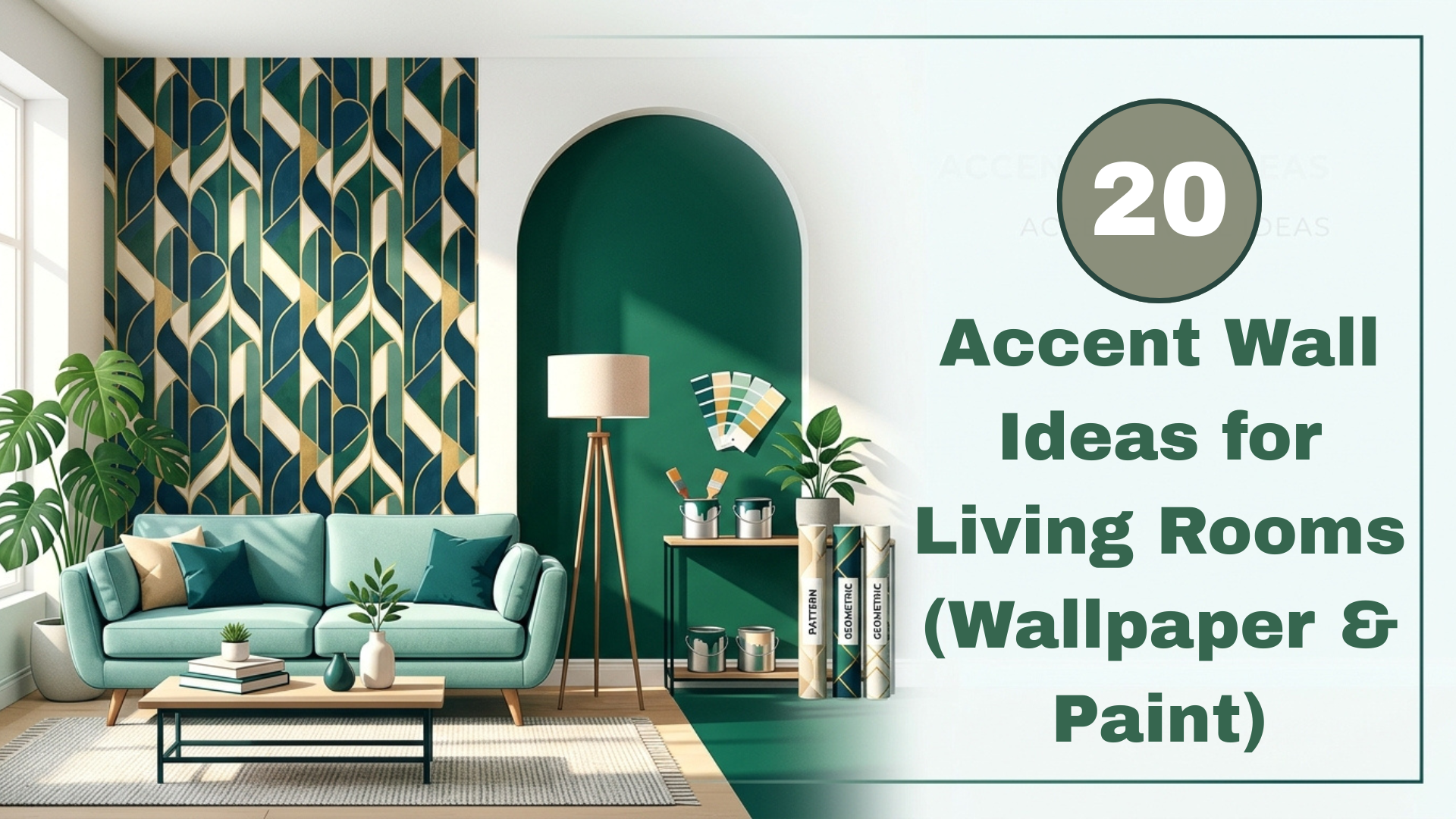
Use paint, wallpaper, or subtle paneling in tones that complement your dining area. Soft blues, olive greens, or muted terracotta shades work beautifully for a balanced, cohesive look.
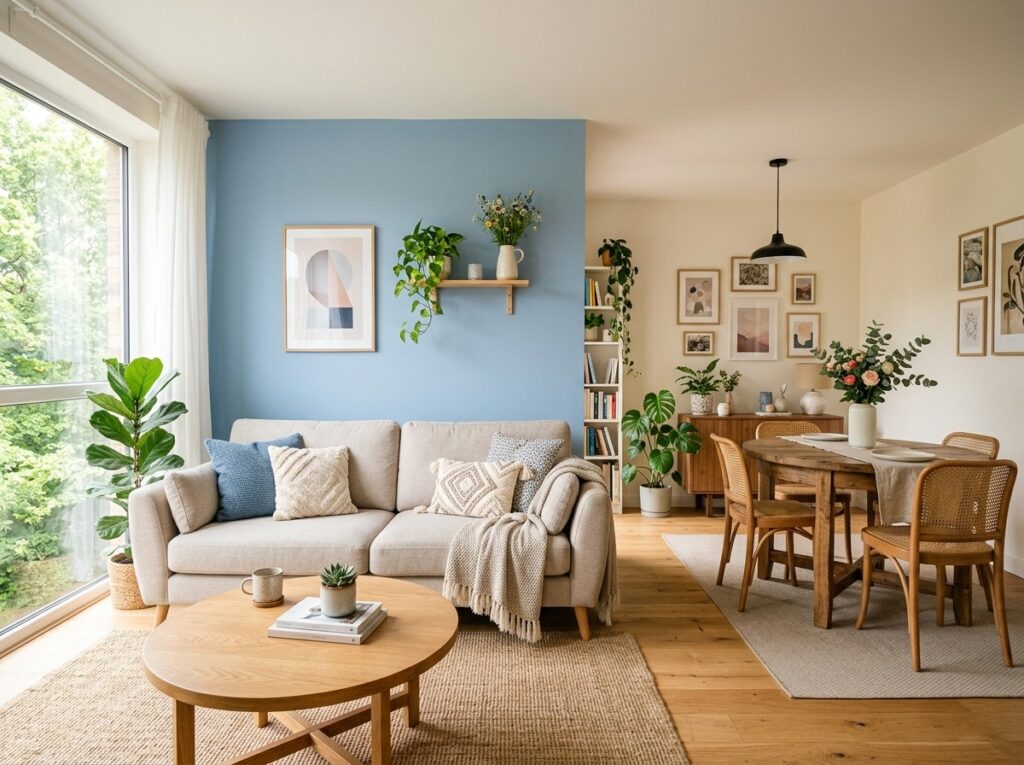
10. Minimal Furniture for Airy Feel
An uncluttered layout instantly makes an open plan space feel larger and more breathable. Fewer, well-chosen pieces allow light to flow freely and create a calm, relaxed environment.
Stick to essential furniture and opt for multi-functional pieces when possible. Leave enough walking space between zones so the room feels open rather than crowded.
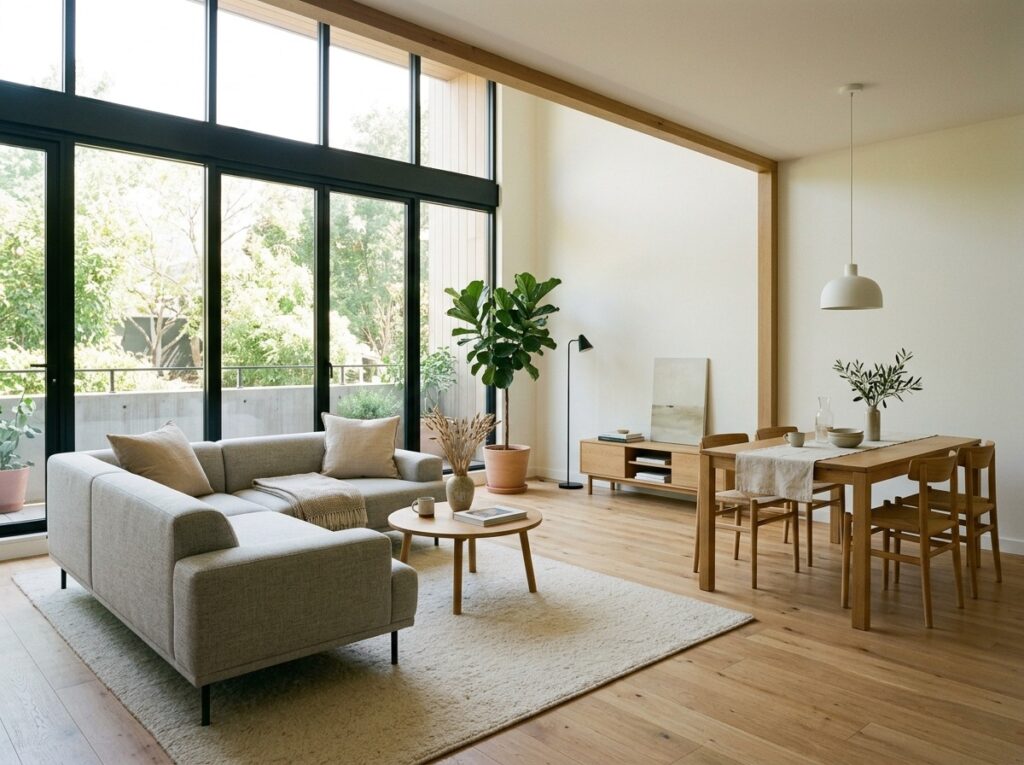
11. Coordinated Textures Across Spaces
Textures bring warmth and personality into your home, making it feel layered and lived-in. When similar textures are used across both areas, the entire space feels cohesive and thoughtfully styled.
Repeat materials like wood, linen, or woven elements in both your living and dining areas. This subtle repetition ties everything together without needing to match every detail.
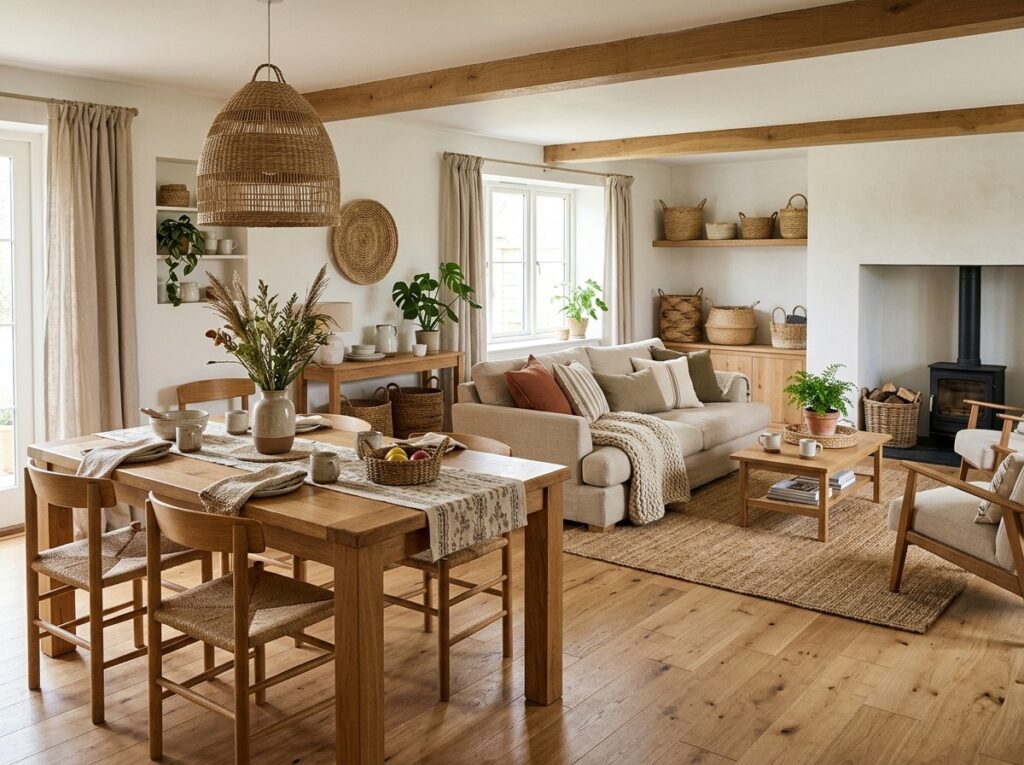
12. Floating Furniture Layout
Floating furniture creates a more intentional and designer-like layout. Instead of pushing everything against the walls, pulling pieces inward makes the space feel balanced and functional.
Place your sofa slightly away from the wall and anchor it with a rug. Ensure clear pathways around furniture so movement between the living and dining areas feels natural.
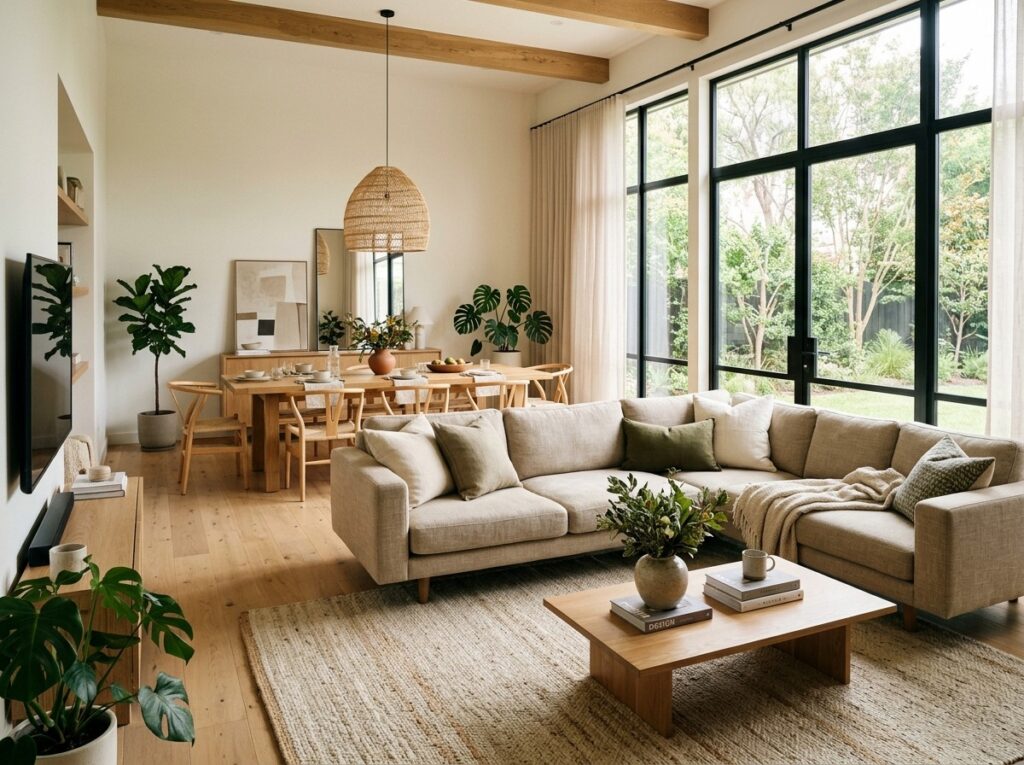
13. Soft Curtains to Frame the Space
Sheer curtains soften the entire room by diffusing natural light and adding a gentle, airy feel. They create a calm backdrop that connects both living and dining areas effortlessly.
Choose light, flowy fabrics in neutral tones. Let them fall naturally to keep the look relaxed and not overly styled.
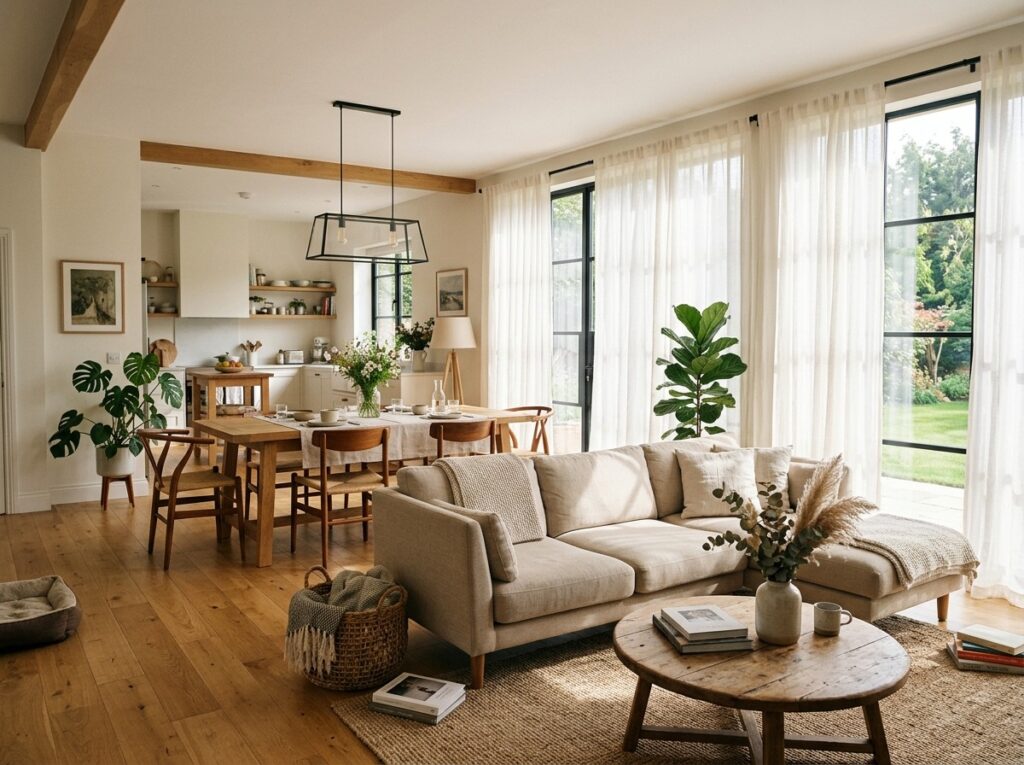
14. Compact Dining Nook
A small dining nook makes your space feel cozy and intentional without taking up too much room. It creates a dedicated dining zone while still blending seamlessly with the living area.
Use a corner with a compact table and add soft cushions or a bench for comfort. This setup works especially well for apartments or smaller homes.
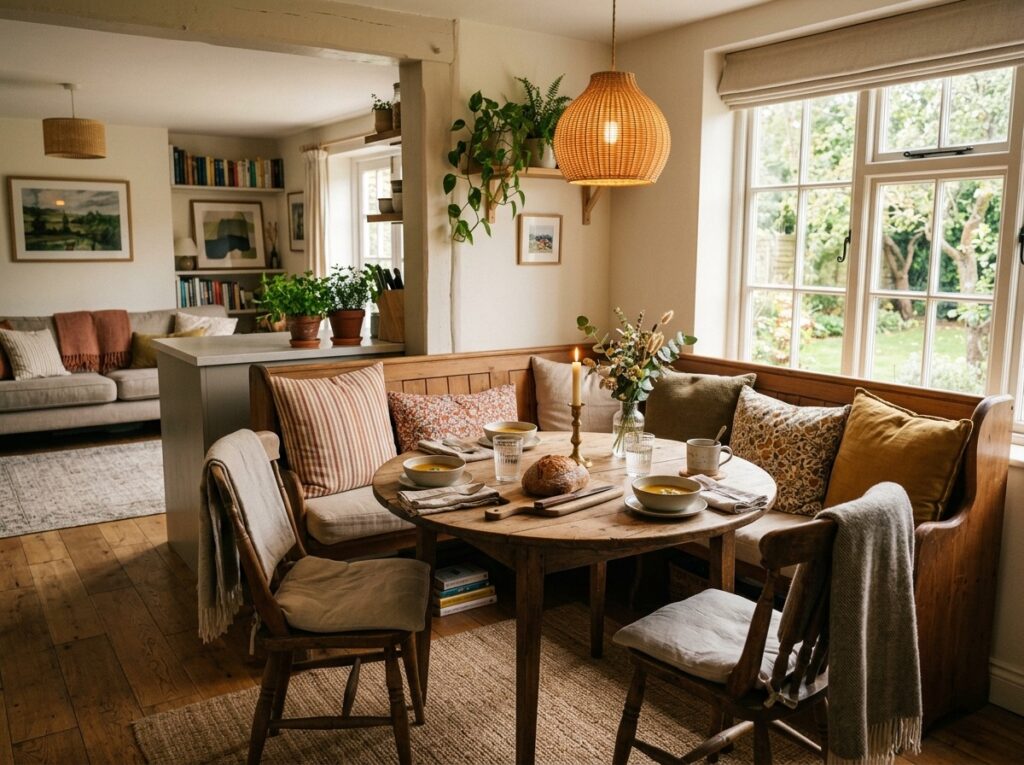
15. Wall Art to Tie Spaces Together
Wall art can visually link your living and dining areas, making the entire space feel unified. It adds personality and helps create a cohesive story throughout your home.
Choose pieces with similar tones, themes, or frames. Even a simple gallery wall can connect both areas beautifully.
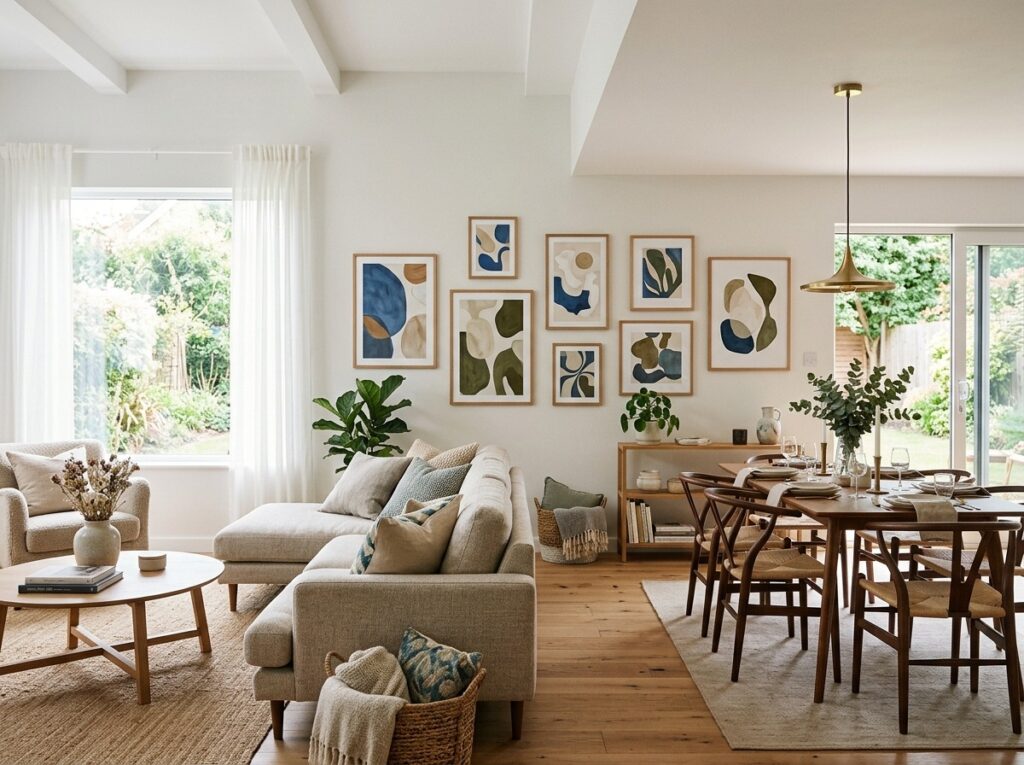
16. Neutral Base with Color Accents
A neutral base creates a calm foundation, while pops of color add life and personality. This balance keeps your space from feeling either too plain or too overwhelming.
Introduce color through cushions, dining chairs, or small decor items. Stick to a few accent shades for a cohesive look.
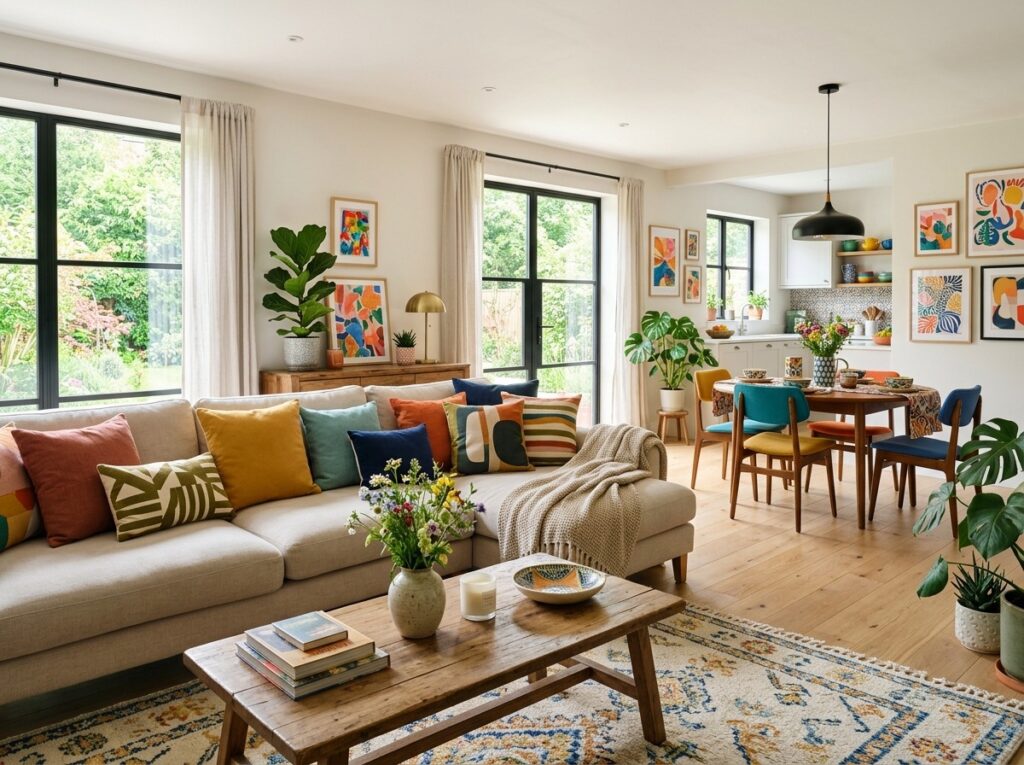
17. Multi-Functional Furniture
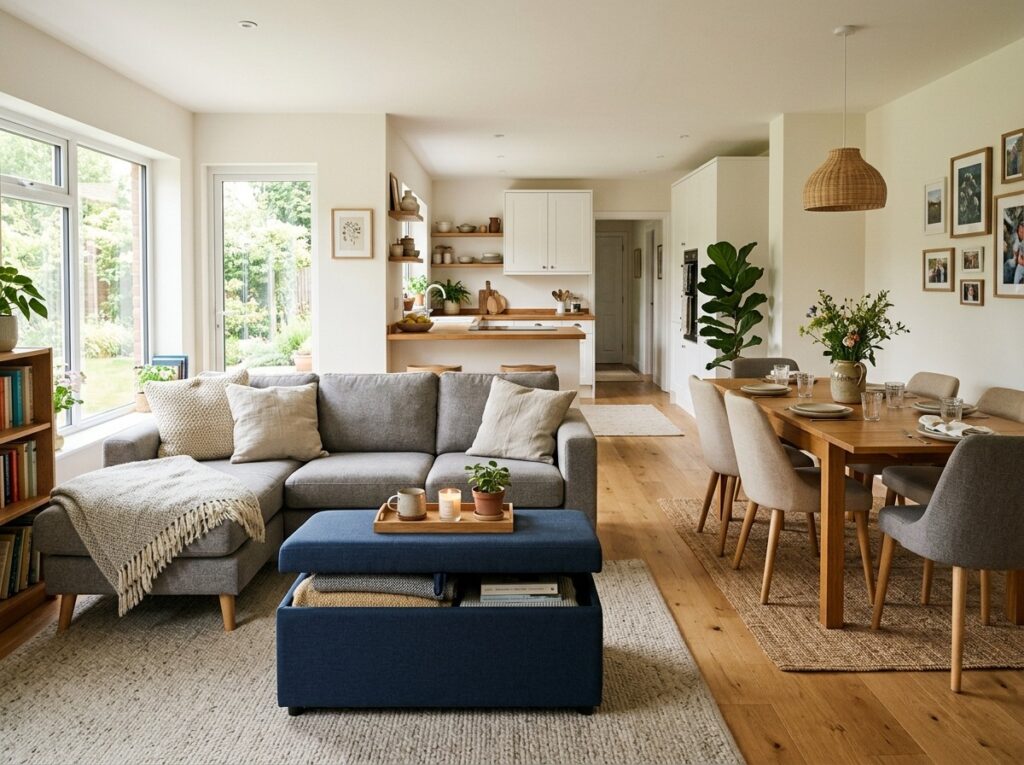
Multi-functional furniture keeps your space practical without sacrificing style. It helps you make the most of your layout while maintaining a clean, uncluttered look.
Use pieces like storage ottomans, extendable dining tables, or foldable furniture. These options are perfect for small spaces or flexible living needs.
18. Indoor Plants for Natural Flow
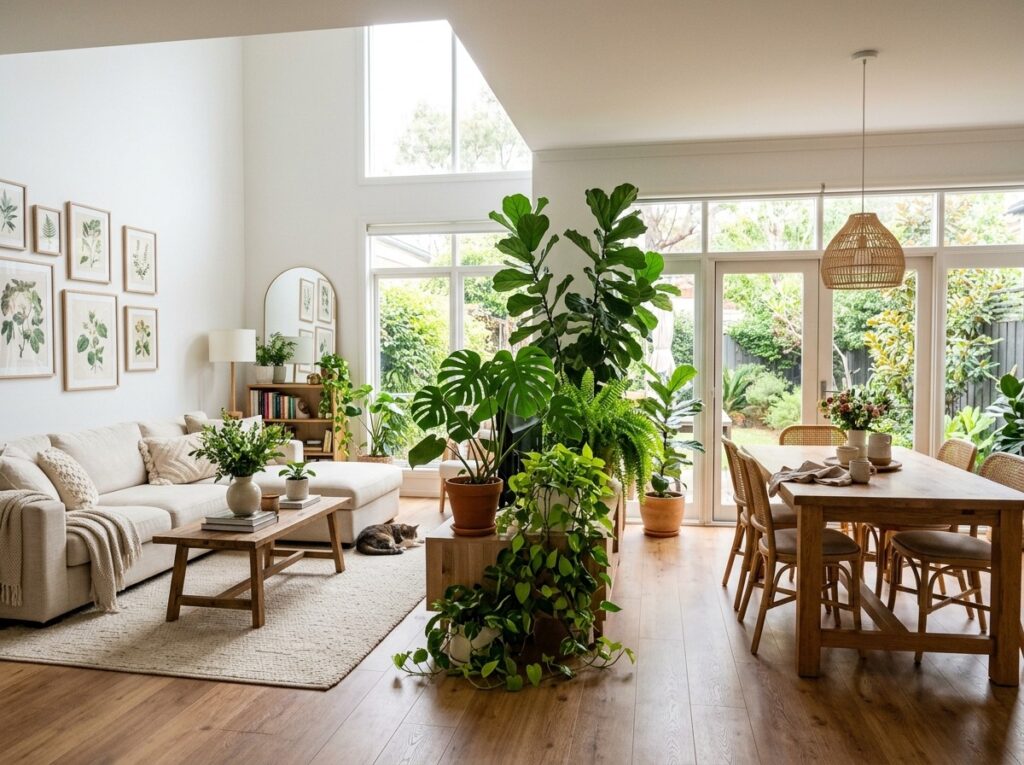
Plants add life, texture, and a natural sense of movement to your home. They soften transitions between areas and make the entire space feel fresh and inviting.
Place plants near corners, beside furniture, or between zones to act as subtle dividers. Choose a mix of sizes for a more natural, organic look.
Conclusion
Creating a beautiful open plan living room layout with a dining combo isn’t about having a perfect space—it’s about making intentional choices that reflect your lifestyle. Even the smallest changes, like adding a rug or rearranging your sofa, can make your home feel more balanced and inviting.
Start with one or two ideas from this list and build from there. Over time, your space will naturally come together in a way that feels personal, cozy, and truly yours. With the right approach, open plan living can feel both stylish and effortlessly comfortable.