Creating a playroom sounds simple until you’re standing in the middle of one wondering why it still feels cluttered, chaotic, or boring despite all the toys. Many parents spend money on games, storage bins, and furniture, only to discover their kids still end up scattered around the house looking for something fun to do.
The truth is that the best playrooms aren’t packed with more stuff. They’re designed around how children actually play, learn, create, and explore. Small changes in layout, storage, colour, and activity zones can make a huge difference in how often a space gets used.
If you’re looking for playroom ideas that keep kids entertained, you’re in the right place. This guide shares 14 practical, Pinterest-worthy ideas that balance fun, creativity, and organisation without requiring a massive budget. From reading corners and climbing walls to art stations and sensory zones, these ideas can help create a room that children genuinely enjoy spending time in.
Let’s dive into the ideas that make playrooms feel exciting, welcoming, and full of possibilities.
Create Activity Zones for Different Types of Play
One of the biggest mistakes I see is trying to make every corner of the room do everything. The result usually feels messy and overwhelming. Children naturally move between activities throughout the day, so giving each type of play its own area helps the room feel more inviting.
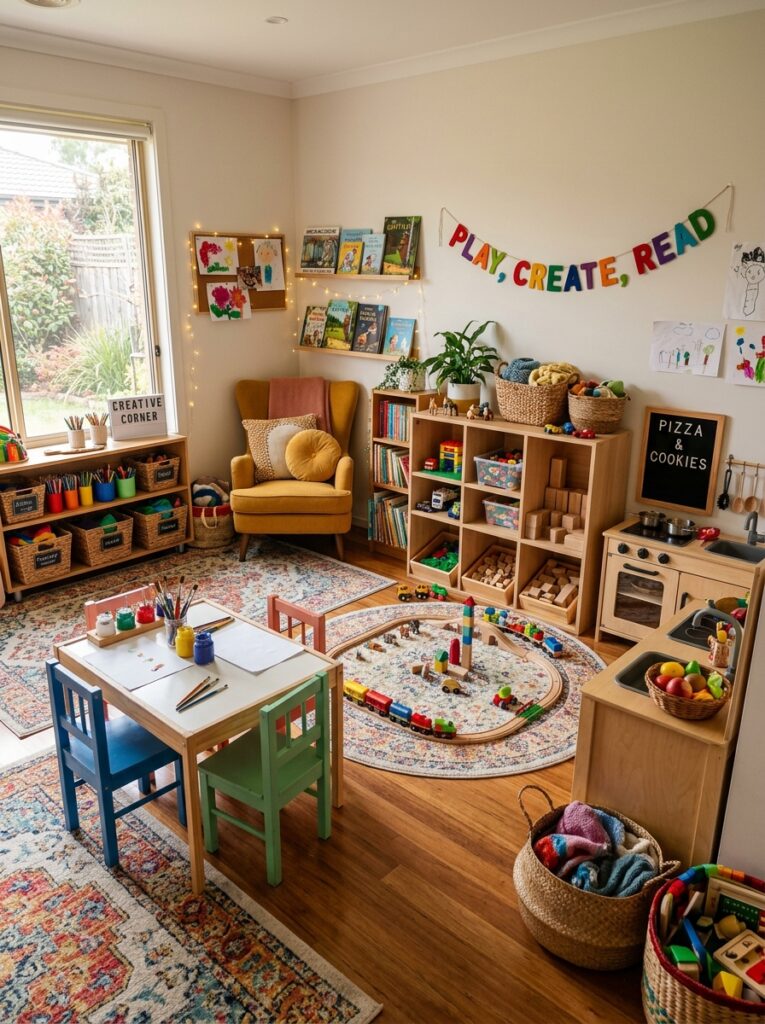
Create separate spaces for reading, building, arts and crafts, pretend play, and active movement. Even simple rugs can visually define different zones.
You don’t need expensive furniture to make this work. A bookshelf can separate a reading area from a play kitchen, while floor cushions can mark a quiet corner. Budget: $30-$150 depending on storage solutions used.
Build a Cozy Reading Nook Kids Actually Want to Use
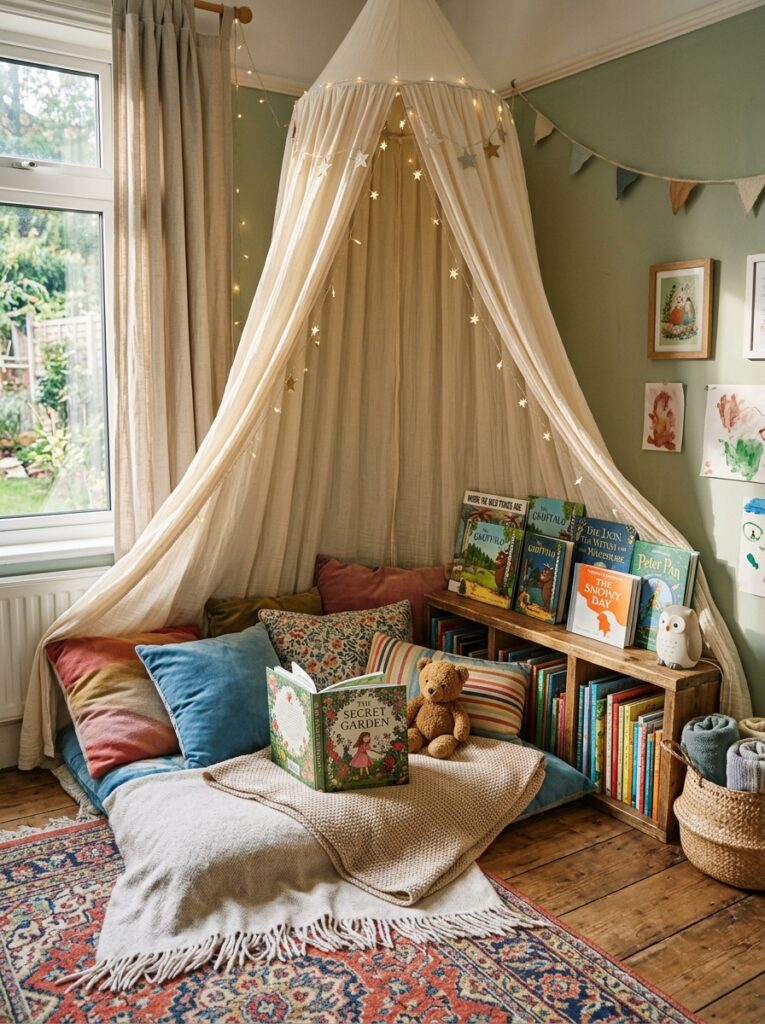
There is something magical about a small corner dedicated entirely to books. What I personally love about this is how it encourages independent quiet time while making reading feel like an adventure rather than homework.
Use floor cushions, bean bags, soft lighting, and front-facing bookshelves so covers are visible. Kids are far more likely to pick up books when they can see them.
A common mistake is placing books on adult-style shelves where only the spines are visible. Keep everything within easy reach. Budget: $50-$250.
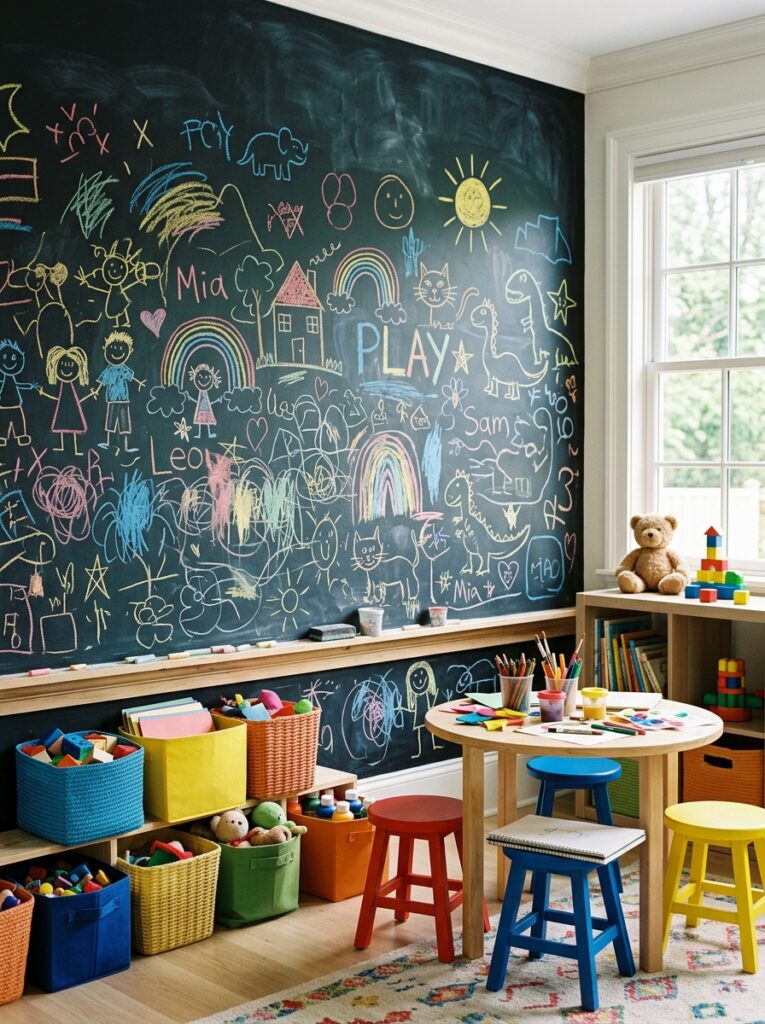
Add a Chalkboard or Whiteboard Wall
Kids love creating on a large scale. A dedicated drawing wall gives them freedom to express themselves without sacrificing your freshly painted living room walls.
A chalkboard wall works particularly well because children can constantly erase and start over. Whiteboards are great for older kids who enjoy drawing, writing stories, or playing games.
In my experience, the biggest mistake here is making the board too small. Go bigger than you think you’ll need. Budget: $20-$100.
Use Open Toy Storage Instead of Hidden Bins
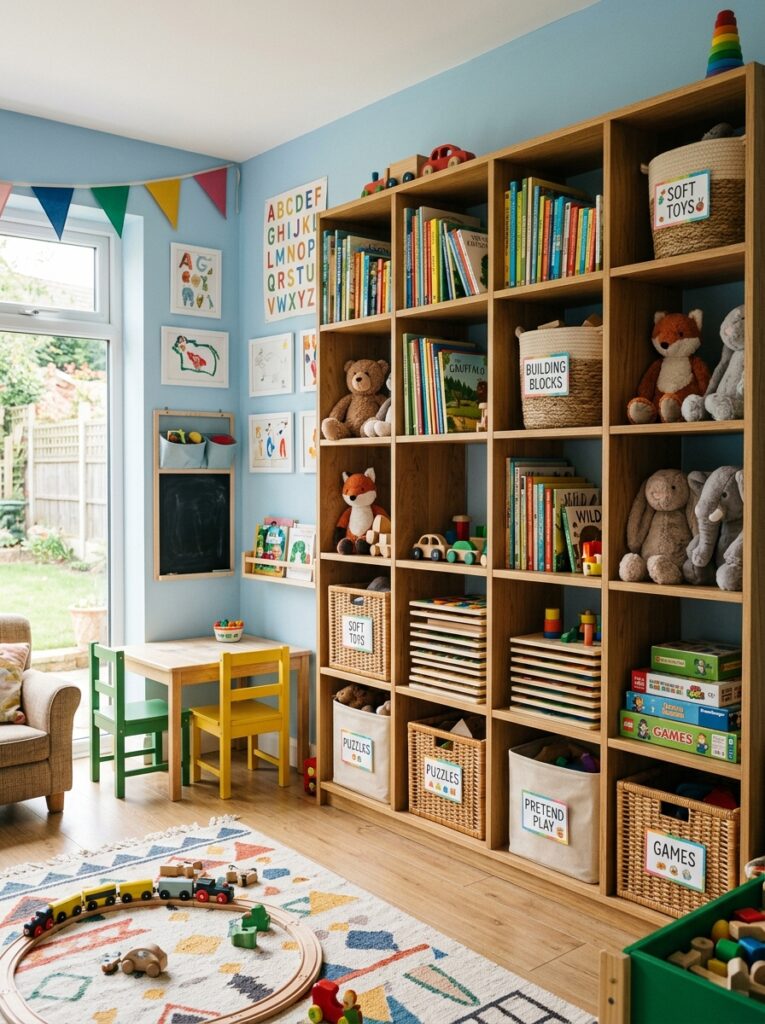
Many parents assume hidden storage automatically means a cleaner room. In reality, kids often forget toys exist when they can’t see them.
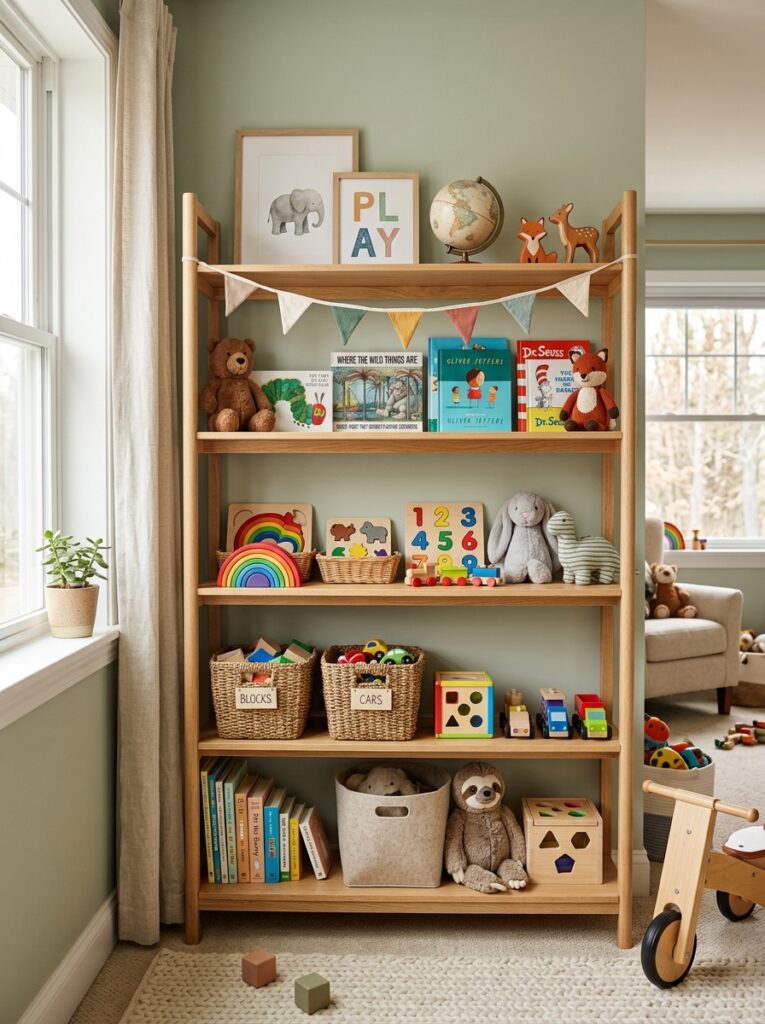
Open shelves, cubbies, and labelled baskets make cleanup easier and encourage independent play because children can quickly find what they want.
I always recommend clear categories for toys. Blocks with blocks, puzzles with puzzles, and art supplies together. Budget: $40-$300.
Create an Art Station for Daily Creativity
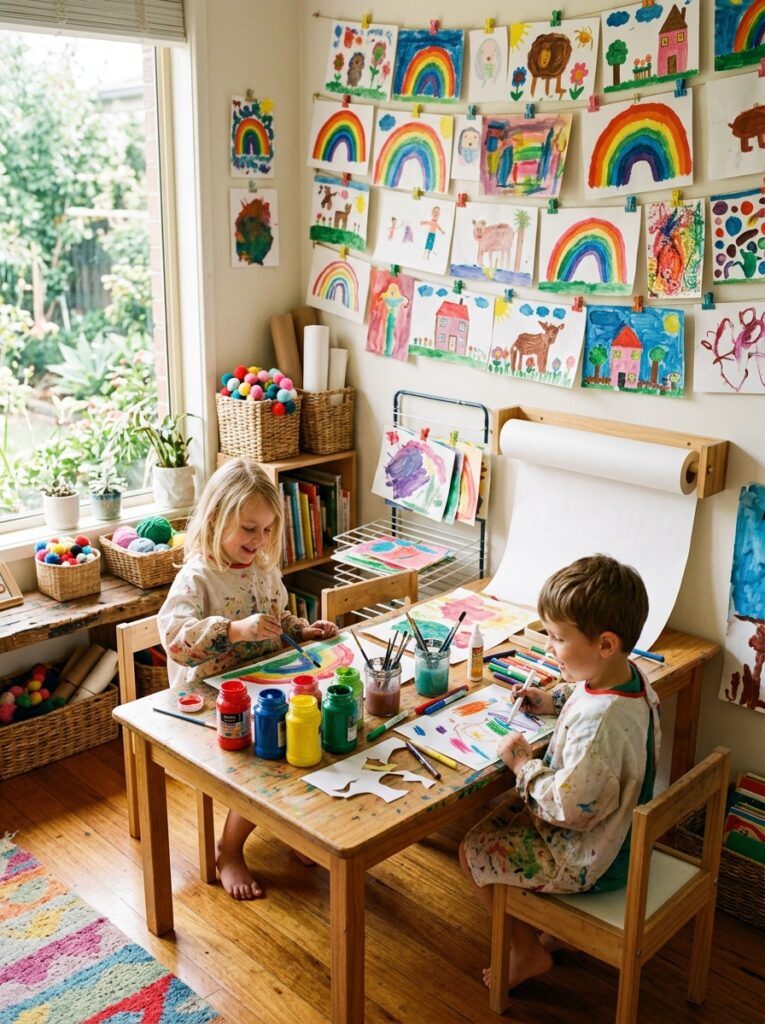
A dedicated art area often becomes the most-used part of a playroom. Children naturally gravitate toward activities that allow them to make something of their own.
Set up a child-sized table with crayons, markers, paper, stickers, and washable paints. Keep supplies accessible but organised.
A lot of people skip proper storage here, but it makes all the difference. Use labelled containers to avoid constant mess. Budget: $50-$200.
Install a Small Indoor Climbing Wall
If your kids are constantly bouncing off furniture, they probably need a healthy outlet for physical energy.
A small climbing wall provides movement, coordination practice, and endless entertainment. Modern indoor climbing kits are safer and easier to install than many people realise.
Keep safety mats underneath and adjust difficulty based on age. Budget: $150-$600.
Add a Play Kitchen for Endless Pretend Play
Pretend play helps children develop creativity, communication skills, and confidence. That’s why play kitchens remain popular year after year.
Choose a kitchen that matches the room’s scale and include simple accessories like pretend food and toy cookware.
What I personally love about this is that it grows with children. Younger kids enjoy role-play while older children create elaborate games. Budget: $80-$300.
Create a Dress-Up Corner
Few things entertain children longer than becoming someone else for the afternoon.
A dress-up corner with costumes, hats, capes, and accessories encourages imagination and storytelling. Install low hooks so children can access everything themselves.
Avoid overloading the space with too many options. Rotating costumes often keeps interest higher. Budget: $30-$150.
Introduce a Sensory Play Area
Sensory activities can keep children engaged for surprisingly long periods while supporting learning and development.
Depending on age, this might include kinetic sand, sensory bins, water beads, rice trays, or textured play materials.
Containment is key. Use trays or designated tables to reduce cleanup stress. Budget: $20-$100.
Display Kids’ Artwork Like Real Wall Art
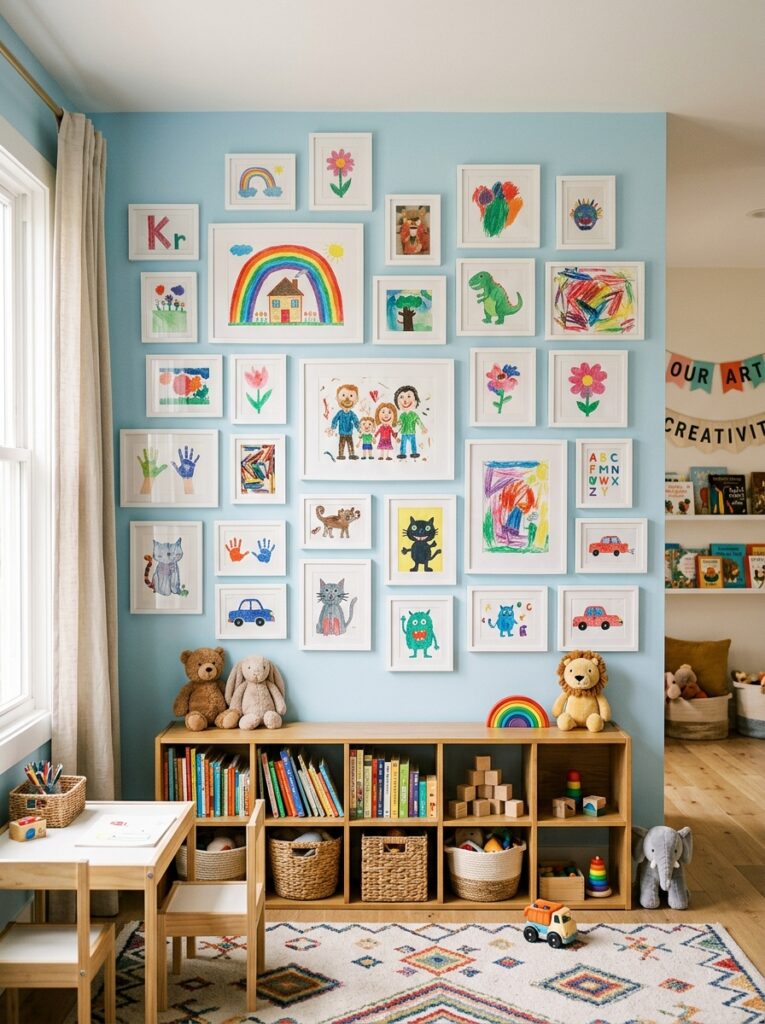
Children love seeing their creations celebrated. It boosts confidence and gives the room personality.
Use frames, clipboards, wire displays, or rotating gallery walls to showcase favourite pieces.
I always recommend updating displays regularly so children continue feeling excited about creating new artwork. Budget: $15-$80.
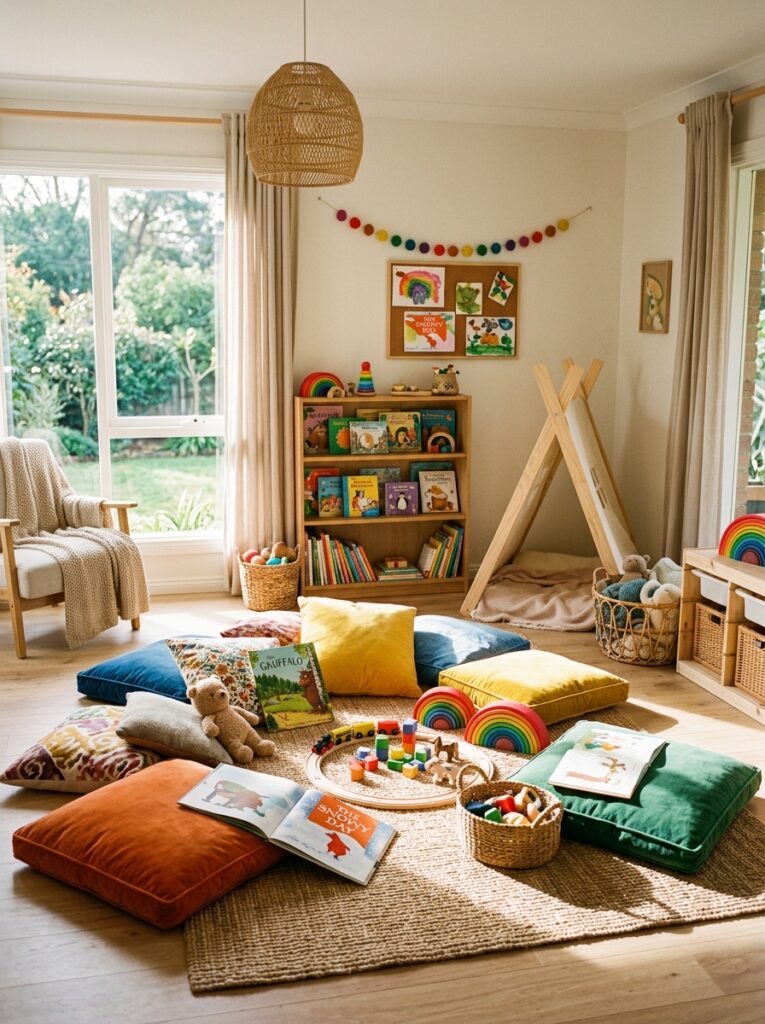
Add Floor Cushions for Flexible Play
Traditional furniture isn’t always necessary in a playroom. Oversized floor cushions create comfortable spots for reading, building, relaxing, or group activities.
Choose durable washable fabrics and mix different sizes for visual interest.
The best part is that cushions can move wherever the activity happens. Budget: $25-$150.
Include a LEGO or Building Zone
Building toys encourage problem-solving, creativity, and concentration. Giving them a dedicated area helps contain the inevitable spread of tiny pieces.
Use tables with storage underneath or large trays for organisation.
A common mistake is mixing all building toys together. Separate categories save frustration later. Budget: $30-$200.
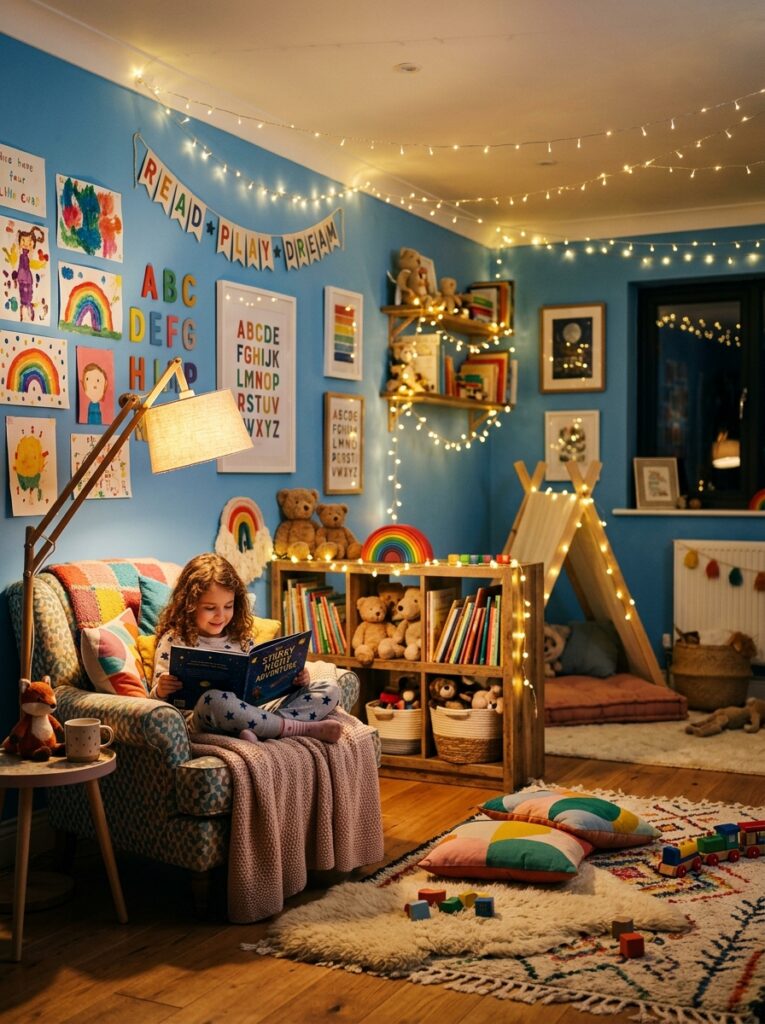
Use Soft Lighting Instead of Harsh Overhead Fixtures
Lighting changes how a room feels more than almost anything else.
Table lamps, wall sconces, string lights, and warm-toned bulbs create a comfortable atmosphere that encourages longer play sessions.
Harsh ceiling lights can make a room feel more like a classroom than a place for fun. Budget: $20-$120.
Add a Rotating Toy Display
Children often lose interest in toys simply because they see them every day.
Store some toys away and rotate selections every few weeks. Suddenly, familiar toys feel exciting again.
In my experience, this strategy works better than constantly buying new toys. It saves money while reducing clutter. Budget: Free to $50 if additional storage is needed.
Create a Mini Stage for Performances
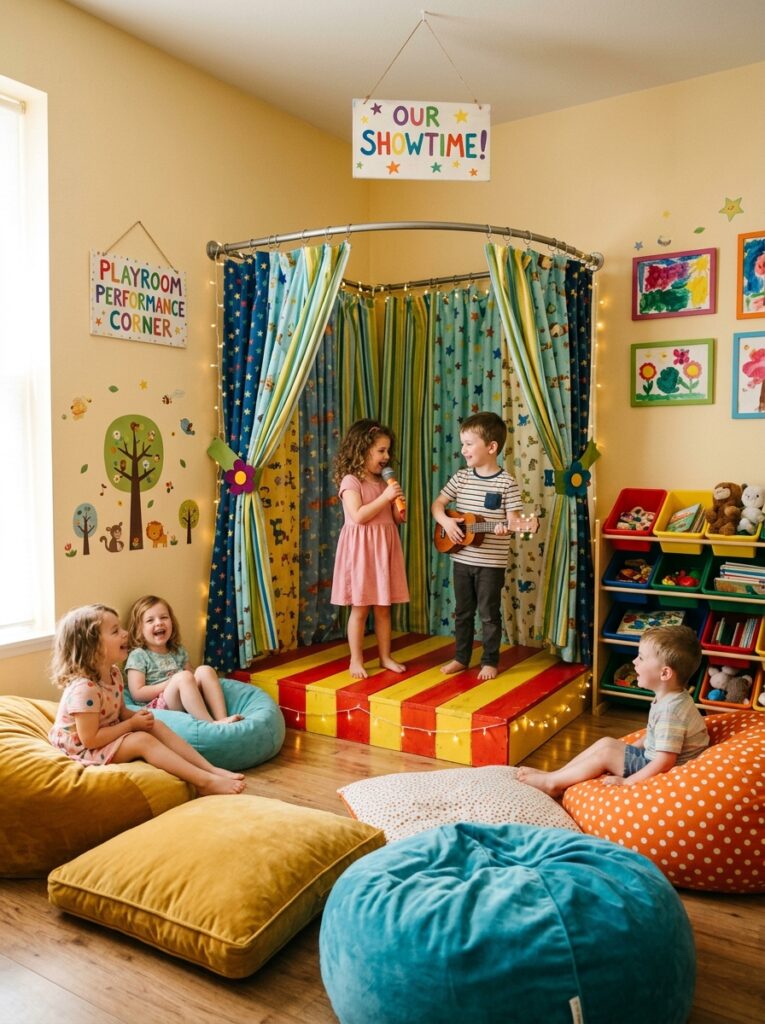
Many children love performing, whether they’re singing, dancing, acting, or putting on puppet shows.
A simple stage area with a curtain, small platform, or designated performance rug can spark hours of entertainment.
What I personally love about this idea is how it encourages confidence and creativity at the same time. Budget: $30-$200.
Final Thoughts
The best playroom ideas that keep kids entertained aren’t necessarily the most expensive or elaborate. They’re the ones that match how children naturally play, explore, and learn.
Instead of trying to overhaul the entire room at once, start with one or two ideas that solve your biggest challenge. Maybe that’s creating a reading nook, organising toys more effectively, or adding an art station that encourages creativity every day.
Small changes often create the biggest impact. As children grow, you can adapt and expand the space to match their interests while keeping it functional for your family.
Remember, a great playroom doesn’t need to look perfect. It should feel welcoming, inspiring, and full of opportunities for fun.
Which of these playroom ideas are you trying first? Drop it in the comments. I’d love to know!
FAQ
How do I make a small playroom feel bigger?
Focus on vertical storage, open shelving, and multipurpose furniture. Keeping toys organised and reducing visual clutter instantly makes a small space feel larger. Mirrors and lighter wall colours can also help reflect light throughout the room.
What is the best flooring for a playroom?
Soft, durable flooring usually works best. Foam mats, low-pile rugs, cork flooring, and carpet tiles are popular choices because they’re comfortable for sitting, crawling, and active play while providing some protection from falls.
How many toys should stay in a playroom?
There isn’t a perfect number, but fewer well-organised toys often lead to better play experiences. Many parents find success with toy rotation systems where only a portion of toys remain accessible at any given time.
What colours work best in a children’s playroom?
Bright colours can be fun, but balance is important. Soft blues, sage greens, dusty pinks, warm yellows, and muted terracotta tones create energy without overwhelming the space. Using colourful toys as accents often works better than painting every surface bright.
How can I keep a playroom organised long-term?
The key is creating systems children can use themselves. Open storage, picture labels, accessible shelves, and regular toy rotations make it easier for kids to participate in cleanup and maintain organisation over time.