Finding space for kids to play can feel impossible when you’re already trying to fit a sofa, dining table, storage, and everyday family life into a smaller home. One minute the living room looks tidy, and the next it’s covered in crayons, building blocks, stuffed animals, and half-finished craft projects. If you’ve been searching for ways to keep your children entertained without dedicating an entire room to toys, you’re not alone.
The good news is that you don’t need a large playroom to create a fun, engaging environment for your kids. Some of the best kids activity corner ideas for small homes take advantage of overlooked spaces like empty wall sections, unused corners, hallway nooks, or even the area under a staircase. A few smart furniture choices and affordable decor updates can completely change how a small space functions.
In this guide, you’ll discover 15 practical, Pinterest-worthy activity corner ideas that encourage creativity, learning, and independent play while keeping your home feeling organised. These ideas are realistic, family-friendly, and designed for actual homes rather than picture-perfect showrooms. You might be surprised by how much potential is hiding in a single unused corner.
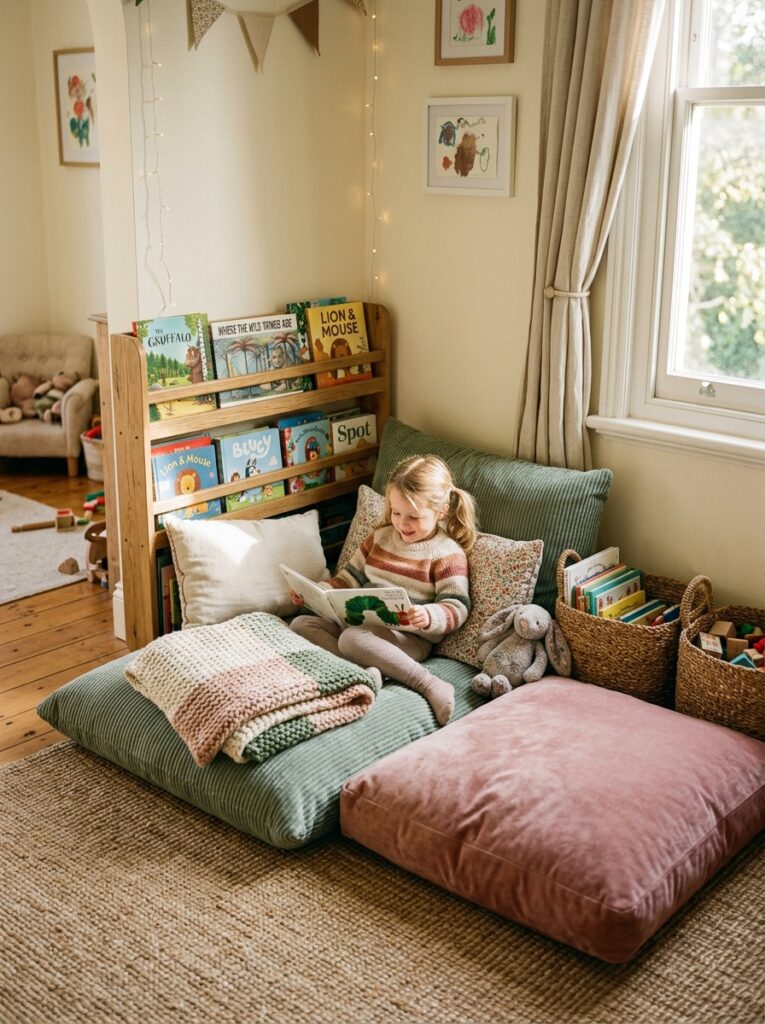
A Cozy Reading Nook With Floor Cushions
There is something special about giving children a dedicated place to slow down and get lost in a book. Picture a soft corner filled with oversized cushions, a chunky knit blanket, and a small bookshelf where colourful covers face outward. Natural sunlight filters through nearby curtains, creating a calm little retreat that feels completely separate from the busyness of the rest of the house.
To recreate this look, place two or three large floor cushions in a corner and add a low bookshelf no taller than your child’s shoulders. What I personally love about this is that it works in spaces as small as 4 feet by 4 feet. Add a soft lamp or fairy lights for evening reading. Budget ranges from $40–$150 depending on the cushions and shelving you choose. Tip: avoid overcrowding the shelf. Displaying fewer books often encourages more reading.
Wall-Mounted Art Station That Saves Floor Space
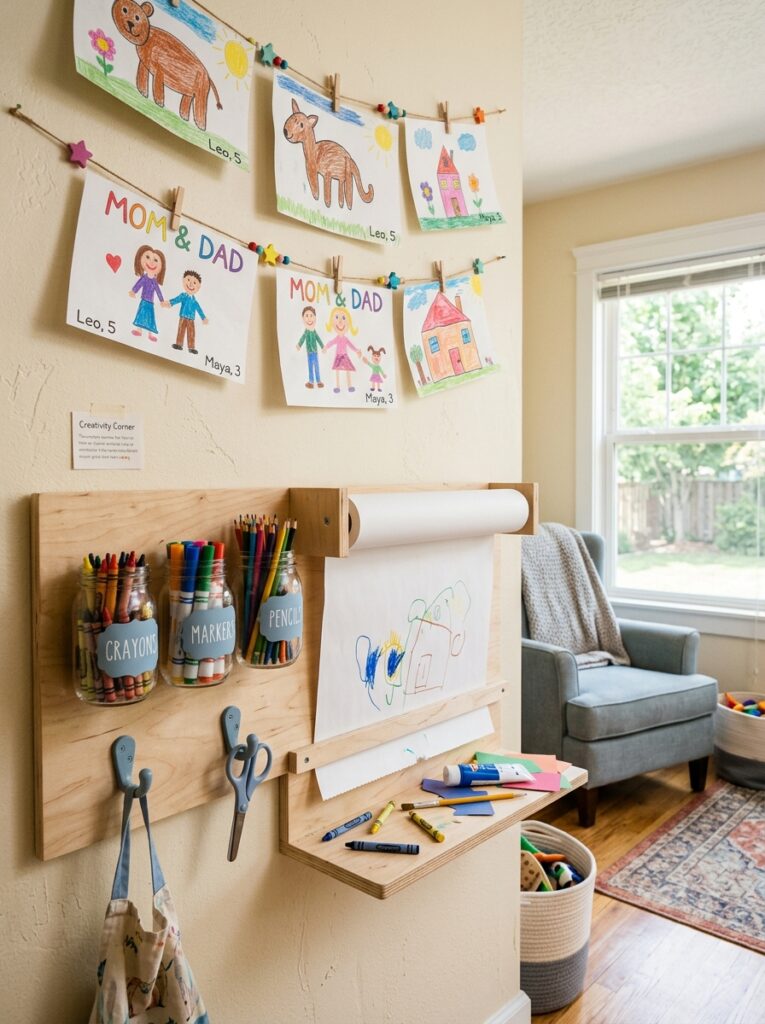
An art corner doesn’t need a bulky desk to work well. Imagine a bright wall filled with children’s drawings, neatly arranged supplies, and a roll of paper ready for the next masterpiece. The area feels creative and inviting without taking over the room.
Install a wall-mounted shelf or narrow desk around 20–24 inches deep, depending on your child’s age. Add hanging containers for markers, crayons, and scissors. In my experience, the biggest mistake here is placing supplies too high. Children should be able to access most materials independently. Expect to spend between $50–$200. A simple IKEA shelf can work just as well as custom cabinetry.
Under-the-Stairs Activity Corner
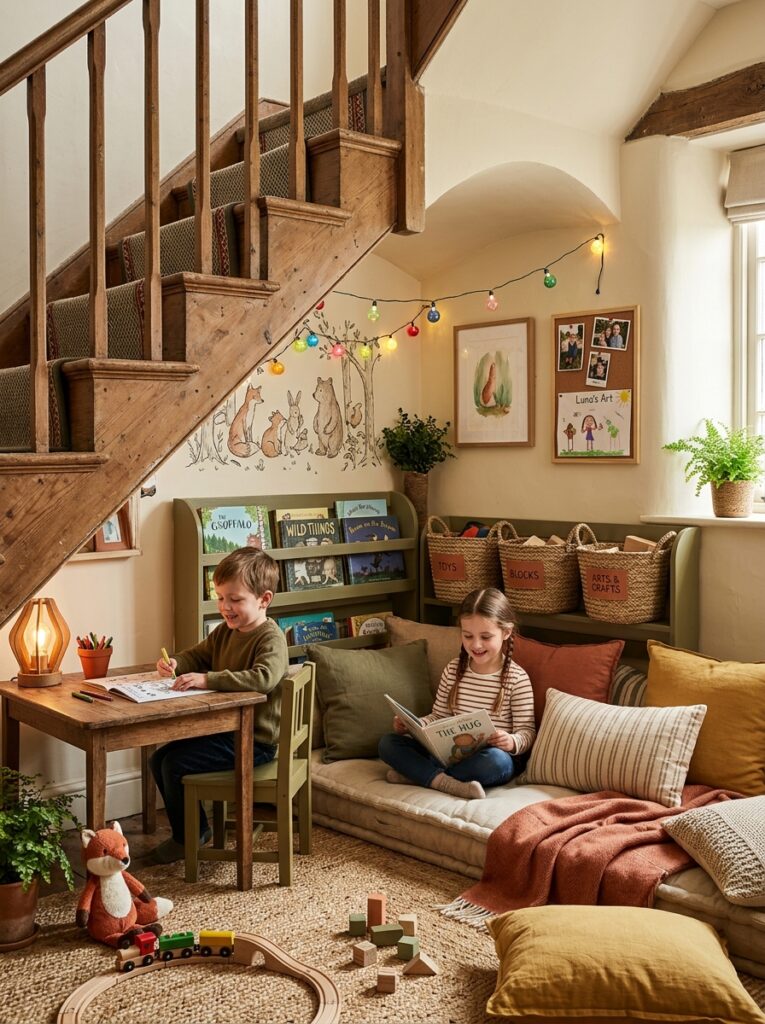
The space under a staircase often becomes a storage graveyard for random household items. Instead, it can become one of the most magical play spaces in the house. Picture a miniature hideaway filled with books, toys, soft lighting, and playful decor that feels like a secret clubhouse.
Use low storage bins, floor cushions, and child-sized furniture. Add removable wallpaper or wall decals to make the space feel special. A lot of people skip lighting in these areas, but it makes all the difference. Budget ranges from $75–$300 depending on furnishings.
LEGO Building Corner With Storage Drawers
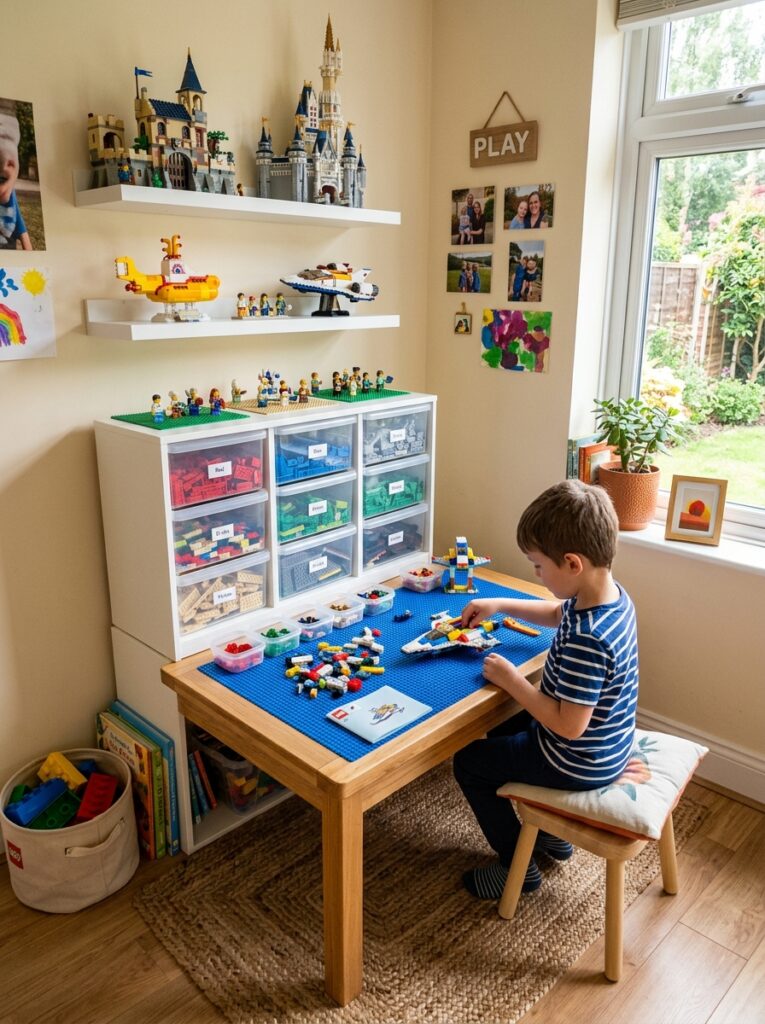
For many children, LEGO can provide hours of focused entertainment. The challenge is preventing tiny pieces from spreading across the entire house. A dedicated building corner helps contain the mess while encouraging creativity.
Use a small table with drawer storage underneath. Add clear containers sorted by colour or piece type. I always recommend this to anyone who asks me about organising building toys because it dramatically reduces cleanup time. Budget: $60–$250.
Window Seat Activity Nook
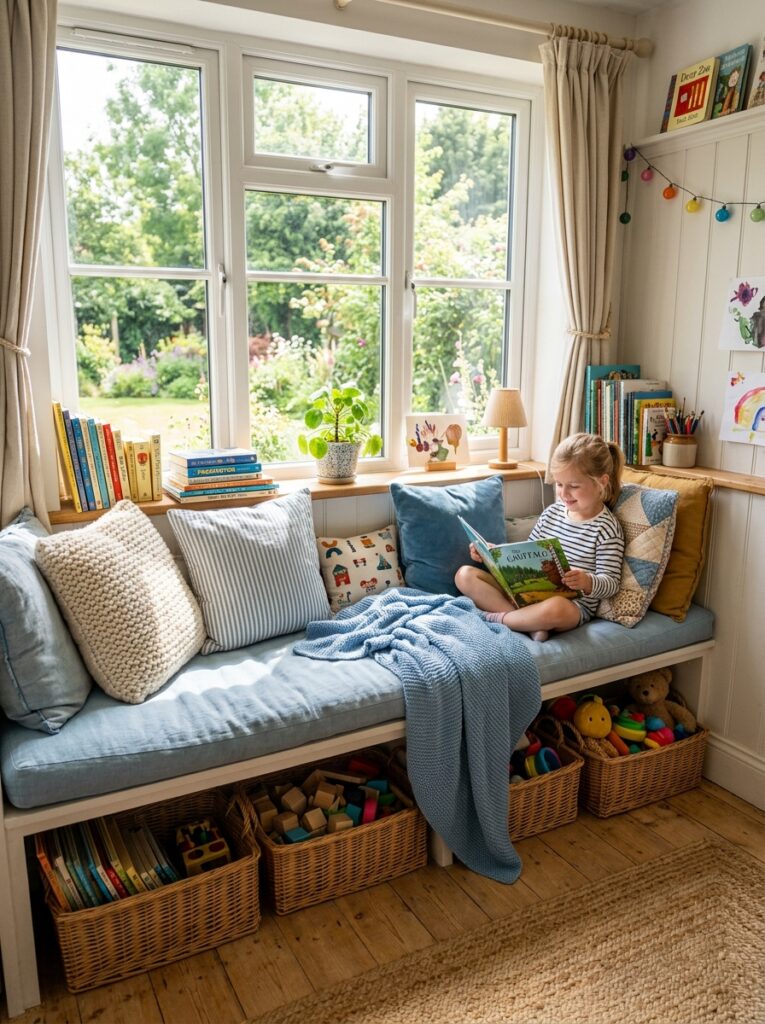
A window area can become much more than a place to look outside. Imagine a cushioned bench where children can read, draw, build puzzles, or simply relax while watching the world go by.
Install a bench with hidden storage underneath if possible. Layer cushions in muted terracotta, sage, and soft blue tones for comfort. Budget-friendly versions can be created using storage cubes topped with a cushion. Costs typically range from $80–$400.
Pretend Play Kitchen Corner
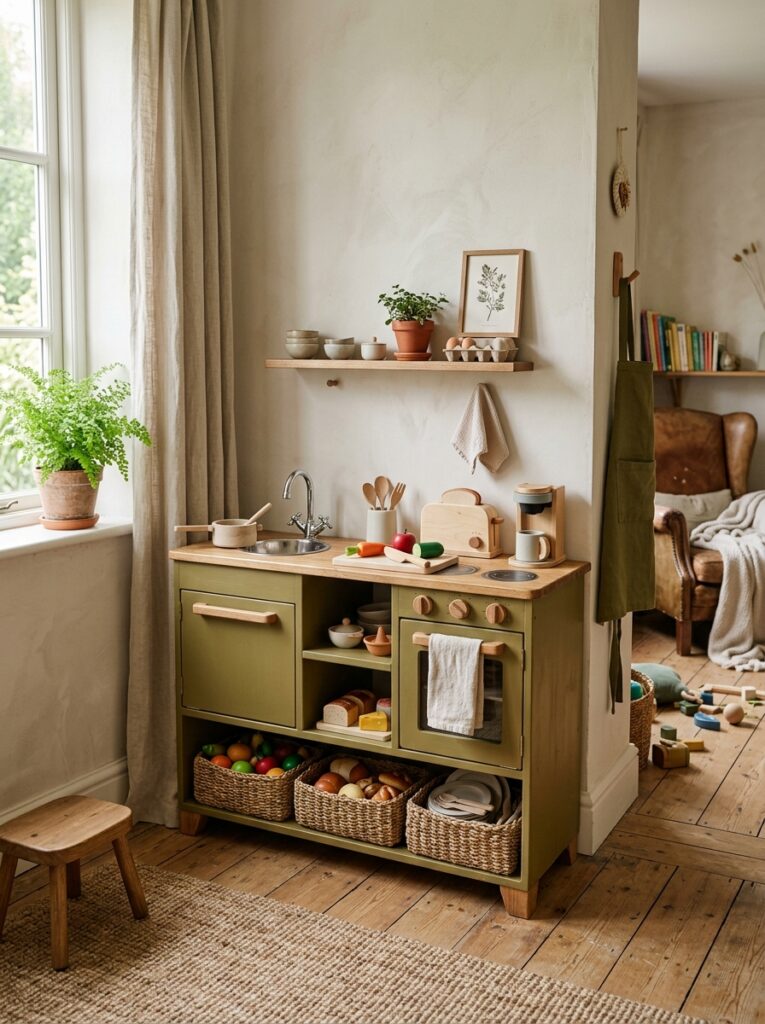
A play kitchen remains one of the most-used activity areas in many homes because it encourages imagination and social interaction. Even a tiny setup can provide endless entertainment.
Choose a compact kitchen unit and place it against an unused wall. Add a small basket of pretend food and a few accessories. What I personally love about this is how it grows with children over several years. Budget: $70–$250.
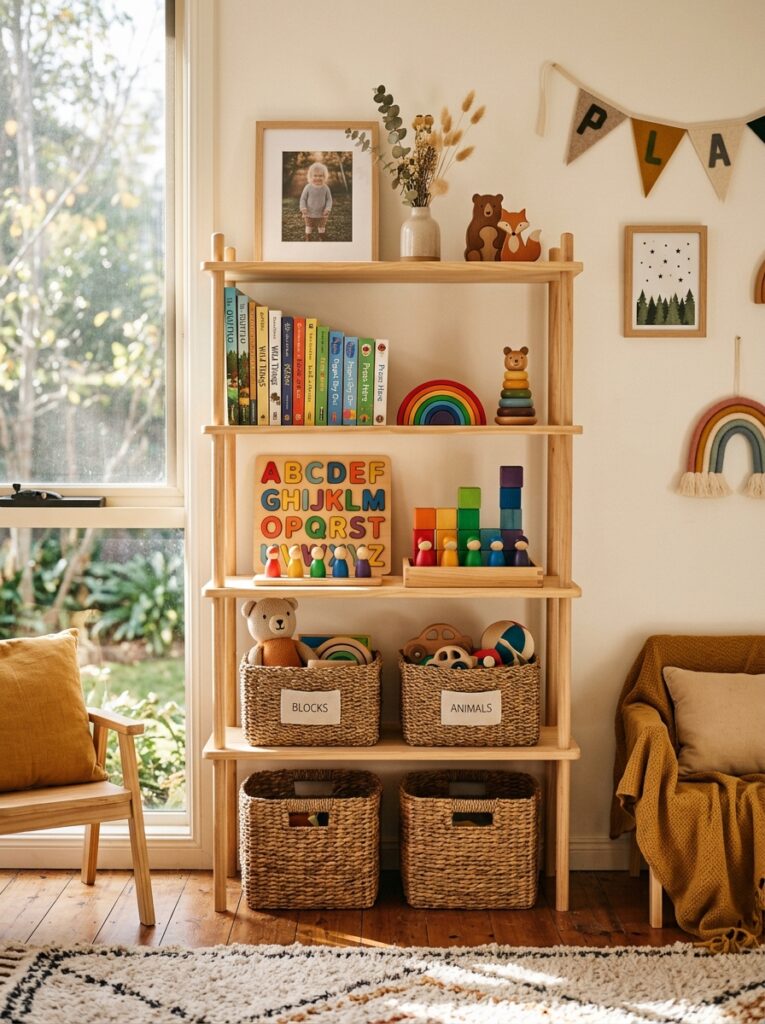
Rotating Toy Display Shelf
Children often lose interest in toys simply because they see the same ones every day. A rotating display keeps things fresh without buying anything new.
Use a small shelf to showcase a limited selection of toys. Store the rest elsewhere and swap them every few weeks. In my experience, the biggest mistake here is displaying too many toys at once. Budget: $20–$100.
Homework and Craft Corner for Older Kids
As children grow, they benefit from having a dedicated place for homework, drawing, and independent projects. The space feels purposeful while still remaining playful.
A narrow desk, comfortable chair, and good task lighting are usually enough. Add a pinboard for artwork and school reminders. Budget: $80–$300.
Sensory Play Station
Sensory activities can keep children engaged for surprisingly long periods while supporting development and creativity. The textures, colours, and hands-on experiences encourage exploration.
Use bins filled with kinetic sand, rice, water beads, or age-appropriate materials. Keep everything on a washable tray for easy cleanup. Budget: $25–$120.
Dress-Up Corner With Wall Hooks
Children love pretending to be superheroes, doctors, princesses, chefs, and explorers. A dedicated dress-up area makes imaginative play feel more exciting.
Install low wall hooks and a child-safe mirror. Display costumes instead of hiding them away. Budget: $30–$150.
Puzzle and Board Game Corner
A dedicated puzzle station creates opportunities for focused family time and independent problem-solving. The space feels calm and purposeful.
Use a small table where unfinished puzzles can remain undisturbed. Add nearby storage for games and puzzle boxes. Budget: $40–$180.
Montessori-Inspired Learning Shelf
Simple, accessible learning materials encourage independence and curiosity. The beauty of this setup is its simplicity.
Display a small number of activities on low shelves within easy reach. Rotate materials regularly. A lot of people skip rotation, but that’s what keeps the shelf interesting. Budget: $50–$200.
Indoor Tent or Canopy Retreat
Every child loves having a space that feels like their own private hideout. A tent or canopy creates that feeling instantly.
Place a small play tent in an unused corner and add pillows, books, and soft blankets. Budget: $40–$180.
Magnetic Wall Activity Zone
A magnetic wall turns unused vertical space into an interactive activity center. Children can create scenes, practice letters, and build designs without creating clutter.
Install magnetic boards or magnetic paint on a section of wall. Keep accessories stored nearby in baskets. Budget: $30–$120.
Fold-Away Activity Corner for Shared Spaces
When every square foot matters, flexibility becomes important. A fold-away activity corner allows children to play without permanently taking over the room.
Use folding tables, stackable bins, and portable storage carts. When playtime ends, everything can be tucked away neatly. I always recommend this to families living in apartments because it offers the best balance between functionality and space savings. Budget: $50–$200.
Conclusion
Creating a dedicated activity space for children doesn’t require an entire playroom or a large budget. The best kids activity corner ideas for small homes focus on making the most of the space you already have while encouraging creativity, learning, and independent play.
Start with just one idea that fits your family’s needs. Maybe that’s a reading nook by the window, a simple art station, or a rotating toy shelf that reduces clutter. Small changes often create the biggest difference because they make everyday routines easier and more enjoyable for both kids and parents.
Remember, children care far more about having a space that feels fun and welcoming than whether it looks perfect. Focus on comfort, accessibility, and opportunities for play. Over time, you can add new elements as your child grows and their interests change.
Which of these kids activity corner ideas for small homes would work best in your space? Drop it in the comments. I’d love to know!
FAQ
How much space do I need for a kids activity corner?
Most activity corners can fit into an area as small as 4×4 feet. Reading nooks, art stations, and toy displays often require less space than people expect. The key is choosing activities that match your child’s interests and using vertical storage whenever possible.
What is the best activity corner for toddlers?
Reading nooks, sensory stations, and simple pretend play areas work particularly well for toddlers. Keep materials safe, easily accessible, and age appropriate. Soft furnishings and low storage are especially important at this stage.
How do I keep a small activity corner organized?
Use baskets, labelled bins, and toy rotation systems. Avoid storing too many toys in one space at the same time. Children are often more engaged when they have fewer options rather than being overwhelmed by clutter.
What colours work best in children’s activity spaces?
Soft greens, blues, terracotta, lavender, and muted pinks tend to feel calming while still being playful. You don’t need bright primary colours everywhere. Adding colour through toys, books, and accessories often creates a more balanced look.
Can an activity corner replace a playroom?
For many families, yes. A thoughtfully designed activity corner can provide reading, creativity, learning, and play opportunities without needing a separate room. Smart storage and multipurpose furniture make a huge difference in smaller homes.