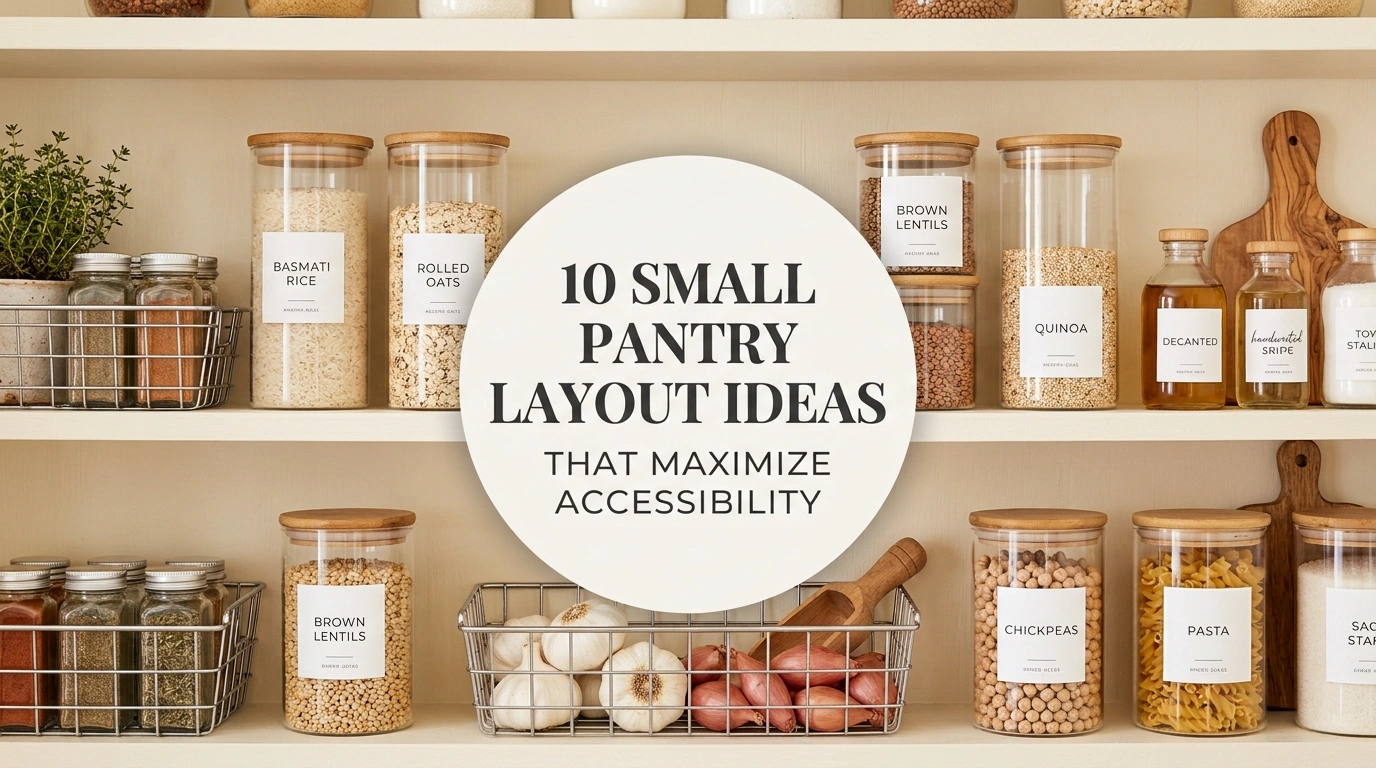
If you’ve ever had to crawl on your hands and knees with a flashlight just to find a tin of coconut milk at the back of your cupboard, you know how frustrating a poorly planned kitchen space can be. In a busy household, a cluttered pantry doesn’t just look messy—it genuinely interrupts the flow of your daily life, making meal prep feel like a chore. The good news is that you don’t need a sprawling, walk-in butler’s pantry to keep your ingredients organized. With these 10 small pantry layout ideas that maximize accessibility, we can turn even the tightest, deepest, or most awkward cupboards into highly functional, stress-free zones where everything is exactly where you expect it to be.
When your storage is designed with accessibility in mind, your entire kitchen routine changes. You save money by not rebuying ingredients you forgot you had, and you gain back valuable time during hectic weeknight dinners. In my experience, the biggest mistake people make is focusing solely on how pretty their storage jars look rather than how easy those jars are to actually reach and use. By making a few small, thoughtful layout adjustments, we can create a functional setup that looks beautiful, feels incredibly satisfying to use, and works hard to make your daily routine just a little bit smoother. Let’s dive into some of the most practical layouts you can easily try in your own home.
1. The Gliding Pull-Out Drawer Conversion
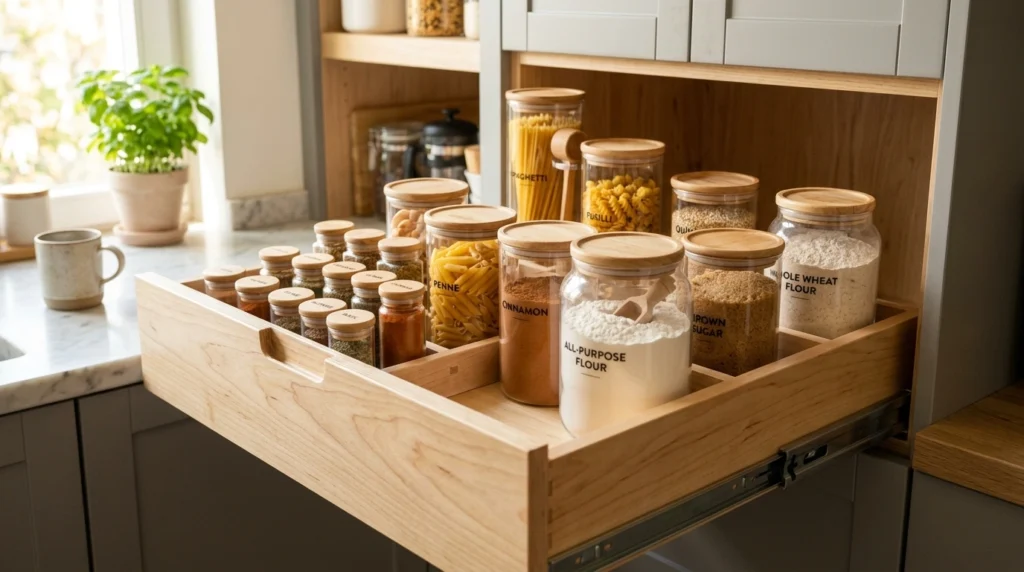
What I personally love about this setup is how it instantly solves the nightmare of deep, dark shelves where canned goods go to be forgotten. Imagine opening your pantry doors to see smooth, solid birch drawer fronts that slide out with a gentle pull, bringing everything from the very back right into the bright kitchen light. The atmosphere is calm and efficient, characterized by the soft warmth of natural wood grain paired with neat, orderly rows of daily essentials. It feels less like a dark cupboard and more like a high-end, custom-built kitchen feature that respects your time and your back.
To recreate this layout, you don’t need to rip out your entire cabinetry; you can easily find retrofitted wooden or heavy-duty wire pull-out baskets that screw directly onto your existing cabinet shelves. I always recommend starting with your heaviest items, like flour jars and canned goods, on the lowest pull-out drawers to keep your cabinet stable. If you’re on a tight budget, sturdy plastic bins with stick-on glide runners can mimic this sliding effect for a fraction of the cost. A common mistake here is neglecting to measure the clearance of your cabinet door hinges, which can block the drawers from sliding out smoothly if not accounted for.
- Suggested Price Range: $40 – $150 per drawer slide-out kit depending on materials.
2. The U-Shaped Wrap-Around Shelving
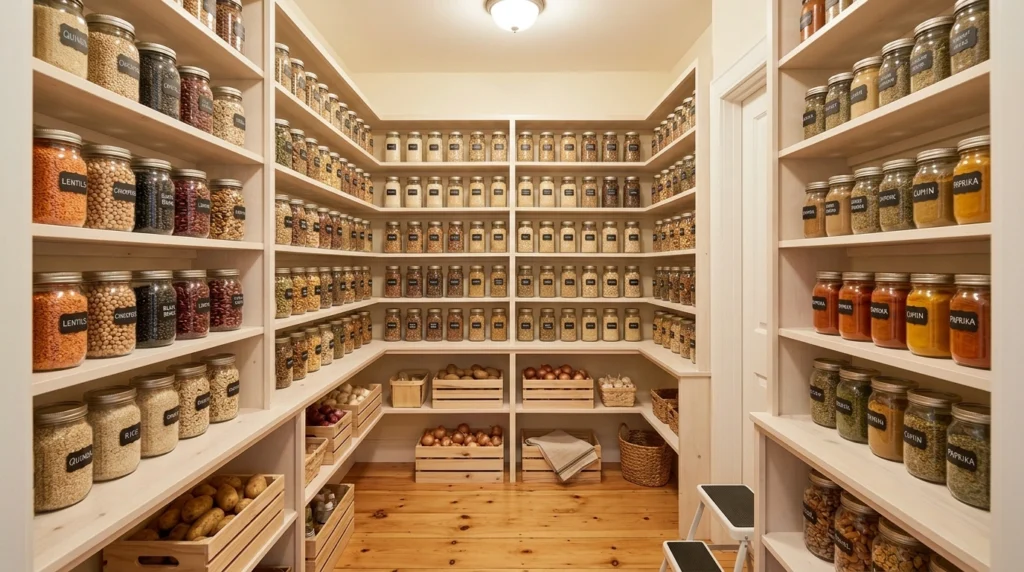
This layout makes incredible use of narrow walk-in closets or deep pantries by wrapping the shelving around three walls in a continuous, shallow U-shape. Walking into this space feels like stepping into a cozy, boutique corner market, where every single item is displayed on shelves no deeper than six inches. The visual effect is clean and open, with soft white-washed pine shelves against a bright, neutral wall, ensuring there are absolutely no dark corners where jars can hide. It is an incredibly comforting layout because you can see your entire inventory in a single glance without shifting a single item.
To make this work well, keep the side shelves exceptionally shallow—just wide enough for a single row of mason jars or tin cans—while reserving the back wall for slightly deeper items like baking dishes or small appliances. This works especially well if you want to look more put together without trying too hard, as the shallow depth naturally prevents clutter from building up in double rows. If custom carpentry isn’t in your budget, you can install affordable, adjustable track-and-bracket shelving systems from your local home improvement store. Avoid the temptation to make the shelves too deep, as this immediately ruins the walk-in clearance and makes the space feel cramped.
- Suggested Price Range: $120 – $350 for DIY adjustable track shelving systems.
3. The Over-the-Door Grid Organizer
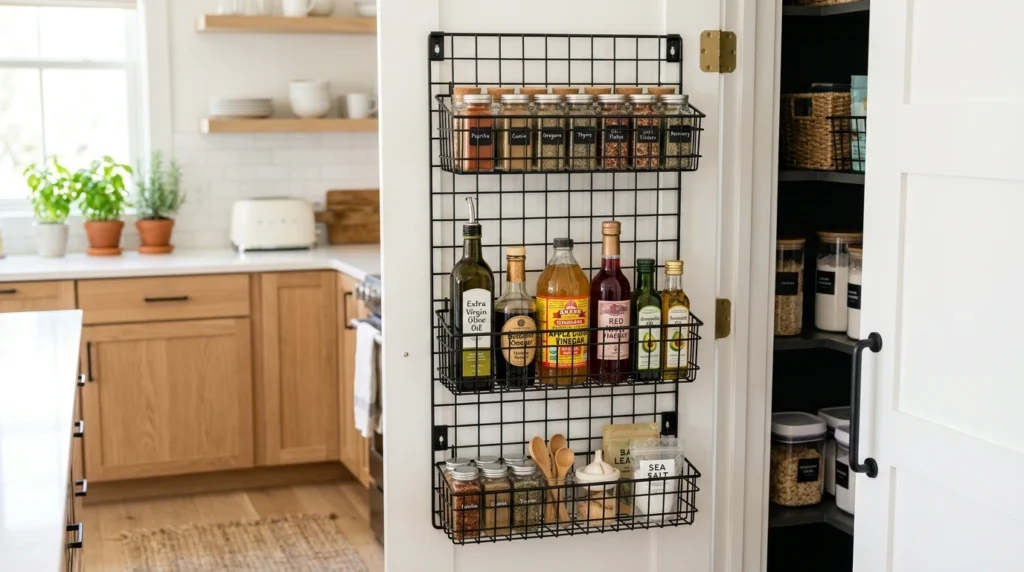
This layout is an absolute lifesaver for small kitchens because it unlocks a massive amount of storage on a surface that most people completely ignore. By attaching an industrial-style matte black wire grid to the inside of your pantry door, you create a beautiful, highly accessible vertical spice and sauce station. When you open the door, there is a reassuring, quiet click as the organized jars sway gently in their secure baskets, bringing your most-used oils, vinegars, and spices right to eye level. It feels wonderfully practical and smart, instantly freeing up precious shelf space inside the pantry itself.
When setting this up, look for a heavy-duty over-the-door organizer that screws directly into the door rather than just hanging over the top, as this prevents annoying rattling and swinging. I always recommend placing your tallest, heaviest bottles at the bottom of the door rack and keeping lightweight spices and snack bags near the top to maintain a balanced weight distribution. For a budget-friendly option, a simple fabric hanging shoe organizer with clear pockets works brilliantly for storing small snack packets, seasoning mixes, and garlic bulbs. Just make sure to double-check that your inner pantry shelves have a few inches of clearance from the door so it can close fully.
- Suggested Price Range: $25 – $65 for a high-quality metal door-mounted organizer.
4. The Lazy Susan Corner Turn
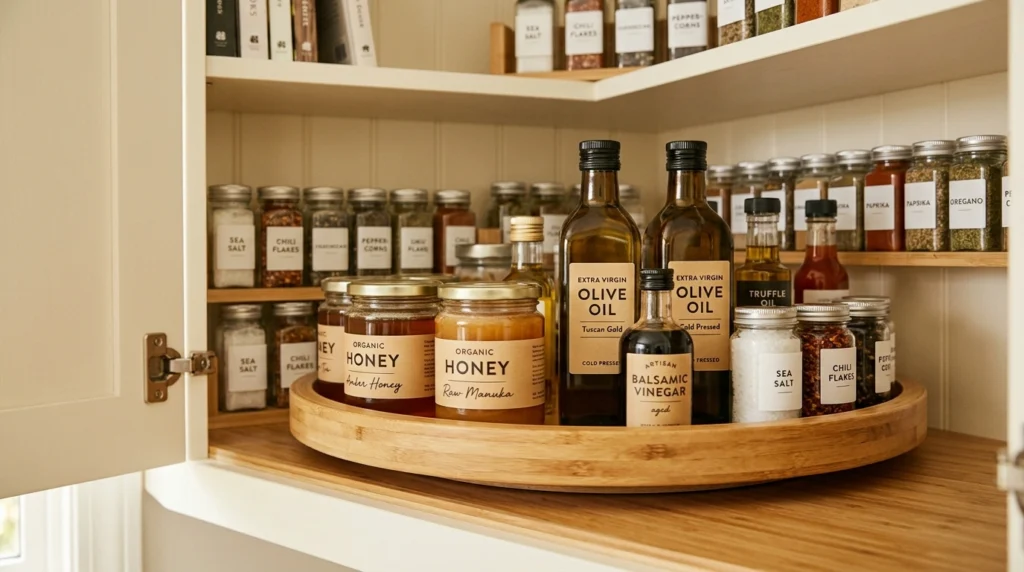
A lot of people overlook this detail, but corner cabinets are usually where kitchen organization goes to die because those deep angles are so hard to reach. This layout completely cures that problem by installing large, rotating lazy Susan turntables on every single corner shelf, turning dead space into prime real estate. With a simple flick of your wrist, a smooth-spinning wooden turn-table sweeps your oils, vinegars, and honey jars from the dark back corner straight to the front. The look is beautifully kinetic and satisfying, especially when you use warm bamboo turntables that add an organic, cozy texture to your pantry interior.
To get the most out of this setup, choose turntables with a slight lip—around one to two inches—to prevent your tall glass bottles from tipping over as they spin. You can even find pie-cut or kidney-shaped lazy Susans that are specifically designed to maximize the awkward geometry of L-shaped corner cabinets. If you are trying to keep costs down, affordable clear acrylic turntables work beautifully and let you see the labels of your items through the sides. A classic mistake to avoid is overloading the turntable with heavy cans, which can wear out the ball bearings and make spinning difficult over time.
- Suggested Price Range: $15 – $45 per turntable depending on size and wood quality.
5. The Shallow-Shelf Pantry Wall
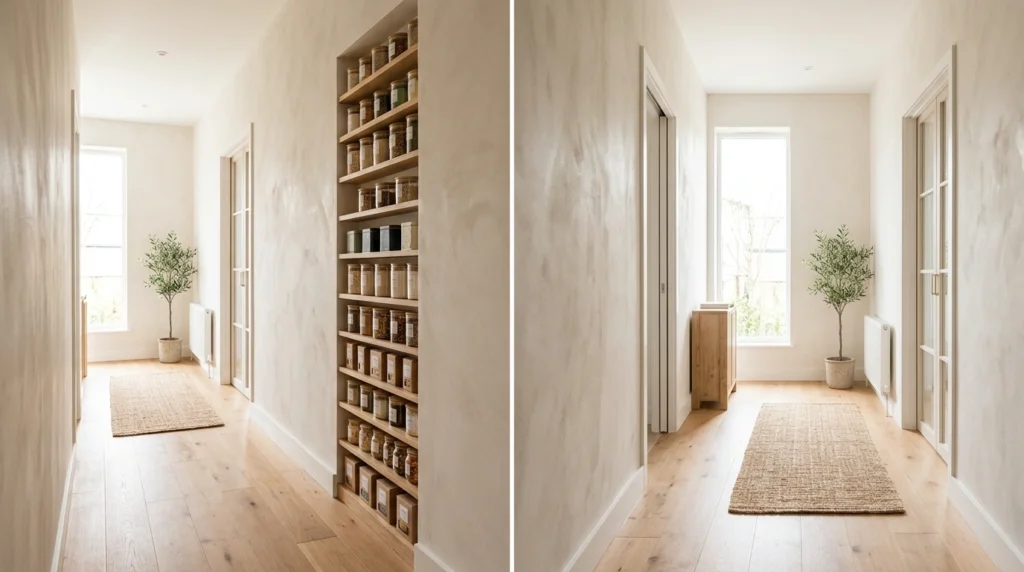
If you have a spare blank wall in your kitchen or hallway, this layout turns a completely unused vertical surface into an elegant, shallow-shelf pantry. Stretching from floor to ceiling but sticking out only four to five inches, this setup mimics the look of a library bookshelf, displaying colorful jars, boxes, and packages like beautiful books. The vibe is incredibly airy, bright, and modern, using minimalist floating shelves in a soft cream or natural oak finish that integrates into your living space. There is a wonderful sense of ease here, as nothing can ever get pushed behind anything else, meaning zero digging is required.
To recreate this layout, look for simple picture ledge shelves or slim floating bookshelves and mount them securely to the studs in your wall. This works especially well for storing spices, mason jars filled with grains, teas, and canned goods in single-file rows that look highly organized with minimal effort. If you are renting and cannot drill extensive holes, a slim, free-standing ladder shelf or a narrow bookcase can achieve a similar feel without damaging the walls. The biggest mistake here is placing heavy appliances or wide boxes on these slim shelves, as they will overhang and ruin the clean, streamlined look of the wall.
- Suggested Price Range: $50 – $180 for a set of high-quality, wall-mounted slim shelves.
6. The Zone-Based Basket Layout
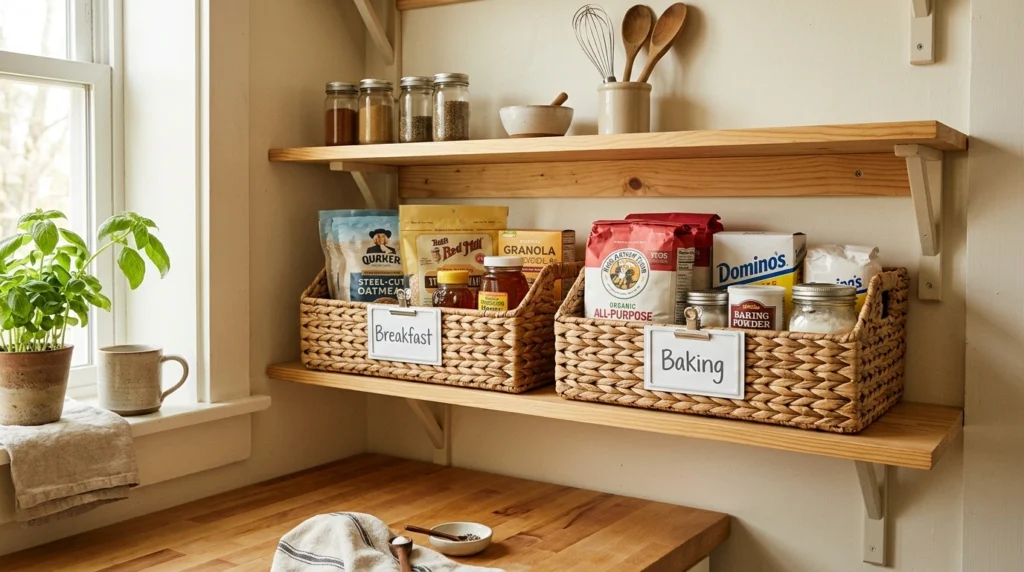
In my experience, trying to organize every single tiny item individually is a recipe for burnout; instead, grouping your items into functional “zones” using beautiful, handled baskets is much more sustainable. This layout organizes shelves by daily routines—such as a “Breakfast Zone” with oatmeal and honey, or a “Baking Zone” with flour and sugars—housed in matching wire or woven hyacinth baskets. Pulling out a lightweight basket by its sturdy handle feels incredibly satisfying, bringing a complete set of ingredients directly to your kitchen counter in one smooth motion. The aesthetic is warm, rustic, and inviting, softening the hard lines of standard cabinetry.
To set this up, choose sturdy baskets with open tops so you can easily see what is inside without having to unlid them every time you cook. I always recommend using large, clear clip-on labels so every member of the family knows exactly where to return the peanut butter or crackers when they are finished. If you are on a budget, you can paint mismatched shoeboxes or plastic storage tubs a uniform neutral color and add hand-written labels to get the same clean look. Avoid buying baskets that are too deep or heavy, as this makes pulling them down from higher shelves difficult and unsafe.
- Suggested Price Range: $10 – $30 per basket depending on size and woven material.
7. The Slide-Out Narrow Pantry Cart
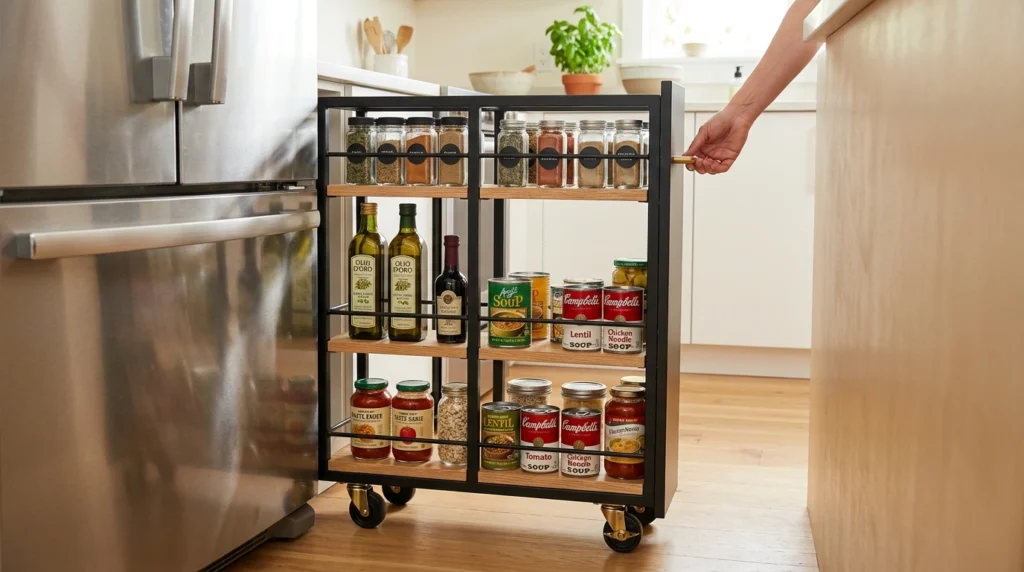
For kitchens with a frustrating gap between the refrigerator and the wall, this layout utilizes a rolling, ultra-slim pantry cart to turn a useless gap into a highly accessible storage drawer. Mounted on smooth-glide caster wheels, this tall, narrow cart slides out completely with a gentle pull of its brass handle, revealing three to four tiers of vertical storage. The mood is highly clever and industrial, featuring a mix of matte black steel frames and warm wood accents that look incredibly stylish when pulled out. It feels like a secret storage weapon, keeping your daily spices, canned goods, and condiments hidden away but perfectly reachable.
To make this work, carefully measure the width of your gap, keeping in mind that these carts are available in incredibly slim profiles starting at just five inches wide. Make sure to purchase a cart with sturdy safety rails on each shelf so that bottles do not tip over and fall off when you roll the cart in and out of its slot. For a budget-friendly project, you can easily attach caster wheels to the bottom of a cheap, narrow wooden bookcase and mount a handle to the front panel. Just be sure not to store heat-sensitive oils or spices right next to the side of the fridge that vents warm air, as this can ruin their shelf life.
- Suggested Price Range: $30 – $75 for a pre-assembled metal rolling cart.
8. The Tiered Step-Shelf Concept
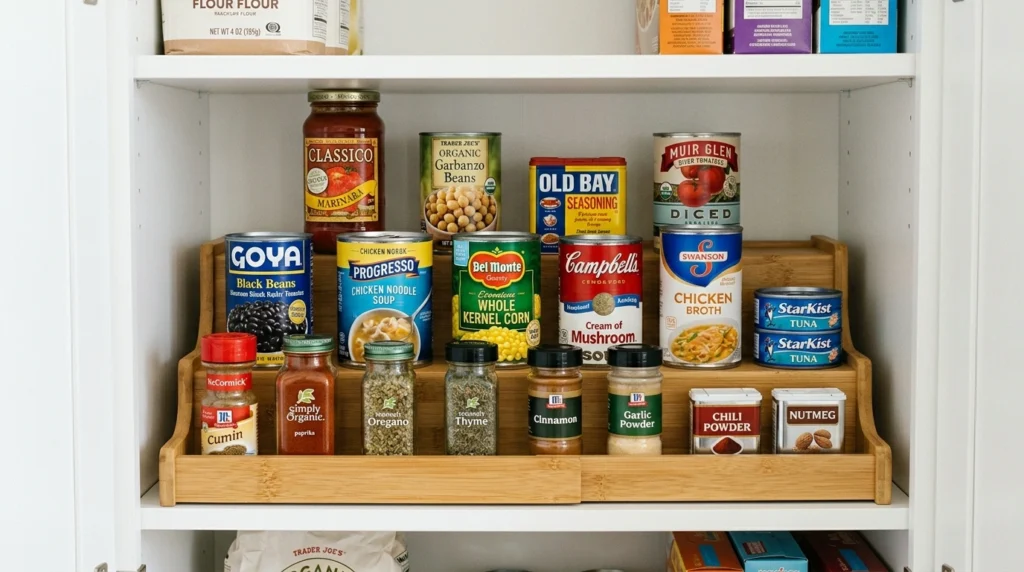
If you have fixed shelves that you cannot easily replace or adjust, this layout uses tiered step-shelf risers to give you a clear, unobstructed view of all your canned goods and small jars. By arranging your items on three-tiered steps, like spectators on stadium bleachers, you can easily read every single label from front to back without moving a thing. The overall look is crisp, organized, and deeply comforting to look at, using clean lines of white or bamboo steps that fit neatly into standard cabinet spaces. It completely eliminates the frustrating guessing game of what is hiding behind your front row of cans.
To set this up, look for expandable step-shelves made of bamboo or non-slip plastic that can adjust to the exact width of your cupboard. Place your tallest cans and jars on the very top step, medium-sized items in the middle, and small spice jars or tuna cans on the bottom step to ensure perfect visibility. If you want a quick DIY alternative, you can stack cheap scrap pieces of wood of varying thicknesses to create your own custom steps. The main mistake people make is buying steps that are too deep for their cabinets, which prevents the cabinet doors from closing completely once the jars are in place.
- Suggested Price Range: $12 – $28 per adjustable step riser.
9. The Drop-Down Upper Cabinet Baskets
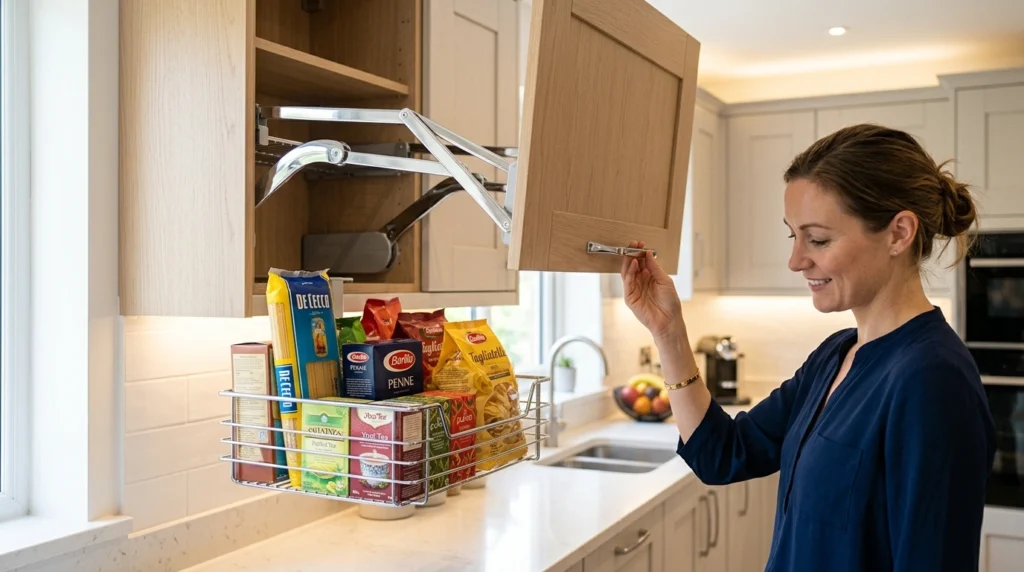
High cabinet shelves are notoriously hard to access, often leaving the top half of a small kitchen completely unused or reserved for dusty holiday platters. This layout solves that problem by introducing specialized, pull-down wire baskets that lower themselves down to eye level with a smooth, assisted spring mechanism. Pulling down on the sleek metal handle gently glides the basket forward and down, making it incredibly easy to grab flour, pasta, or snacks without needing to fetch a stepstool. It feels incredibly modern, smart, and empowering, turning previously frustrating, out-of-reach spaces into highly active, accessible storage.
To recreate this, look for “pull-down cabinet organizers” designed specifically for upper wall cabinets, making sure to measure your cabinet’s interior depth and height precisely before purchasing. This works especially well if you want to look more put together without trying too hard, as it allows you to hide less aesthetic cardboard packaging up high while still keeping it fully accessible. For a simpler, budget-friendly alternative, you can use long plastic bins with built-in, drop-down front lips that let you grab items from high shelves without removing the entire box. Always avoid placing fragile glass jars or heavy liquids in these pull-down baskets to keep the lowering mechanism smooth and safe.
- Suggested Price Range: $80 – $220 for mechanical pull-down cabinet inserts.
10. The Pegboard Custom-Grid Wall
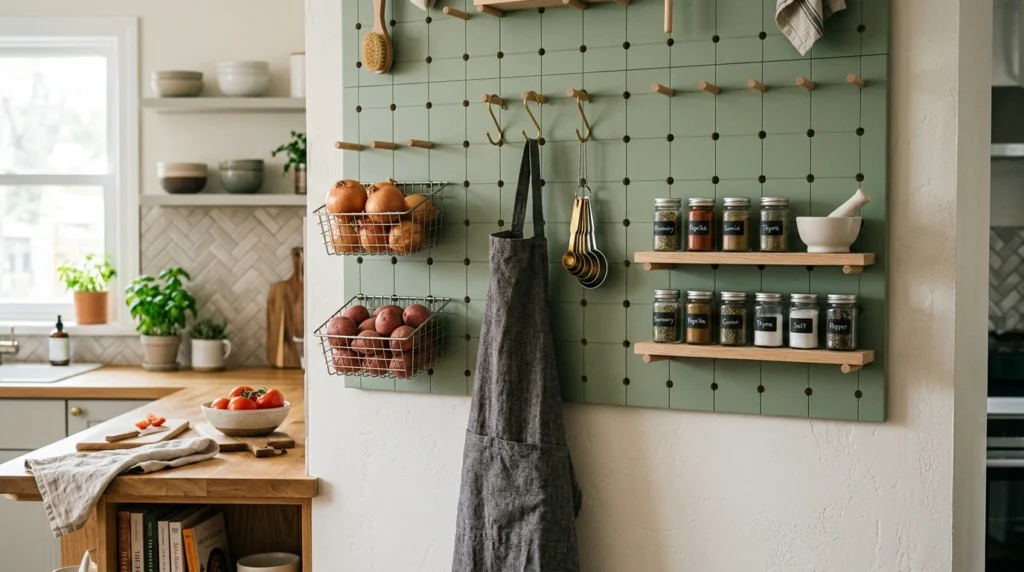
For an incredibly versatile, industrial-cool look, this layout replaces traditional shelves with a heavy-duty wooden or metal pegboard wall inside your pantry closet or on a bare kitchen wall. By using a grid of sturdy pegs, you can hang lightweight wire baskets, single shelves, and hooks at the exact heights and configurations that work for your household. The atmosphere is creative, airy, and highly personalized, allowing you to change your entire storage layout in minutes as your grocery needs evolve over time. It looks wonderfully modern and artistic, displaying your kitchen utensils, garlic baskets, and measuring cups like a functional work of art.
To set this up, install a high-quality wooden pegboard with thick, sturdy pegs and attach small wire baskets to hold dry goods, potatoes, or onions. I always recommend placing your most frequently used items—like your favorite apron, colanders, or shopping bags—on individual hanging hooks for instant grab-and-go access. If you are looking for an affordable version, standard white hardboard pegboards from the hardware store can be painted in a beautiful, warm sage green or terracotta to match your kitchen decor. Just ensure that the pegboard is mounted with spacers behind it so that the pegs and hooks have enough clearance to slide into the holes properly.
- Suggested Price Range: $40 – $110 for a complete pegboard and hook starter kit.
Finding Comfort in a Space Built for You
At the end of the day, a beautiful kitchen is not about having a flawless, picture-perfect space that feels too pristine to actually cook in. Real style is about creating a home that supports you, respects your daily routines, and makes your life feel just a little bit easier. By choosing just one or two of these small pantry layout ideas that maximize accessibility, you can take control of your kitchen’s flow and eliminate the daily friction of messy, out-of-reach cupboards.
You do not need to spend thousands of dollars on custom cabinetry to make a difference; a simple lazy Susan or a set of thoughtful step-risers can completely change how you interact with your space. Start small, organize the items you use every single day first, and let your pantry evolve naturally to match your lifestyle.
Which of these pantry layout ideas would you actually try first in your own kitchen? I’d genuinely love to know in the comments below!
Frequently Asked Questions
How do I make a deep, dark pantry cabinet more accessible?
The absolute best way to make deep cabinets accessible is to install retrofitted pull-out drawers or heavy-duty sliding baskets. This brings items from the back directly to you, completely eliminating the need to dig in the dark. Alternatively, placing large lazy Susans in deep corners or using long, clear plastic bins with front handles can make reaching distant items incredibly easy.
What container materials are best for a budget-friendly pantry?
You do not need expensive glass jars to keep your pantry organized; clear, BPA-free plastic bins with handles are highly durable, lightweight, and perfect for seeing exactly what you have. Another excellent, budget-friendly option is utilizing simple wire baskets or repurposing clean glass jars from spaghetti sauces and jams for a lovely, cohesive look.
How can I organize a small pantry if I live in a rental?
If you cannot drill holes, focus on non-damaging vertical storage, such as heavy-duty over-the-door organizers that hang securely without screws. You can also use free-standing rolling carts to fill awkward gaps, expandable tension shelves inside your cabinets, and removable clear bins that organize your space without altering the cabinetry.
How do I stop food from getting lost in the back of my shelves?
To prevent food from disappearing, keep your shelves as shallow as possible, aiming for a single-file or double-row setup. If you have deep shelves, use tiered step-shelf risers for canned goods so you can see every label, or use the “bin method” where smaller items are grouped together inside labeled, pull-out containers.
How do I keep my small pantry organized when I have kids?
Make accessibility work for your kids by setting up a dedicated, low-level “Kid’s Snack Zone” using open, lightweight wire or plastic baskets they can easily reach. Use clear, simple labels with icons or drawings so they know exactly where to return items, and keep heavier glass jars or baking supplies safely stored on higher shelves.