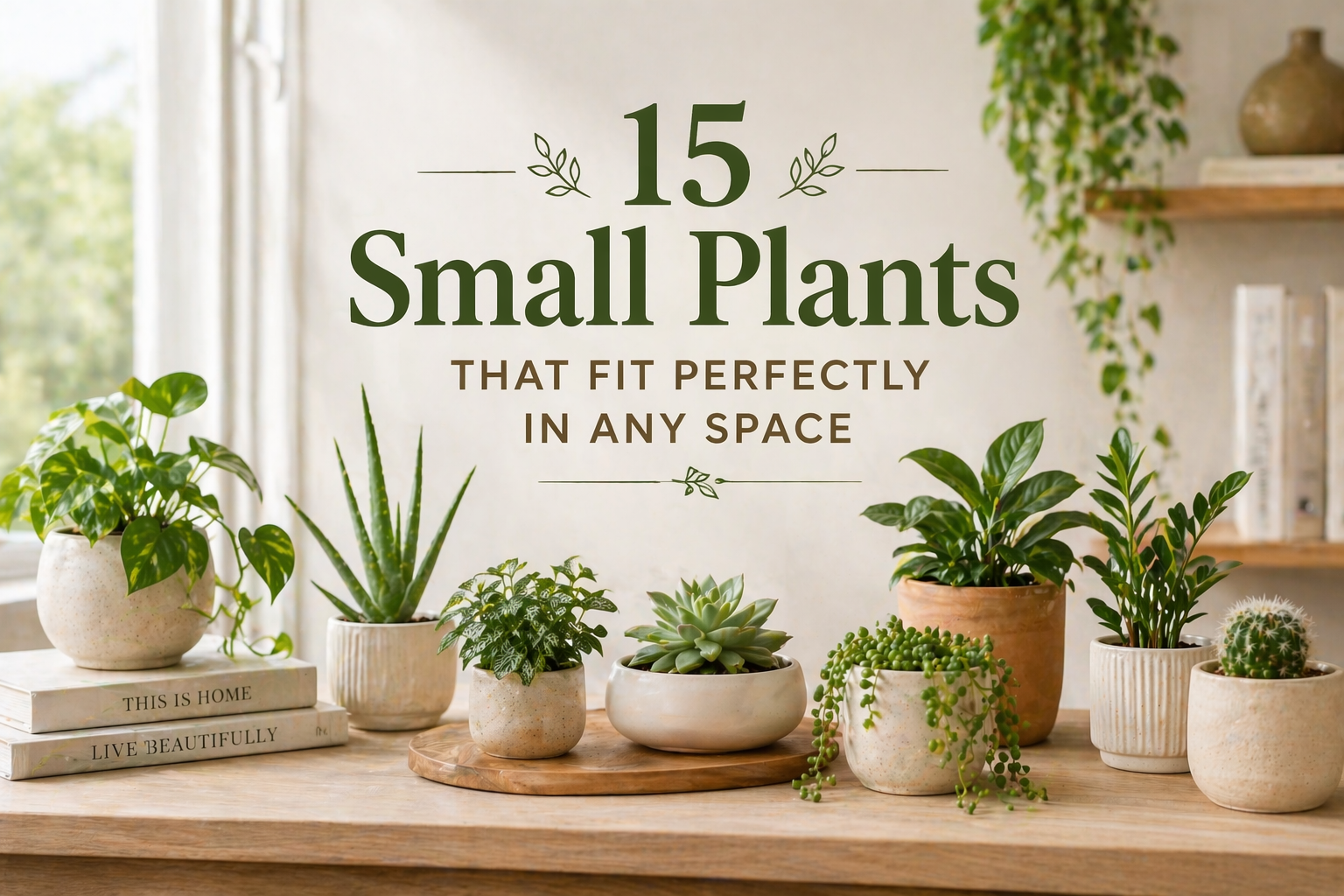
If you’ve been wanting to add greenery to your home but keep thinking, I just don’t have the room, you’re exactly who this post is for. Small shelves, narrow windowsills, crowded desks, tiny bedside tables, and apartment corners can make plant styling feel harder than it should. A lot of people end up giving up before they start because they assume plants only work in big, bright homes with lots of empty surfaces. That is simply not true. 15 small plants that fit perfectly in any space is really about finding the right scale, the right placement, and plants that make a room feel warmer without creating clutter.
What I personally love about small plants is that they do a lot with very little. A tiny pot on a bathroom shelf, a trailing plant on a bookcase, or a compact succulent near your kitchen sink can shift the whole mood of a room. These are the kinds of affordable decor updates that make a home feel more personal, more relaxed, and more alive. In this post, I’m sharing 15 realistic, beginner-friendly plant ideas that work in everyday homes and look genuinely good while doing it. If your space is small, awkward, or already full, these picks are where to start.
Tiny Pothos for Shelves That Feel Flat
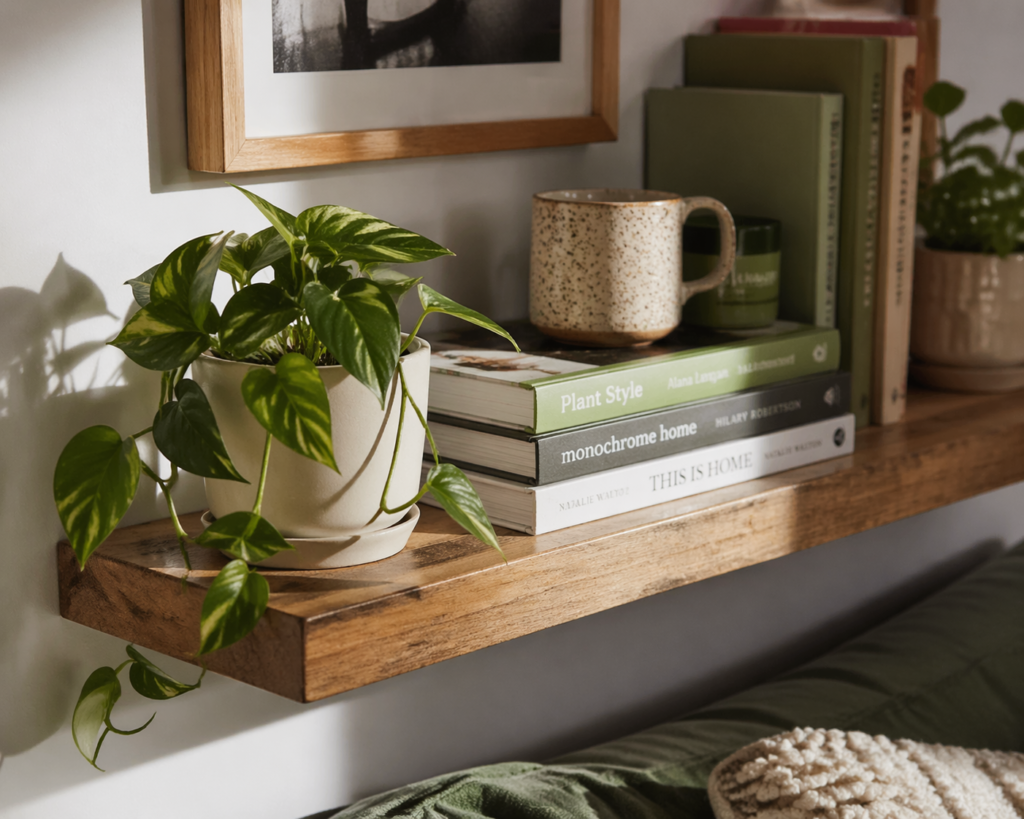
There’s something about a small pothos that makes a shelf look less stiff right away. Even a young plant with just a few trailing vines adds movement and softness, especially when it sits next to stacked books, a candle, or a framed photo. It makes a shelf feel lived in instead of overly arranged.
A 4-inch pothos is one of the easiest ways to bring greenery into tight spaces. Place it on a floating shelf, cabinet edge, or narrow bookcase where the vines have a little room to spill over. It does well in medium light and can handle lower light too. Water when the top inch of soil feels dry. Most small pothos plants cost around $8–$15. In my experience, the biggest mistake here is letting it grow too long without trimming, which can make it look sparse instead of full.
Peperomia for Desks and Side Tables
Peperomia is one of those plants that works quietly in the background but still makes a big difference. The leaves are compact, slightly textured, and neat enough for a desk, but they never feel boring. It brings that soft green touch without taking over your workspace.
This is a great option for a home office, bedside table, or apartment entry console. A small peperomia usually stays compact, which means you do not need to keep repotting it too often. Place it in bright to medium indirect light and water when the soil is mostly dry. Expect to spend around $10–$18. I always recommend this to anyone who asks me about a desk plant because it looks fresh without needing constant attention.
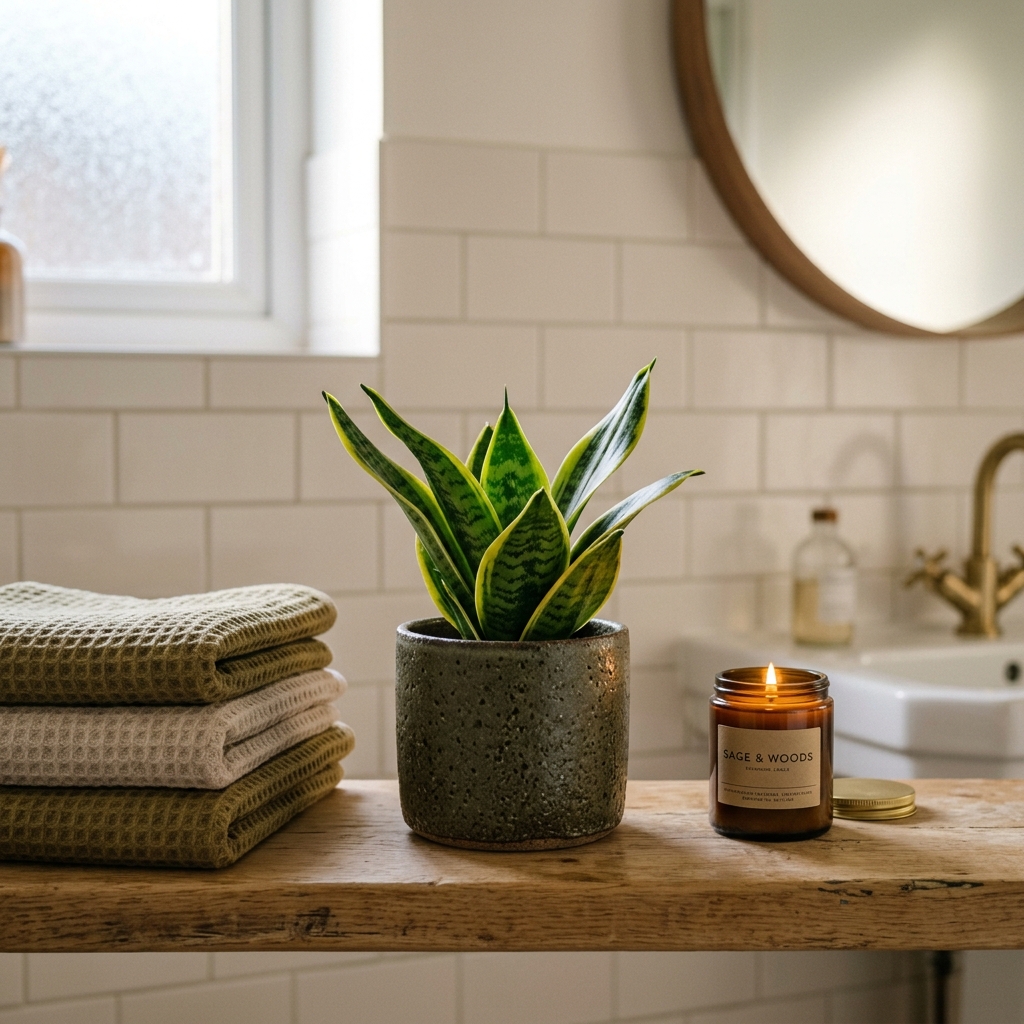
Mini Snake Plant for Narrow Corners
A mini snake plant has the same upright, clean look as the larger version, but it fits into tighter spots where a full-size floor plant would feel too heavy. It adds a little structure, which is useful when a room feels soft and needs something with shape.
Use a mini snake plant on a bathroom counter, windowsill, or narrow corner shelf. It does well in low to bright indirect light and only needs water every 2 to 3 weeks once the soil has dried out. A small one usually costs $8–$20. A lot of people skip checking the pot for drainage, but it makes all the difference with snake plants because soggy roots are the fastest way to ruin them.
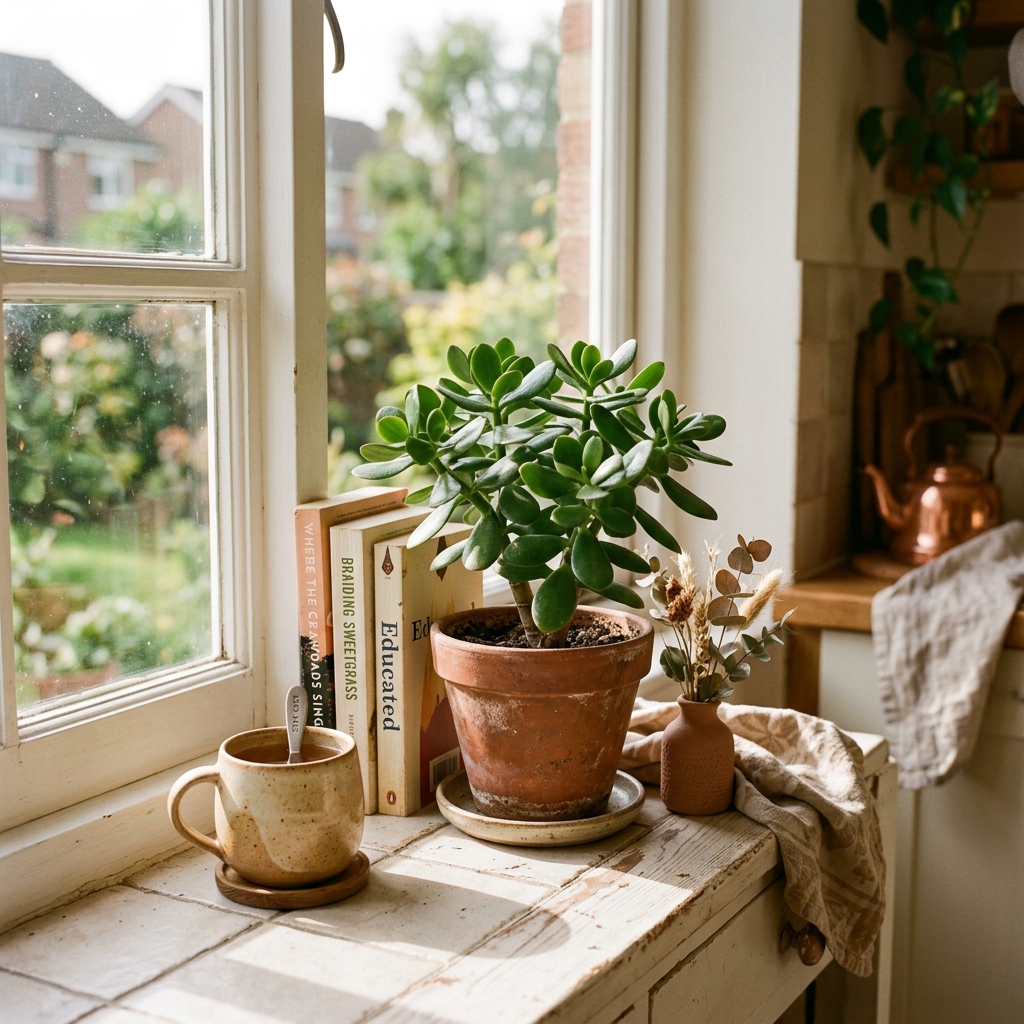
Jade Plant for Sunny Little Spots
Jade plants are sturdy, compact, and incredibly useful when you want a plant that looks tidy in a small area. The plump leaves catch the light beautifully, and the shape stays neat enough for desks, kitchen ledges, and small accent tables.
If you have one bright windowsill or a sunny kitchen corner, this is a smart pick. Use a pot with drainage, let the soil dry fully between waterings, and keep it in bright indirect light or gentle direct morning sun. Most small jade plants cost about $10–$20. What I personally love about this is that it looks expensive and sculptural without actually costing much. Tip: do not treat it like a thirsty tropical plant. Less water is better.
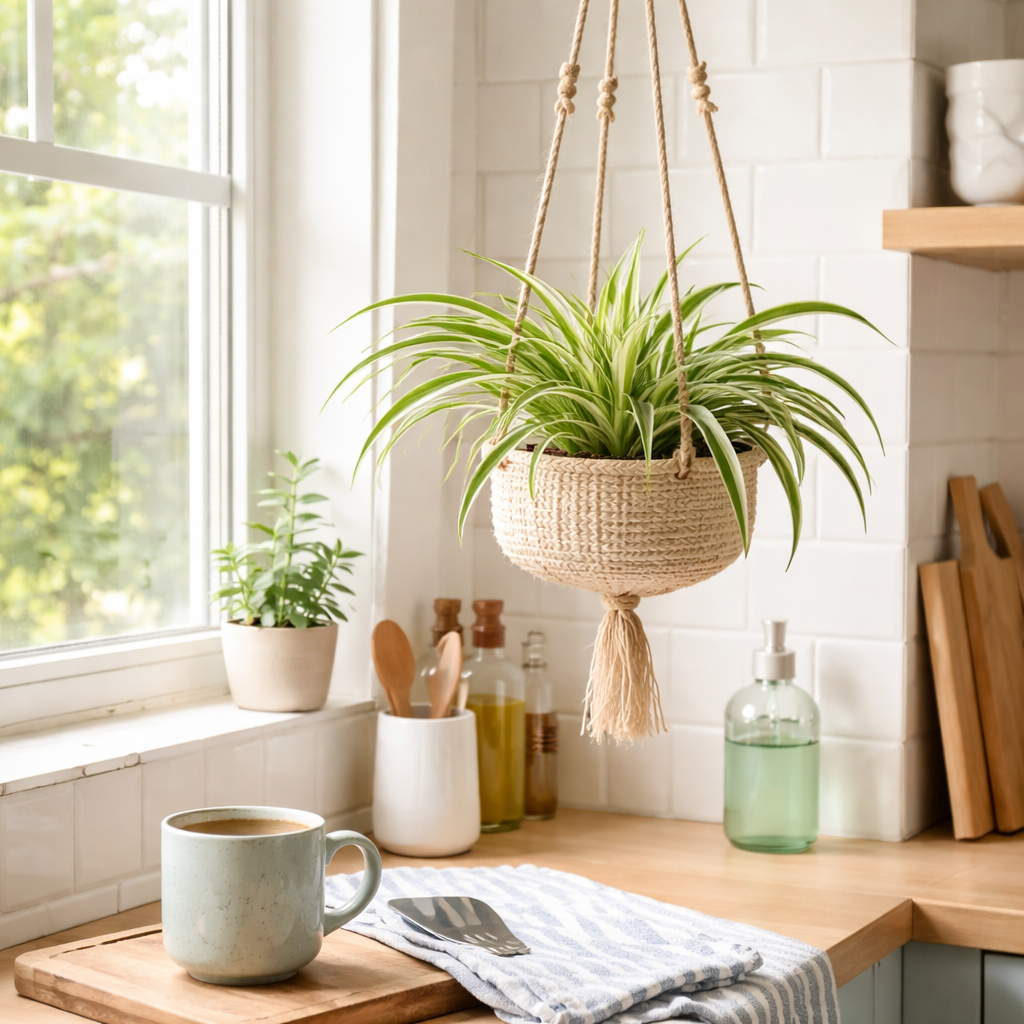
Spider Plant for Hanging in Small Rooms
A small spider plant can completely change the feel of a cramped room when you take it off the surface and hang it instead. The long, arching leaves add movement and make the room feel a little more layered, especially in kitchens, bathrooms, or studio apartments where flat surfaces are already crowded.
Hang it near a bright window or place it on a high shelf where the leaves can drape naturally. It likes bright to medium indirect light and needs watering about once a week, depending on heat and humidity. Small spider plants are often $8–$15. In my experience, the biggest mistake here is placing it in a dark corner and expecting it to stay full. It needs some decent light to keep that fresh shape.
Air Plant for Tiny Styling Moments
Air plants are perfect for those in-between spaces that feel unfinished but cannot handle a full pot. Think bathroom ledges, trays on a coffee table, a bookshelf nook, or a bedside stack of books. They add greenery without visual weight, which is why they work so well in small homes.
You do not need soil for these, but you do need a care routine. Soak them in water for about 20 to 30 minutes every week or two, then let them dry upside down before putting them back. Prices usually range from $5–$12. A lot of people skip this drying step, but it matters more than people realize because trapped moisture can cause rot.
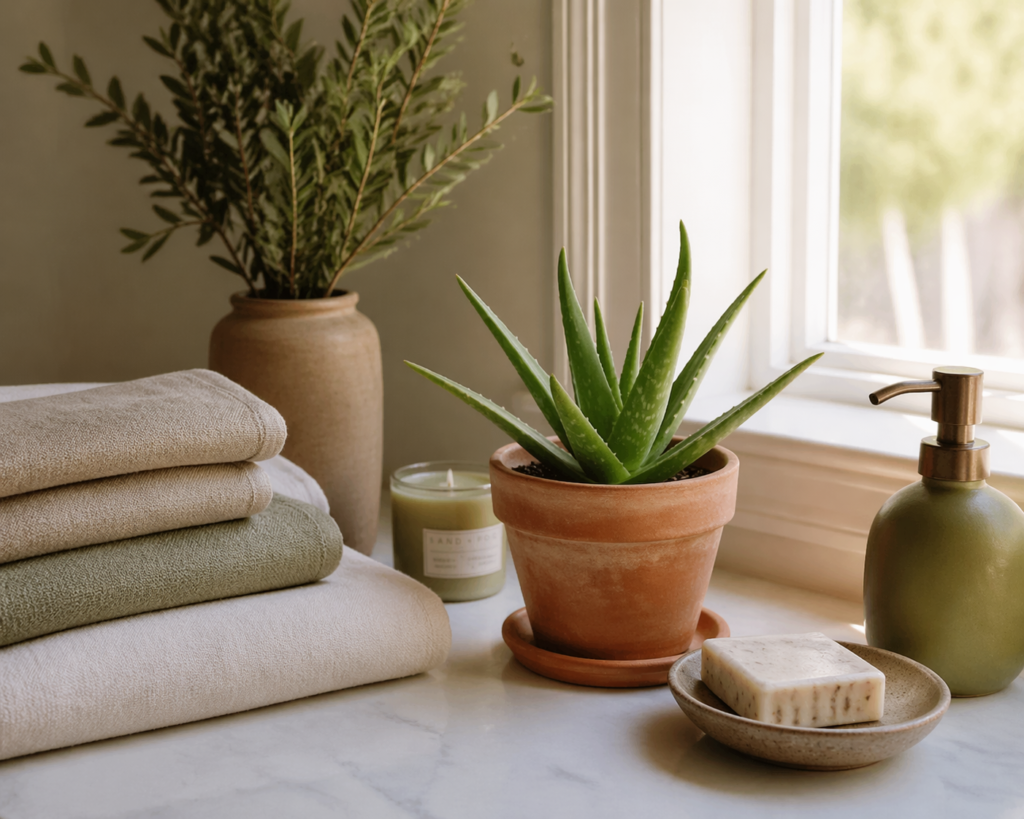
Mini Aloe Vera for Kitchen and Bathroom Styling
A small aloe vera plant has that clean, pointed shape that works beautifully in functional spaces. It is practical, compact, and just sharp enough in shape to break up softer decor like linen towels or rounded ceramics.
Place mini aloe in a sunny bathroom window, kitchen sill, or bright shelf. Use a terracotta pot if possible, and water only when the soil is fully dry. Most small aloe plants cost around $7–$15. I always recommend this to anyone who wants a low-fuss plant with a useful side benefit. Tip: avoid putting it in a dim room just because the pot is cute. It really does need light.
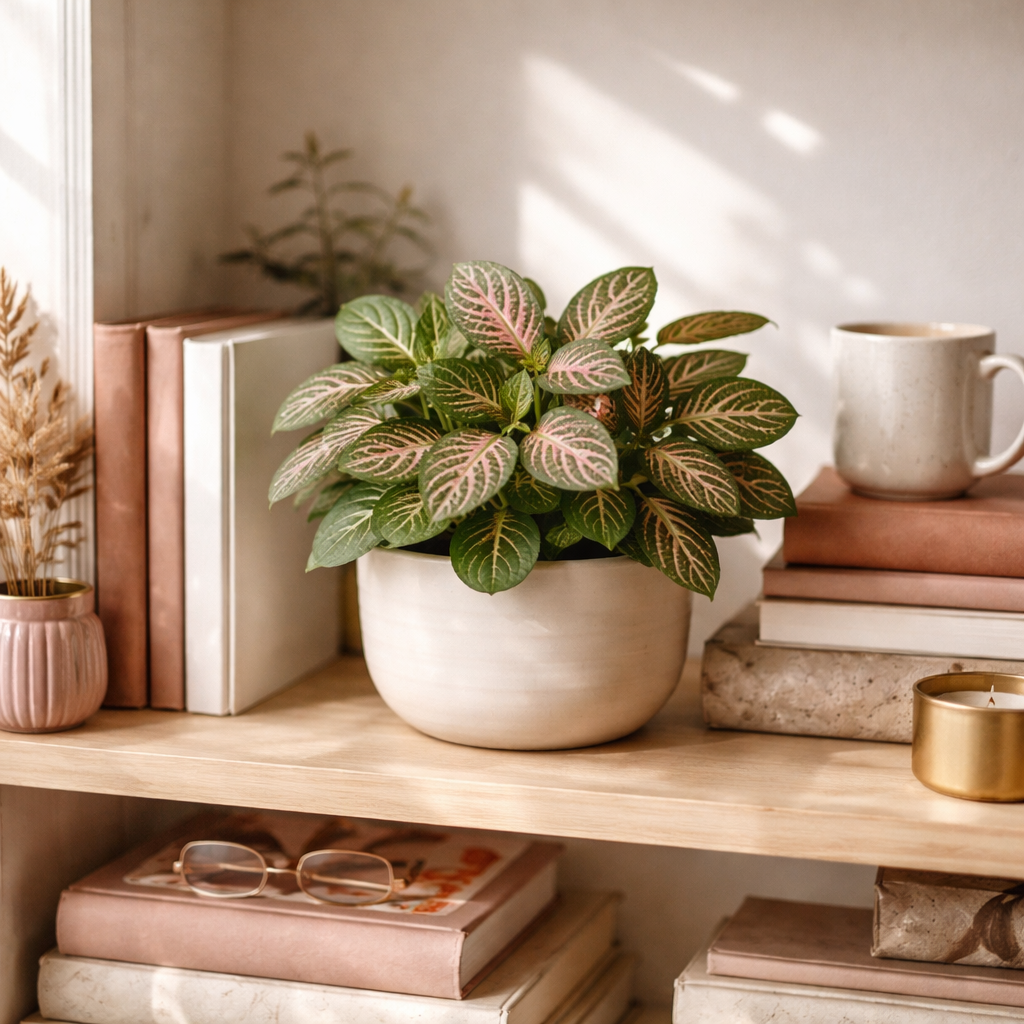
Fittonia for Color on Small Shelves
Fittonia, also called nerve plant, brings something a lot of small plants do not: color and pattern. The veined leaves in pink, white, or soft red add detail to shelves and side tables that otherwise feel a bit plain. It is especially good if your room needs a softer, more decorative touch.
This works well in bedrooms, offices, or styled shelf corners with medium indirect light. Keep the soil lightly moist and avoid letting it dry out completely. Small plants usually cost $8–$16. What I personally love about this is that it makes even a simple shelf setup look more layered. Tip: if it suddenly flops, it often just needs water and bounces back fast.
Baby ZZ Plant for Low-Light Spots
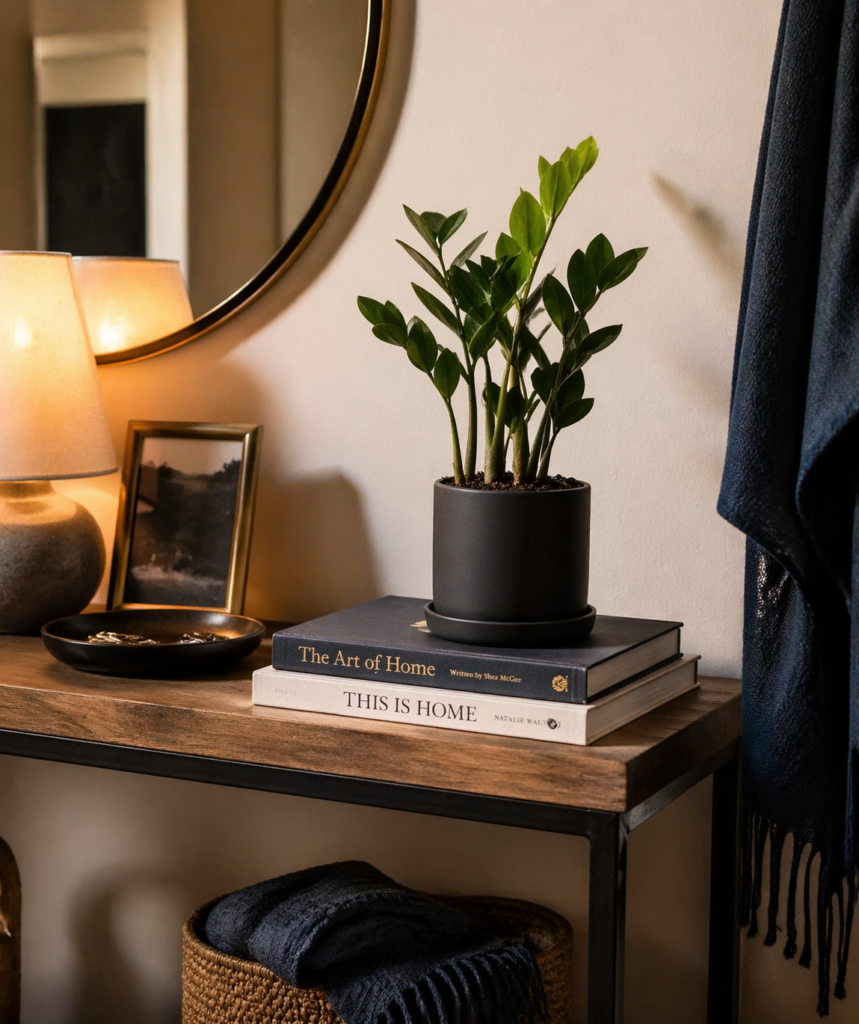
A baby ZZ plant is ideal when you want greenery in a room that does not get much sunlight. The glossy leaves reflect light, so even a small plant helps a darker shelf or entry table feel brighter and less forgotten.
Use it on a nightstand, entry console, or office shelf in low to medium indirect light. Water every 2 to 3 weeks only after the soil has dried out well. A small ZZ plant typically costs $10–$20. In my experience, the biggest mistake here is watering it out of habit. This one likes to be left alone more than people think.
Mini Peace Lily for Bedroom Calm
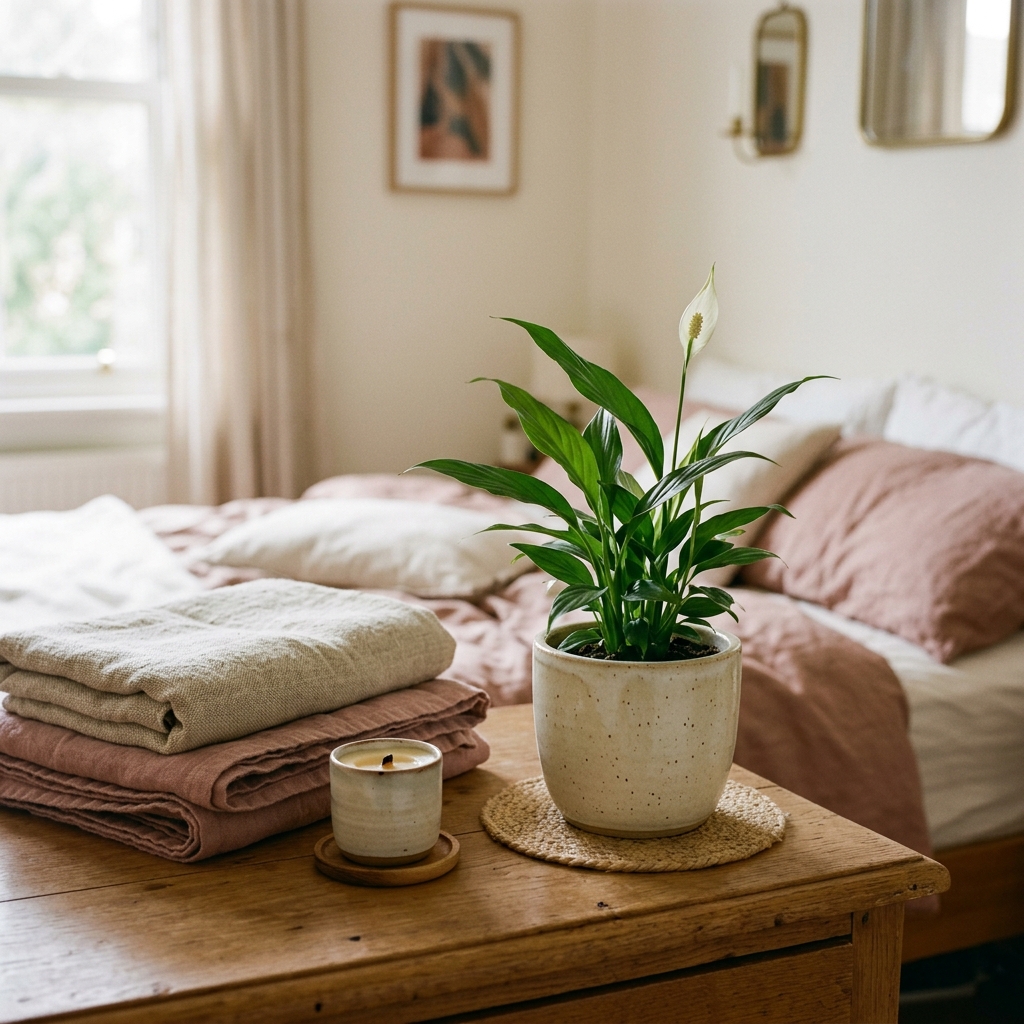
A mini peace lily has a softer look than many compact plants. The dark leaves and occasional white bloom make a bedside table or dresser feel fresher without looking busy. It gives that calm, quiet feeling that works especially well in bedrooms.
Keep it in medium to low indirect light and water when the top inch of soil starts to feel dry. A small peace lily usually costs around $10–$18. A lot of people like this plant because it clearly droops when thirsty, which makes it easier for beginners to read. Just do not ignore it for too long once it starts signaling.
Succulent Trio for Coffee Tables and Trays
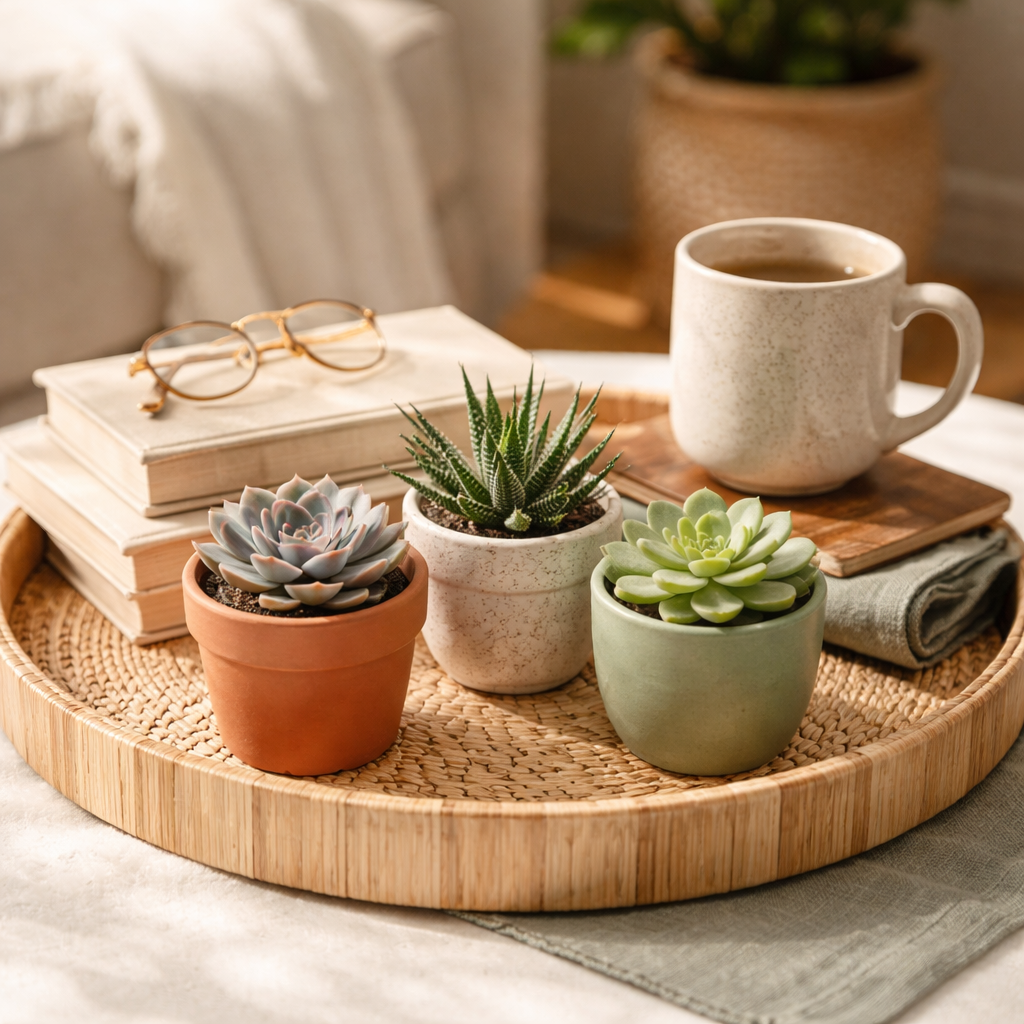
Sometimes one plant is not enough, but a large arrangement feels too bulky. That is where a small trio of succulents works so well. Grouped together on a tray, they add shape, color, and texture without taking up much room at all.
Use three small pots in slightly different heights or finishes for a relaxed look. Place them on a coffee table tray, kitchen shelf, or entry table in bright light. Water sparingly, usually every 2 to 3 weeks depending on the room. A trio can cost as little as $12–$25 total. A lot of people skip spacing them slightly apart, but that little gap keeps the setup from looking cramped.
Small Philodendron for Bookshelves
A compact philodendron has soft heart-shaped leaves that make a bookshelf feel more relaxed and less rigid. It is one of the easiest ways to break up rows of books and decor objects without adding something flashy.
Place it on a middle shelf where it gets medium indirect light and a little room to trail or spread. Water when the top inch of soil dries out. Small philodendrons usually cost $10–$18. I always recommend this to anyone who wants a bookshelf plant because it has a warm, easy look and does not feel stiff. Tip: rotate the pot every couple of weeks so it grows evenly.
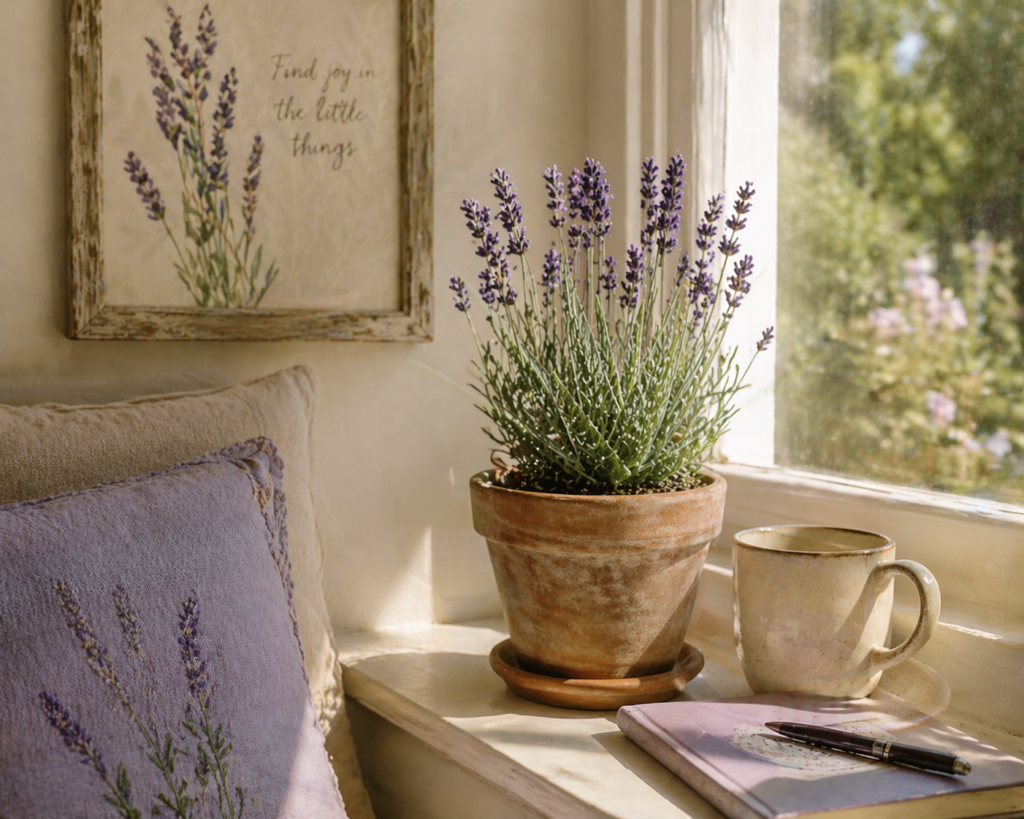
Lavender Pot for a Sunny Window Nook
If you have a bright little nook and want something that looks charming and smells good too, a small lavender pot can be a beautiful choice. It adds a slightly rustic, cozy feel and works especially well in kitchens or breakfast corners.
Lavender needs more sun than many of the other plants on this list, so only choose it if you truly have a bright window. Use a pot with drainage, keep the soil on the drier side, and avoid overwatering. Small lavender plants usually cost around $8–$16. In my experience, the biggest mistake here is placing it in low light just because it looks pretty. It will not stay happy there.
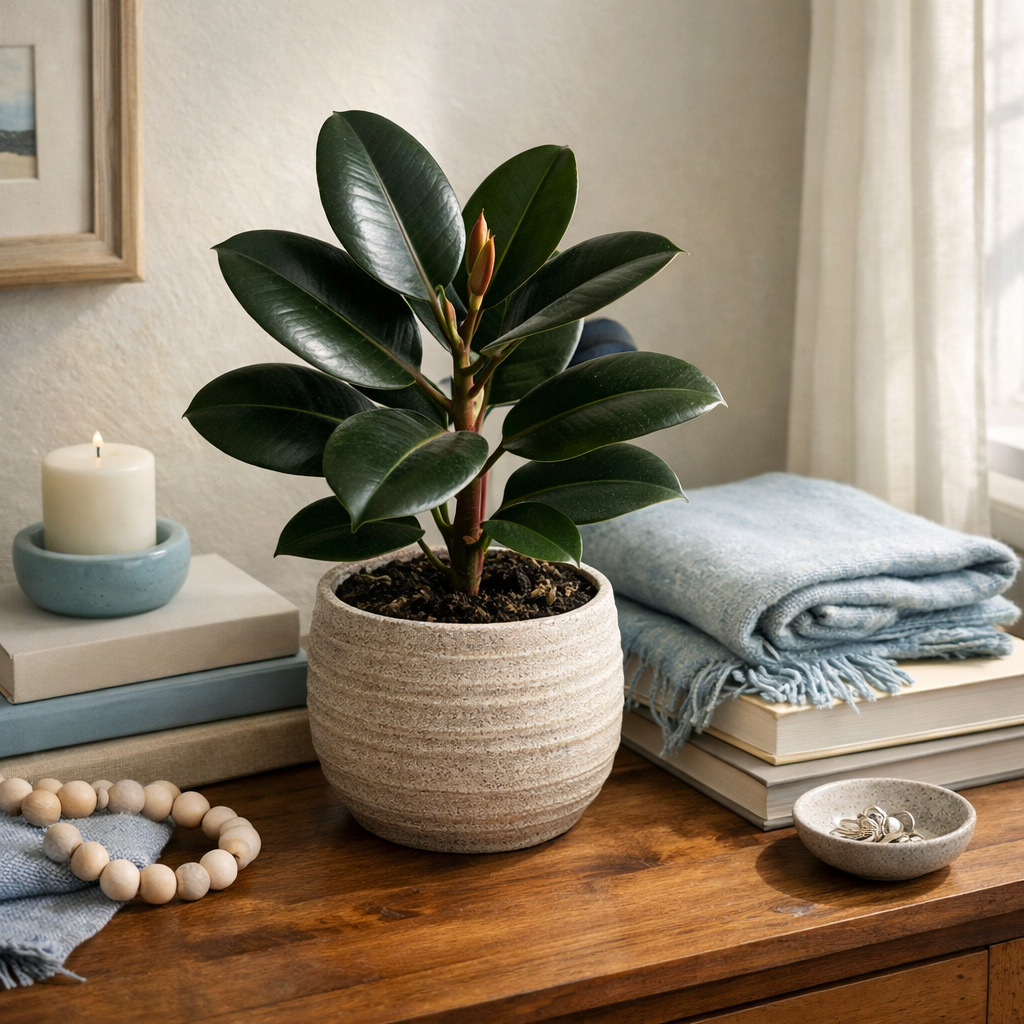
Mini Rubber Plant for a Fuller Look
A mini rubber plant is great when you want something with richer, darker leaves in a smaller footprint. It gives a room a little more visual weight without needing a big floor planter, which makes it perfect for consoles, dressers, or apartment corners.
Keep it in bright indirect light and water when the top part of the soil feels dry. Wipe the leaves now and then so they stay glossy and healthy. A small rubber plant usually costs $12–$22. What I personally love about this is how polished it looks even when the rest of the styling is simple. Tip: avoid cold drafts near windows or vents.
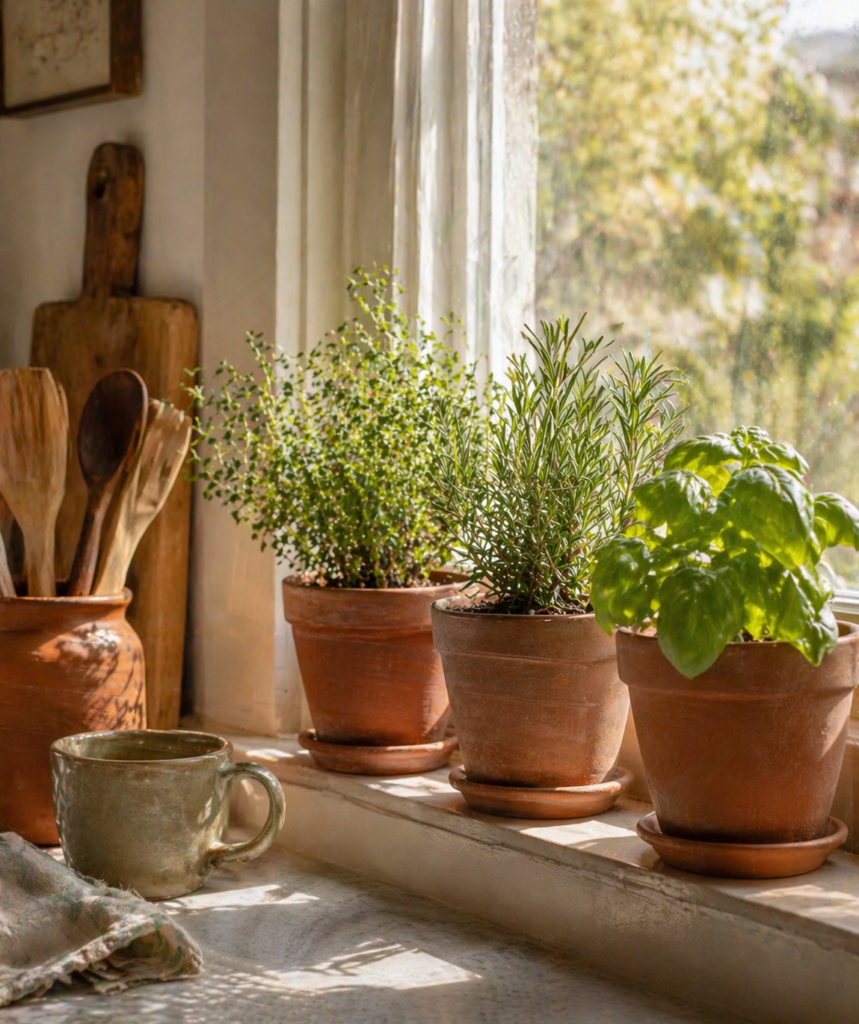
Herbs in Small Pots for Kitchen Warmth
Small herb pots are one of the most useful plant ideas for compact homes. Basil, mint, thyme, or rosemary on a kitchen sill add greenery, fragrance, and a little practical charm that feels real instead of overly decorative.
Use matching or loosely coordinated 4-inch pots and place them where they will get good light. Water based on the herb, but most like consistent moisture without soggy soil. You can start a small set for around $12–$25. A lot of people skip trimming herbs regularly, but frequent snipping actually keeps them fuller and healthier.
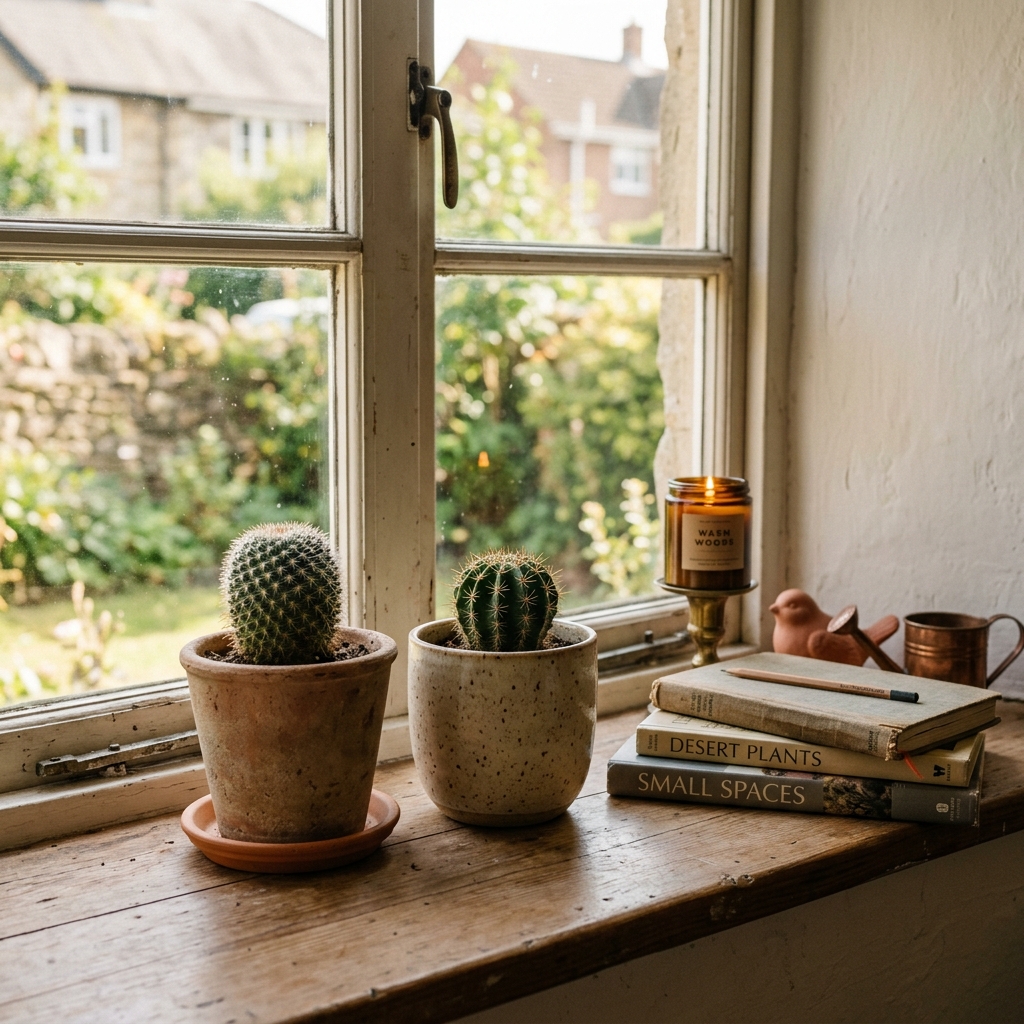
Cactus Pair for Tiny Nooks That Need Shape
A pair of small cacti can work beautifully in the smallest spots in the house. They are especially good for window ledges, bathroom shelves, or narrow side tables because they take up so little space while still adding strong shape and texture.
Choose two different cactus forms for contrast, such as one round and one upright. Keep them in bright light, use gritty soil, and water lightly only when the soil is fully dry. A pair often costs around $10–$18. I always recommend this to anyone who forgets to water, but the one thing to avoid is placing them in a dim room where they slowly stretch and lose shape.
Conclusion
The best thing about choosing small plants that fit perfectly in any space is that you do not need a huge home or a perfect setup to make them work. A stylish home is rarely about having more room. It is usually about noticing the little places that could use softness, color, and life. That might be a bookshelf corner, a bathroom ledge, a desk, or a sunny kitchen sill.
If you are new to plants, start with one or two that match your actual light and routine. A baby ZZ plant for a low-light table, a small pothos for a shelf, or a jade plant for a bright window can be enough to shift the feel of a room. These kinds of affordable decor updates make a home feel warmer and more personal without asking for a lot of space or money.
What I personally love about small plants is that they make decorating feel possible. They are easy to tuck in, easy to enjoy, and surprisingly good at making a room feel complete. Which of these ideas are you trying first? Drop it in the comments — I’d love to know.
What are the best small plants for beginners?
Some of the best small plants for beginners are pothos, peperomia, mini snake plant, jade plant, and baby ZZ plant. These tend to be forgiving, easy to find, and not too expensive if you are just getting started. In my experience, the easiest choice depends less on the plant itself and more on whether it matches your lighting. Always choose based on your space first.
Where should I put small plants in a tiny home?
Small plants work well on floating shelves, windowsills, desks, bathroom counters, bedside tables, and bookcases. Hanging planters are also a smart option when surfaces are limited. A lot of people forget vertical space, but it makes all the difference in apartments and smaller rooms. Even one tiny plant in the right spot can change the mood of a room.
Do small indoor plants need less care than large ones?
Not always, but they are often easier to manage because they take up less space and are simpler to move around as you learn what works. The main thing to watch is that smaller pots can dry out faster than large ones, especially in bright windows. That said, many of the plants on this list are chosen because they are genuinely low-fuss. Care depends more on plant type than on plant size alone.
Which small plants work best in low light?
Baby ZZ plants, mini snake plants, pothos, small peace lilies, and some philodendrons tend to handle low light better than others. They are good for bedrooms, hallways, and office shelves that do not get strong sun. Just remember that low light does not mean no light at all. Even easy plants still need some indirect light to stay healthy.
How many small plants should I use in one room?
For most rooms, one to three small plants is enough to make a visible difference without creating clutter. On a desk or bedside table, one compact plant often works best. On a bookshelf or coffee table tray, two or three grouped thoughtfully can look really good. I always recommend starting small, then adding more only if the room still feels like it needs it.