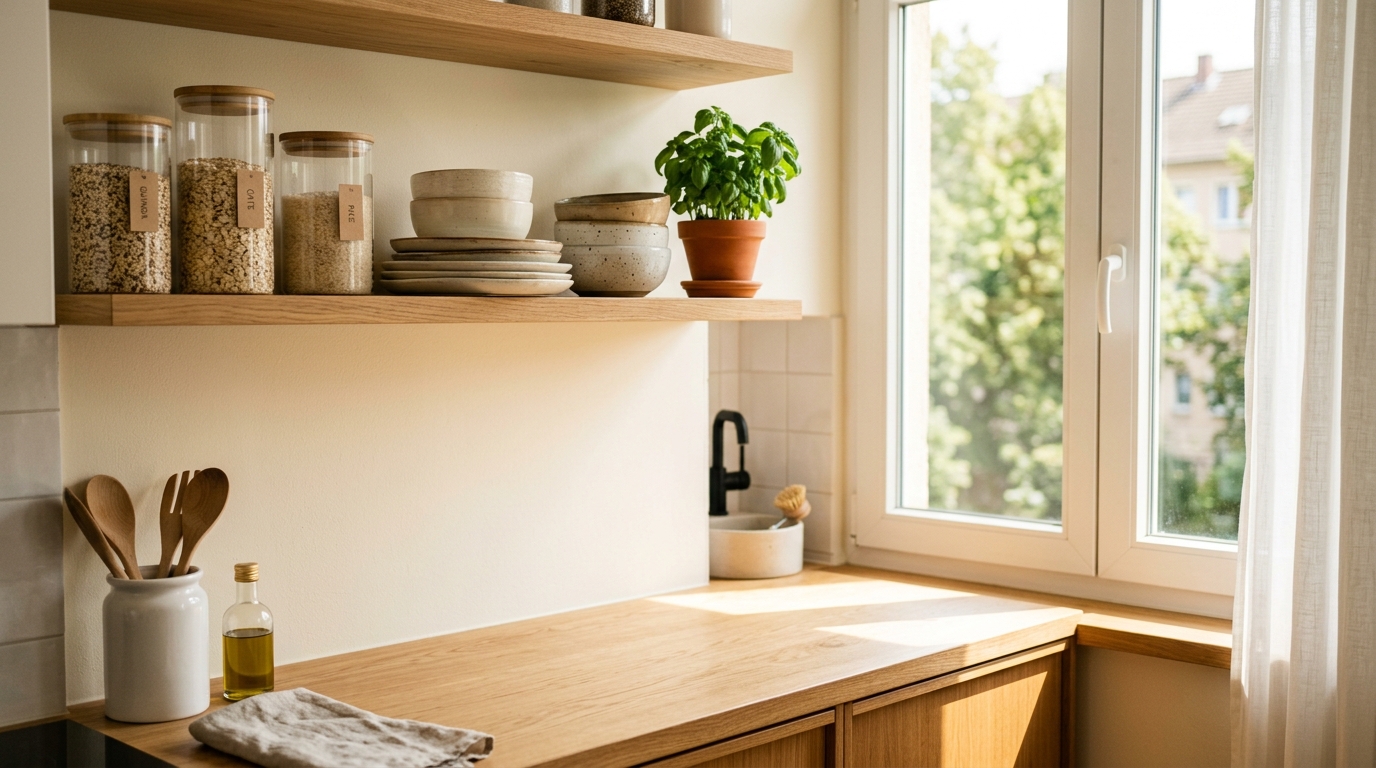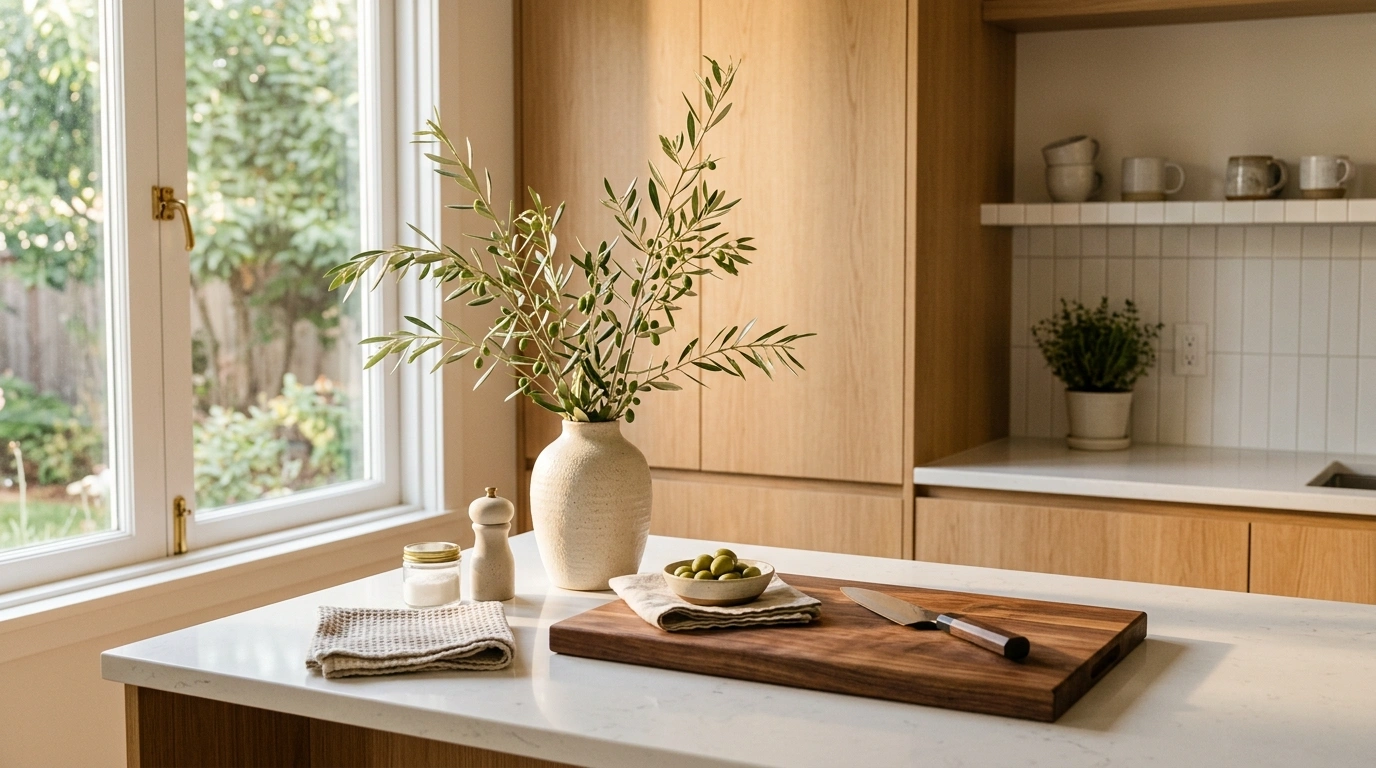
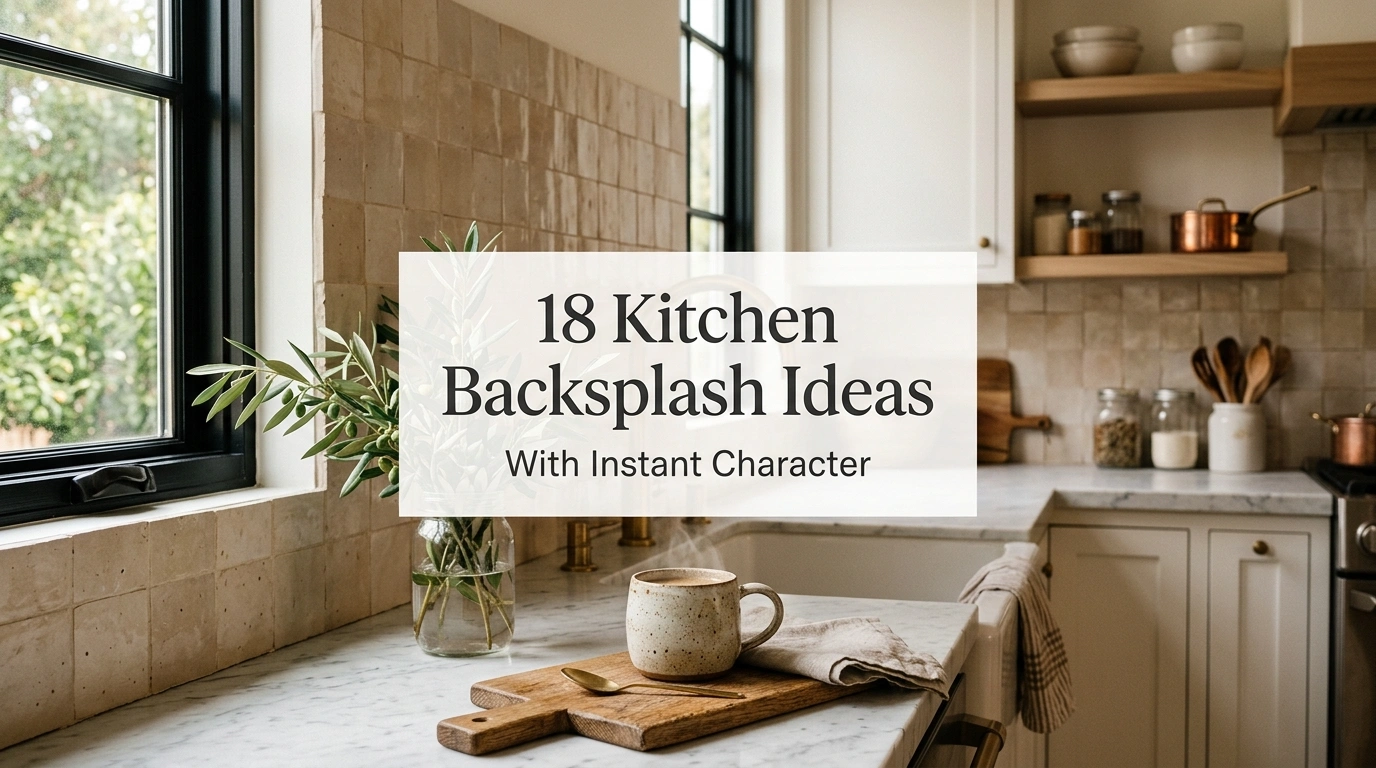
Is your kitchen starting to feel a little too quiet, sterile, or just plain boring? It is a very common issue: you build a beautiful, highly functional cooking space with clean white cabinets and polished countertops, but when you step back, it lacks a heartbeat. It lacks that lived-in, cozy warmth that makes you want to linger over your morning coffee. In my experience, the biggest mistake people make is treating the kitchen purely as a laboratory for food instead of a room meant for living.
The easiest, most high-impact way to fix this problem is right at eye level: your kitchen backsplash. Choosing the right kitchen backsplash ideas can completely change the mood of your home, turning a standard build into a space rich with texture, history, and personal charm. You do not need a massive budget or a full-scale demolition to bring life back into your kitchen. By focusing on tactile finishes, interesting tile patterns, and earthy tones, you can make simple materials look intentional and expensive. In this guide, we are going to walk through 18 creative, character-filled kitchen backsplash ideas that actually work for real, everyday life. You will learn exactly how to choose materials that wear well, how to pair grout colors, and how to avoid the common styling mistakes that make beautiful tile look cold.
1. Handcrafted Zellige Tiles for Organic Texture
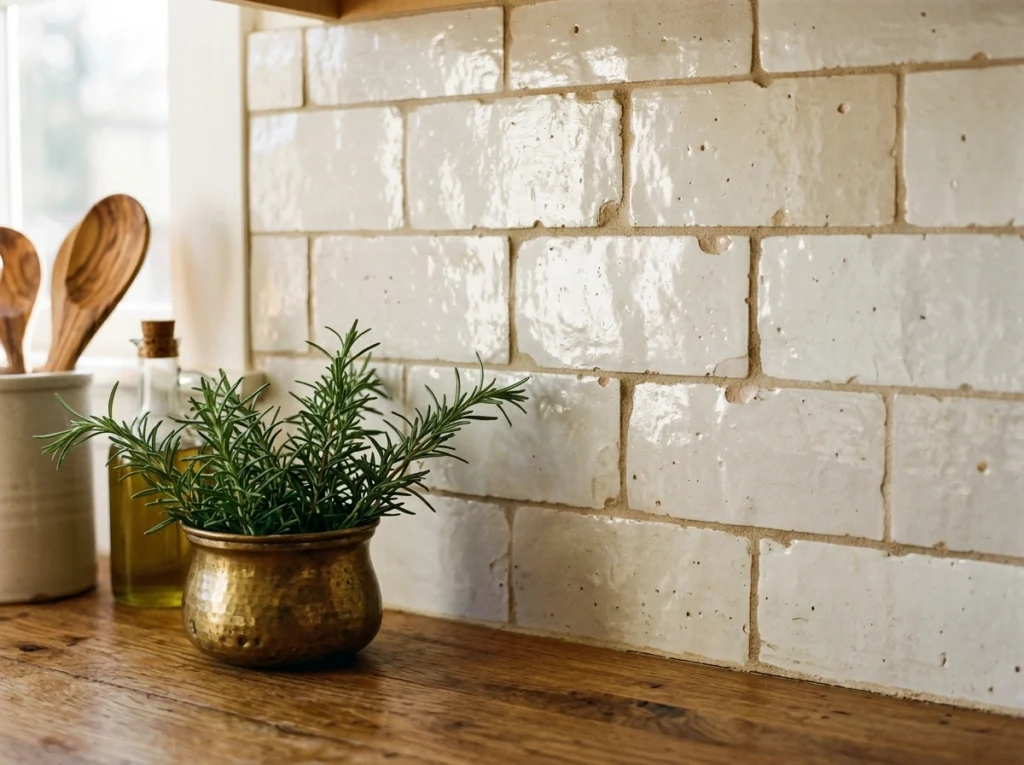
What I personally love about this look is how the light hits the uneven, glazed surface of each tile. Zellige tiles are handmade clay tiles from Morocco, meaning no two pieces are exactly the same thickness, shape, or color. This natural imperfection creates a beautiful, rippling texture across your wall that catches the afternoon sun and makes a modern kitchen feel instantly grounded and warm. It feels earthy, cozy, and incredibly high-end without looking like you are trying too hard.
To recreate this, I always recommend starting with a soft, warm white or a pale olive green zellige tile. Because the edges are naturally uneven, you must install them as close together as possible without traditional tile spacers, using a very thin grout line. Avoid bright white grout; instead, opt for a soft gray or warm beige to highlight the natural variations. Expect to pay around $15 to $35 per square foot for authentic tiles, though ceramic lookalikes are available if you are on a tight budget.
2. Vertically Stacked Subway Tile for Subtle Modern Height
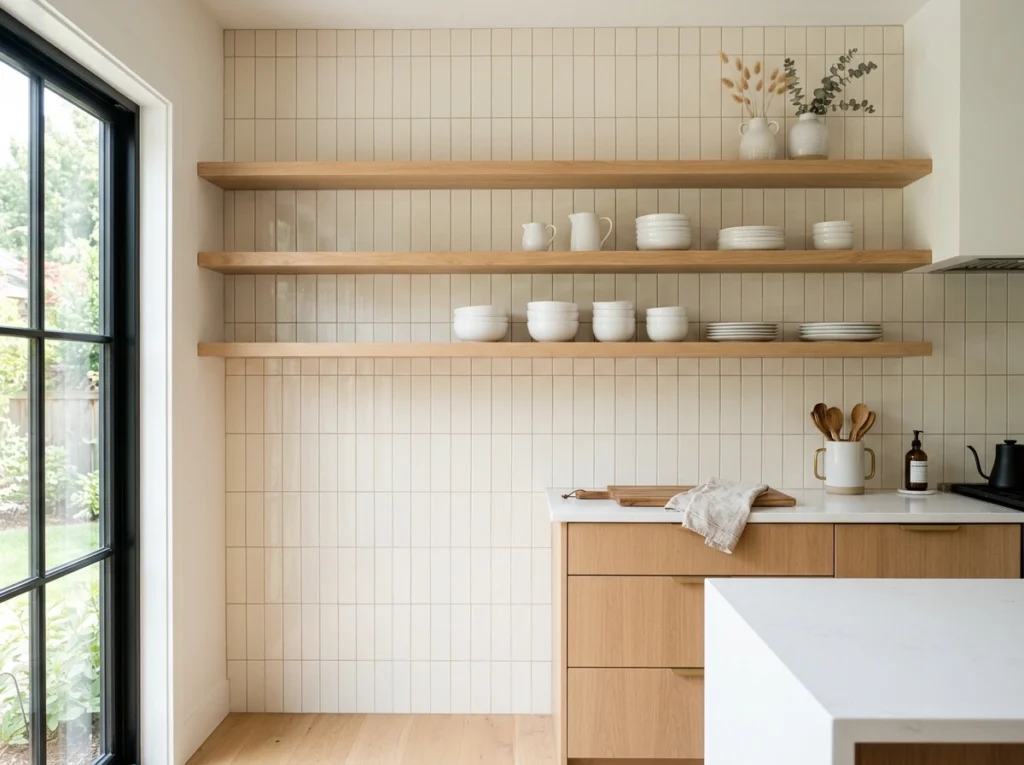
A lot of people overlook this detail, but simply turning a standard, affordable subway tile on its end completely changes the entire room. Instead of the traditional horizontal running bond pattern, stacking these tiles vertically draws the eye upward, making low kitchen ceilings feel much higher and airier. It has a clean, structured appearance that feels modern and organized, yet it retains a quiet warmth when you pair it with the right cabinetry.
When installing vertical stacked tile, choose a tile with a slightly wavy edge or a handmade texture to prevent the vertical pattern from looking too clinical or cold. Pair a soft cream or muted sage tile with a matching grout color for a seamless, calming background. This is a very budget-friendly project, typically costing between $3 to $8 per square foot, making it an excellent option for quick weekend DIY projects.
3. Warm Terracotta Brick for a Lived-In European Kitchen
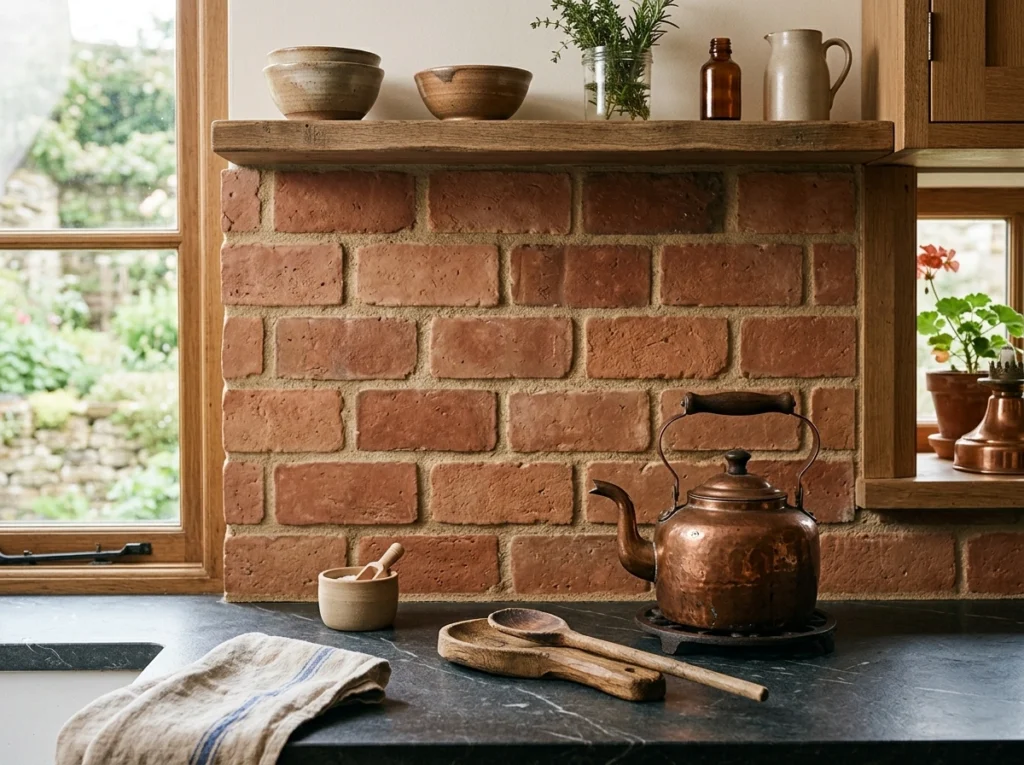
If you want your kitchen to feel like a cozy, sun-drenched cottage in the European countryside, warm terracotta brick tiles are unmatched. They bring an immediate sense of history, grounding raw wood open shelving and contrasting beautifully with painted cabinets. The deep, dusty orange and reddish tones feel incredibly welcoming, transforming a cold white cooking space into the most inviting room in the house.
For practical kitchen use, raw terracotta is highly porous, so the biggest mistake people make is failing to seal it properly before and after grouting. I always recommend using a high-quality, matte-finish penetrating sealer to protect the brick from oil and tomato sauce splatters without making it look unnaturally shiny. Pair these rustic tiles with brass hardware and warm wood tones to complete the look. Expect to spend $8 to $20 per square foot.
4. Solid Stone Slab Backsplash for Clean Drama
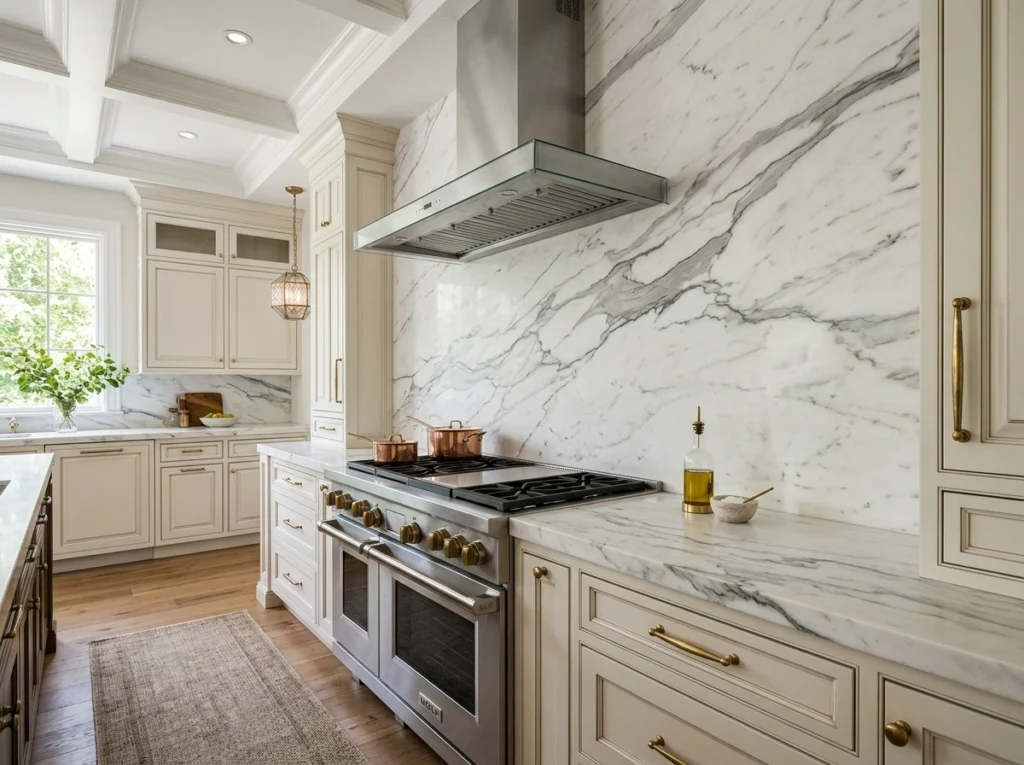
This works especially well if you want your kitchen to look put together and expensive without cluttering the walls with busy grout lines. Carrying your countertop material—such as a beautifully veined marble, soapstone, or quartz—straight up the wall to the underside of your cabinets or shelves creates a continuous, uninterrupted visual flow. It feels exceptionally clean, strong, and highlights the natural, sweeping patterns of the stone as a work of art.
If you choose a heavily veined stone like Calacatta marble or dramatic black soapstone, keep your surrounding shelves and countertops relatively clear of clutter to let the stone be the star. The biggest installation trick here is ensuring your fabricator matches the veining patterns seamlessly at the seam where the countertop meets the wall. This is a premium choice, often costing $50 to $120+ per square foot installed, but it offers a massive return in visual impact.
5. Hand-Painted Cement Tiles for Graphic Charm
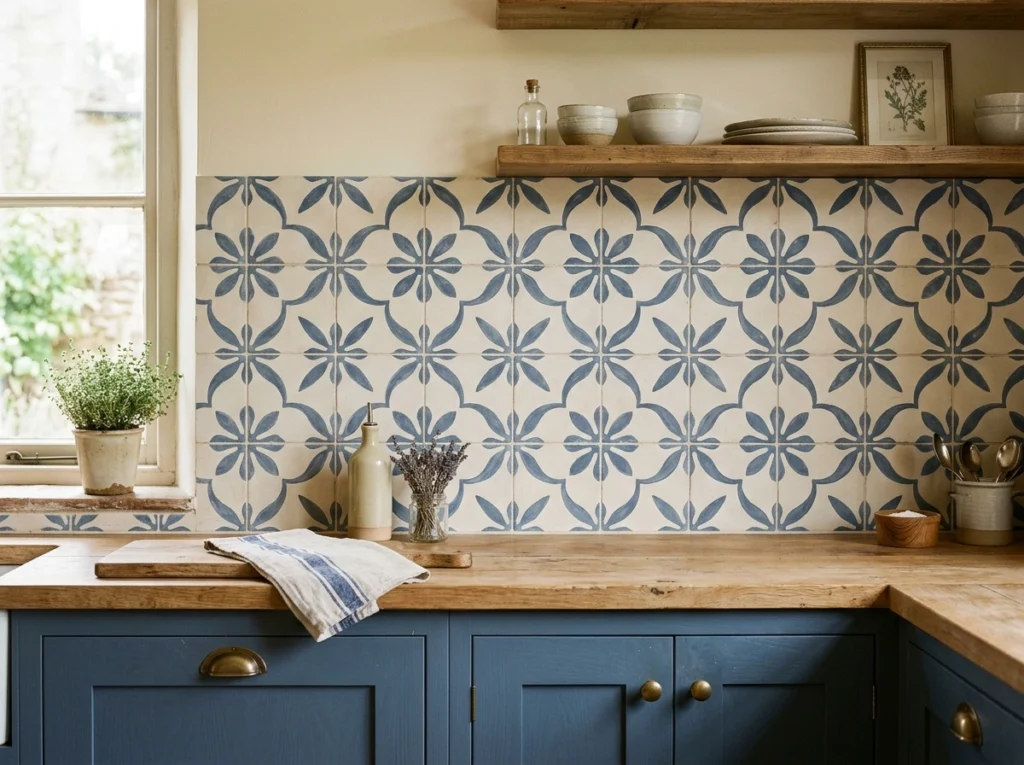
If your kitchen feels a bit lifeless and needs a strong injection of pattern, hand-painted cement tiles are an incredible choice. They carry a soft, matte finish that looks velvety and rich under kitchen lighting, avoiding the harsh glare of high-gloss tiles. The intricate, geometric, or floral patterns offer a vintage, worldly feel that makes your kitchen look like it has evolved naturally over decades.
Because cement tiles are thick and heavy, make sure your wall substrate is sturdy enough to hold them, and always use a professional sealer to protect the matte surface from grease stains. Keep your cabinetry colors simple and pulled directly from the tile’s pattern—such as a dusty navy, muted charcoal, or warm cream—to keep the space looking cohesive rather than chaotic. These tiles typically range from $12 to $25 per square foot.
6. Elegant Herringbone Pattern in Muted Tones
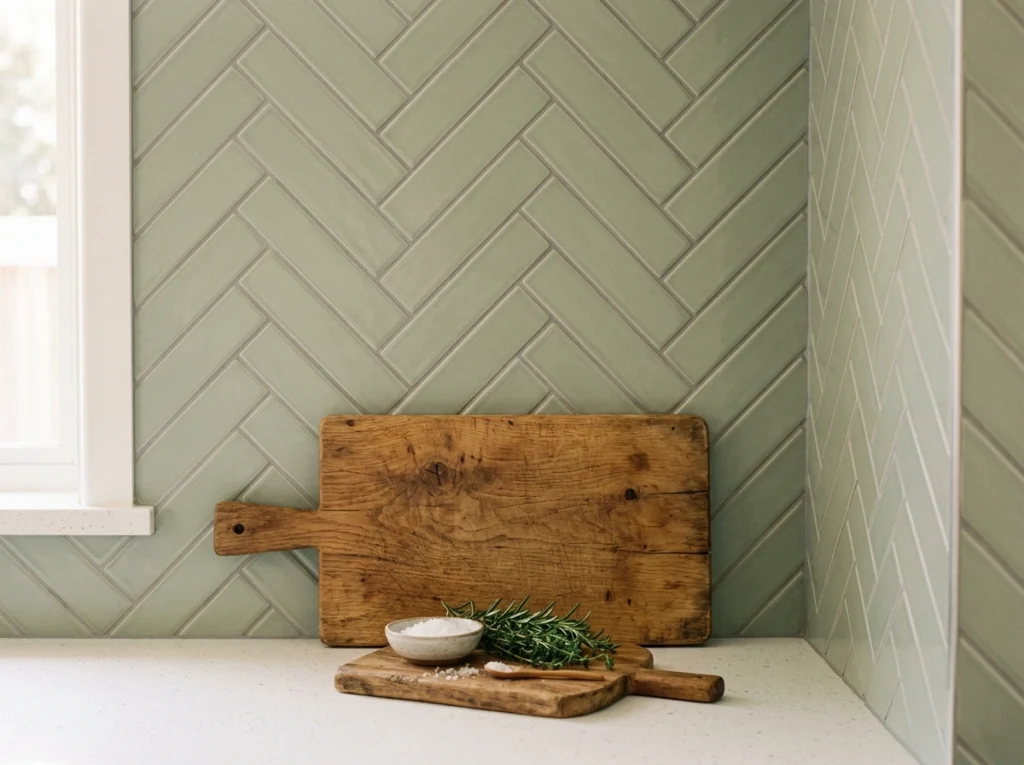
What makes this idea so reliable is how it elevates a standard, affordable rectangular tile into something highly decorative and dynamic. By laying the tiles at a precise 45-degree angle to create a V-shaped pattern, you introduce a subtle sense of movement across your kitchen walls. It catches the light beautifully and adds a layer of quiet sophistication without demanding too much visual attention.
To keep this looking modern and soft rather than busy, I suggest using a tile and a grout color that are very similar in tone—like a soft gray tile with a light silver grout. If the contrast between the tile and the grout is too high, the herringbone pattern can become visually overwhelming and tiring to look at every day. You can easily achieve this look using standard $4-per-square-foot ceramic tiles, making it highly cost-effective.
7. Moody Charcoal Beadboard for Historic Character
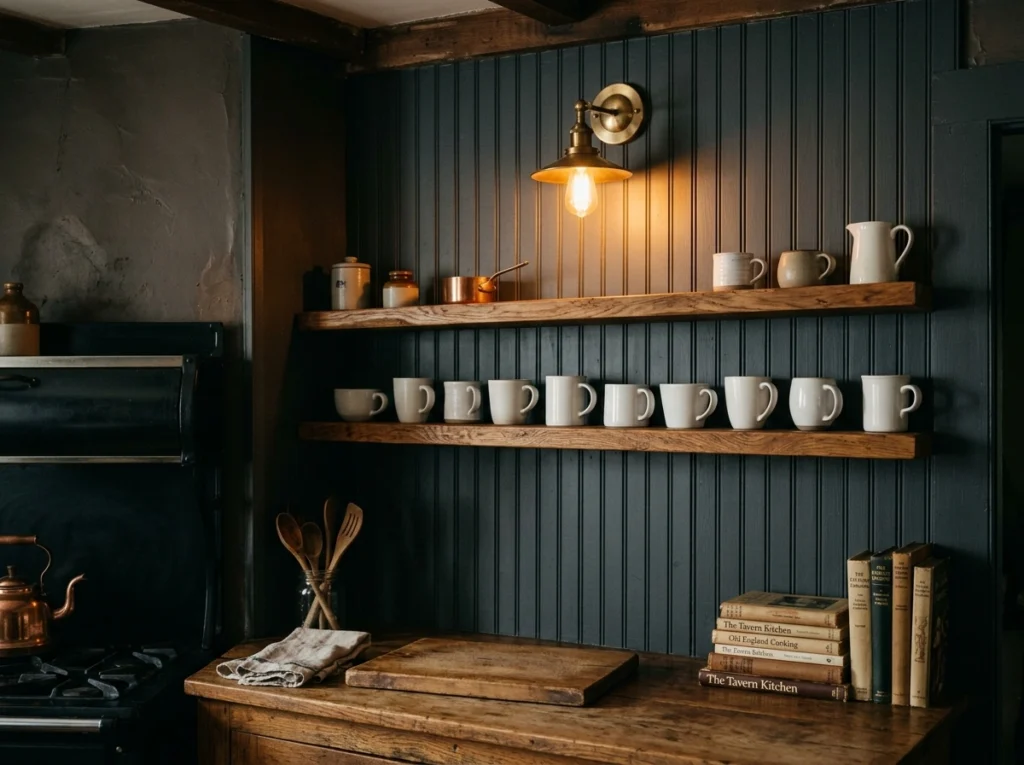
A lot of people automatically assume a backsplash has to be made of stone or ceramic, but wood beadboard is an incredibly cozy, historically rich alternative. Painted in a deep, moody charcoal, forest green, or dark navy, beadboard panels bring a soft, vertical texture that instantly makes a kitchen feel like an intimate, historic tavern or a cozy coastal cabin. It is a brilliant way to add depth to light-colored cabinets.
The secret to making wood beadboard work behind a sink or stove is using a high-quality tongue-and-groove paneling rather than thin MDF sheets, and finishing it with a durable, water-resistant semi-gloss or satin paint. This makes it incredibly easy to wipe down after cooking. This is a highly accessible project for beginner DIYers, with materials costing as little as $2 to $5 per square foot.
8. Polished Brass or Copper Sheets for Warm Metallic Glow
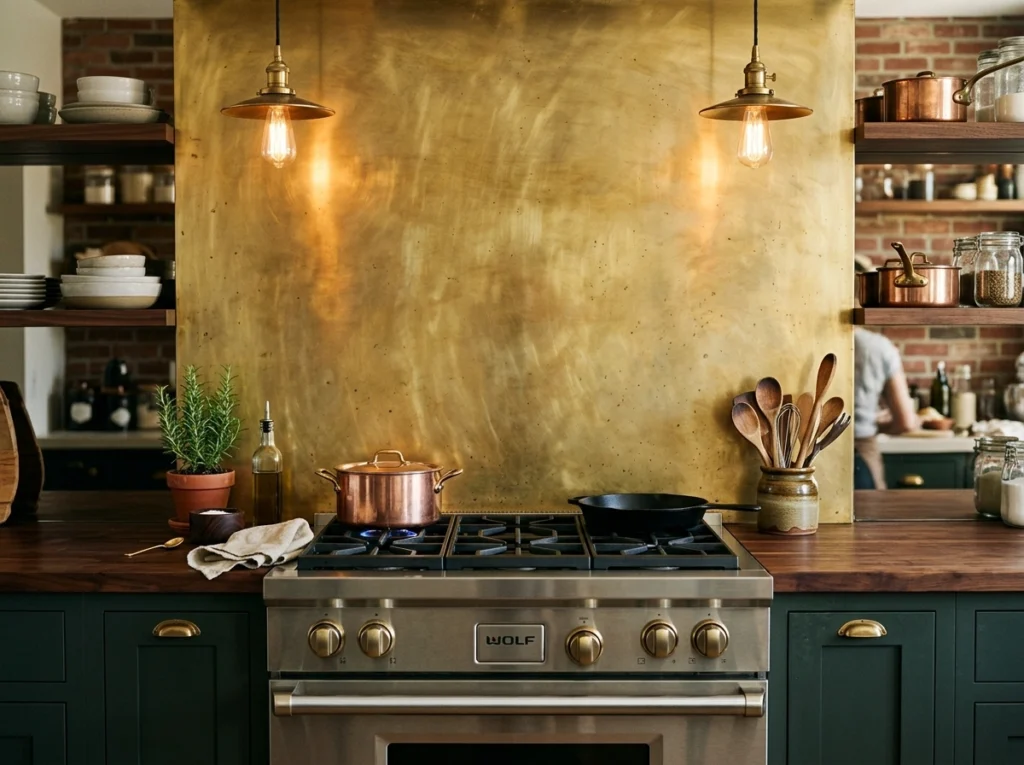
If your kitchen lacks natural light, a solid sheet of unlacquered brass or copper behind your stove can work absolute wonders. It reflects warm, golden light back into the room, creating an incredibly cozy, glowing atmosphere as you prep dinner. Over time, the raw metal will develop a beautiful, natural patina from heat and air, giving your kitchen an authentic, hard-working culinary feel.
When installing sheet metal, you can order custom-cut sheets online or from a local metal fabricator and mount them directly to the drywall using strong construction adhesive. If you prefer to keep the metal looking bright and polished rather than aged, you will need to clean it regularly with a mild metal polish. This unique design element generally costs between $20 to $50 per square foot depending on the metal thickness.
9. Terrazzo Tiles for Playful, Mid-Century Texture
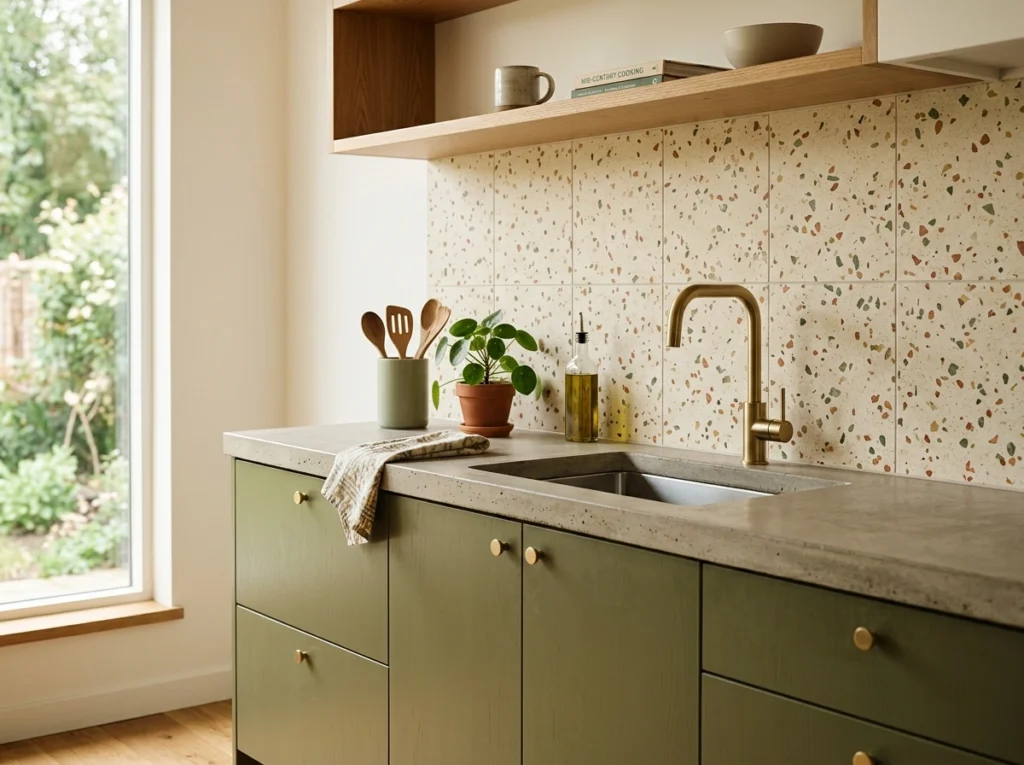
Terrazzo, with its characteristic flecks of marble, quartz, and granite set in cement, is a phenomenal way to introduce multiple colors into your kitchen in a very organic way. It has a beautiful, speckled appearance that feels artistic, cheerful, and full of texture. Because it contains several different shades, it acts as a perfect visual bridge to tie together your cabinetry, countertops, and flooring colors.
When styling terrazzo, choose a tile with a warm beige or cream background and soft, muted flecks of sage green, terracotta, or ochre. This keeps the look feeling grounded and sophisticated rather than reminiscent of a vintage school floor. Use a matching neutral grout so the individual tiles blend into one continuous, colorful surface. Quality terrazzo tiles typically cost between $10 to $25 per square foot.
10. Classic Square Tiles with Contrast Grout
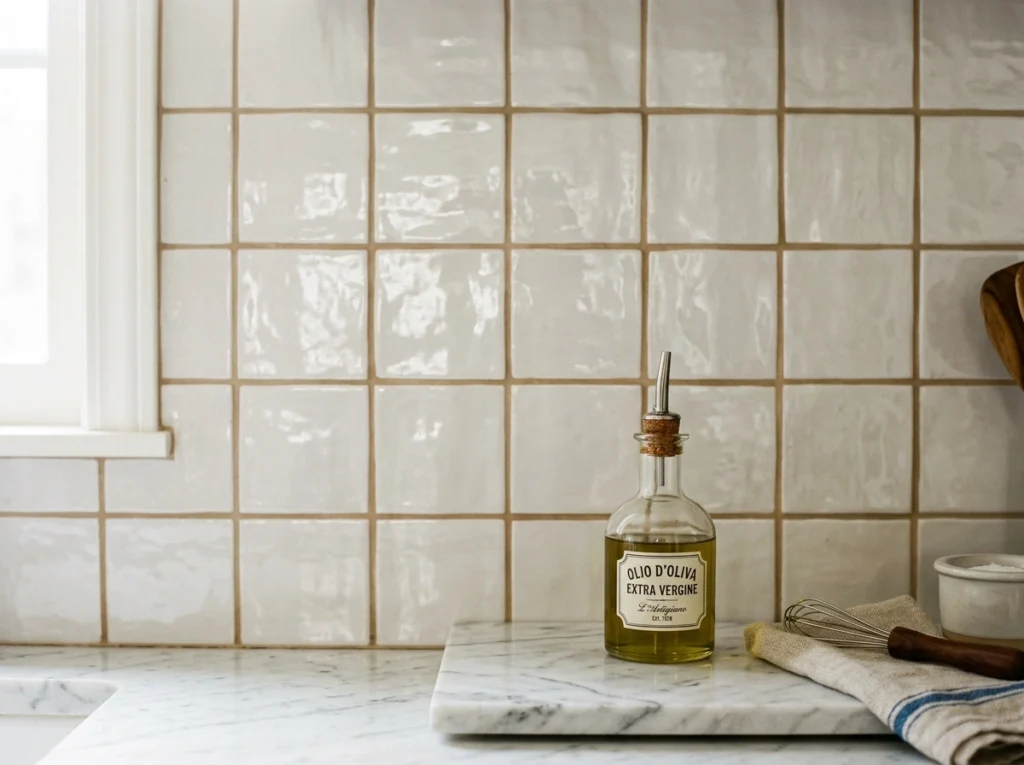
There is something beautifully nostalgic and honest about simple, square ceramic tiles. Before the subway tile trend took over, square tiles were the standard in mid-century homes and traditional European bistros. When installed with a slightly contrasting grout, they create a crisp, graphic grid pattern that feels incredibly charming, clean, and unpretentious.
To make this look intentional rather than dated, avoid basic, flat-surfaced contractor-grade white tiles. Instead, look for a square ceramic tile with a slightly uneven, glazed surface that reflects light beautifully. Pair a soft off-white tile with a warm taupe or light gray grout to define the grid line without making it look too harsh. This is incredibly budget-friendly, often costing under $5 per square foot.
11. Rustic Reclaimed Wood for Warm Texture
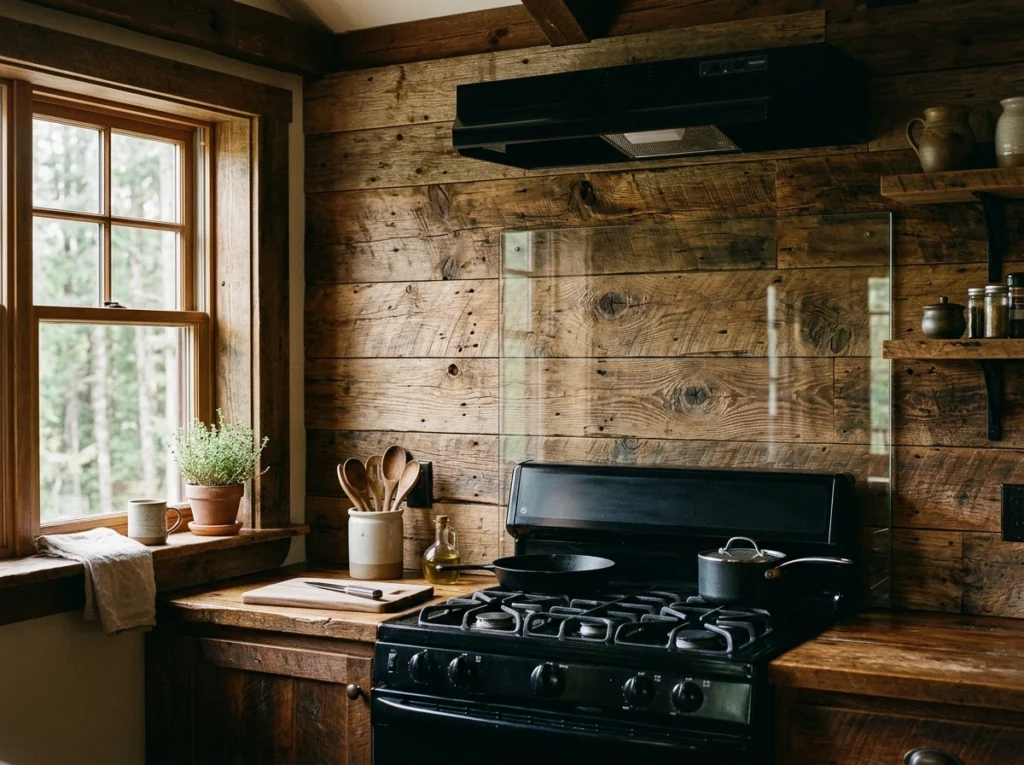
For those who want to maximize the cozy, rustic cabin feel, using reclaimed wood planks as a kitchen backsplash is an incredible choice. The natural knots, weathering, and deep wood grain bring an intense organic warmth that instantly softens cold stainless steel appliances and smooth countertops. It tells a story and makes the kitchen feel deeply personal and lived-in.
Because wood is susceptible to moisture and heat, I always recommend installing a piece of clear tempered glass or a small stone riser directly behind the stove to protect the wood from direct heat and grease splatters. Seal the wood planks thoroughly with a clear, matte polyurethane sealer to make cleanup easy. This can be extremely cheap or even free if you salvage old wood planks yourself, otherwise costing $5 to $15 per square foot.
12. Hexagon Mosaic Tiles for Geometric Play
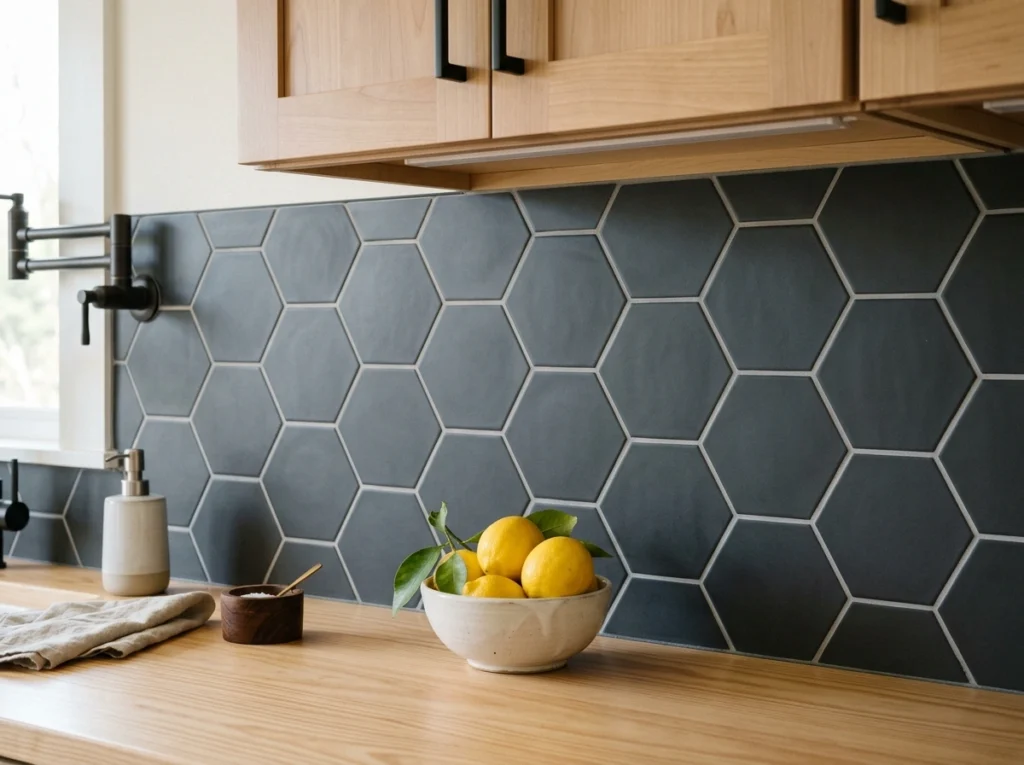
Hexagon tiles offer a wonderful way to bring a touch of vintage geometry into your kitchen without making it feel overly modern or cold. The honeycomb pattern is visually interesting and helps break up the straight, hard lines of your kitchen cabinets and countertops. It feels playful yet remarkably grounded, especially when rendered in soft, matte ceramic or natural stone.
To keep this looking modern and sophisticated, try using larger hexagon tiles (around 2 to 4 inches) rather than tiny penny-sized hexagons, which can sometimes look too much like a bathroom floor. A matte black, charcoal gray, or soft forest green hexagon tile paired with a slightly lighter grout can create a stunning, sophisticated focal point. Expect to pay around $8 to $18 per square foot.
13. Arched Plaster Backsplash for Old-World Simplicity
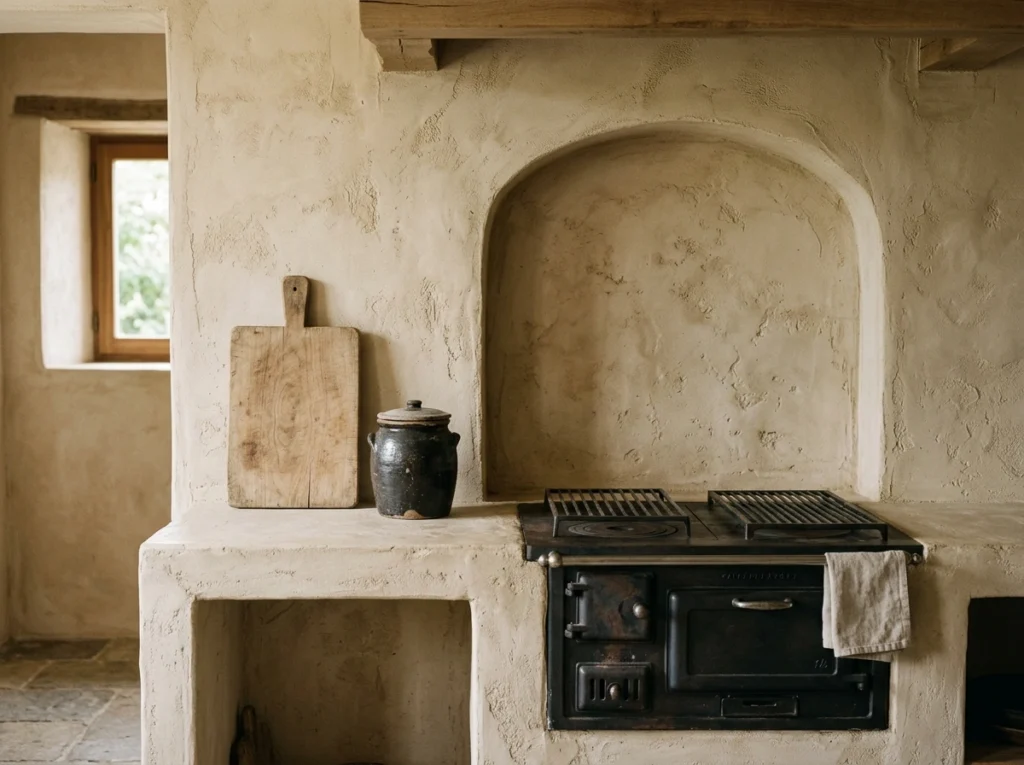
If you love minimalist design but hate the cold, sterile feeling that often comes with it, a smooth, hand-troweled plaster backsplash is a breath of fresh air. This design involves wiping plaster directly onto the wall, sometimes creating a gentle archway detail behind the range. It has an incredibly soft, velvety appearance that feels quiet, artistic, and deeply calming.
To make a plaster backsplash practical for a working kitchen, you must use a traditional Lime or Roman plaster and seal it with a specialized protective wax or a water-resistant matte sealer. This prevents oil and steam from penetrating the plaster. Keep the styling incredibly simple with some raw wood cutting boards and a single beautiful ceramic crock. This look can be achieved as a DIY for under $100 in materials.
14. Antiqued Mirror Tiles for Vintage Depth
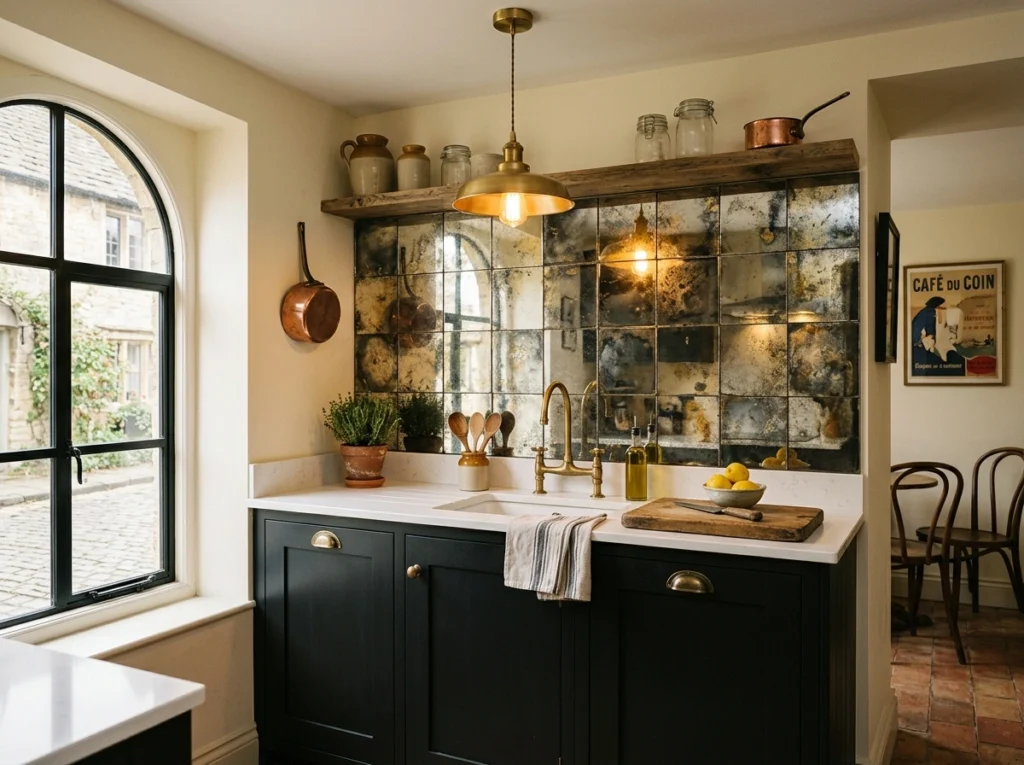
If you have a small kitchen that feels a bit dark or cramped, antiqued mirror tiles are an incredible design trick. The distressed, silvered surface reflects light and views beautifully, making your kitchen feel twice as large and instantly brighter. Because the mirror is antiqued with soft, smoky gold and charcoal speckling, it hides water spots and grease much better than a standard mirror while adding a glamorous, vintage bistro vibe.
To keep this looking sophisticated and cozy, frame the mirrored tile area with beautiful wood trim or let it run all the way up to a high open shelf. Avoid using highly reflective, brand-new mirror glass, which can look cold and show every single fingerprint. Pair this with dark painted cabinetry for a rich, moody look. High-quality antiqued mirror tile sheets generally run from $25 to $50 per square foot.
15. Checkerboard Ceramic Tiles for Classic Charm
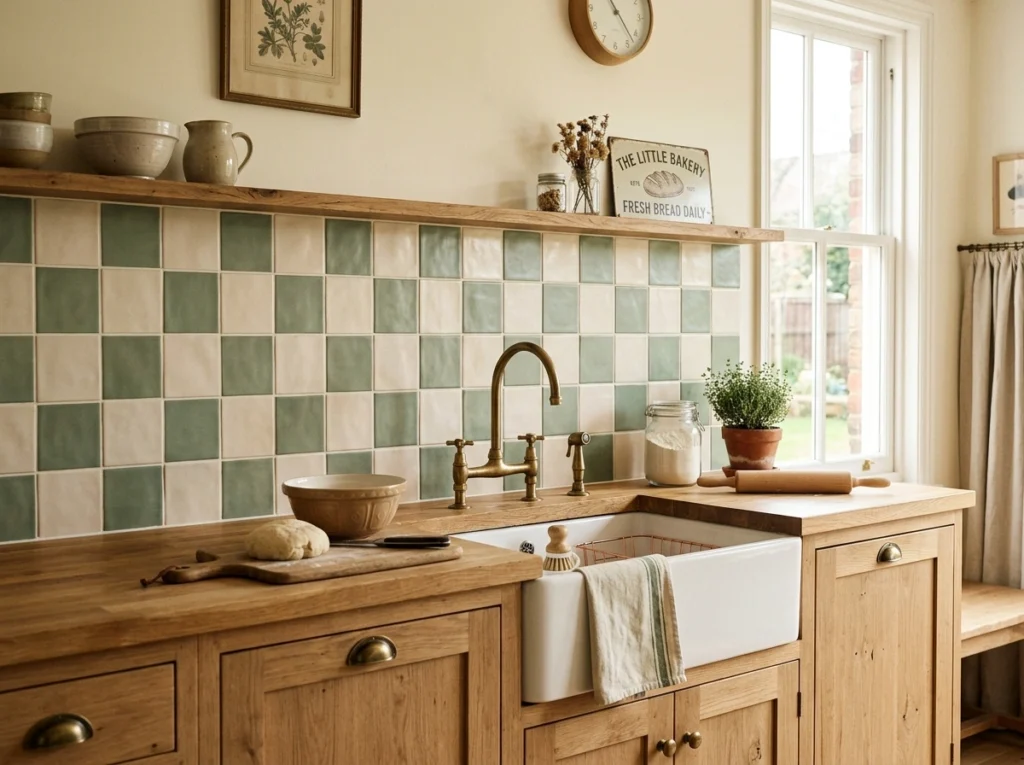
Checkerboard patterns are experiencing a massive revival, and for good reason—they bring an undeniable sense of classic, European charm that feels both playful and timeless. By alternating two soft, complementary colors in a simple square layout, you create an incredibly welcoming, dynamic wall that looks like a vintage bakery or an old country estate.
The secret to making this look modern and cozy is to avoid high-contrast black and white, which can look too stark and clinical. Instead, use soft, low-contrast pairings like warm cream and muted sage green, or soft beige and dusty terracotta. Use a matte or satin finish tile rather than high-gloss to keep the texture soft and inviting. Expect to spend $6 to $15 per square foot for ceramic tiles.
16. Exposed Original Brick for Architectural History
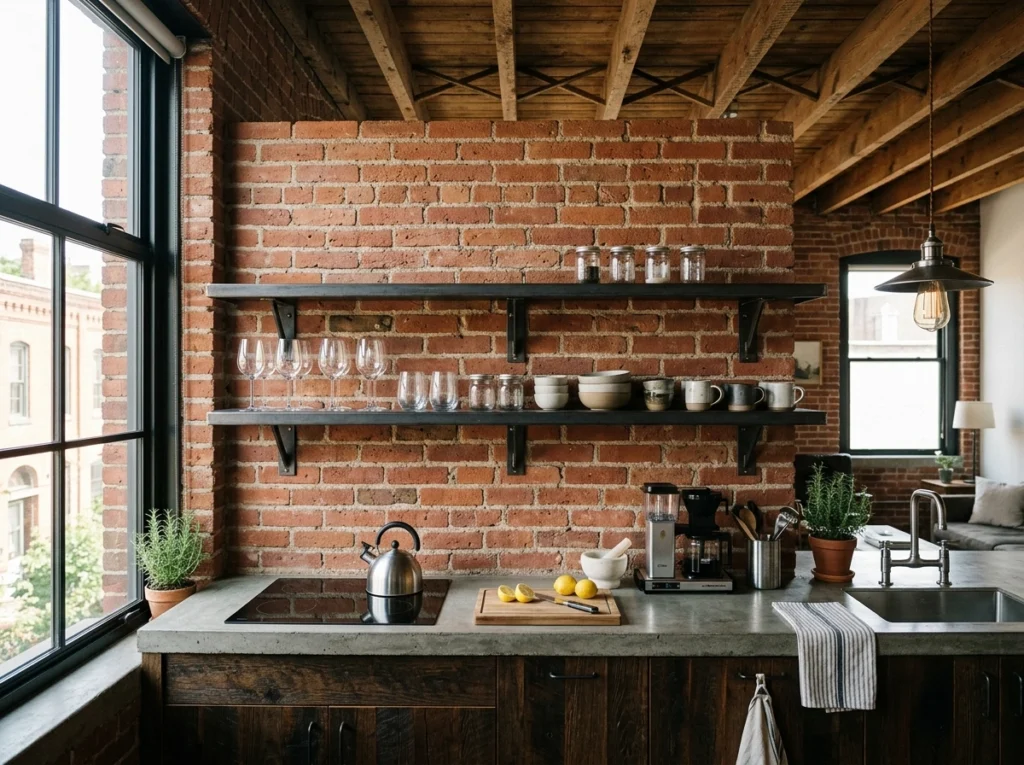
There is absolutely nothing that compares to the rich texture and historic character of authentic, exposed brick. If you are lucky enough to live in an older home with solid brick walls, stripping away old drywall to reveal the original brick behind your kitchen counters is the ultimate way to inject real personality into your space. It feels incredibly warm, rugged, and full of stories.
Because old brick is highly crumbly and porous, the biggest mistake people make is leaving it completely unsealed. I always recommend cleaning the brick thoroughly and applying a matte, non-yellowing brick sealer to lock in the dust and make it completely wipeable. If you don’t have real brick walls, you can easily install thin brick veneers for a remarkably convincing look at around $8 to $15 per square foot.
17. Vintage Pressed Tin Panels for Cozy Cottage Style
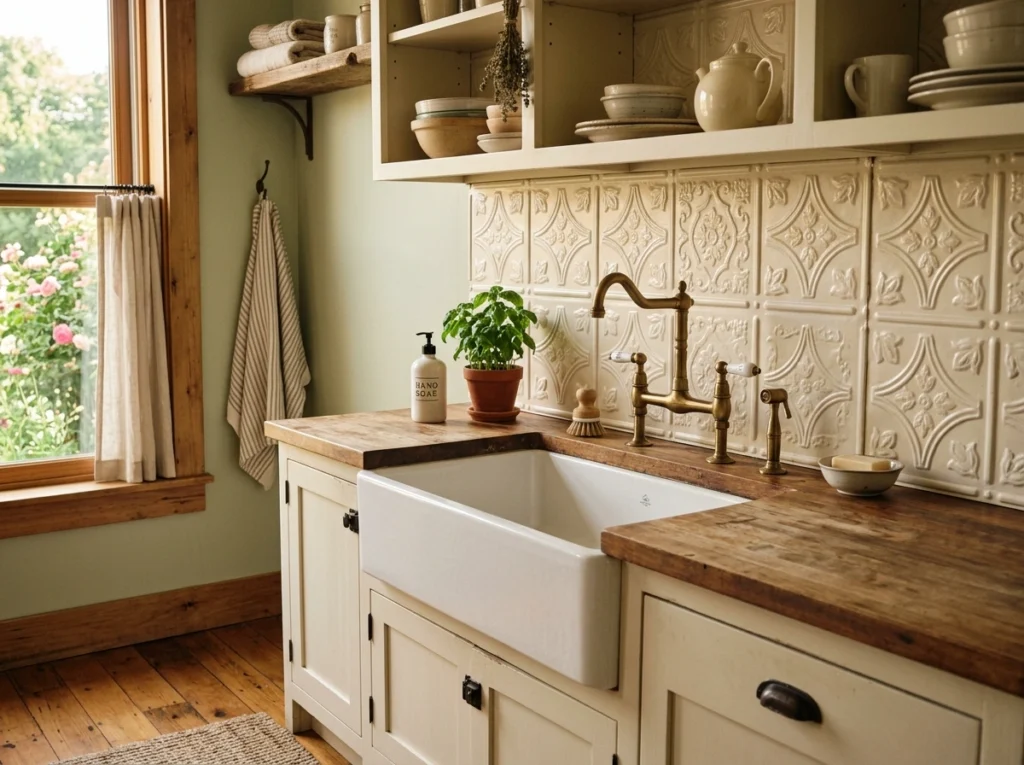
For a charming, vintage farmhouse look, pressed tin ceiling panels used as a kitchen backsplash are exceptionally beautiful. The intricate, embossed floral or geometric patterns catch the light and add an antique, textural element that pairs beautifully with open shelving and apron-front farm sinks. It feels incredibly nostalgic, warm, and comforting.
You can buy real tin panels or lightweight, paintable polyurethane replicas that are incredibly easy to cut and install with adhesive. If you use real tin, you can seal it with a clear coat to prevent rust, or paint it in a soft, satin-finish cream or warm white to match your cabinets. This is an incredibly budget-friendly way to make a big impact, with panels costing around $5 to $12 per square foot.
18. Classic Penny Tiles with Rich, Warm Grout
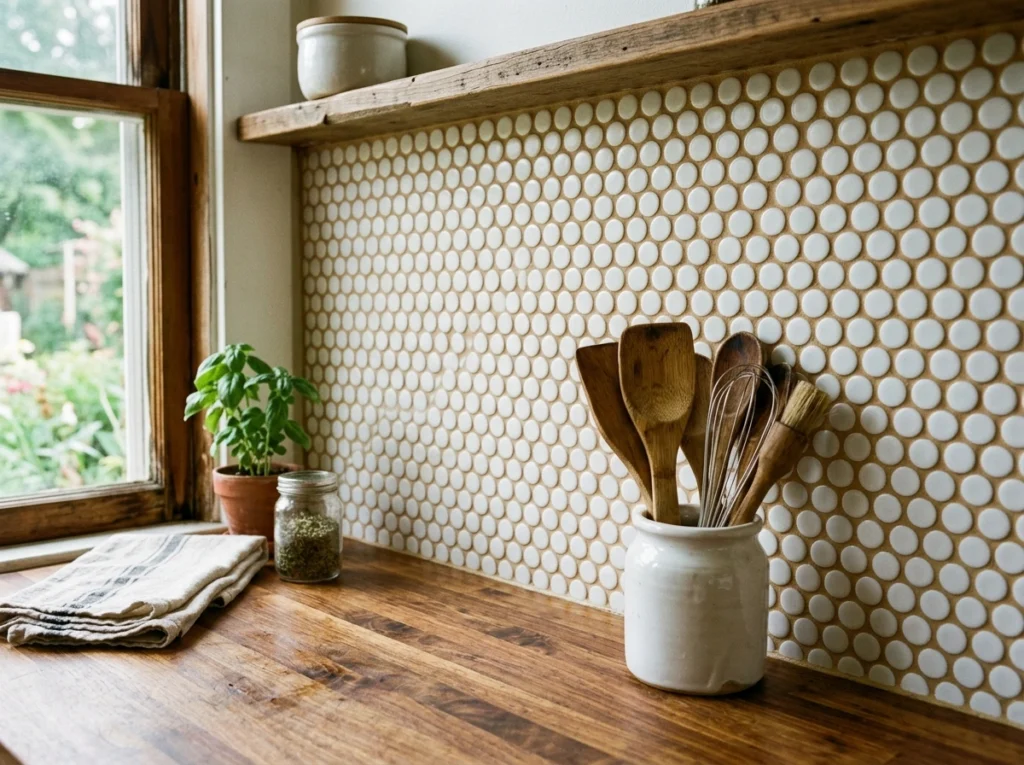
Penny tiles are small, circular mosaic tiles that have been a staple in American homes for over a century. They are incredibly versatile, slipping easily into tight spaces, curved walls, and awkward corners without requiring complex cuts. When installed across a full kitchen wall, they create a beautiful, tight-knit texture that feels historic, cozy, and highly detailed.
To make penny tiles feel warm and expensive rather than cold and institutional, always pair them with a contrasting grout that highlights their round shape. For example, pair a classic white ceramic penny tile with a warm, sandy-beige or soft gray grout. Avoid dark black grout, which can look too harsh, and bright white, which makes the unique circular texture disappear. Penny tiles are highly affordable, starting around $5 to $10 per square foot.
Simple Ways to Choose the Right Backsplash For Your Home
When you are trying to make your kitchen feel more put together, it is easy to get overwhelmed by all the options. I always recommend starting with your countertops. If your countertops have a lot of busy movement and veining, choose a simpler, more uniform backsplash like stacked subway tile or smooth plaster to give your eyes a place to rest. On the other hand, if your countertops are a solid, quiet color, that is your cue to bring in rich texture with Zellige tiles, hand-painted patterns, or warm brick. Remember, style is not about buying the most expensive materials; it is about creating a space that feels balanced, comfortable, and uniquely yours.
Kitchen Backsplash Frequently Asked Questions
How do I make basic white subway tile look more expensive?
The best way to make standard subway tile look custom is to use a high-quality, warm-toned grout like soft beige or silver-gray instead of bright white, and to select a tile with a slightly wavy, handmade texture that catches the light beautifully.
What is the most practical, easy-to-clean kitchen backsplash material?
Classic glazed ceramic or porcelain tiles are by far the easiest to clean because their smooth, non-porous surfaces allow grease and food splatters to wipe away effortlessly with a damp cloth and mild soap.
Should my kitchen backsplash be lighter or darker than my countertops?
There is no hard rule, but choosing a backsplash that is slightly lighter than your countertops will help keep your kitchen feeling bright and open, while a darker backsplash creates a cozy, dramatic focal point.
How do I choose the right grout color for my tile?
To create a soft, seamless look, match your grout color as closely as possible to the primary color of your tile; to highlight the shape and pattern of the tile, choose a grout that is a few shades lighter or darker.
Can I install a new backsplash directly over my existing tile?
While it is technically possible to use specialized tile-on-tile adhesives, I always recommend removing the old tile down to the drywall or backer board to ensure a perfectly flat, secure, and long-lasting installation.