Have you ever walked into your bathroom, looked at your standard built-in tub-and-shower combo, and felt a little sigh escape your lips? You are definitely not alone. For most of us, the bathroom is the first place we go to wake up and the last place we go to wash away the stress of a long day, yet it often feels more like a sterile utility room than a personal sanctuary. It is easy to get caught up in the belief that a beautiful, spa-like space is only possible with a massive budget or a five-star hotel reservation. But the truth is that small, intentional styling changes can completely redefine the space.
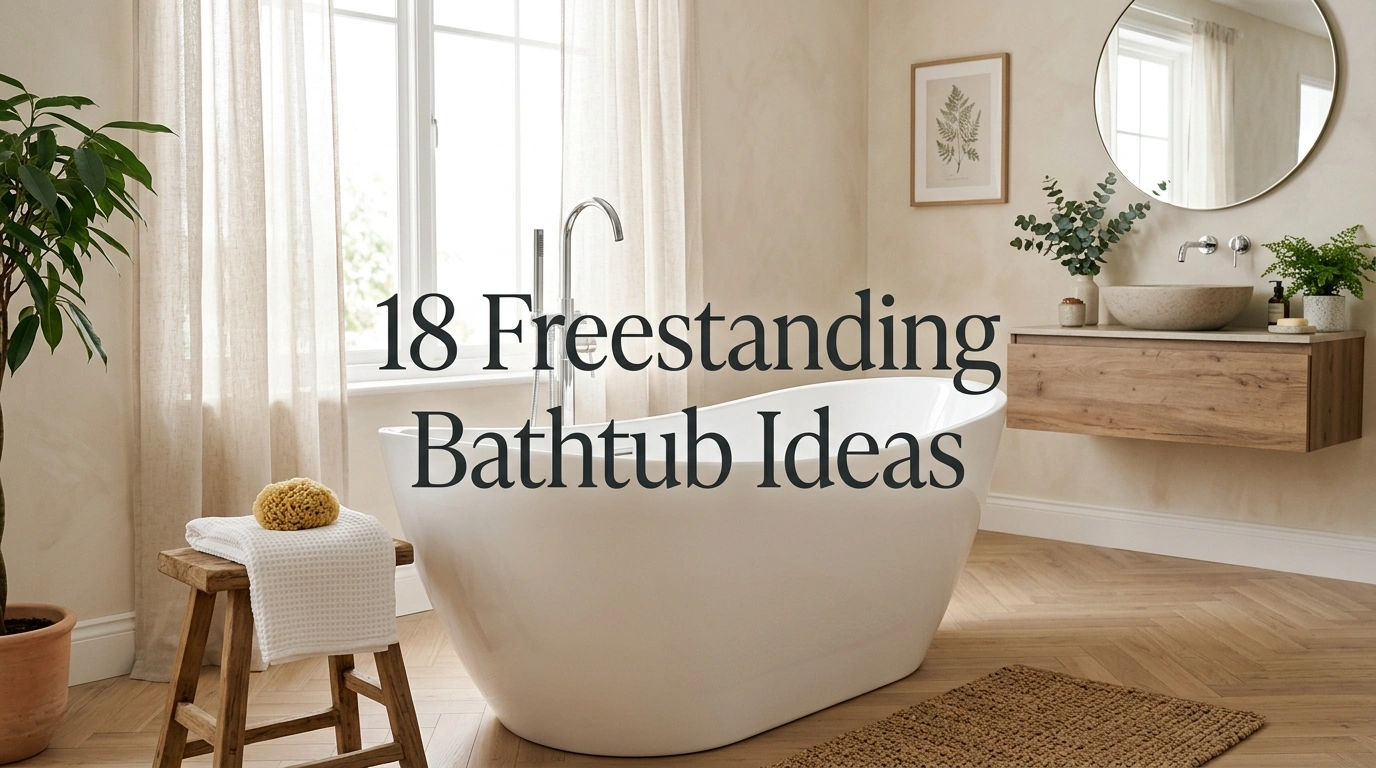
If you are planning a remodel or just dreaming of a refresh, finding the right layout is the key to creating a home you love. In this guide, we are looking closely at 18 Freestanding Bathtub Ideas That Elevate Any Bathroom to help you find the perfect mix of practicality and comfort. We will cover everything from placement and plumbing to the tiny, budget-friendly accessories that make a simple tub look incredibly inviting. You will learn how to choose the right materials, avoid common installation mistakes, and style your space so it feels incredibly cozy and easy to maintain. Let’s dive in and look at how to bring these beautiful setups to life in your own home.
1. The Matte Black Minimalist Tub
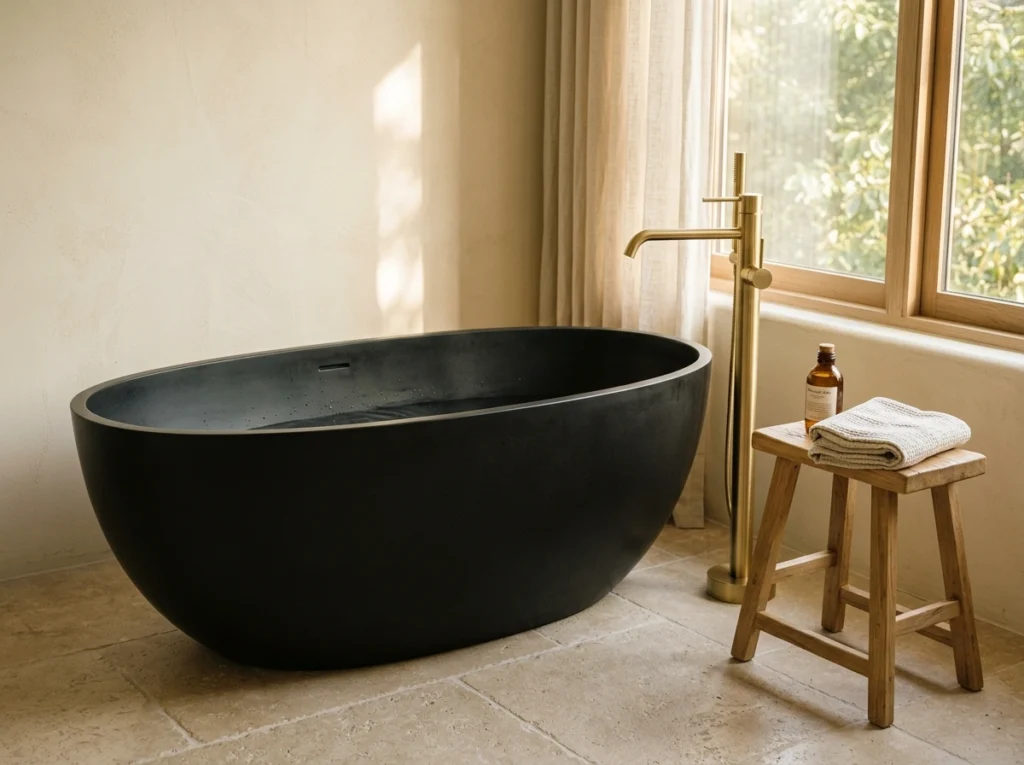
What I personally love about this look is how it instantly anchors a bright, neutral bathroom without feeling heavy or dark. Imagine stepping onto warm, textured tile and looking at a deep, charcoal-gray or matte black soaking tub that feels as smooth as a river stone. The contrast against soft cream walls or white subway tiles is incredibly grounding, creating a quiet space where your eyes can rest. It feels incredibly modern but cozy, especially when paired with warm, natural sunlight filtering through linen window shades.
To recreate this setup, look for a composite stone tub rather than acrylic if your budget allows, as matte black acrylic can sometimes show water spots more easily. I always recommend starting with a sleek floor-mounted faucet in a brushed gold or brass finish to warm up the dark tones of the tub. A common mistake people make is choosing a black faucet that matches the tub exactly; this makes the setup look too flat and clinical. Keep your budget in check by using simple, natural wood stools nearby to hold your towels, adding a layer of warmth.
- Suggested Budget Range: $1,500 – $3,200 (including high-end matte composite tub and fixtures)
2. Classic White Acrylic Slipper Tub
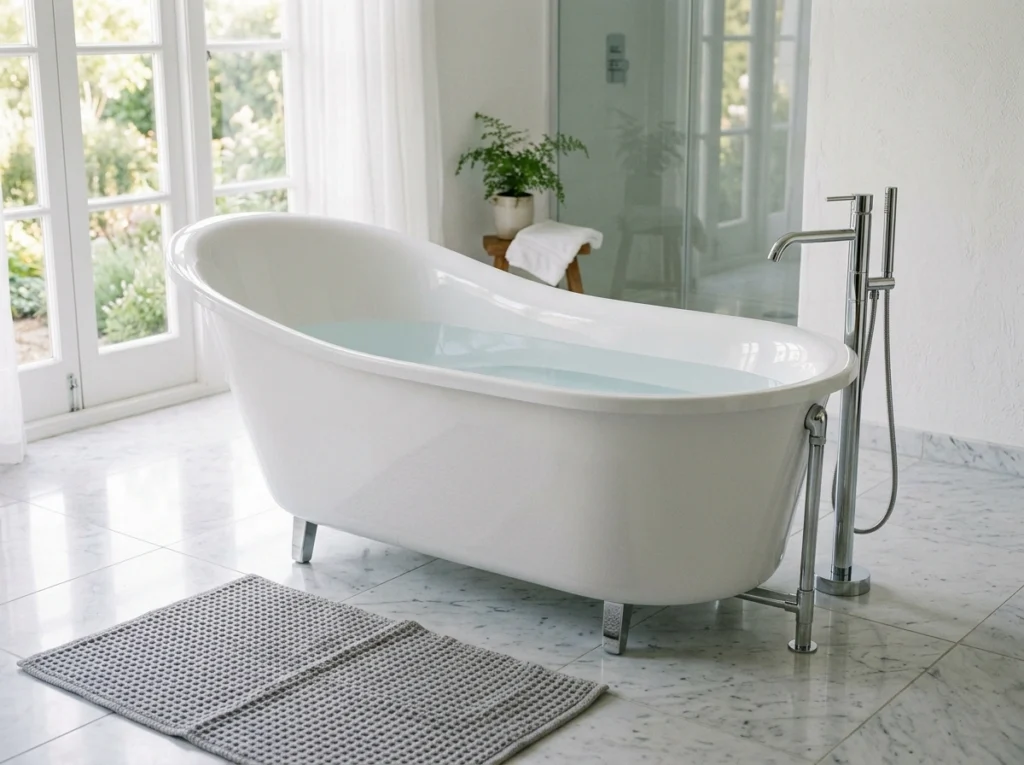
There is something so incredibly comforting about a classic slipper tub, which has one raised end designed to support your back while you soak. The smooth, glossy white finish catches the light beautifully, making even a small bathroom feel much larger and airier. It evokes the feeling of a quiet, lazy Sunday morning where there is absolutely nowhere else you need to be. The gentle, sloping lines feel soft and approachable, keeping your bathroom from looking too blocky or angular.
When styling an acrylic slipper tub, pay close attention to the slope. If you love reading or sipping tea in the bath, make sure the high end of the tub faces toward your main light source so you can see comfortably. For a budget-friendly setup, lightweight acrylic is excellent because it does not require you to reinforce your subfloor. Avoid the mistake of putting this tub right against the wall; leave at least six inches of breathing room all around to make cleaning behind it a breeze. Pair it with a simple chrome floor-mount faucet and a waffle-weave bath mat for a clean, fresh look.
- Suggested Budget Range: $800 – $1,800
3. The Organic Wood-Slat Surround Tub
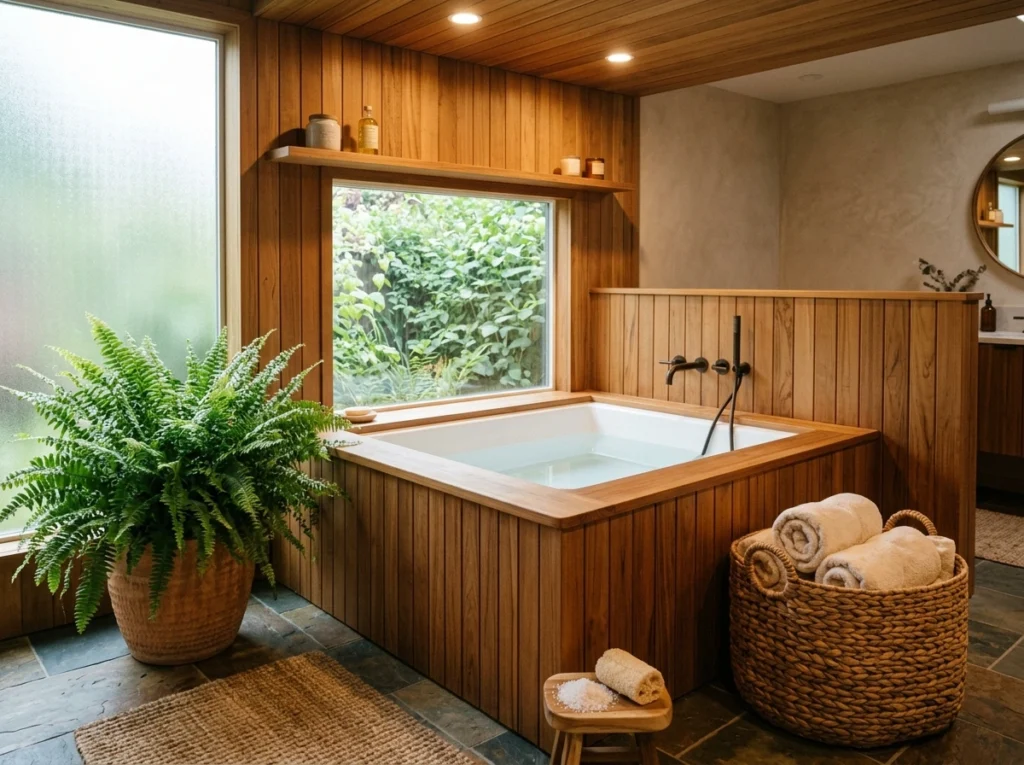
If you want your space to look more styled without trying too hard, wrapping a simple freestanding tub in a warm wood-slat surround is a game-changer. The rich, earthy wood tones bring a distinct outdoor-sauna feel right into your home, softening the hard surfaces of tile and porcelain. It smells faintly of cedar or teak when the bathroom gets warm and steamy, making every bath feel like an immersive escape into nature. It is a brilliant way to introduce texture and tactile warmth to a cold room.
To pull this off safely, you must use moisture-resistant woods like teak, cedar, or thermo-treated ash, and ensure they are finished with a high-quality marine sealer. In my experience, the biggest mistake people make is ignoring ventilation; without a good exhaust fan, wood in a wet environment can eventually warp or mildew. If a custom wood surround is out of your budget, you can easily mimic this look by placing a high-quality teak bath mat next to a standard white tub and lining up a few potted ferns nearby.
- Suggested Budget Range: $1,200 – $2,800 (depending on custom carpentry costs)
4. Vintage Copper Clawfoot Statement
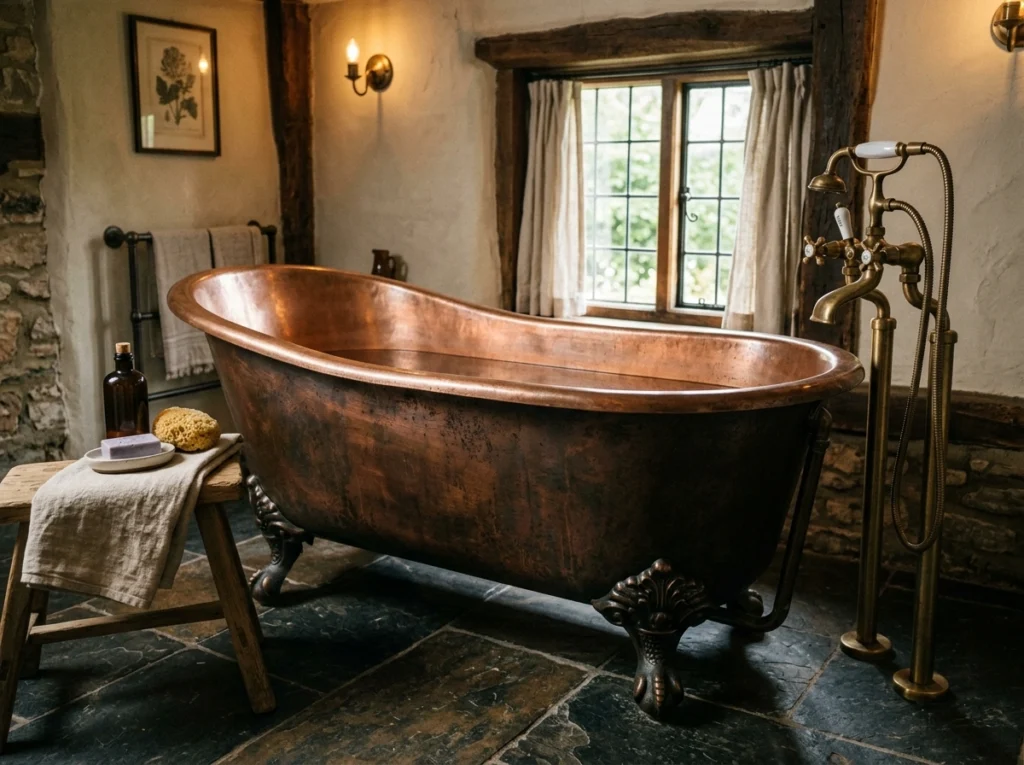
This look is for anyone who appreciates character, history, and a touch of drama in their home design. A copper clawfoot tub feels incredibly grand and acts as a brilliant living sculptural piece in the room. Over time, the copper develops a beautiful, natural patina that tells a story, or you can keep it polished to a warm, glowing rose-gold finish. It holds heat exceptionally well, meaning your bathwater stays hot for much longer, allowing you to linger and relax without rushing.
When installing a copper tub, remember that these pieces are incredibly heavy, especially when filled with water. Always check with a contractor to ensure your bathroom floor can handle the weight before purchasing. A lot of people overlook this detail, but pairing copper with oil-rubbed bronze or unlacquered brass fixtures makes the entire setup feel cohesive and intentional. To save money, look for vintage cast-iron tubs at architectural salvage yards and paint the exterior with copper-metallic paint, rather than buying a solid copper tub.
- Suggested Budget Range: $2,500 – $5,000+
5. Japanese-Style Deep Soaking Tub
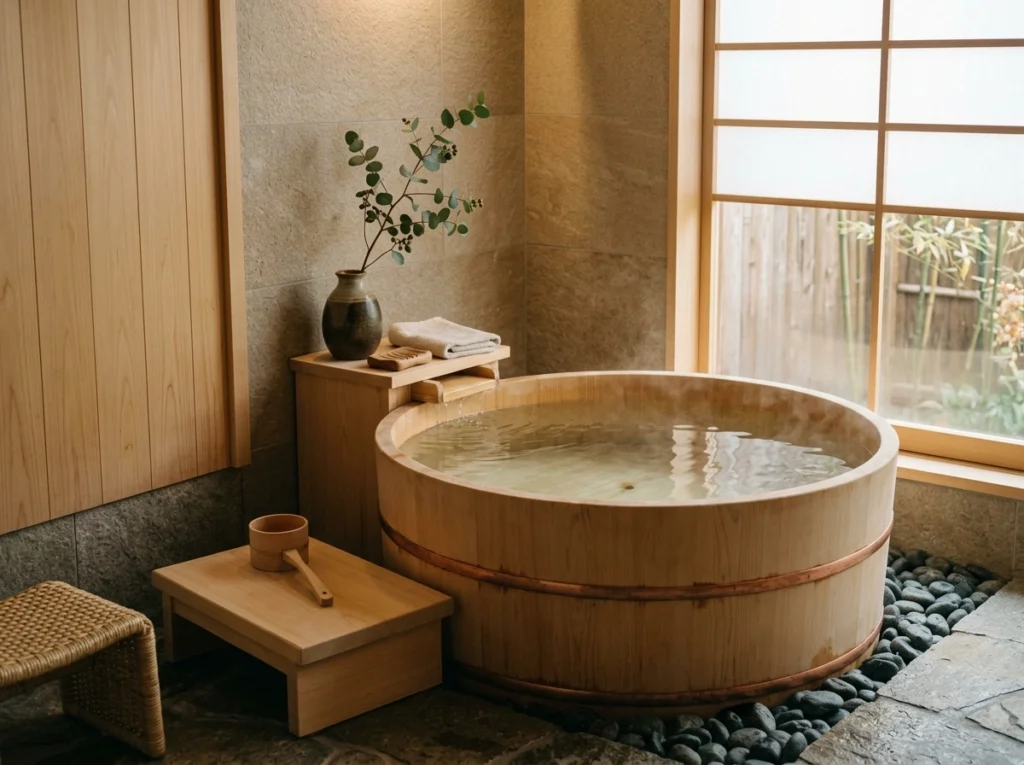
Perfect for smaller bathrooms, a Japanese-style soaking tub (or ofuro) focuses on depth rather than length. You sit upright in these tubs, with the water coming all the way up to your shoulders, creating an incredibly cozy, enveloping sensation of warmth and weightlessness. The compact footprint means you can fit this into tight corners where a standard long tub would never go. It feels intensely purposeful, quiet, and deeply restorative.
To recreate this vibe, look for a round or square tub made of cedar, hinoki wood, or a high-quality composite. Because these tubs are deep, getting in and out can sometimes be a challenge; I highly recommend installing a low, sturdy wooden step next to the tub to make entry safe and comfortable. Keep the rest of the styling incredibly simple with neutral stone tiles, a single branch of eucalyptus in a ceramic vase, and a small wooden stool for your soap.
- Suggested Budget Range: $1,800 – $4,000
6. Stone-Look Composite Tub on Concrete
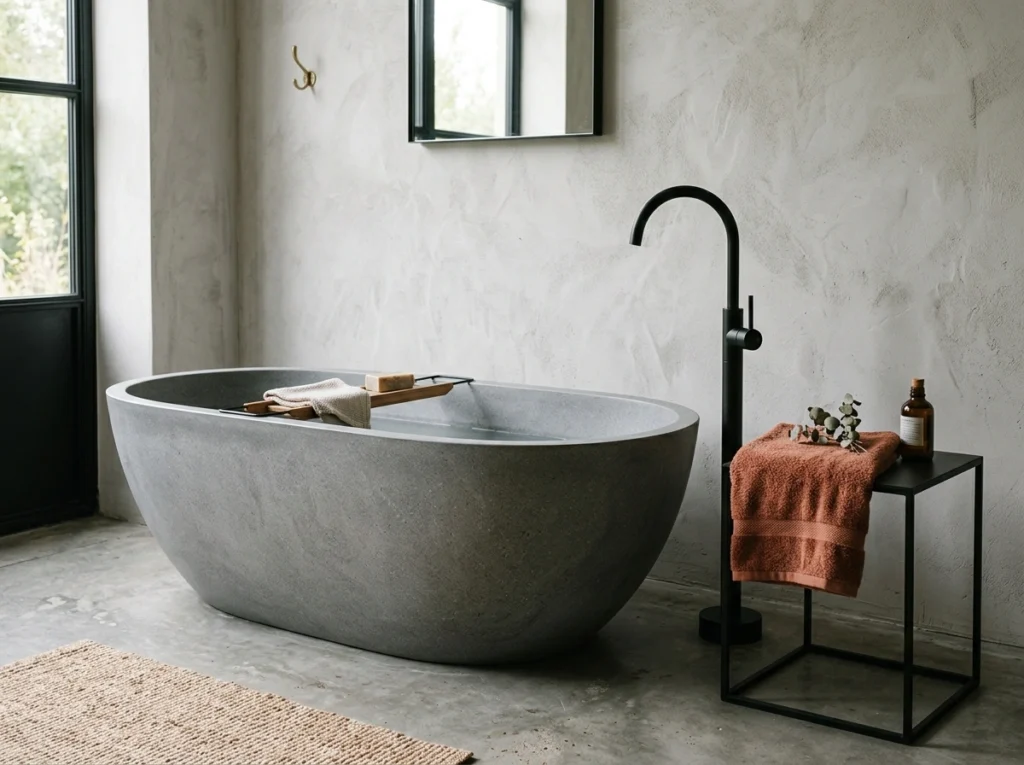
There is a raw, honest beauty in combining a stone-look composite tub with cool, industrial concrete flooring. The soft, rounded curves of the tub soften the hard, flat lines of the concrete, creating a space that feels incredibly modern but deeply connected to the earth. The subtle, flecked texture of the composite material feels lovely against the skin and holds the temperature of the water beautifully, making your bath feel like a natural hot spring.
When styling this setup, the key is to prevent the space from feeling too cold or sterile. Bring in plenty of tactile warmth with thick, plush cotton towels in earthy tones like olive green, warm terracotta, or soft ochre. Avoid the mistake of using cold-toned chrome fixtures here; instead, choose matte black or unlacquered brass to add contrast and warmth. If pouring a concrete floor is too expensive or impractical, high-quality concrete-look porcelain tiles are an incredible, budget-friendly alternative that is much easier to maintain.
- Suggested Budget Range: $2,000 – $4,500
7. The Brass-Feet Double Slipper Tub
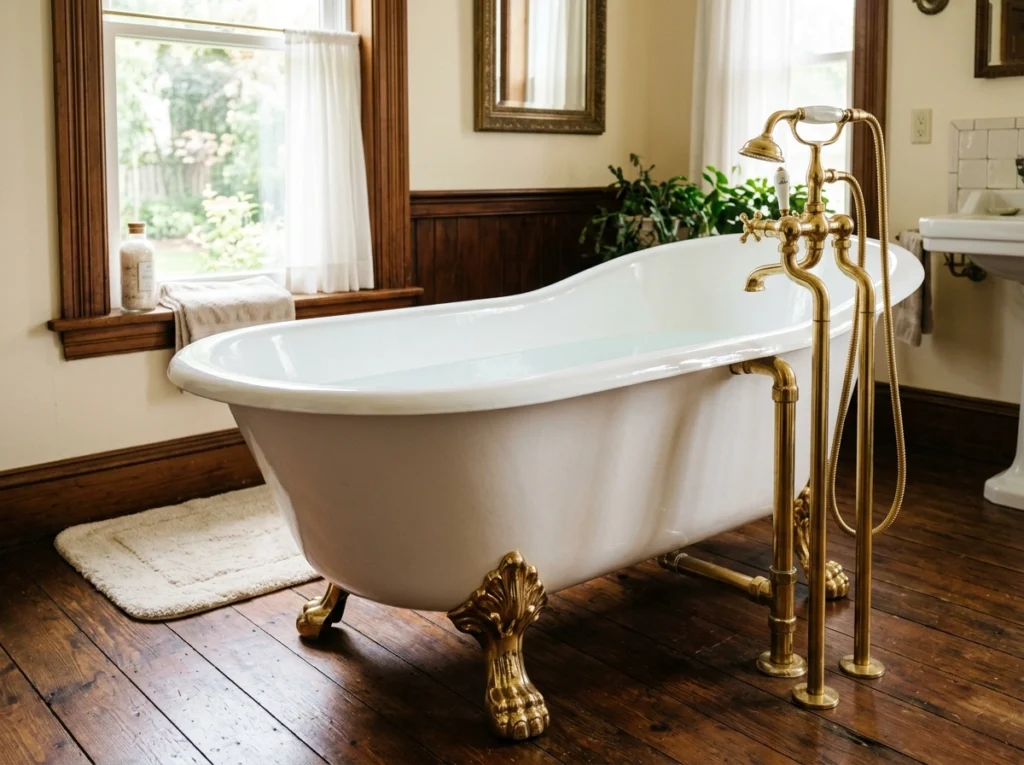
For a space that feels soft, elegant, and classic, a double slipper tub with ornate brass claw feet is unmatched. Having both ends curved upwards means two people can lounge comfortably, or you can choose whichever side has the best view of the room. The brass feet elevate the tub off the ground, letting you see more of the floor, which instantly makes a medium-sized bathroom feel far more spacious and grand.
When sourcing this style, ensure the brass feet match the metal finish of your floor-mounted faucet and waste pipe to keep the design looking unified. A common mistake is buying a cheap reproduction tub with plastic feet painted to look like brass; these can crack under pressure and look inexpensive up close. If you are on a tight budget, look for secondhand cast-iron tubs online and scrub the original brass feet back to life with a bit of polish and elbow grease.
- Suggested Budget Range: $1,200 – $2,500
8. Framed Window View Placement
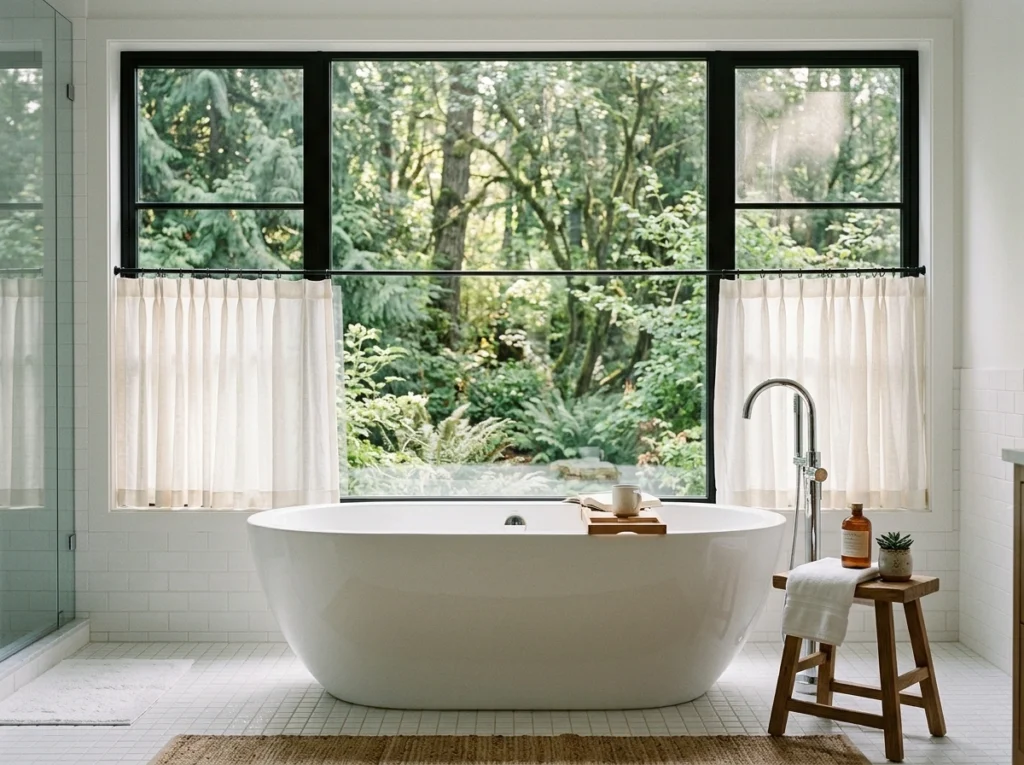
If you are lucky enough to have a beautiful view or a private backyard, placing your freestanding tub directly under a large window is the ultimate luxury. It allows you to watch the leaves change, look at the stars, or enjoy the morning fog while soaking in warm water. This setup is all about bringing the outside in, making your bathroom feel incredibly open, airy, and deeply peaceful.
Privacy is, of course, the biggest hurdle here. I always recommend starting with top-down, bottom-up cellular shades or sheer linen café curtains; this way, you can block the line of sight from the outside while still letting natural light flood the room. Make sure your window frames are made of moisture-resistant materials like vinyl or fiberglass, as wood frames can rot over time from the rising steam of the bath.
- Suggested Budget Range: $1,500 – $3,500 (excluding any major window structural changes)
9. The Modern Oval Tub with Floor Faucet
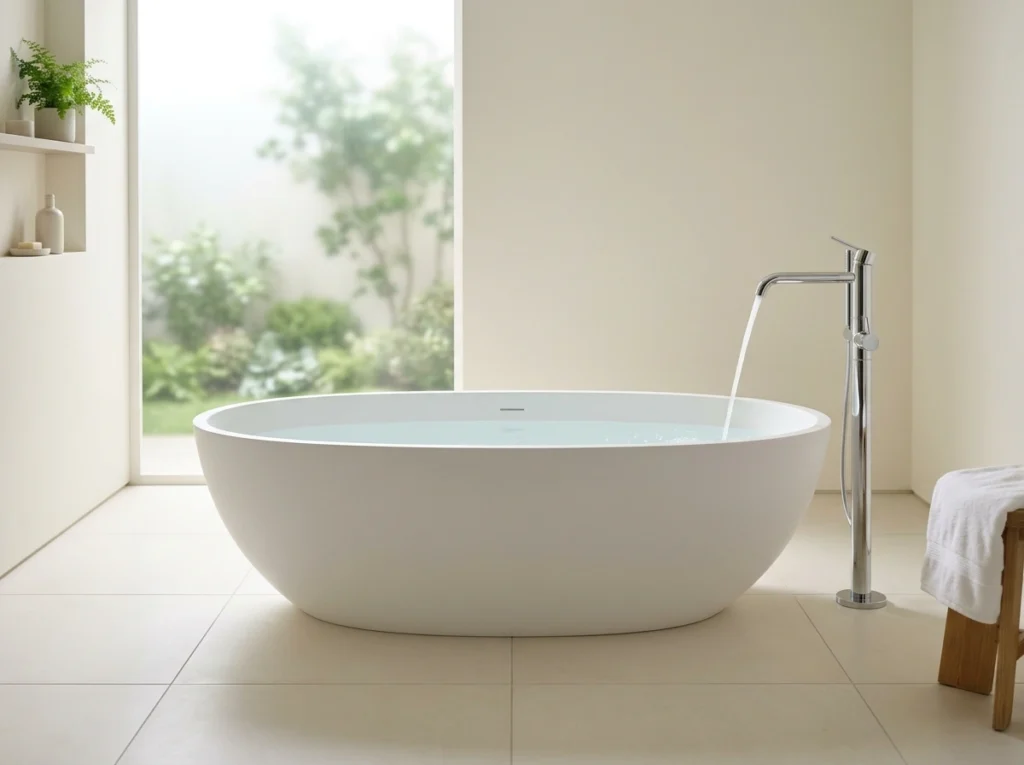
This is the ultimate layout for a clean, unfussy bathroom that feels incredibly restful. A simple, symmetrical oval tub sitting in the middle of a tiled floor acts as a gentle, calming center point for the room. The floor-mounted faucet stands tall beside it like a piece of functional art, pouring water smoothly into the tub with minimal splashing. It feels light, airy, and incredibly easy to live with.
When planning this layout, the placement of your plumbing is critical. Because the faucet stands on the floor, the pipes must run up through the subfloor, which can be difficult if you have a concrete slab or are remodeling a second-story bathroom. In my experience, the biggest mistake people make is not measuring the faucet’s reach; make sure the spout extends far enough over the rim of the tub so water doesn’t spill onto the floor.
- Suggested Budget Range: $1,400 – $2,800
10. Rustic Wooden Board Bath Tray Setup
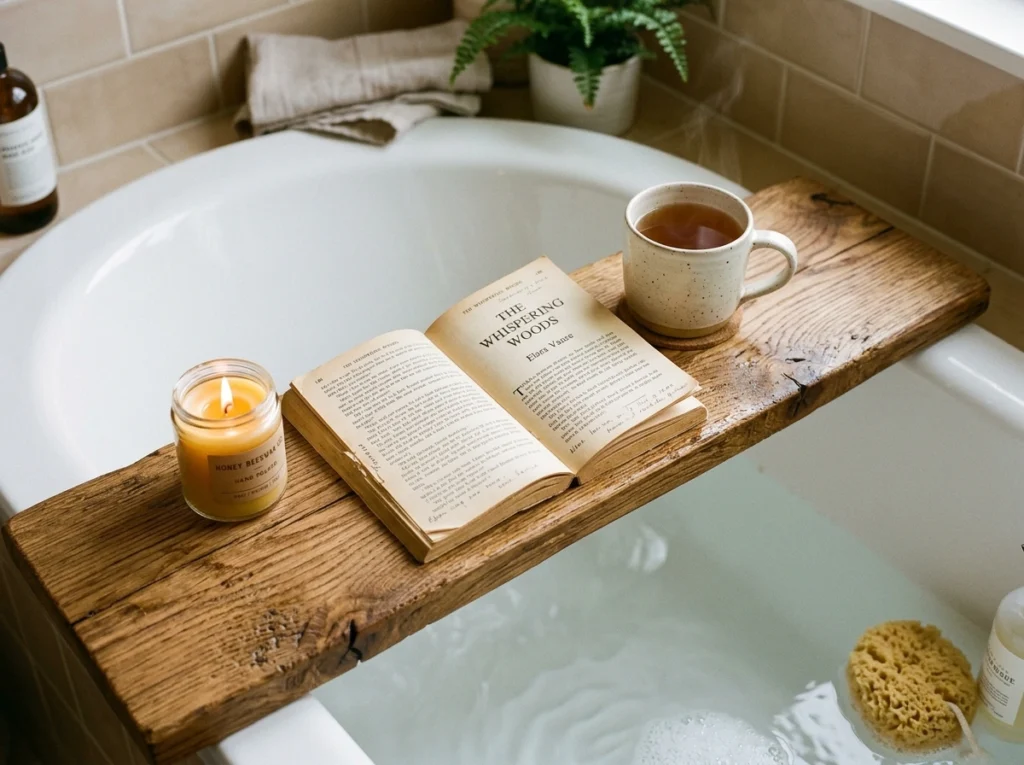
You do not need to do a full remodel to change the vibe of your bath. Adding a thick, rustic wooden bath bridge across a sleek white tub instantly makes the space feel warmer, more lived-in, and incredibly cozy. It provides a beautiful, practical surface to hold a soft beeswax candle, a book, a cup of herbal tea, or a small vase of fresh wildflowers. It is a simple touch that whispers, “Take your time and stay a while.”
When choosing a tub tray, avoid cheap bamboo ones with too many metal slots and plastic holders; they tend to look cluttered and don’t age well in a wet environment. Instead, look for a thick, solid piece of reclaimed oak, walnut, or teak that has been sealed with a waterproof oil. This works especially well if you want to look more put together without trying too hard, giving your bathroom an instant aesthetic upgrade for very little cost.
- Suggested Budget Range: $50 – $150 (for the tray and styling accessories)
11. Corner Placement with Floating Shelves
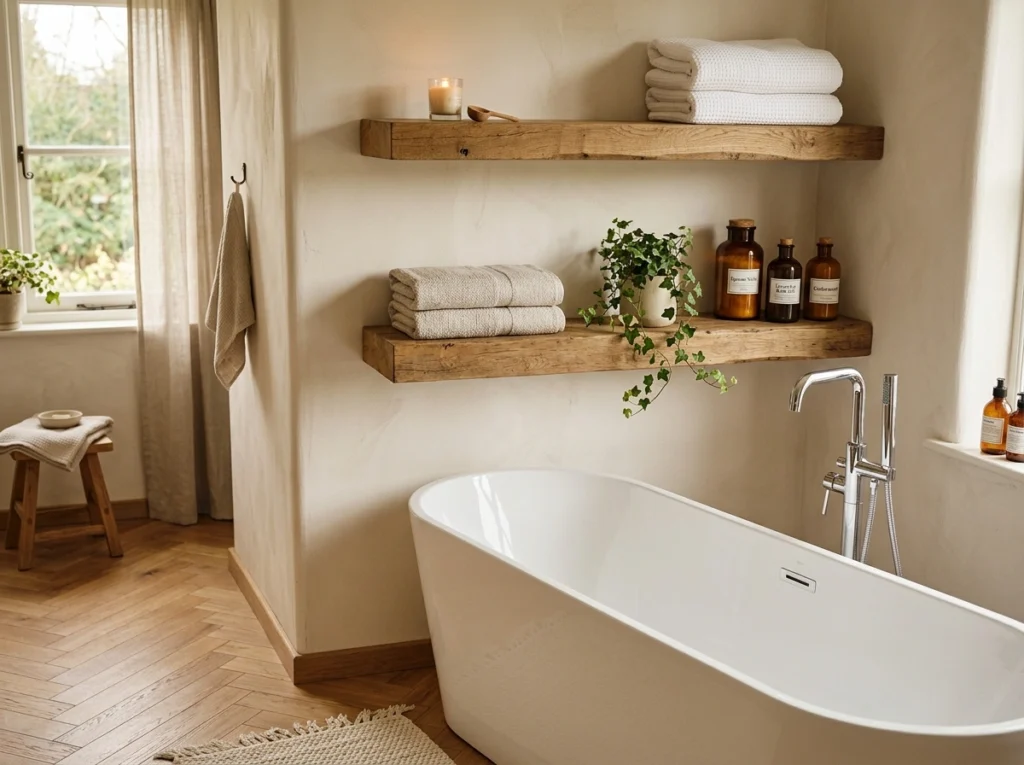
Not everyone has a massive bathroom with room for a tub right in the center of the floor. Placing a freestanding tub at an angle in a corner is a brilliant way to maximize floor space while maintaining that beautiful, airy feel. By hanging a few thick, rough-sawn wooden floating shelves on the walls above, you turn an awkward corner into a functional, gorgeous feature that holds clean towels, bath salts, and potted ivy.
When styling a corner tub, the biggest mistake people make is pushing the tub completely flush against both walls. This creates tight, unreachable crevices where dust, moisture, and mold can accumulate. Keep at least four to six inches of space between the tub and the walls so you can easily run a duster or a mop behind it. Use the floating shelves to display beautiful amber glass bottles and soft linen towels to keep the corner looking tidy and styled.
- Suggested Budget Range: $1,000 – $2,200
12. Marble-Wrapped Plinth Tub
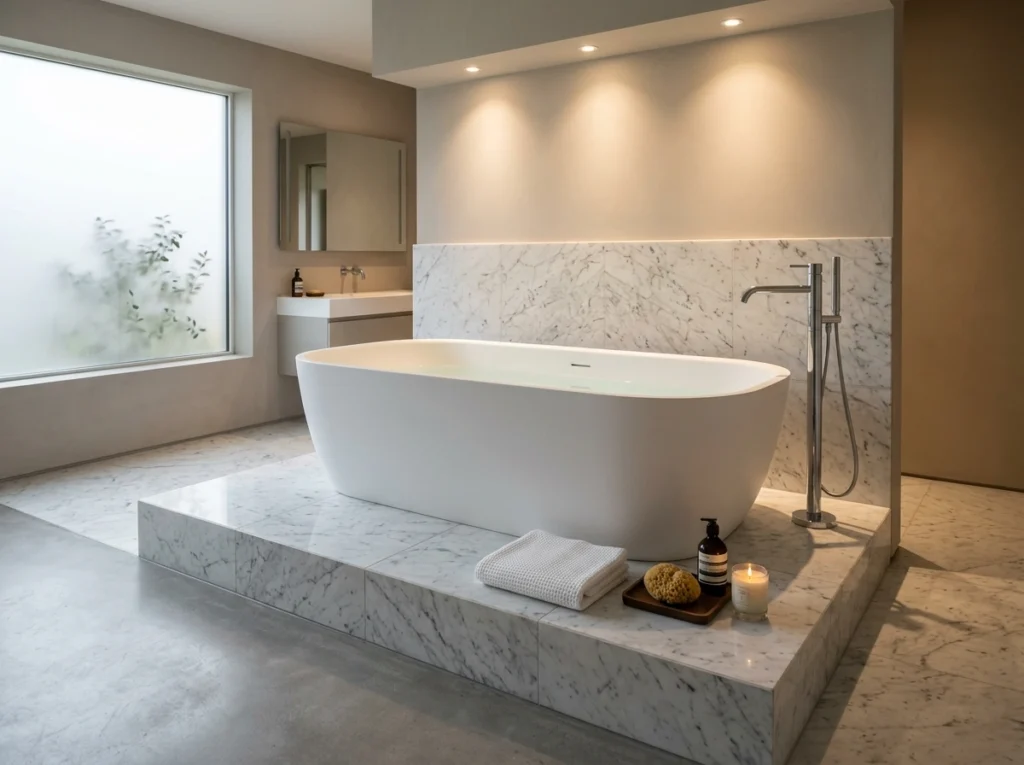
If you want a look that feels incredibly solid, permanent, and architectural, placing your freestanding tub on a low, marble-wrapped plinth is a breathtaking option. It elevates the tub slightly, turning it into a true work of art and a clear focal point. The cool, grey-and-white veining of the marble looks incredibly rich against a simple white acrylic or solid-surface tub, making the entire bathroom feel like a high-end spa.
This is a heavy, permanent installation that requires professional tile-setting and proper floor support. To save on costs, you do not need to use solid marble slabs; you can achieve an identical look by wrapping a simple plywood plinth frame in large-format marble-look porcelain tiles. Just ensure the corners are mitered beautifully so the edges look seamless and solid.
- Suggested Budget Range: $2,500 – $5,500
13. The Colorful Painted-Exterior Clawfoot
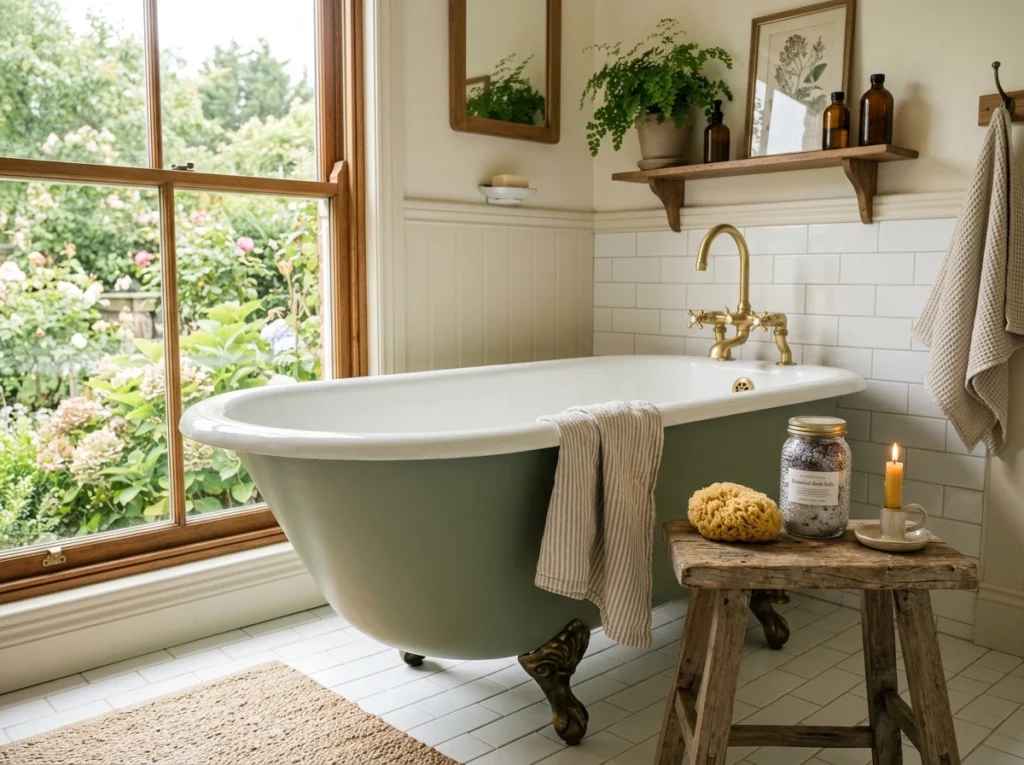
If your personal style is warm, playful, and full of life, there is no rule saying your tub has to be white. Painting the exterior of a classic clawfoot tub in a dusty sage green, deep navy, or warm terracotta is an incredible way to inject personality into your bathroom. It breaks up the monotony of white porcelain and tile, making the tub feel like a loved, custom piece of furniture rather than a utility fixture.
To do this yourself, look for a cast-iron tub and prep the exterior thoroughly by sanding away any rust or peeling paint. Use a high-quality oil-based primer and paint with a satin or semi-gloss finish to ensure it can withstand the moisture and splashes of a busy bathroom. Pair your colored tub with simple white walls and natural wood accents to keep the room feeling balanced and grounded.
- Suggested Budget Range: $900 – $2,000 (especially budget-friendly as a DIY project)
14. Modern Square-Edge Pedestal Tub
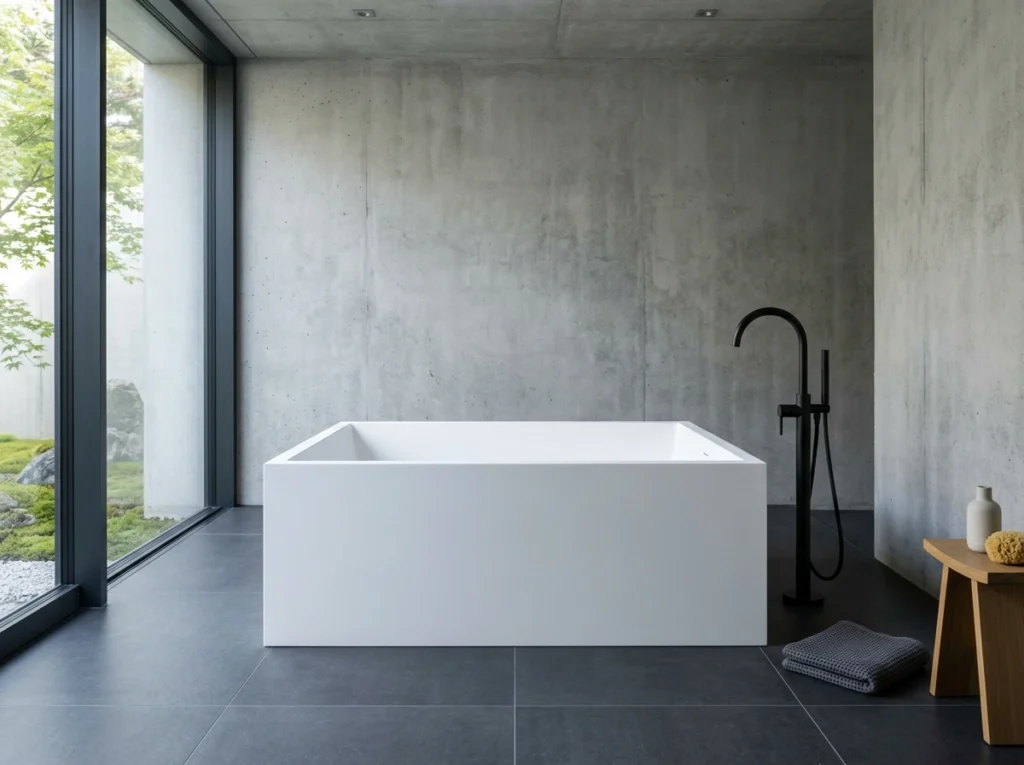
For those who prefer clean lines, sharp angles, and an ultra-clean layout, a square-edge pedestal tub is a stunning choice. Instead of sloping curves, this tub features crisp, defined edges that look incredibly striking and architectural. It sits flat on a solid pedestal base, concealing all the plumbing beneath it and giving the entire bathroom a very neat, structured, and modern look.
Because of the sharp edges, these tubs work best in larger bathrooms where they have room to breathe; in a tiny space, the sharp corners can make the room feel cramped and blocky. A lot of people overlook this detail, but a square-edge tub pairs beautifully with square or rectangular floor tiles, which echo the clean geometry of the bath. Choose a sleek, minimalist chrome or matte black faucet to match the modern lines.
- Suggested Budget Range: $1,600 – $3,500
15. Bohemian Styled Tub with Hanging Plants
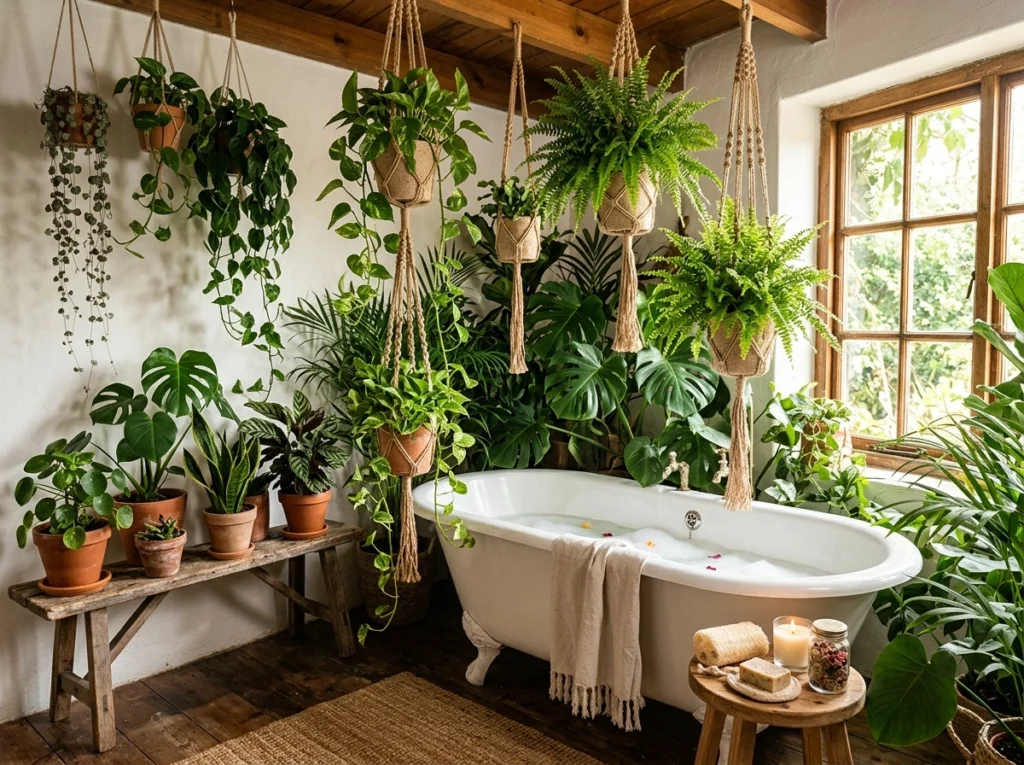
If your dream is a bathroom that feels like a lush, sun-drenched jungle oasis, this is the layout for you. Surrounding a simple, curved white tub with a variety of hanging and potted plants creates an incredibly fresh, vibrant, and alive space. The humidity from your baths will make tropical plants like pothos, boston ferns, and peace lilies thrive, while their soft, cascading green leaves provide natural privacy and a beautiful pop of color.
When setting up your green oasis, make sure to hang plants at different heights using natural jute or cotton macramé hangers to create depth. In my experience, the biggest mistake people make is putting plants in pots without drainage; the high humidity can trap moisture and cause root rot. Use beautiful terracotta or handmade ceramic pots with saucers, and place a small, rustic wooden stool next to the tub to hold your watering can and some bath oil.
- Suggested Budget Range: $900 – $1,800 (very affordable to style with plants)
16. Micro-Bathroom Space Saver Tub
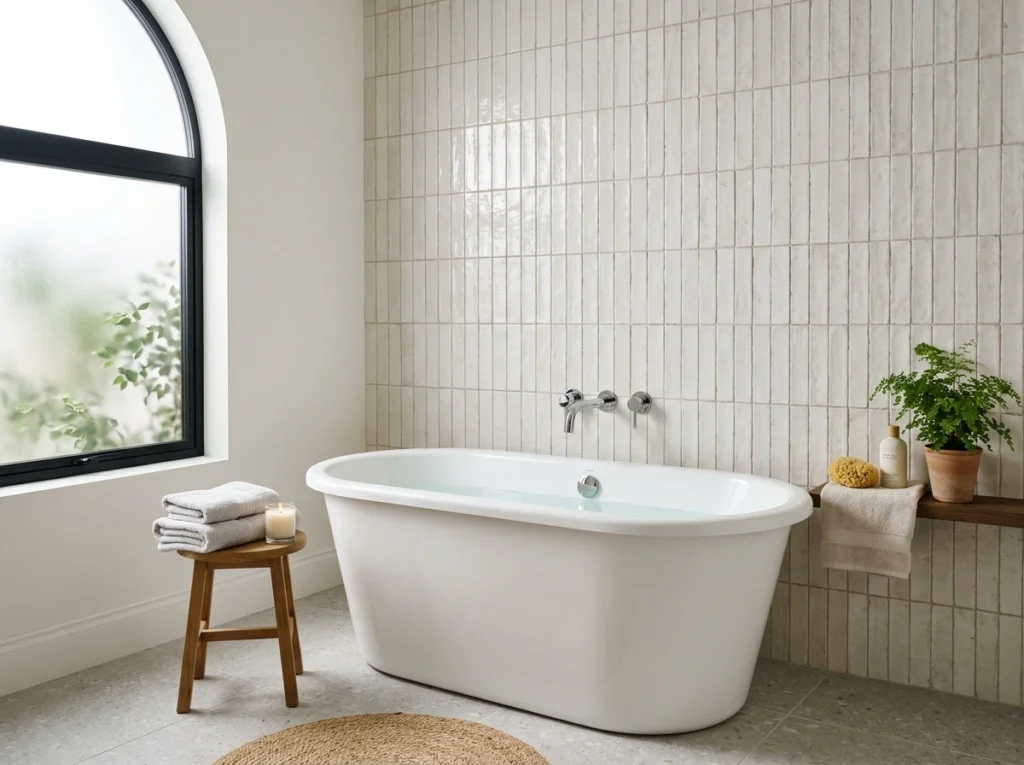
Do not let a tiny floor plan stop you from enjoying a freestanding tub. Many manufacturers now make beautiful, scaled-down freestanding tubs that are under 50 inches long but feature deep, upright basins. Placing one of these compact beauties against a feature wall of textured tiles makes a small bathroom feel incredibly intentional, luxurious, and spacious, proving that you do not need a mansion to have a beautiful bath.
To make a small bathroom feel as open as possible, pair a compact tub with a wall-mounted faucet rather than a floor-mounted one; this saves precious inches of floor space and keeps the layout looking clean. Avoid dark colors in a micro-bathroom; instead, opt for a glossy white or soft cream tub to bounce the light around the room and make the space feel larger.
- Suggested Budget Range: $1,000 – $2,000
17. Wet-Room Style Open Shower Integration
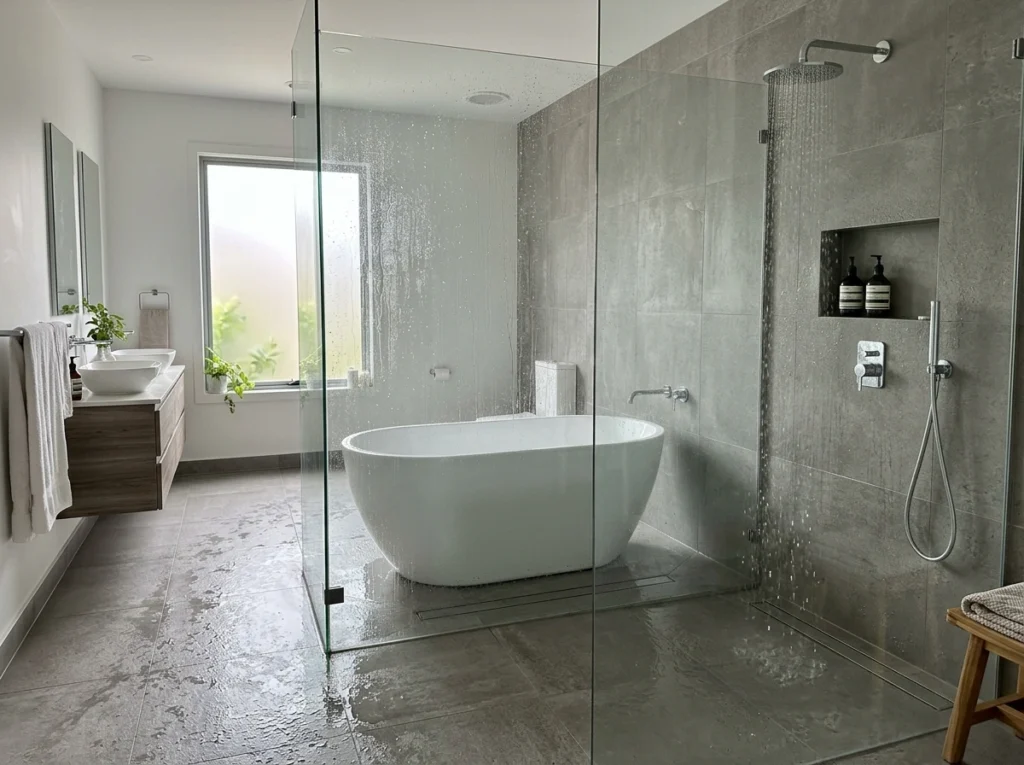
One of the most modern and practical design choices today is placing your freestanding tub directly inside an open, glass-enclosed wet-room shower area. This layout is incredibly functional because all the water, splashes, and steam are contained in one fully tiled zone. It looks incredibly sleek and open, eliminating the awkward chore of cleaning the tight spaces between a tub and a shower glass panel.
When designing a wet room, hiring a professional tile-setter is absolutely critical. The entire floor must be sloped correctly toward a central or linear drain so that water from both the shower and the tub splashes drains away quickly without pooling. Use high-quality, slip-resistant tiles throughout the wet area to keep the space safe when wet.
- Suggested Budget Range: $3,500 – $7,000+ (requires extensive tiling, waterproofing, and plumbing work)
18. Romantic Candlelit Alcove Soaker
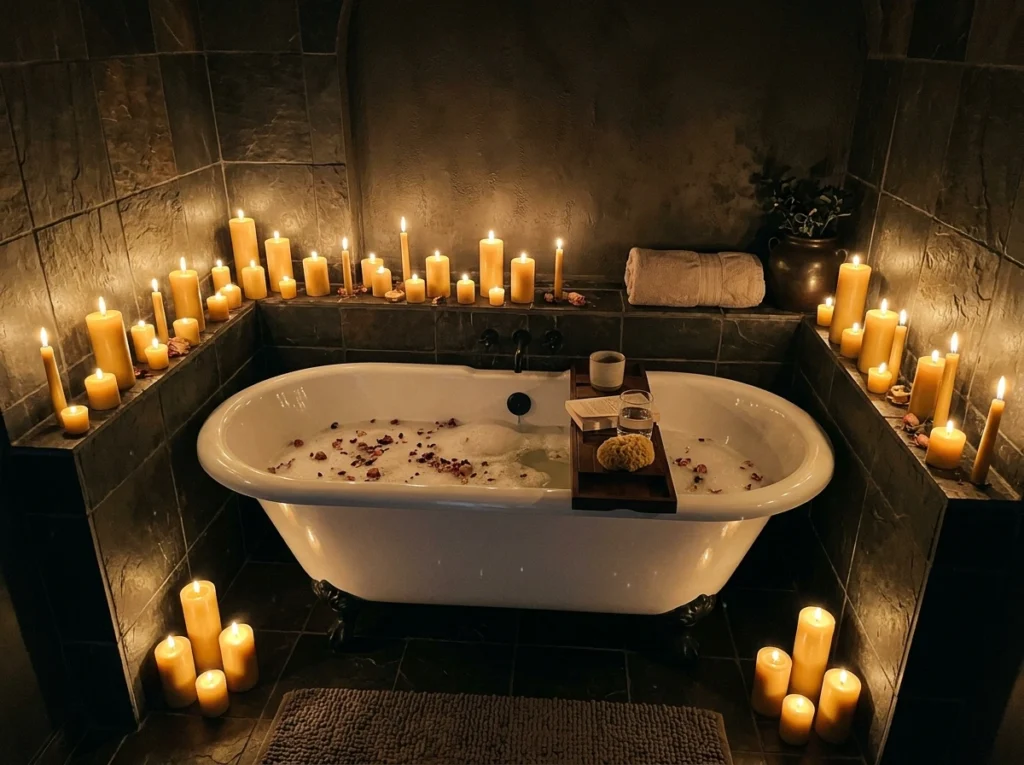
There is nothing quite like dimming the overhead lights, lighting a few candles, and sinking into a warm bath at the end of a hard week. Tucking a freestanding tub into a cozy, tiled alcove with dimmable recessed lighting or built-in candle ledges creates an incredibly intimate, romantic, and peaceful space. It feels like a warm hug, shielding you from the rest of the world and letting you truly unwind.
To style this alcove, build a shallow, tiled ledge or niche into the wall behind the tub to hold your favorite candles, bath salts, and a small speaker for quiet music. Avoid the mistake of using harsh, cool-toned LED lights; instead, choose warm-toned dimmable bulbs or stick strictly to real beeswax candles to create a soft, flickering glow that is incredibly soothing to the eyes.
- Suggested Budget Range: $1,500 – $3,000
Choosing Comfort and Simplicity Over Perfection
At the end of the day, creating a beautiful bathroom is not about spending a fortune or having a picture-perfect space that you are afraid to actually use. It is about setting up a quiet corner of your home that feels comfortable, functional, and deeply welcoming to you. Whether you decide to invest in a gorgeous new stone soaking tub or simply upgrade your current bath with a rustic wooden tray, a fresh waffle-weave towel, and a few potted plants, the goal is to make your daily routine feel just a little more special.
Which of these 18 Freestanding Bathtub Ideas That Elevate Any Bathroom would you actually want to soak in first? Do you prefer the clean lines of a modern oval tub, or are you drawn to the warm, rustic character of a copper clawfoot? I would genuinely love to know—let’s chat in the comments below!
Frequently Asked Questions
Does a freestanding tub take up more space than a built-in tub?
Yes, freestanding tubs generally require more space because you need to leave at least four to six inches of breathing room between the tub and the walls to allow for easy cleaning, plumbing access, and to keep the bathroom from feeling cramped.
How do you clean the hard-to-reach floor behind a freestanding bathtub?
The easiest way to clean behind a freestanding tub is to ensure you leave enough space during installation to fit a slim microfiber mop or a vacuum attachment. A flexible duster and a handheld shower spray are also incredibly helpful for rinsing away dust and soap residue.
What is the most durable material for a freestanding tub?
Stone resin and cast iron are the most durable materials for a freestanding tub because they are highly resistant to scratching, chipping, and fading, and they retain heat beautifully. However, high-quality acrylic is a fantastic, lightweight, and budget-friendly alternative.
Are freestanding bathtubs comfortable to lounge in?
Freestanding tubs can be incredibly comfortable, especially slipper-style or double-slipper designs that feature a sloped, supportive backrest. To maximize comfort, choose a tub with a deep basin so you can soak fully, and add a soft waterproof bath pillow.
How do I add storage near a freestanding bath?
Since freestanding tubs don’t have built-in ledges, you can easily add storage by placing a rustic wooden stool, a small side table, or a rolling cart nearby to hold your towels and soaps. A high-quality wooden bath tray across the tub is also a perfect, stylish solution.