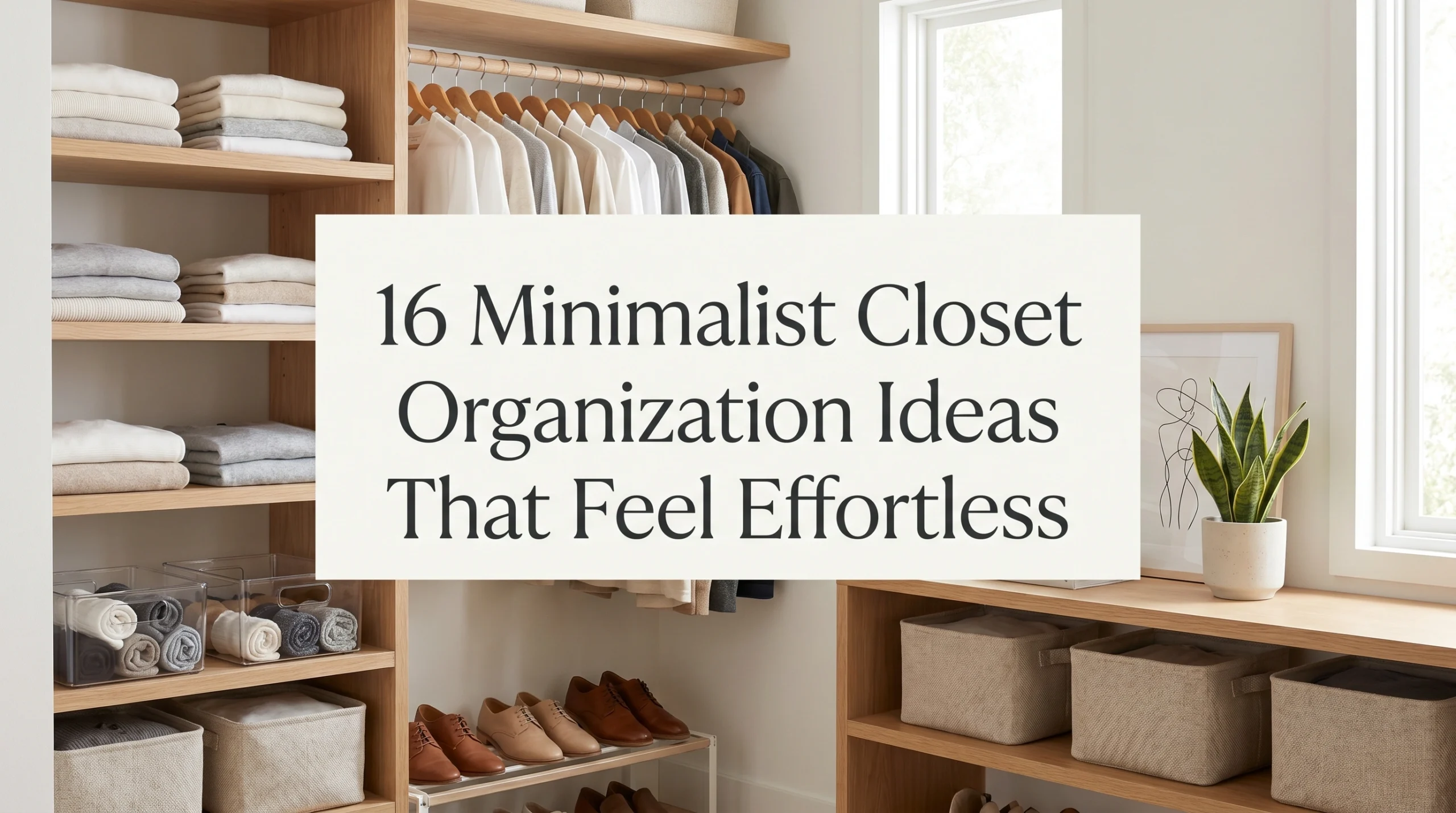
If your closet feels overwhelming, cluttered, or just visually heavy, you’re not alone. So many people crave a clean, minimal space—but feel stuck between wanting simplicity and needing practicality. The good news is, minimalist closet organization doesn’t mean getting rid of everything or creating a cold, empty space. It’s about making thoughtful choices that bring clarity, calm, and ease into your everyday routine.
Small changes can completely transform how your closet looks and feels. When everything has a place and visual clutter is reduced, your space instantly becomes more breathable and inviting. It’s not about perfection—it’s about creating a space that works for you while still feeling warm and personal.
In this guide, you’ll discover minimalist closet organization ideas that feel effortless, combining function with soft, Pinterest-worthy home styling. These ideas are simple, achievable, and designed to help you create a closet that feels clean, calm, and beautifully put together.
Slim Neutral Hangers for a Clean Base
A closet instantly feels lighter when bulky, mismatched hangers are replaced with slim, neutral ones. The visual lines become softer and more consistent, creating a calm and uncluttered look that feels effortless.
Switch to slim velvet or matte hangers in tones like beige, soft grey, or muted taupe. This simple change saves space and creates a more cohesive feel.
Keep Only What You Love and Wear
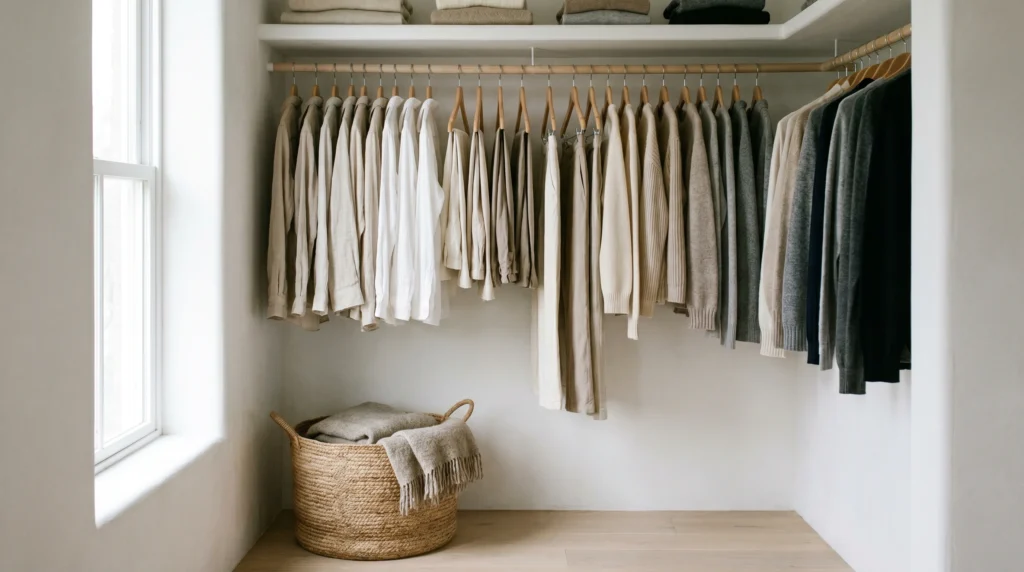
A minimalist closet feels peaceful because it isn’t overcrowded. Each item has room to breathe, creating a sense of clarity and ease every time you open the door.
Edit your wardrobe regularly and keep only items you truly wear and love. Let go of duplicates or pieces that no longer fit your lifestyle.
Soft Color Palette for Visual Calm
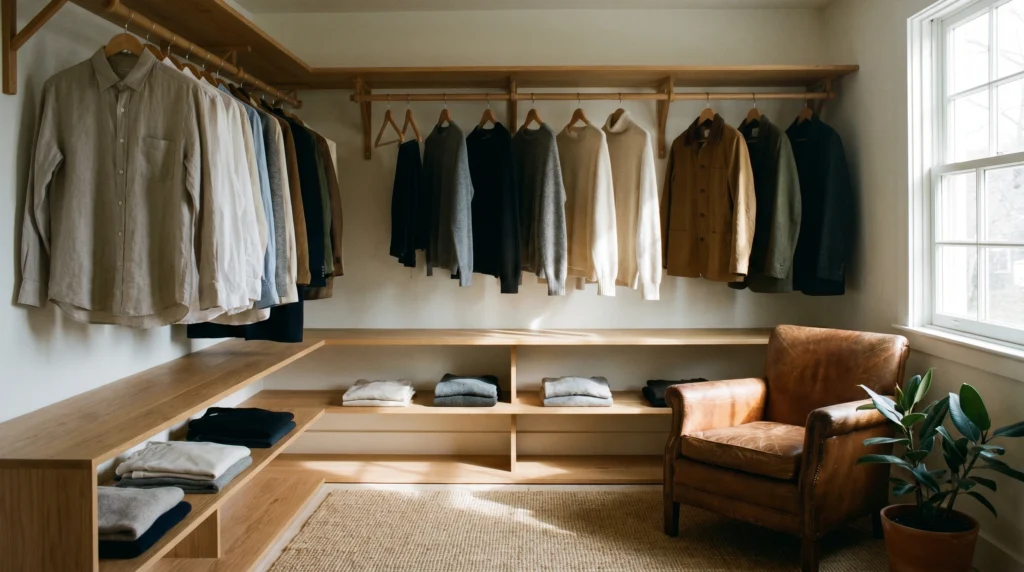
A soft, cohesive color palette creates a smooth, flowing look. It reduces visual noise and makes the space feel instantly more refined and intentional.
Stick to tones like white, cream, sage, soft blue, or muted blush. Group similar colors together for a seamless effect.
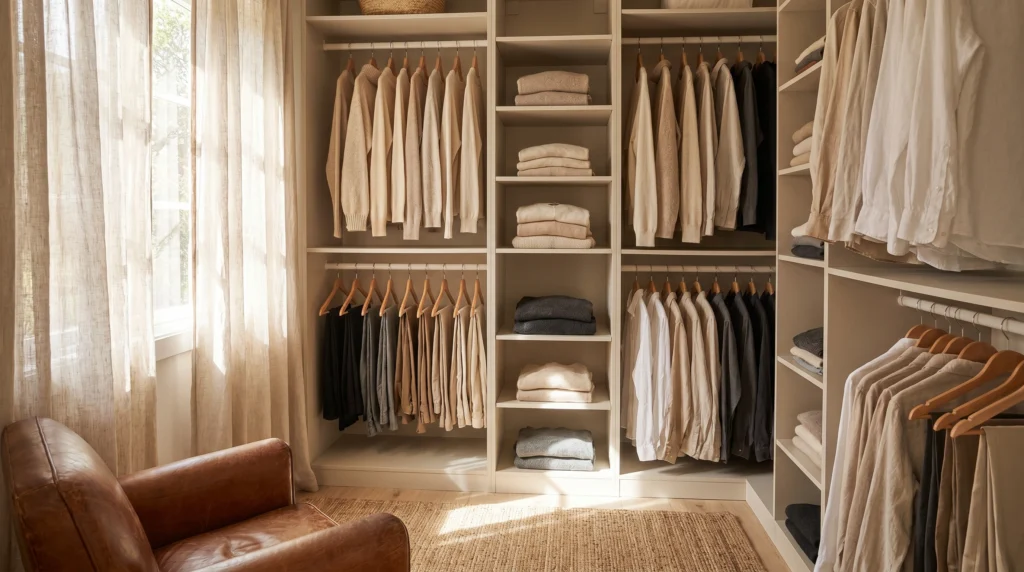
Open Space Between Items
Minimalist spaces feel effortless because they aren’t crowded. Leaving space between items creates a sense of airiness and calm.
Avoid overfilling rods or shelves. Give each item a little breathing room for a clean look.
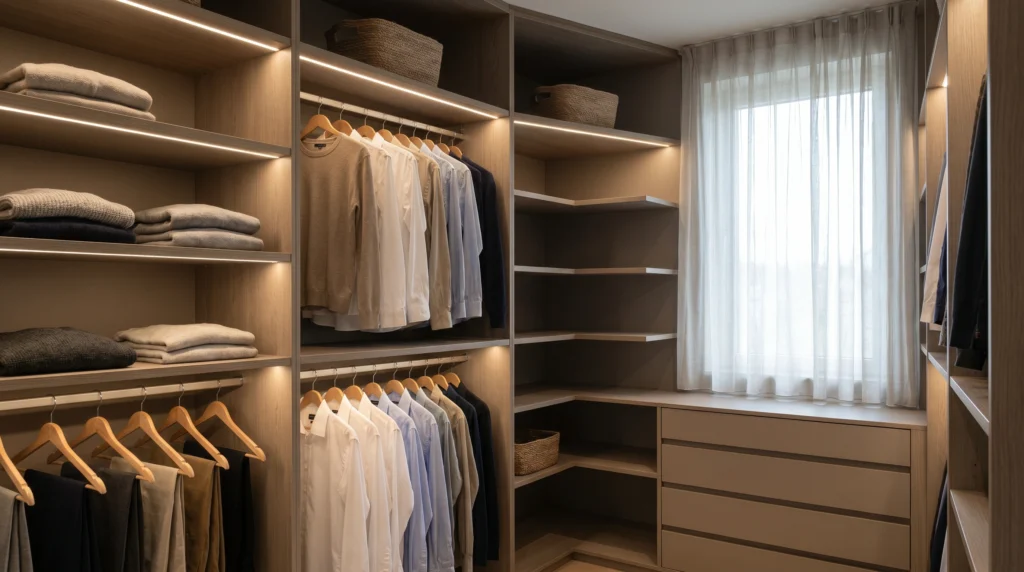
Folded Storage for a Balanced Look
Folding certain items instead of hanging them creates visual balance. It softens the overall look and adds variation to the layout.
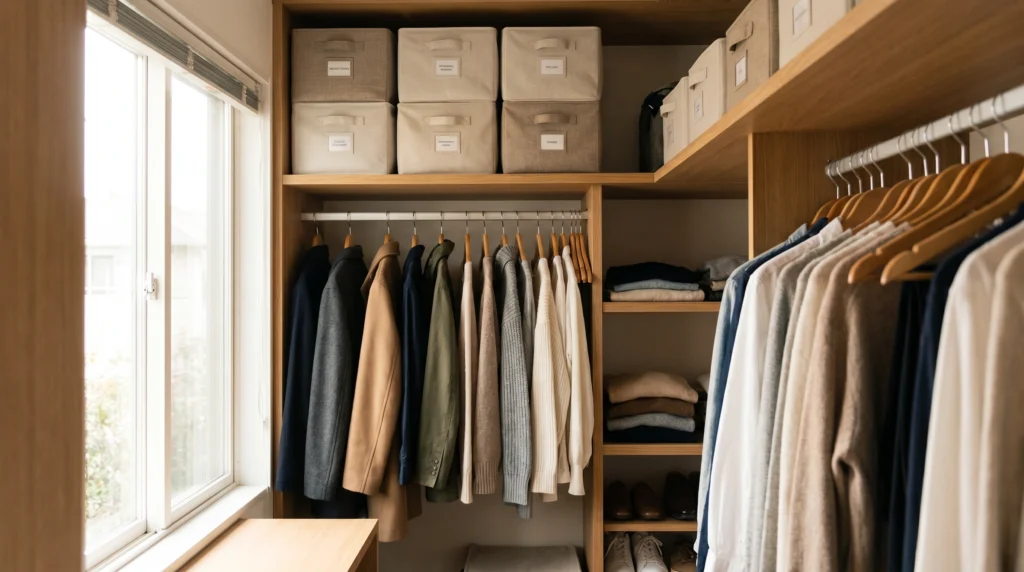
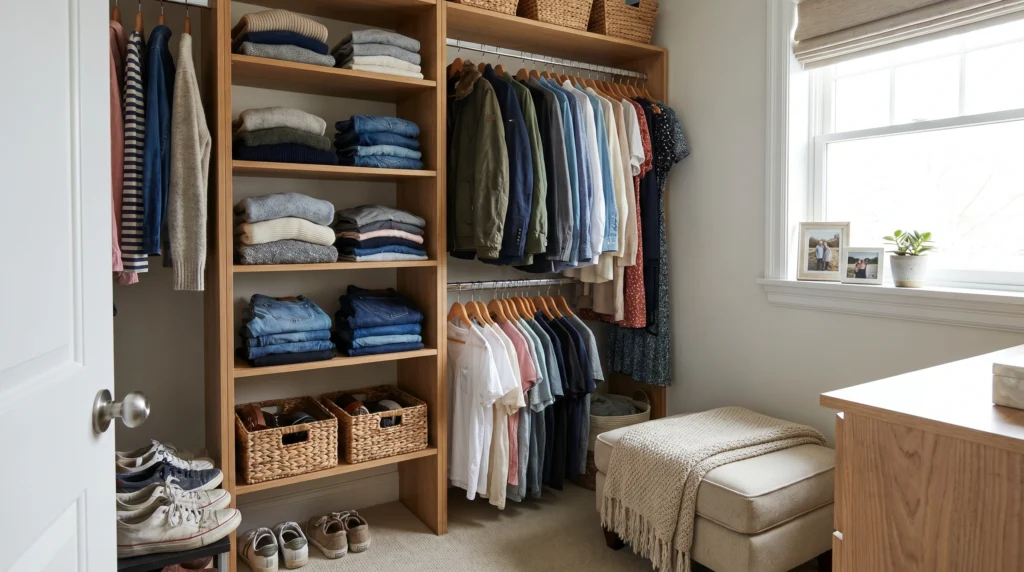
Fold sweaters and bulky items on shelves or in bins. Keep stacks neat and minimal.
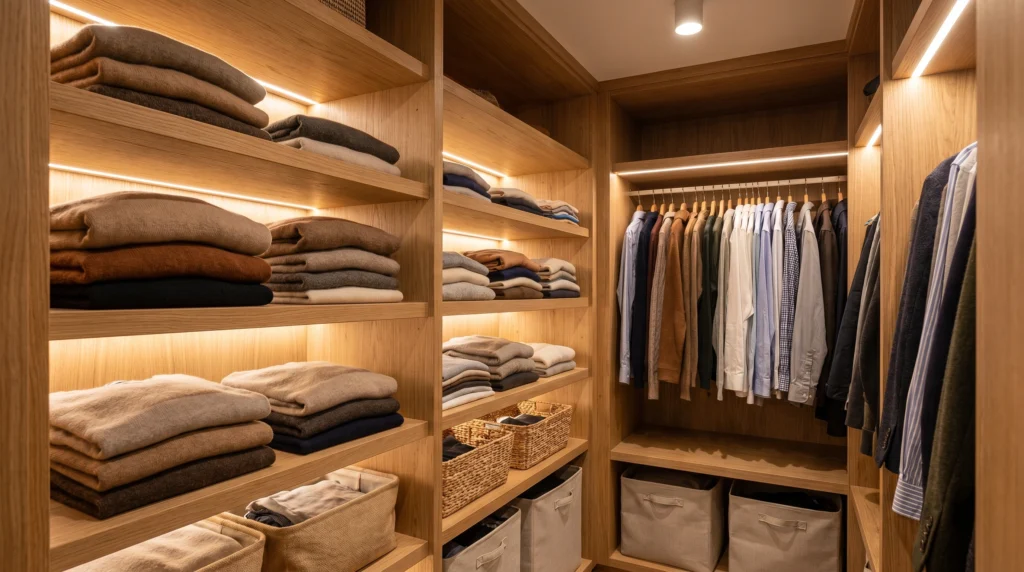
Hidden Storage for a Clean Finish
Minimalism thrives on simplicity. Hidden storage keeps clutter out of sight, allowing the visible space to remain calm and uncluttered.
Use closed boxes or bins for small or seasonal items. Keep visible areas minimal and intentional.
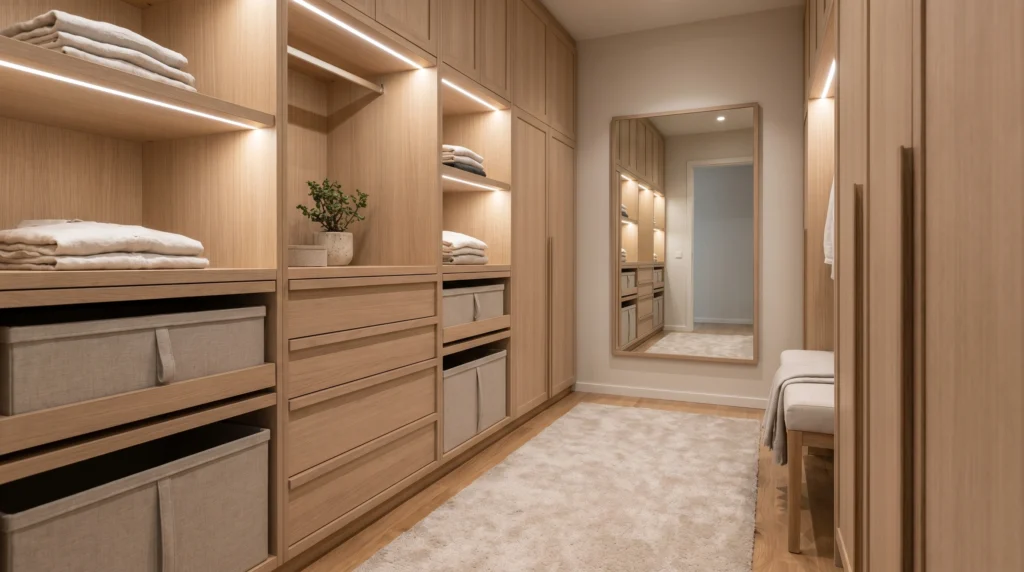
Woven Baskets for Subtle Texture
Minimal doesn’t have to mean flat or cold. Woven baskets add warmth and texture while maintaining a clean aesthetic.
Use a few baskets for accessories or folded pieces. Stick to neutral tones for cohesion.
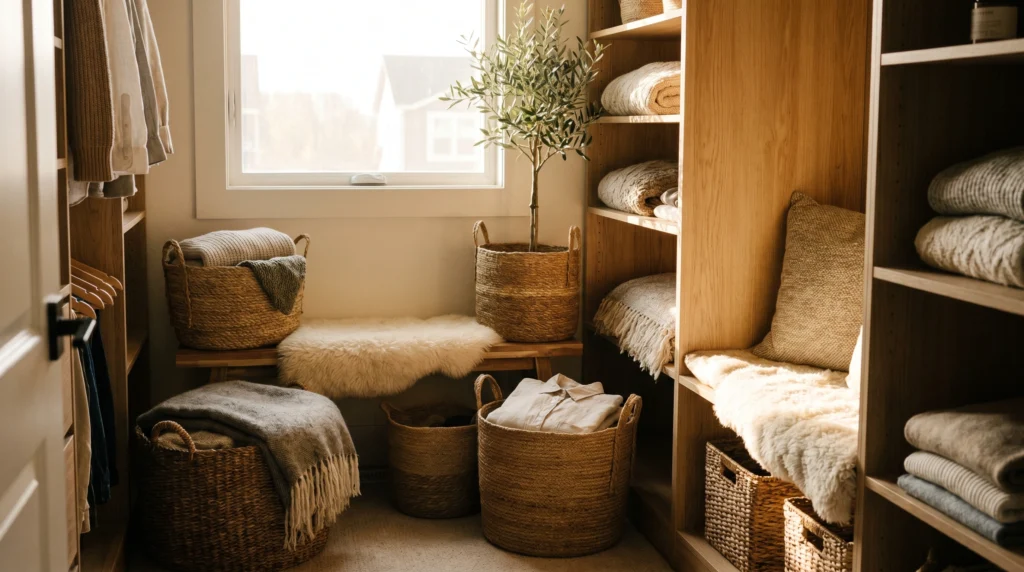
Limit Decor to a Few Intentional Pieces
A minimalist closet still feels personal—but not overcrowded. A few carefully chosen decor items create warmth without clutter.
Add one or two elements like a small tray, book stack, or folded linen.
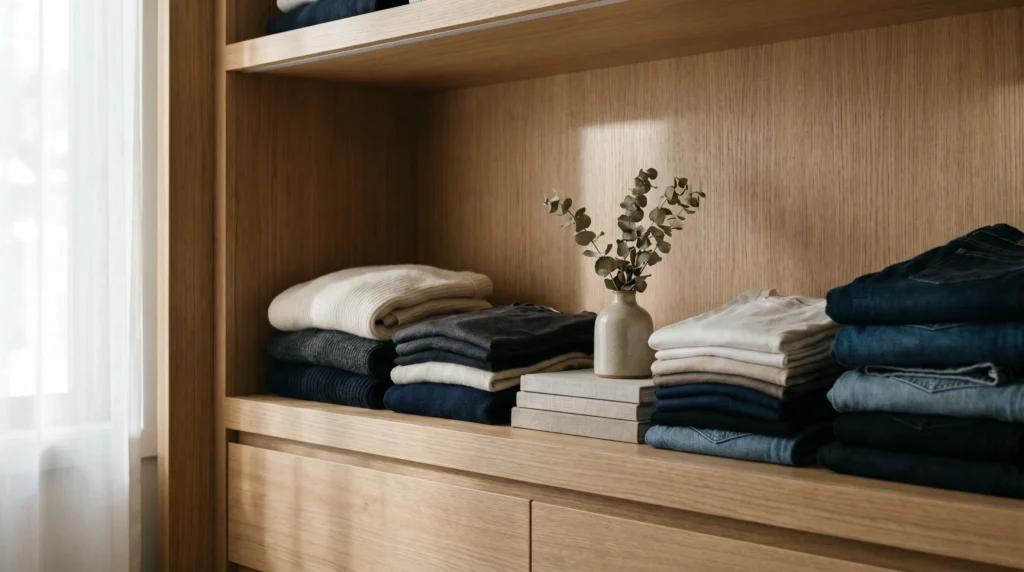
Use Vertical Space Thoughtfully
Using vertical space keeps the closet functional without making it feel busy. It allows for more storage while maintaining clean lines.
Add a high shelf for storage bins or less-used items.
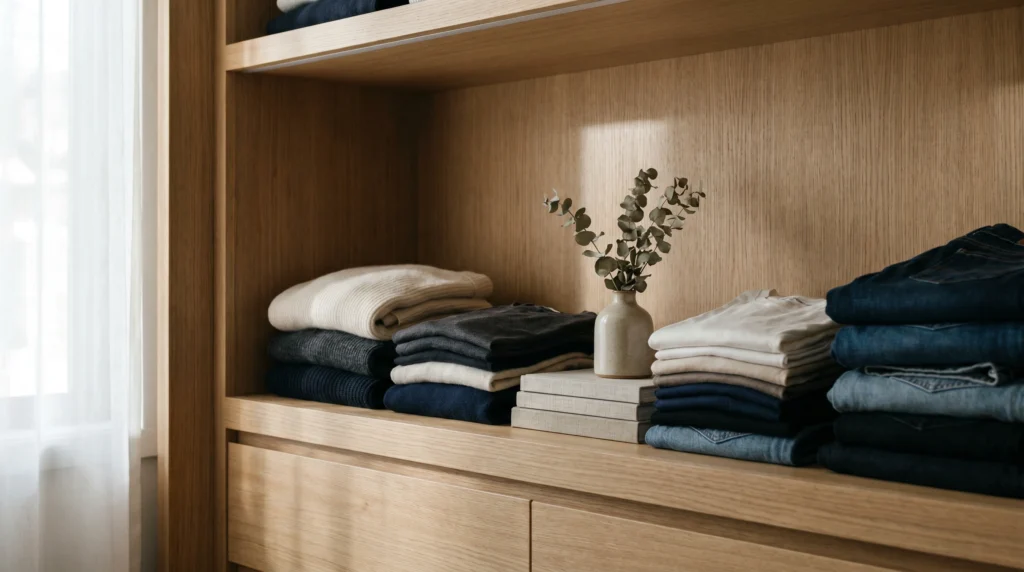
Drawer Dividers for Invisible Organization
Even hidden spaces should feel calm. Organized drawers make daily routines smoother and maintain the minimalist feel.
Use simple dividers to separate small items like socks or accessories.
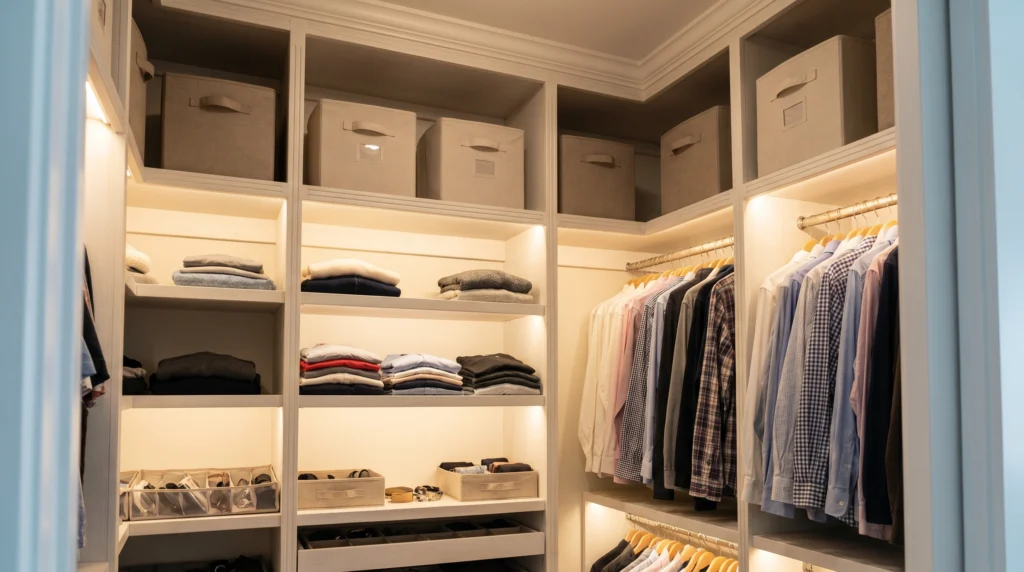
Light Wood Elements for Warmth
Light wood tones add a natural, grounding element to a minimalist closet. They keep the space from feeling too stark.
Incorporate wooden hangers, shelves, or small accents.
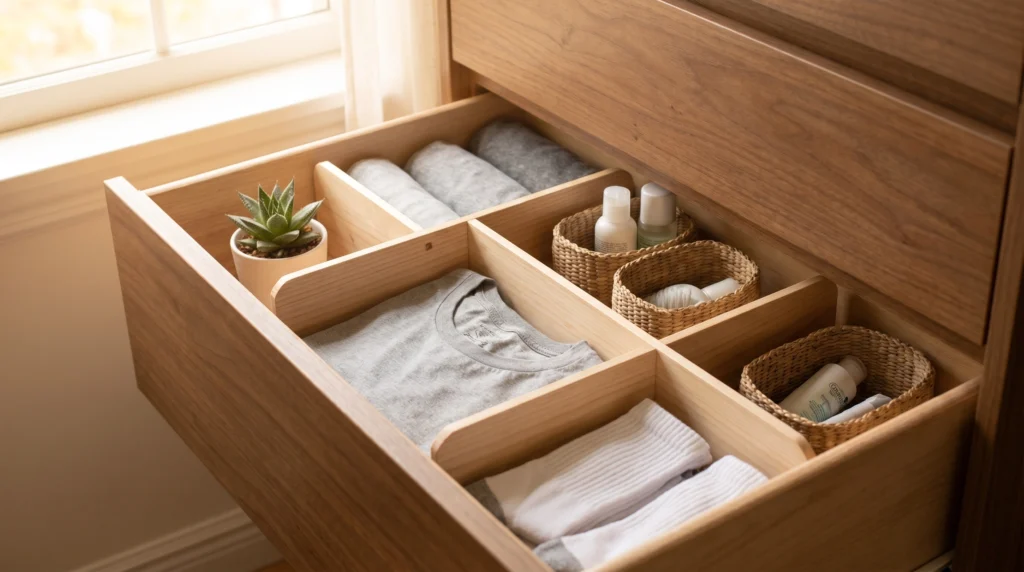
Mirror for Openness and Light
Mirrors reflect light and make the closet feel larger and brighter. They add a subtle, effortless elegance.
Place a simple mirror inside or near your closet.
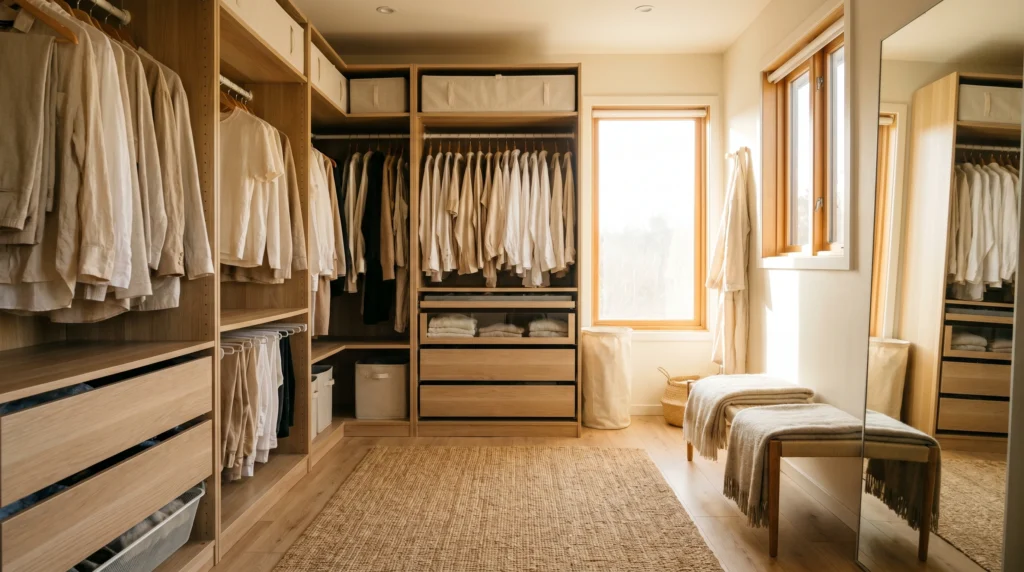
Soft Lighting for a Calm Atmosphere
Lighting can transform a space from basic to inviting. Warm tones create a relaxed, cozy feel.
Use LED strips or soft bulbs to enhance the ambiance.
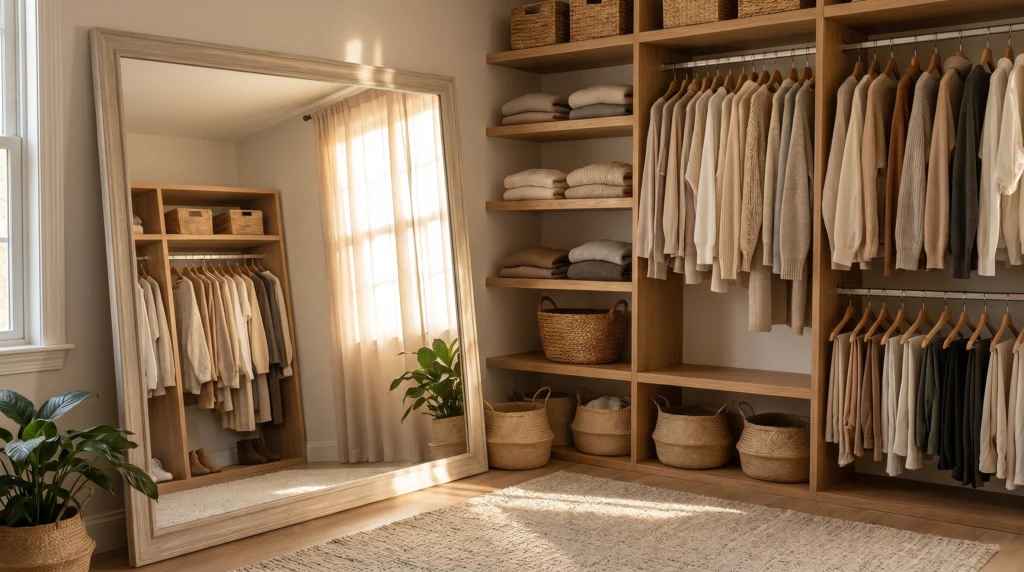
Seasonal Rotation for Less Clutter
A minimalist closet stays clutter-free by holding only what’s needed. Removing extra items creates space and clarity.
Store off-season clothing in bins and rotate regularly.
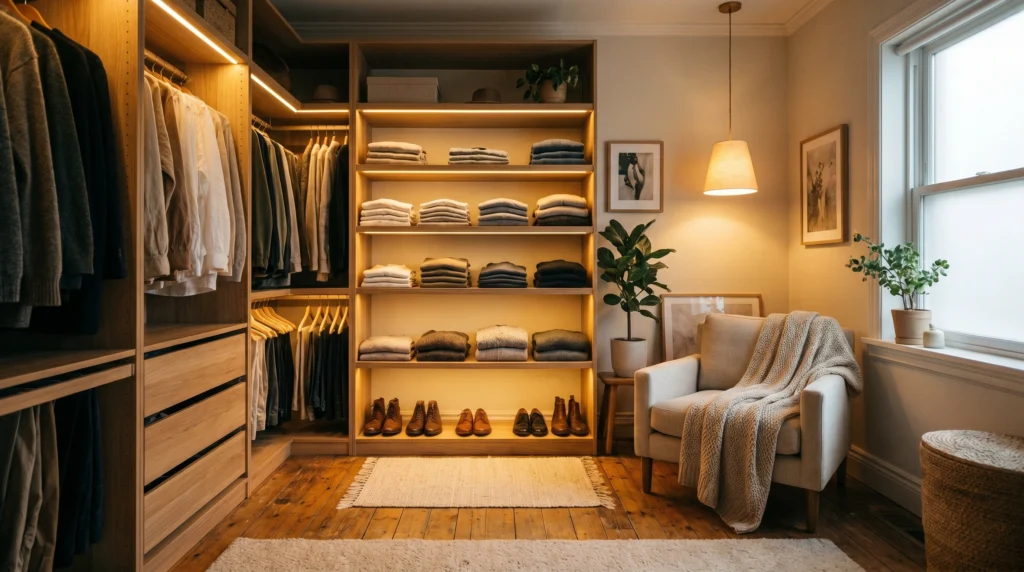
Clean Floor Space for Visual Breathing Room
An empty floor instantly makes a closet feel larger and calmer. It reduces visual weight and creates balance.
Keep shoes on racks or shelves instead of scattering them on the floor.
Simple Daily Reset Habit
Minimalism is maintained through small habits. A quick daily reset keeps the closet looking clean and effortless.
Return items to their place after use and avoid letting clutter build up.
Conclusion
Creating a minimalist closet isn’t about removing everything—it’s about keeping what matters and giving it space to shine. These minimalist closet organization ideas that feel effortless show how small, thoughtful changes can completely transform your space.
Start with one or two simple updates, like switching hangers or decluttering your wardrobe, and build from there. Over time, your closet will become a space that feels calm, functional, and easy to maintain.
With the right balance of simplicity, warmth, and practical design, your closet can feel like a peaceful extension of your home—clean, intentional, and effortlessly beautiful.