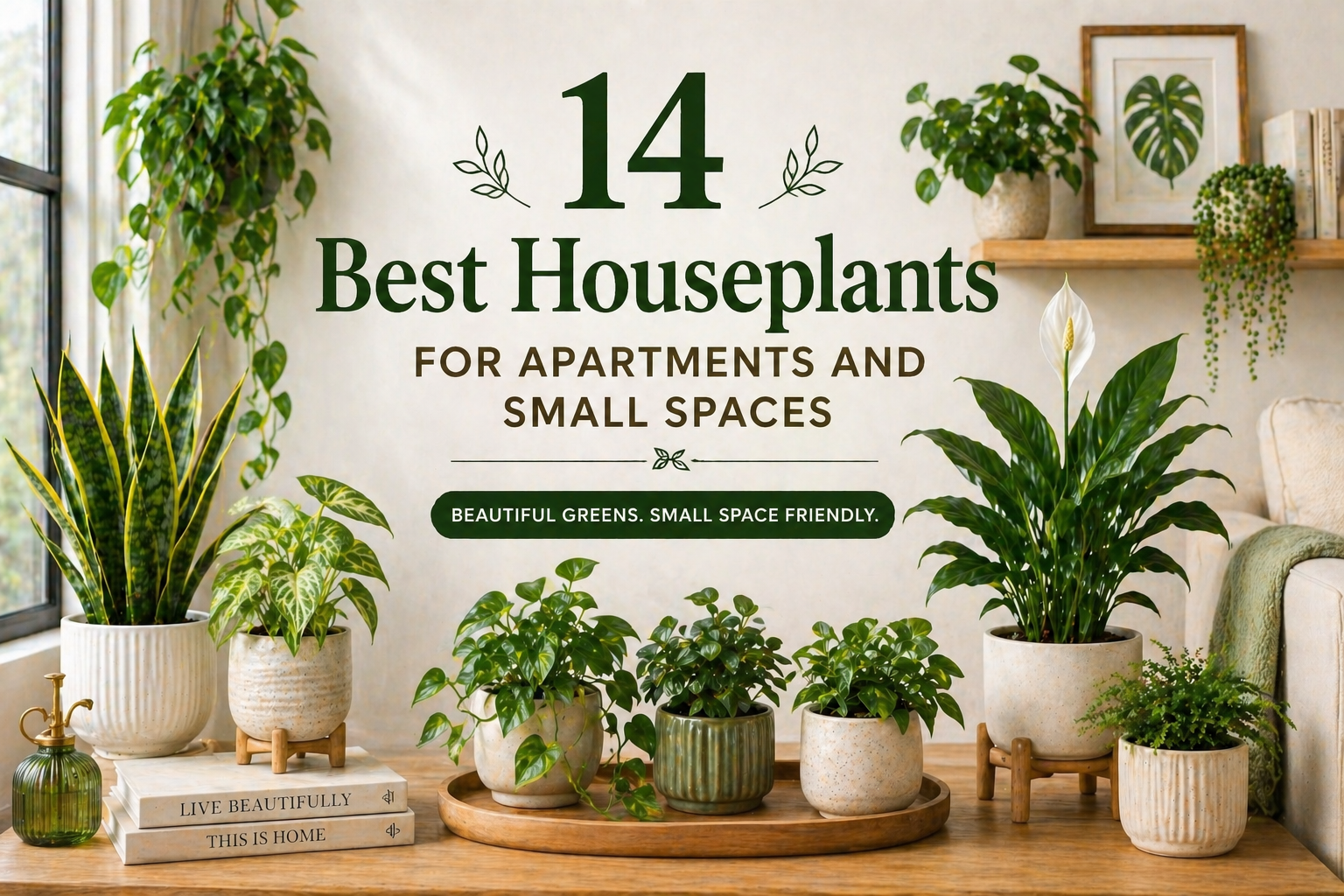
If you live in an apartment, you probably know the decorating struggle already. You want your home to feel fresh and inviting, but every surface matters. The windowsill is small, the corners are awkward, and the last thing you want is to buy a plant that takes over the room or dies a week later. That is exactly why choosing the best houseplants for apartments and small spaces matters so much. The right plant can make a studio feel softer, a tiny bedroom feel calmer, and a plain shelf feel finished without adding clutter.
What I personally love about decorating with plants is that they do not need a big budget or a huge floor plan to make a difference. A compact trailing vine, a slim upright plant, or a small tabletop pot can shift the mood of a room fast. It is one of the easiest affordable decor updates out there. In this post, I’m sharing 14 realistic, beginner-friendly plants that work well in everyday apartments and smaller homes. These are not fussy greenhouse plants meant for perfect conditions. They are practical, stylish, and easy to work into real life. If your space is limited but you still want that cozy, Pinterest-worthy home styling, these picks are a very good place to start.
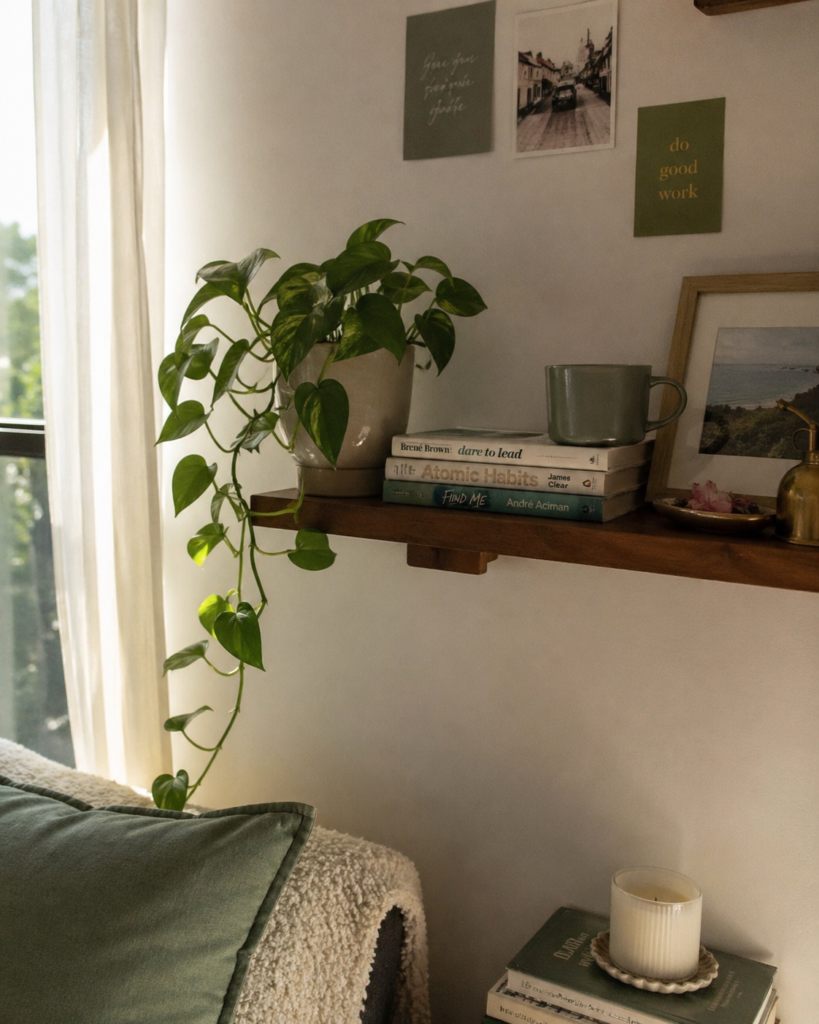
Pothos for Shelves and Cabinets That Need Softness
There is a reason pothos shows up in so many small-space home decor ideas. The trailing vines make a room feel softer almost instantly, especially when they spill from a bookshelf, cabinet top, or floating shelf. In an apartment where furniture edges can feel a little hard and boxy, that softness matters. It adds movement without using extra floor space, which is always a win in tighter rooms.
Pothos is also one of the easiest plants to keep alive, which makes it ideal for renters, beginners, and busy people. Place it in a 4- to 6-inch pot on a shelf with medium to bright indirect light, though it can handle lower light too. Water when the top inch of soil feels dry, usually every 7 to 10 days depending on the room. A small pothos usually costs around $8–$18. In my experience, the biggest mistake here is letting the vines get long and sparse without trimming them. A quick trim encourages fuller growth and keeps it looking lush instead of stringy.
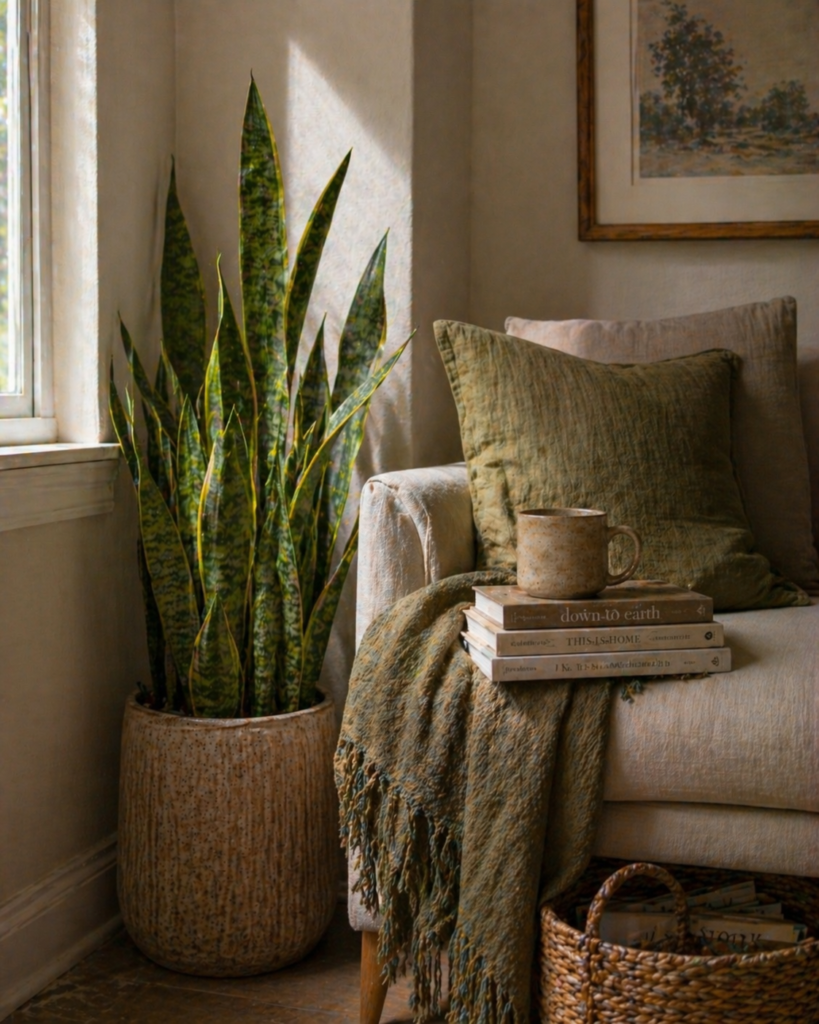
Snake Plant for Narrow Corners and Low Light
Snake plants are one of the smartest choices for apartments because they go upward instead of outward. That vertical shape gives a room structure without asking for a lot of square footage. In a narrow bedroom corner, beside a media console, or near an entry bench, it adds a clean, grounded look that makes the space feel more finished.
This is one I always recommend to anyone who asks me about starter plants for small homes. It tolerates low light, dry air, and missed waterings better than most. A medium snake plant in an 8-inch pot can sit happily in a corner that gets indirect light most of the day. Water every 2 to 3 weeks only after the soil is fully dry. Prices usually range from $12–$35. A lot of people skip checking the drainage hole, but it makes all the difference with this plant. Soggy soil is the quickest way to ruin it.
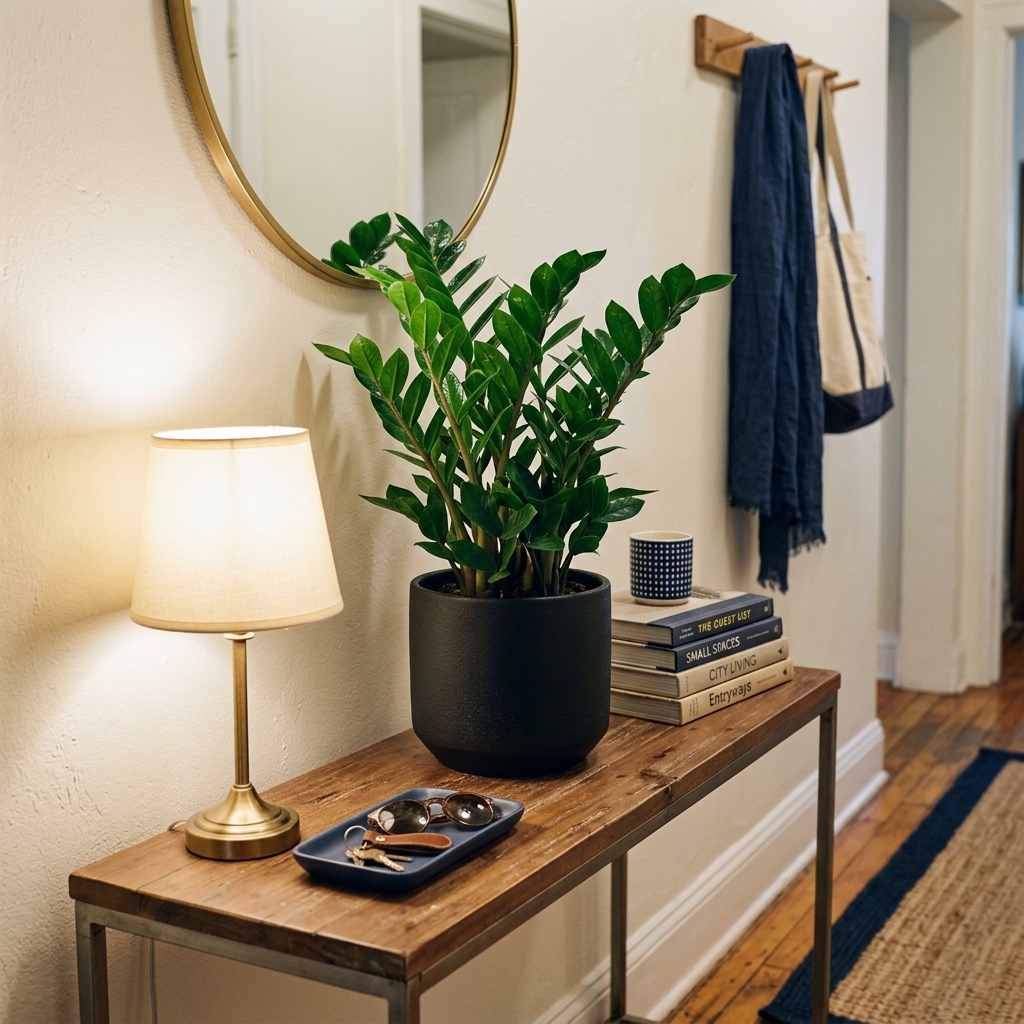
ZZ Plant for Rooms With Limited Sunlight
Some apartments get beautiful light. Others get one decent window and a lot of wishful thinking. That is exactly where the ZZ plant comes in. Its glossy leaves reflect light in a way that helps a dim room feel brighter, and the upright stems bring shape without feeling heavy or crowded.
If your bedroom, office nook, or entryway does not get much sun, this is a solid choice. ZZ plants do well in low to medium indirect light and prefer to dry out between waterings. Use a pot with drainage, keep it in a 6- to 8-inch planter, and water about every 2 to 3 weeks. Expect to spend around $15–$40. What I personally love about this is how low-effort it is. The common mistake is treating it like a thirsty tropical plant. It is much happier when you leave it alone.
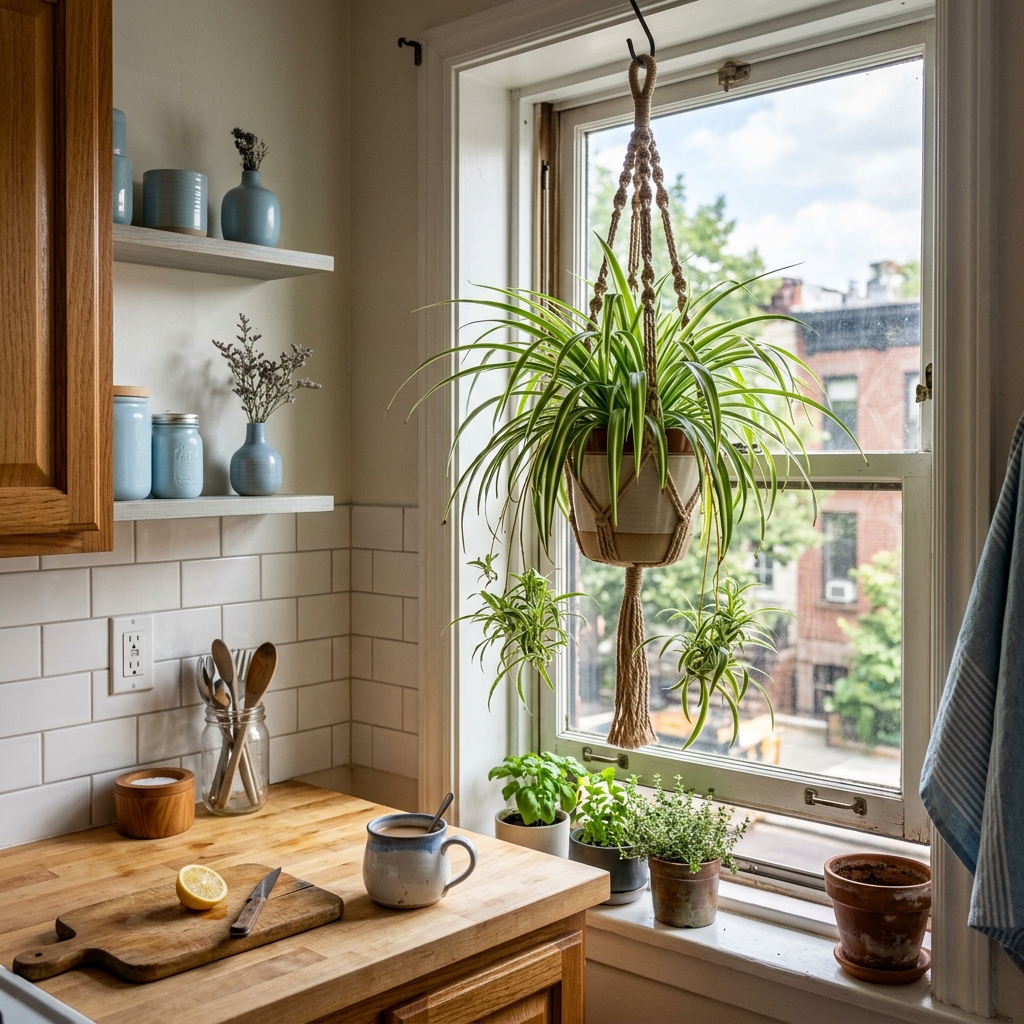
Spider Plant for Hanging Baskets in Tight Rooms
When surfaces are already full, hanging plants are a lifesaver. Spider plants work especially well because their arching leaves add a light, playful shape without feeling bulky. In a kitchen corner, bathroom window, or apartment office, they make the room feel more layered and alive.
Use a hanging planter or a high shelf where the leaves can drape naturally. Spider plants like bright to medium indirect light and usually need water about once a week, depending on how warm your apartment gets. A small one generally costs around $8–$15. In my experience, the biggest mistake here is putting it in a dark corner and hoping for the best. It can survive less-than-perfect conditions, but it stays much fuller and fresher with decent light.
Peperomia for Desks, Nightstands, and Tiny Surfaces
Peperomia is one of the best houseplants for apartments and small spaces because it stays compact and tidy. It is the kind of plant that works on a desk, a nightstand, a bathroom shelf, or even a narrow windowsill without ever feeling crowded. The leaves add texture and color, but the overall shape stays neat.
This is a great option if you want greenery in a spot where a larger plant would feel awkward. Place it in bright to medium indirect light and water only when the soil is mostly dry. A 4-inch peperomia in a simple ceramic pot usually costs $10–$18. I always recommend this to anyone who wants something easy but a little more interesting than a basic succulent. Tip: do not overpot it. Keeping it in a snug pot usually works better than jumping to something much larger.
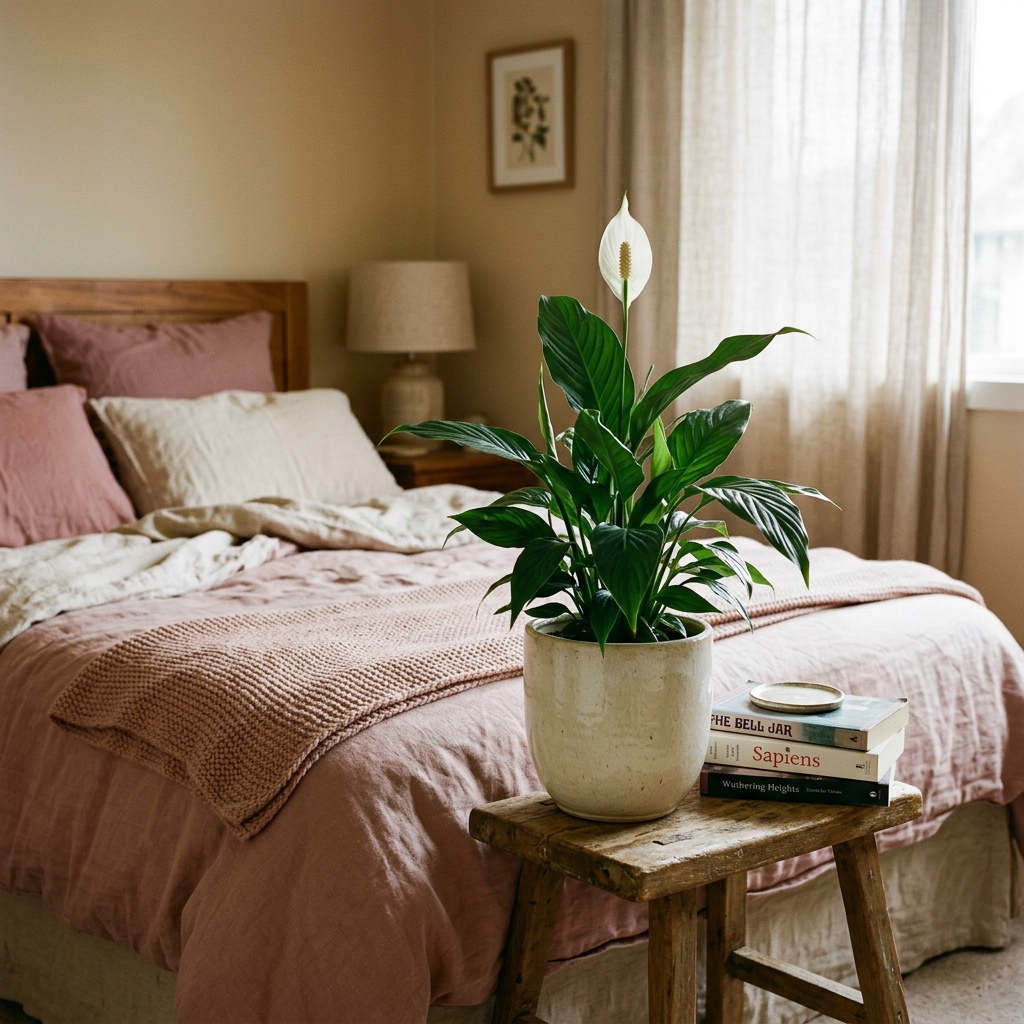
Peace Lily for Calm Bedroom Corners
A peace lily has a softer look than many small-space plants. The dark green leaves and white blooms make a room feel fresher and calmer, which is exactly why it works so well in bedrooms and reading corners. It has a clean look, but it never feels cold.
Peace lilies do well in medium to low indirect light, which makes them practical for apartments that do not have huge sunny windows. Use a pot with drainage and water when the top inch of soil feels dry. A medium peace lily usually runs around $15–$30. What I personally love about this is that it tells you when it needs water by drooping a little. A lot of people skip paying attention to those cues, but once you learn them, this plant becomes much easier to manage.
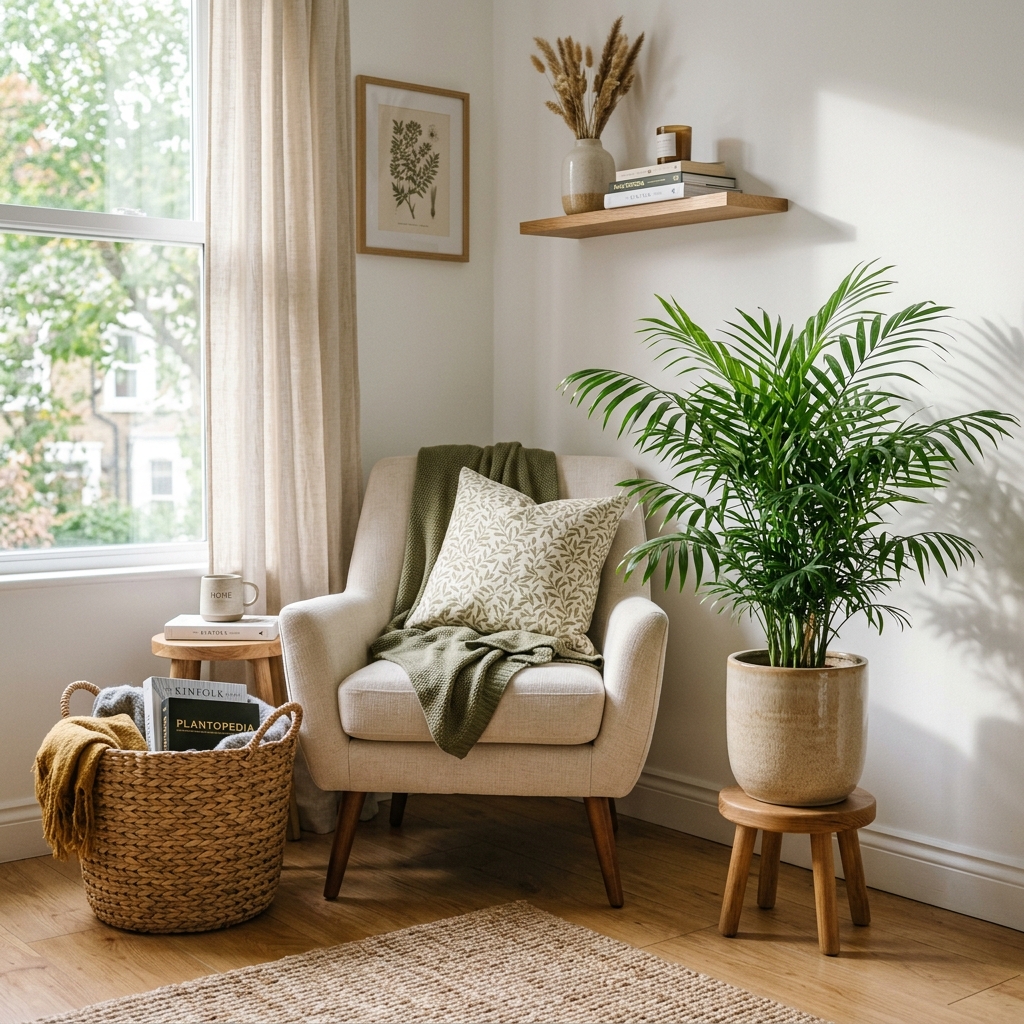
Parlor Palm for a Light, Airy Feel
Some plants feel heavy in a small apartment. Parlor palm is the opposite. Its feathery leaves bring softness and movement, which helps a room feel relaxed rather than packed. It works especially well in corners where you want greenery but do not want a dense, bushy shape.
Parlor palms do well in medium to low light and stay fairly manageable in size indoors. Place one in a slim planter near a chair, dresser, or sofa arm where it can fill space without crowding traffic flow. Water when the top inch of soil dries out. Prices usually range from $12–$30. In my experience, this is one of the best choices if you want something that feels gentle and airy. Tip: avoid oversized pots, because they can hold too much moisture.
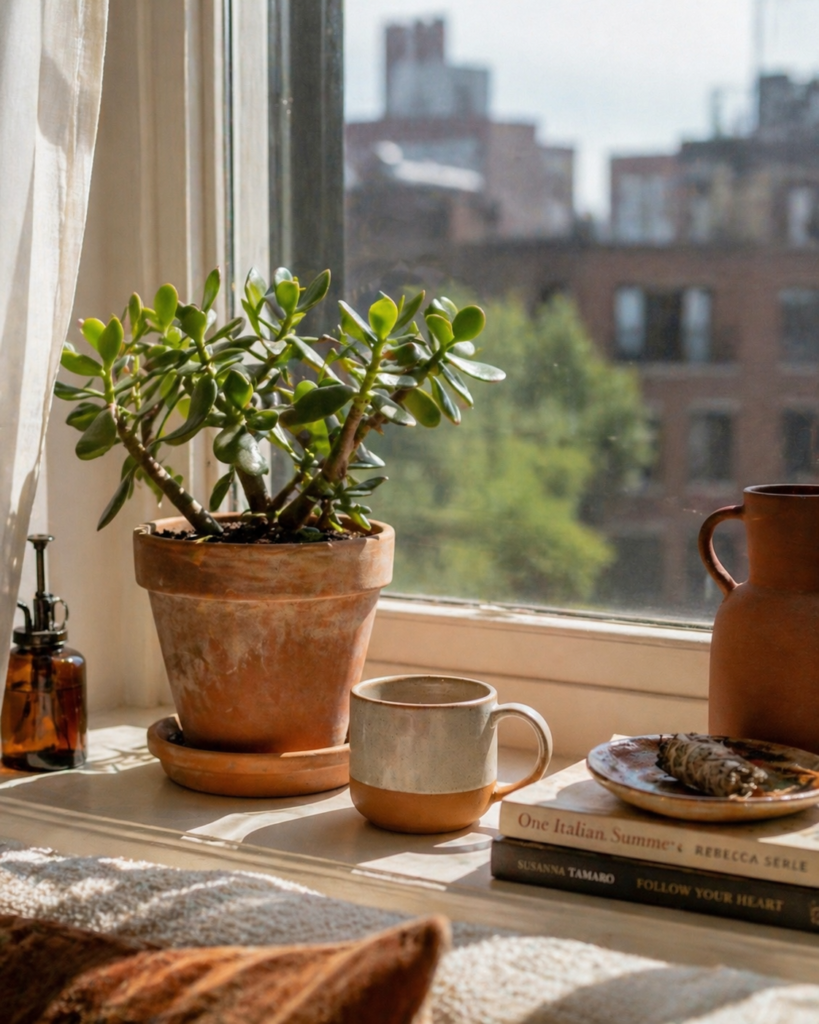
Jade Plant for Sunny Windowsills
If your apartment has one good sunny windowsill, a jade plant is a smart use of it. The rounded, thick leaves look clean and sculptural, and because the plant stays relatively compact, it works beautifully in kitchens, home offices, and little breakfast nooks.
Jade likes bright indirect light and can handle some gentle direct sun. Let the soil dry fully before watering, and use a pot with drainage so the roots do not stay wet. A small jade plant usually costs around $10–$20. I always recommend this to anyone who wants a tidy-looking plant that does not need constant fuss. In my experience, the biggest mistake here is watering it too often just because it is in a small pot.
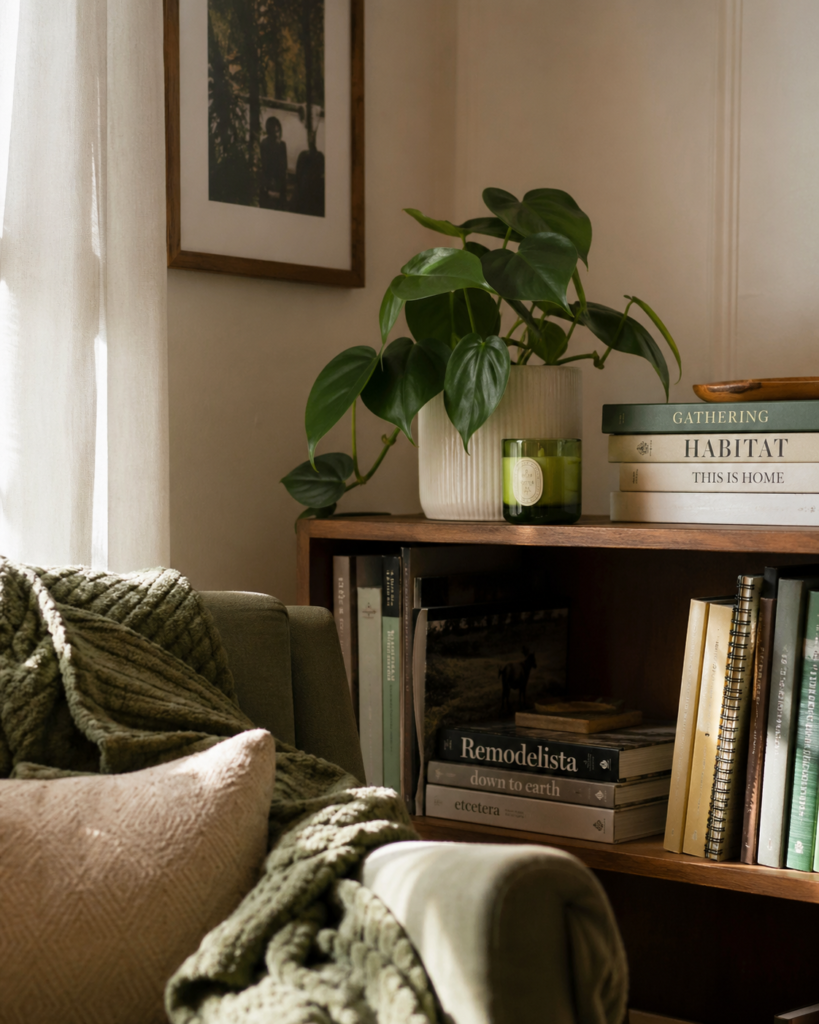
Philodendron for Bookcases and Reading Nooks
Philodendrons have soft, heart-shaped leaves that make a room feel relaxed and welcoming. In a small apartment, that matters because compact spaces can easily start feeling too sharp or overly functional. A philodendron on a bookcase or shelf adds warmth without needing a lot of room.
This plant does well in medium indirect light and can handle lower light conditions better than many beginners expect. Water when the top inch of soil dries out, and let it trail gently from a shelf or train it upward on a small support. Most small philodendrons cost around $10–$20. A lot of people skip rotating the pot, but that small habit helps the plant grow evenly instead of leaning hard toward one side.
Aloe Vera for Functional Kitchen Styling
Aloe vera works especially well in apartments because it is compact, useful, and easy to place in bright functional areas like kitchens and bathrooms. The pointed leaves add shape and texture, which is helpful if your decor leans soft and needs a little contrast.
Keep aloe in a terracotta or ceramic pot with drainage and place it in your brightest spot. It likes bright light and very dry soil between waterings, so it is a good fit if you want a low-maintenance plant for a sunny corner. Prices usually land around $8–$18. What I personally love about this is that it feels both decorative and practical. Tip: if the leaves start looking thin or mushy, you are probably watering too much.
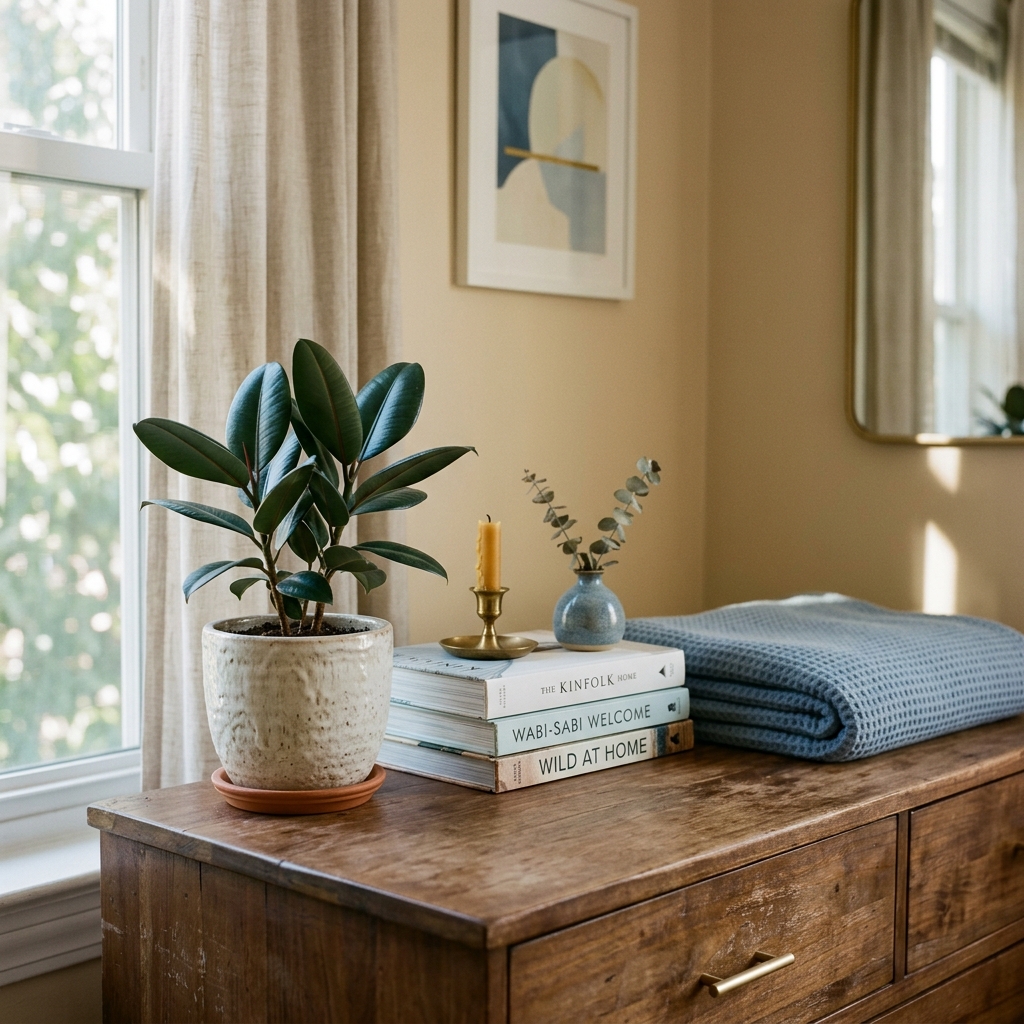
Rubber Plant for a Compact Statement
If you want one plant that makes more of an impact without taking over the room, a small rubber plant is a very good option. The broad, glossy leaves bring depth and richness, which helps smaller rooms feel more layered. It is especially nice in apartments with simple furniture that needs one darker, fuller element.
Rubber plants like bright indirect light and do best when the top couple of inches of soil dry out between waterings. A compact rubber plant in a medium pot typically costs around $15–$30. I always recommend wiping the leaves with a soft cloth now and then because it keeps them glossy and helps the plant look its best. The biggest mistake here is placing it too close to cold drafts or harsh afternoon sun.
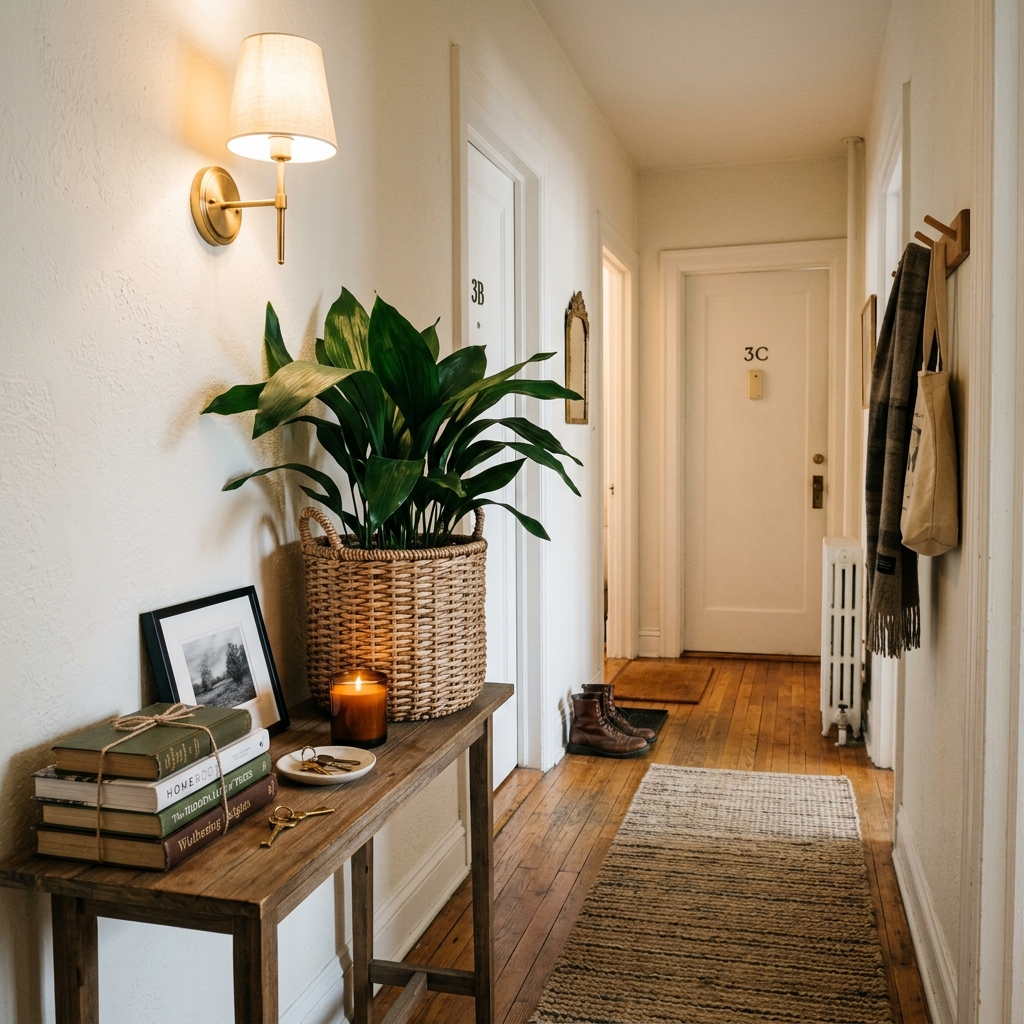
Cast Iron Plant for Tough Apartment Conditions
Apartment living is not always ideal for plants. Dry air, inconsistent light, and tight corners can make some varieties struggle fast. The cast iron plant gets its name for a reason. It is sturdy, calm, and far less dramatic than many other houseplants.
This is a great pick for darker rooms, narrow hallways, or renters who do not want something delicate. Keep it in low to medium indirect light and water once the top layer of soil is dry. A medium cast iron plant usually costs around $18–$40. In my experience, this is one of the safest choices for anyone who has killed a few plants already and wants a second chance. Tip: do not place it in strong direct sun, because that can scorch the leaves.
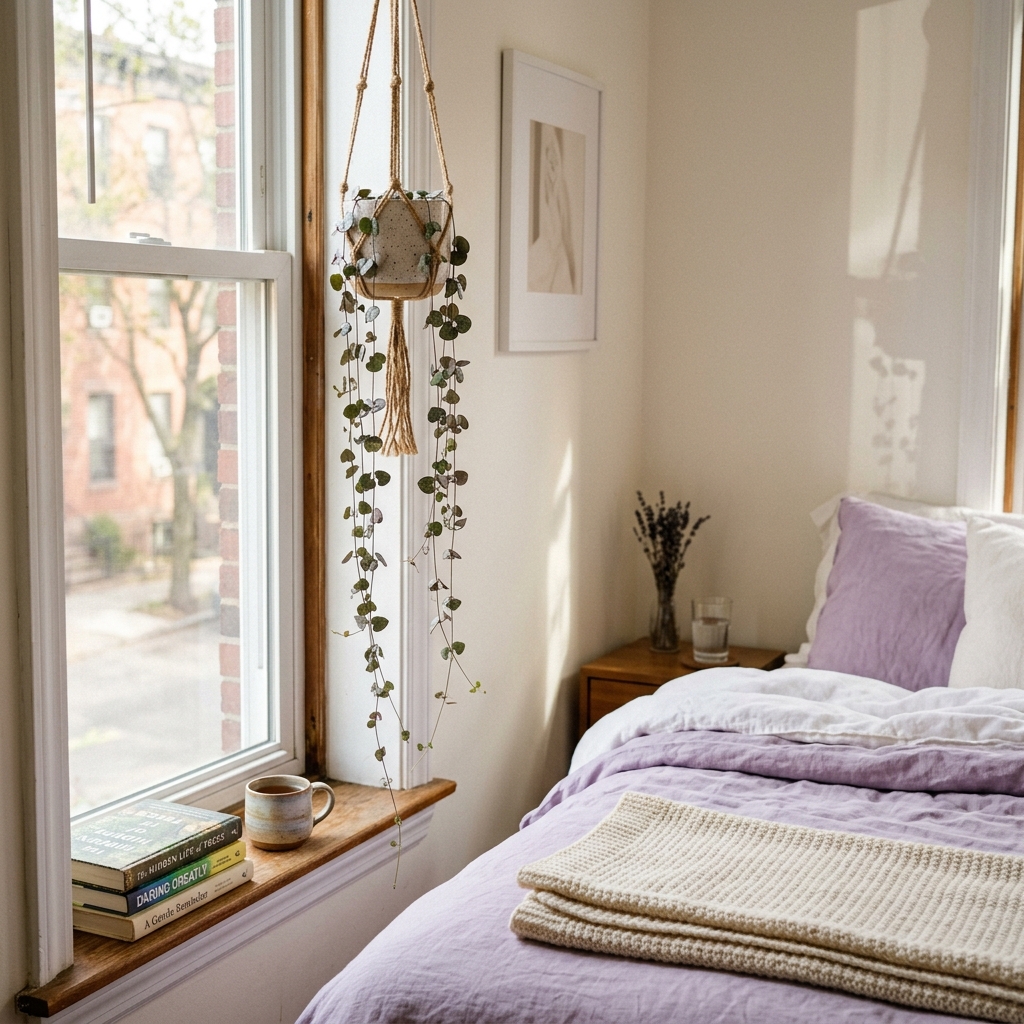
String of Hearts for Vertical Apartment Styling
String of hearts is one of those plants that looks delicate but can be surprisingly apartment-friendly when placed well. The thin vines and tiny heart-shaped leaves bring a romantic, airy look that works beautifully in bedrooms, near mirrors, or on high shelves where the strands can trail down.
It prefers bright indirect light and likes the soil to dry between waterings. Use a small hanging planter or shelf pot so the vines have room to fall naturally. Prices are usually around $12–$25 depending on size. What I personally love about this is how much visual interest it adds without any bulk. A lot of people skip giving it enough light, and then the vines get sparse, so placement matters here.
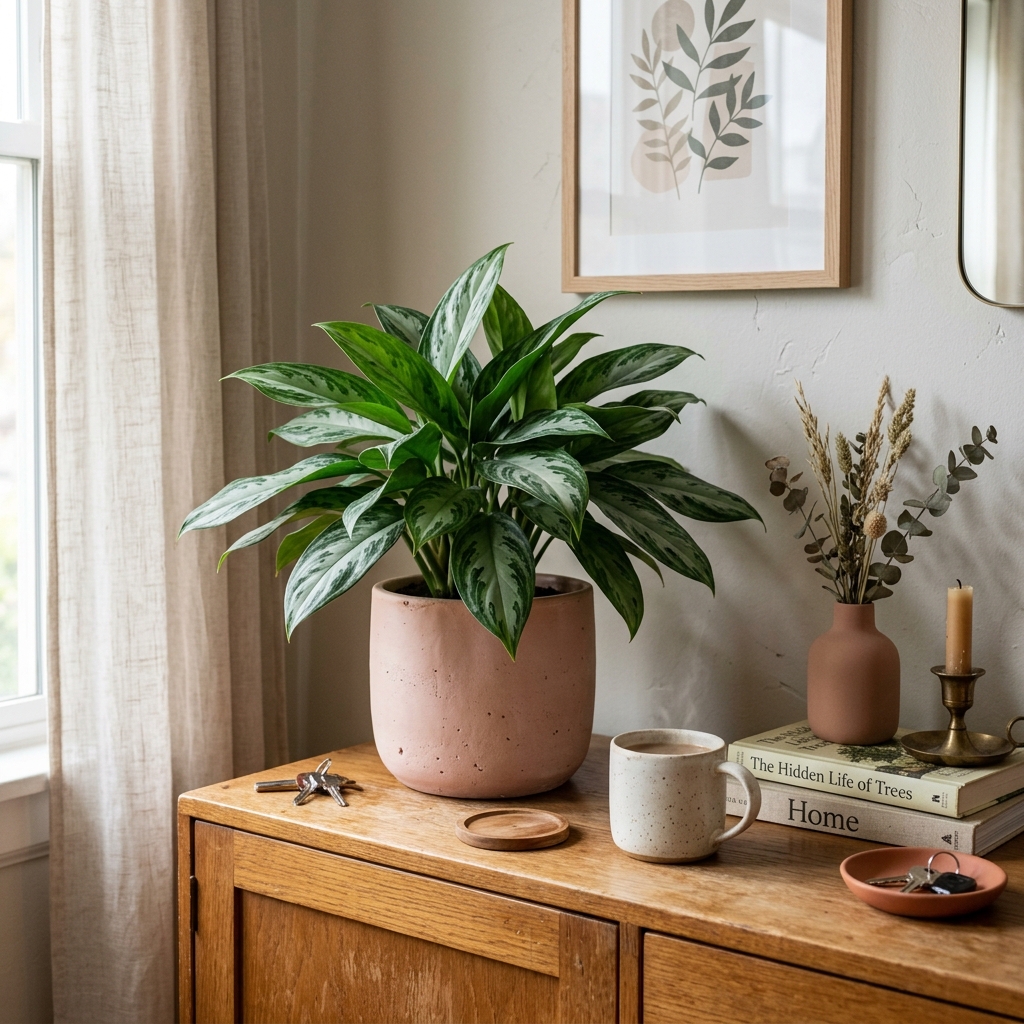
Chinese Evergreen for Color in Small Rooms
If your apartment decor feels a little too plain, Chinese evergreen is a smart way to bring in subtle color without using loud accessories. Many varieties have soft pink, silver, or patterned leaves, which makes them feel decorative even in a small pot.
Chinese evergreen does well in medium to low light and likes lightly moist soil, though not soggy conditions. Place it on a side table, dresser, or console where the leaf pattern can show. Small to medium plants usually cost around $15–$35. I always recommend this to anyone who wants something easy but a bit more visually interesting than basic green foliage. Tip: rotate it every few weeks so it grows evenly.
Conclusion
The nice thing about the best houseplants for apartments and small spaces is that they prove you do not need a huge home to make a room feel fresh, warm, and personal. A stylish home is rarely about square footage. It is about noticing what a room needs and making small choices that work with your actual life. Sometimes that is a pothos on a shelf. Sometimes it is a snake plant in a corner that felt empty for months.
If you are just getting started, do not try to fill every surface at once. Pick one or two plants that match your light, your schedule, and the spots you already have. A compact jade plant on a sunny sill or a ZZ plant in a darker entry can go a long way. In my experience, that is how good apartment styling comes together: slowly, practically, and in a way that still feels personal.
What I personally love most about plants in small homes is that they make even ordinary rooms feel softer and more lived in. Which of these are you trying first? Drop it in the comments — I’d love to know.
FAQs
What are the best low-maintenance houseplants for apartments?
Some of the easiest low-maintenance choices are snake plant, ZZ plant, pothos, jade plant, and cast iron plant. These tend to handle average indoor conditions well and do not need constant attention. In my experience, the best plant is the one that matches your light first and your style second. That is what makes it last.
Which houseplants work best in small apartments with low light?
ZZ plant, snake plant, peace lily, cast iron plant, Chinese evergreen, and parlor palm are all good choices for lower-light apartments. They can handle filtered light and do not need strong direct sun to stay healthy. That said, low light does not mean no light, so try to place them somewhere they still get some natural brightness during the day.
How many plants should I keep in a small apartment?
For most small apartments, starting with two to five plants is more than enough. That gives you enough greenery to warm up the space without making it feel cluttered or hard to maintain. A lot of people buy too many at once and then get overwhelmed. Starting small usually leads to better results.
Where should I place houseplants in a small space?
Shelves, windowsills, narrow corners, desks, entry consoles, bathroom ledges, and hanging planters are all useful spots in smaller homes. Vertical placement matters a lot in apartments because floor space is limited. A lot of people skip wall shelves or hanging planters, but those are often the easiest ways to add greenery without losing usable space.
Are houseplants good for apartment decor?
Yes, they are one of the simplest ways to make an apartment feel warmer and more personal. Plants bring texture, color, and softness, which helps balance hard finishes like white walls, metal fixtures, and basic rental flooring. They also work well with many modern home decor trends because they make a room feel alive without needing a big budget or major changes.