You’ve been scrolling through plant accounts on Instagram for months. Your phone camera roll is full of screenshots of trailing pothos, dramatic fiddle-leaf figs, and little terracotta pots lined up on sunny windowsills. But every time you try to bring that same energy into your own home, something falls flat — or worse, dies within two weeks and you feel like the problem is you.
It’s not you. It’s the approach.
Indoor garden ideas work best when they’re matched to your actual space, your actual light, and your actual level of commitment. You don’t need a sunroom or a green thumb or a hundred-dollar plant stand. You need a starting point, a little direction, and ideas that are real — not just pretty on a mood board.
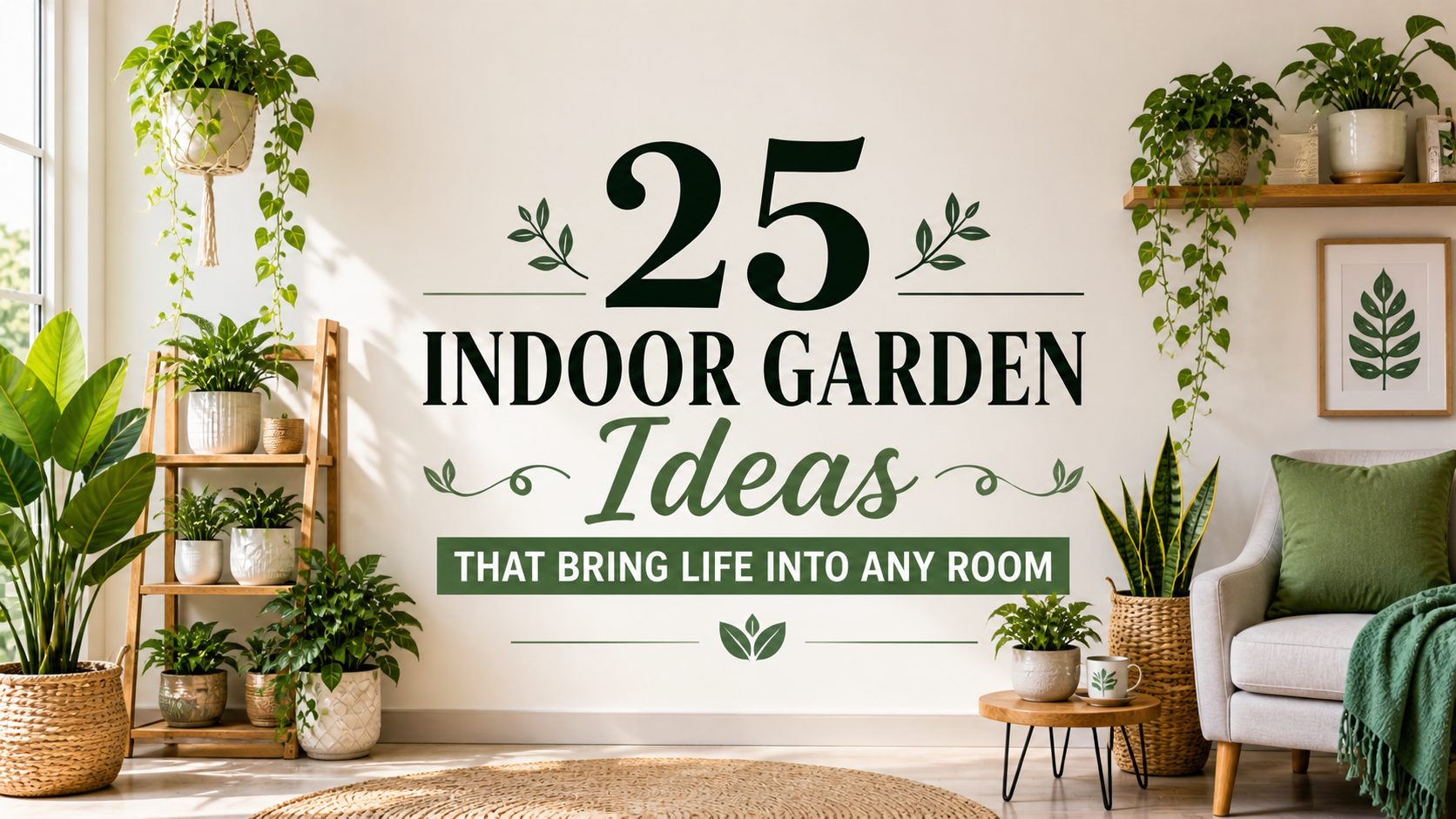
That’s exactly what this post is. Twenty-five indoor garden ideas that work in real homes, for real people, across every budget. Some take five minutes to set up. Some take a weekend. All of them will make your space feel more alive in a way that no throw pillow or wall print ever quite manages.
Whether you’ve got a bright south-facing window or a dim corner apartment, there’s something here for you. Let’s get into it.
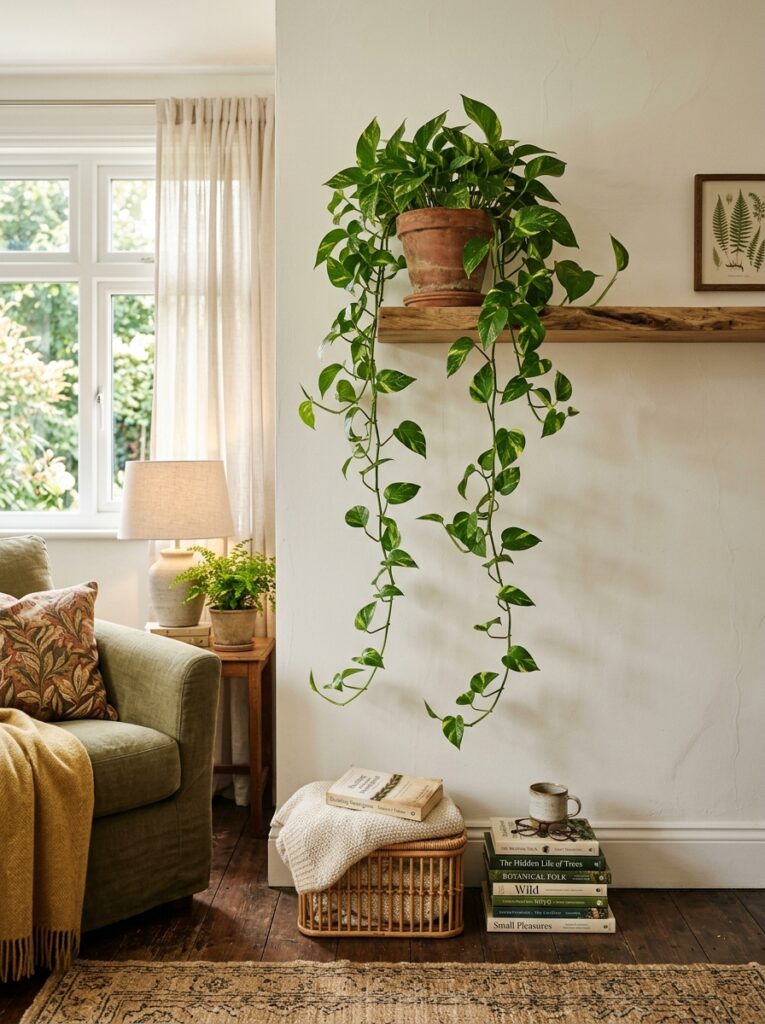
1. A Trailing Pothos Shelf That Fills an Empty Wall Corner
There are few plants more forgiving than a golden pothos, and few placements more satisfying than letting one trail down from a high shelf. It fills vertical space without taking up floor room, and the draping green vines make even a boring corner feel intentional.
Mount a floating shelf 6–7 feet up on a wall — IKEA LACK shelves work perfectly and run about $8–$12. Place a 4-inch or 6-inch pothos in a simple terracotta or matte white pot on the shelf and let gravity do the rest. Water once a week, and within a month you’ll have trails reaching a foot or more. In my experience, the biggest mistake here is placing the shelf too low. The higher it is, the more dramatic and full the cascade looks over time.
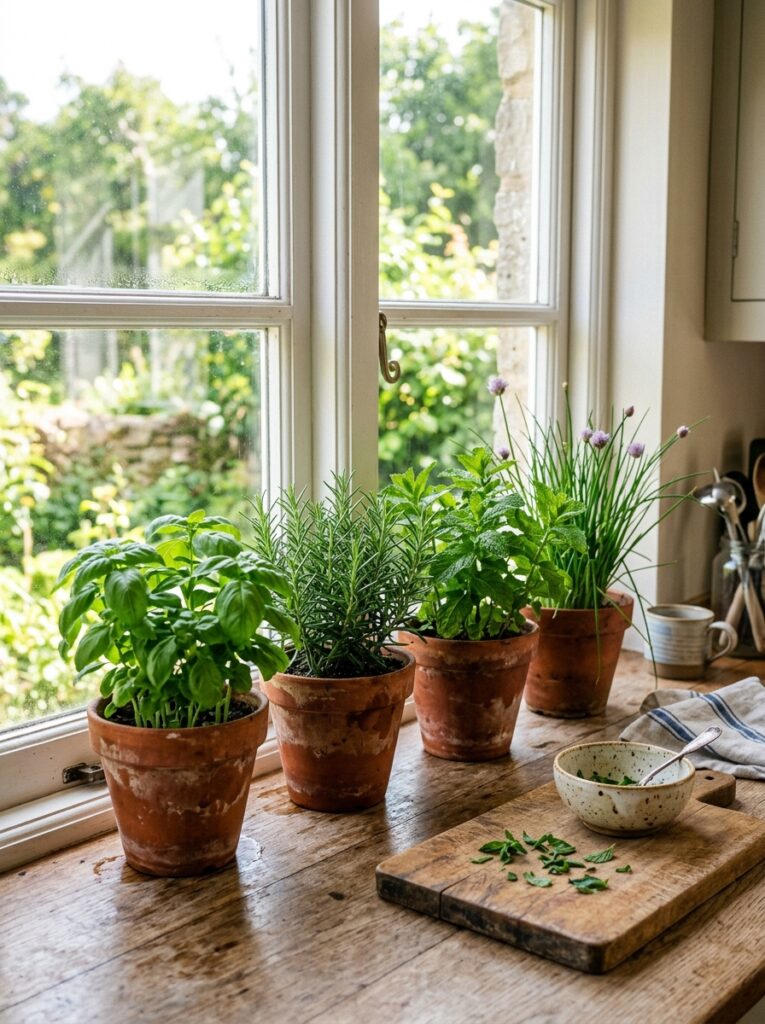
2. A Kitchen Herb Garden on a Windowsill That Actually Gets Used
A windowsill herb garden is one of those indoor garden ideas that earns its place twice — once visually, and once every time you reach for fresh basil or snip some chives into your eggs. It’s the most practical kind of pretty.
Pick a south- or east-facing kitchen window that gets at least four hours of light. Grab three or four small terracotta pots (about 3–4 inches each) and plant basil, mint, rosemary, and chives — these are the most used and the least fussy. Set them directly on the windowsill or line them up on a small wooden tray to keep things contained. Water when the top inch of soil feels dry. A lot of people skip drainage holes and then wonder why their herbs rot — always use pots with drainage, and place a saucer underneath.
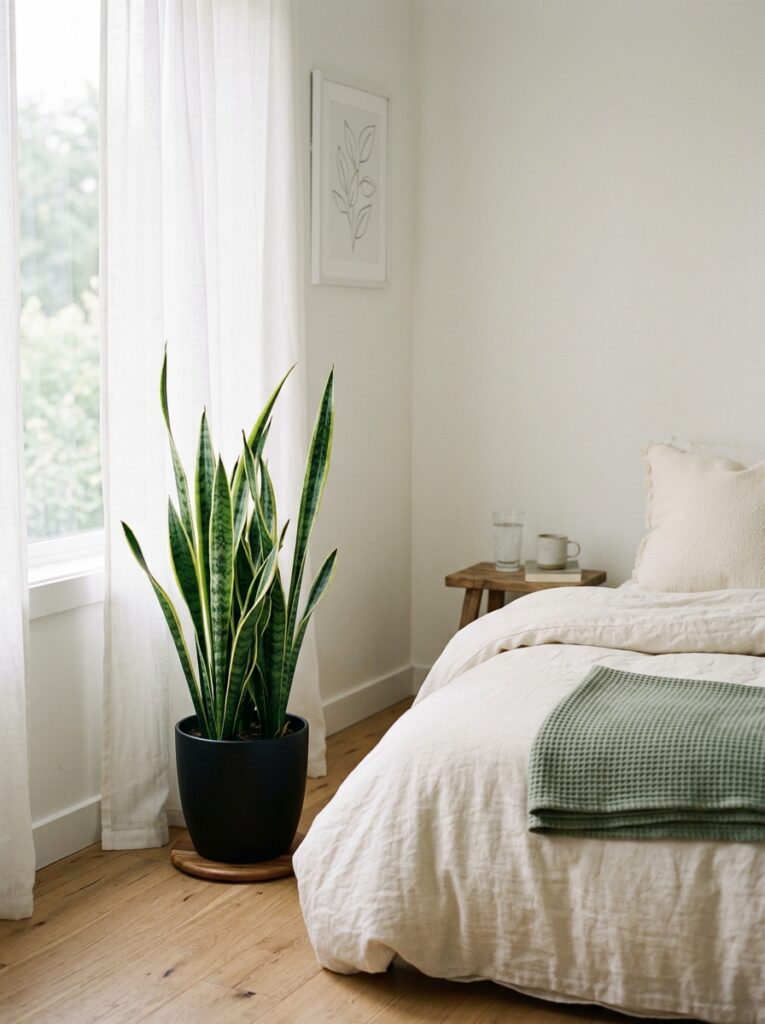
3. A Bedroom Snake Plant in the Corner That Does Everything Quietly
The snake plant — Sansevieria, now officially renamed Dracaena trifasciata, though nobody calls it that — is the most reliable indoor plant in existence. It tolerates low light, forgets to be watered for two weeks, and still looks polished. It also cleans the air, which makes it one of the best bedroom plants you can own.
Choose a tall variety (Laurentii or Black Gold) for bedrooms — they grow upright and architectural, which looks great in a corner without taking much floor space. Put it in a matte black or warm terracotta pot, a 6–8 inch size for a starter plant. Place it in a corner that gets indirect light, even a few feet from the window. Water it every two to three weeks. What I love about this plant is that it thrives on neglect, which is exactly what most of us actually give our plants.
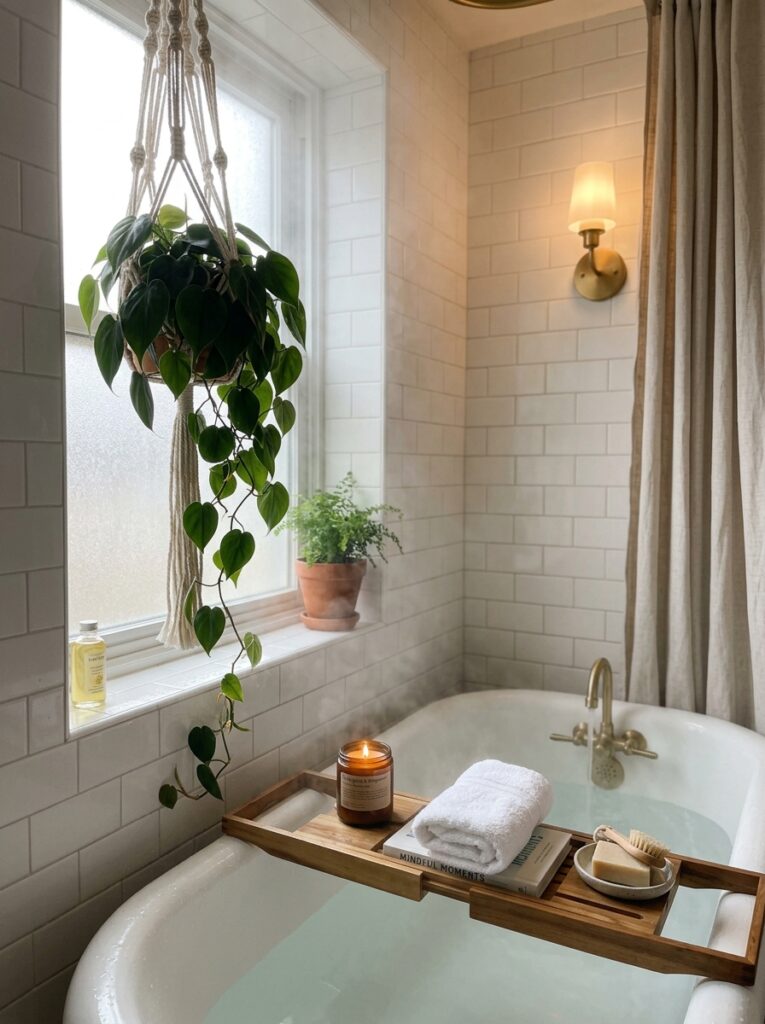
4. A Bathroom Hanging Plant Setup That Thrives on Steam
Your bathroom might be the most overlooked room for plants — but it’s often the most naturally humid, which makes it ideal for tropical varieties that struggle in dry indoor air. A hanging plant in the bathroom turns a purely functional space into something that feels like a spa.
Go with a pothos, heartleaf philodendron, or spider plant — all of them love humidity and tolerate lower light. Use a simple macramé plant hanger ($10–$15 on Amazon or Etsy) and hang it from a ceiling hook near a window or skylight. If you have no natural light, a small grow bulb in your existing light fixture does more than you’d think. Water less frequently than you think — the steam from your shower adds real moisture to the soil over time.
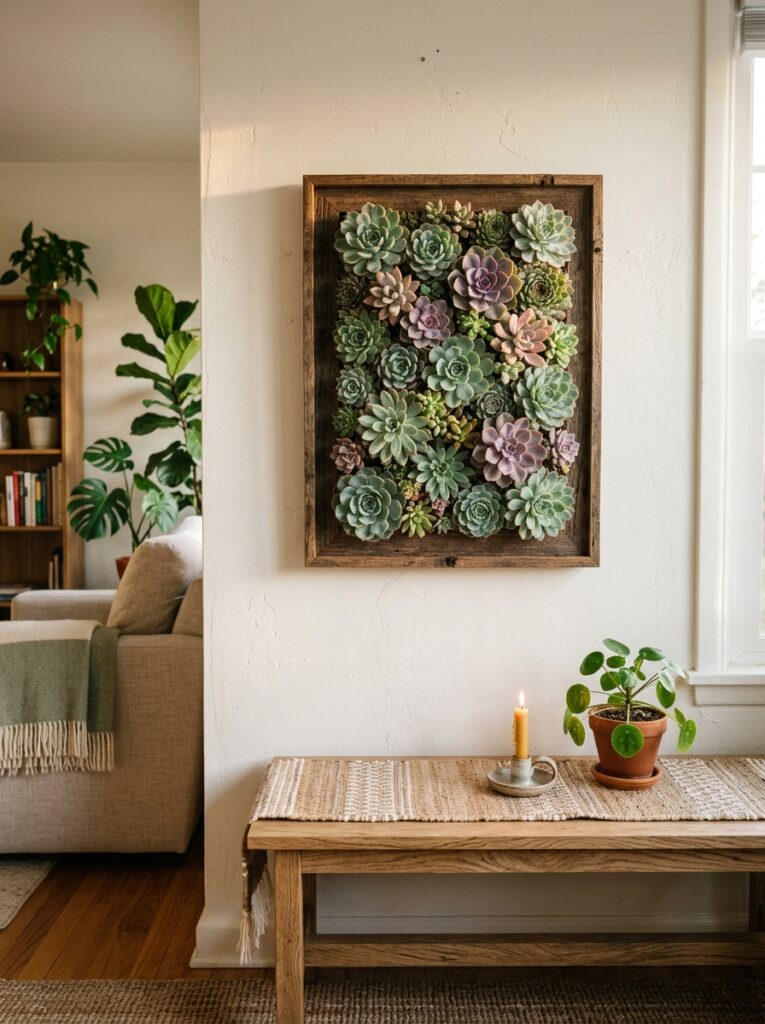
5. A Living Wall Panel on an Accent Wall That Costs Under $100
A living wall — a vertical arrangement of plants mounted directly on a wall — sounds expensive and complicated. It doesn’t have to be. A simple panel version using succulent frames or pocket planters can turn any blank wall into a genuine focal point for under $100.
Buy a succulent wall planter frame (you’ll find good ones on Amazon or at Home Depot for $25–$50) or DIY one using a shallow shadow box, landscape fabric, and a soil mix designed for succulents. Plant small echeverias, haworthias, or sedums — they’re slow-growing and don’t need much water. Hang the frame on the wall and water sparingly every two to three weeks. The most common mistake is using regular potting soil, which holds too much moisture and causes rot. Use cactus mix and you’ll be fine.
6. A Propagation Station on a Shelf That Makes You Feel Like a Plant Parent
Propagation — the process of growing new plants from cuttings — has become one of the most popular indoor garden ideas because it’s cheap, satisfying, and endlessly visual. A row of glass propagation vases on a shelf looks like a science experiment crossed with a still-life painting.
Pick up a set of propagation vases or test tubes with a wooden stand (most sets run $15–$25 on Amazon). Cut stems from pothos, tradescantia, begonias, or coleus — any plant with a node will work. Place the cuttings in water and set them near a window. Change the water every week. Within two to four weeks, you’ll see roots. What I love about this is that you’re essentially growing free plants from what you already have, and watching the roots develop is oddly addictive.
7. A Fern in the Living Room That Makes the Whole Corner Feel Lush
Boston ferns have a way of making a space feel genuinely alive — their soft, arching fronds fill space in a way that feels wild without being chaotic. They’re dramatic, affordable, and wildly satisfying to look at.
Choose a Boston fern from your local nursery ($10–$20 for a good-sized pot) and place it on a plant stand or pedestal in a corner that gets bright indirect light. Ferns hate to dry out, so water frequently — every two to three days in warmer months — and mist the leaves if your home is dry. Place a saucer with pebbles and water under the pot to boost humidity around the plant. A lot of people kill ferns by underwatering in dry air. They’re not low-maintenance plants, but the payoff is worth it.
8. A Terrarium on the Coffee Table That Doubles as Décor
A terrarium is essentially a self-contained mini-ecosystem in a glass container — and it’s one of the most low-maintenance indoor garden ideas you’ll find. Once it’s set up, a closed terrarium basically waters itself through condensation.
Start with a glass cloche, geometric terrarium frame, or even a large glass apothecary jar (all available at HomeGoods, TJ Maxx, or Amazon for $15–$30). Layer the bottom with pebbles for drainage, then activated charcoal, then a thin layer of sphagnum moss, then potting soil. Plant small ferns, baby tears, or moss as the base. Tuck in a tiny figurine or crystal if you want a little personality. For open terrariums, use succulents and cacti instead. In my experience, the most common mistake is over-planting — leave room for the plants to grow.
9. A Monstera Statement Plant That Anchors a Living Room
The monstera deliciosa — with its large, fenestrated leaves — is arguably the most iconic indoor plant of the last decade. There’s a reason it’s everywhere. A well-placed monstera makes an entire room feel designed, even if nothing else has changed.
Buy a plant with at least four to six leaves, ideally a foot or more in height — you’ll spend $20–$60 at a nursery or garden center depending on size. Put it in a wide, heavy planter (it will need room to grow) and set it near a bright window where it gets indirect light. Keep the soil evenly moist but not waterlogged. Wipe the leaves with a damp cloth every couple of weeks — dusty leaves absorb less light and just look sad. This is one plant where size really does matter — the bigger, the better.
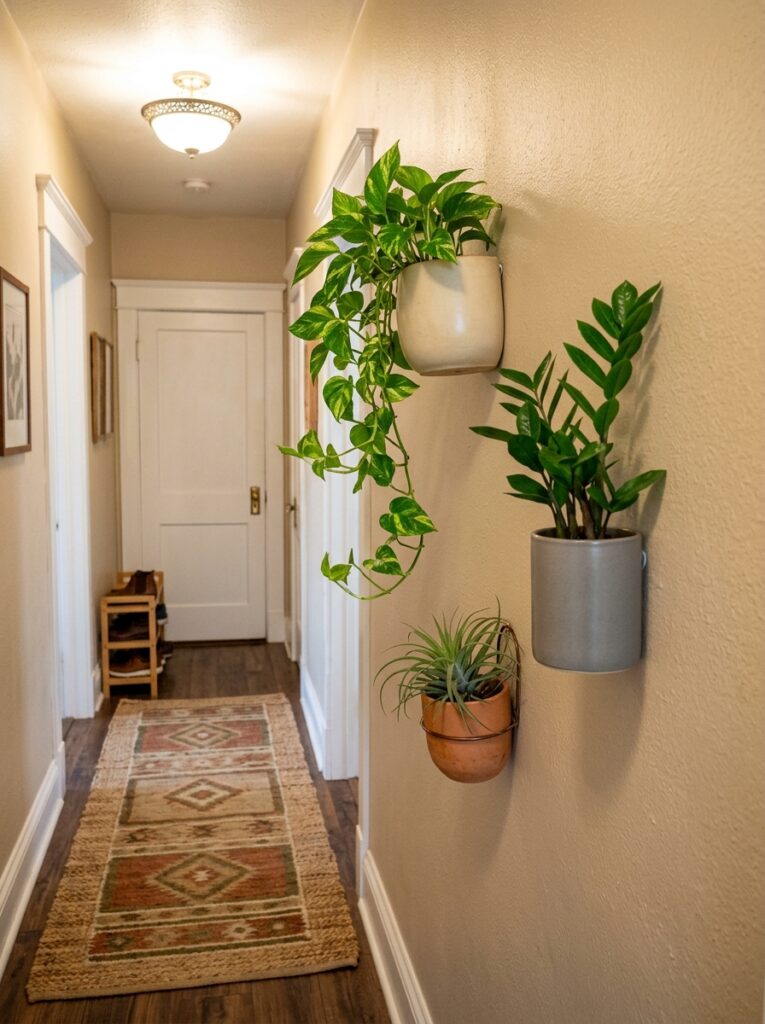
10. Floating Wall Planters in a Hallway That Transform Dead Space
Hallways are dead space in most homes — just walls you walk past without thinking. Floating wall planters change that completely. A row of them turns a hallway into something you actually look at.
Choose ceramic or molded concrete wall planters (sets of three to five run $25–$50 on Amazon or at Anthropologie) and mount them at staggered heights on one side of the hallway wall. Plant low-light tolerant varieties — ZZ plants, pothos cuttings, or air plants work well in the dimmer conditions typical of hallways. Use a level when mounting so the row looks intentional. The staggered height is key — even spacing in a straight line looks flat. Going up and down slightly gives it rhythm.
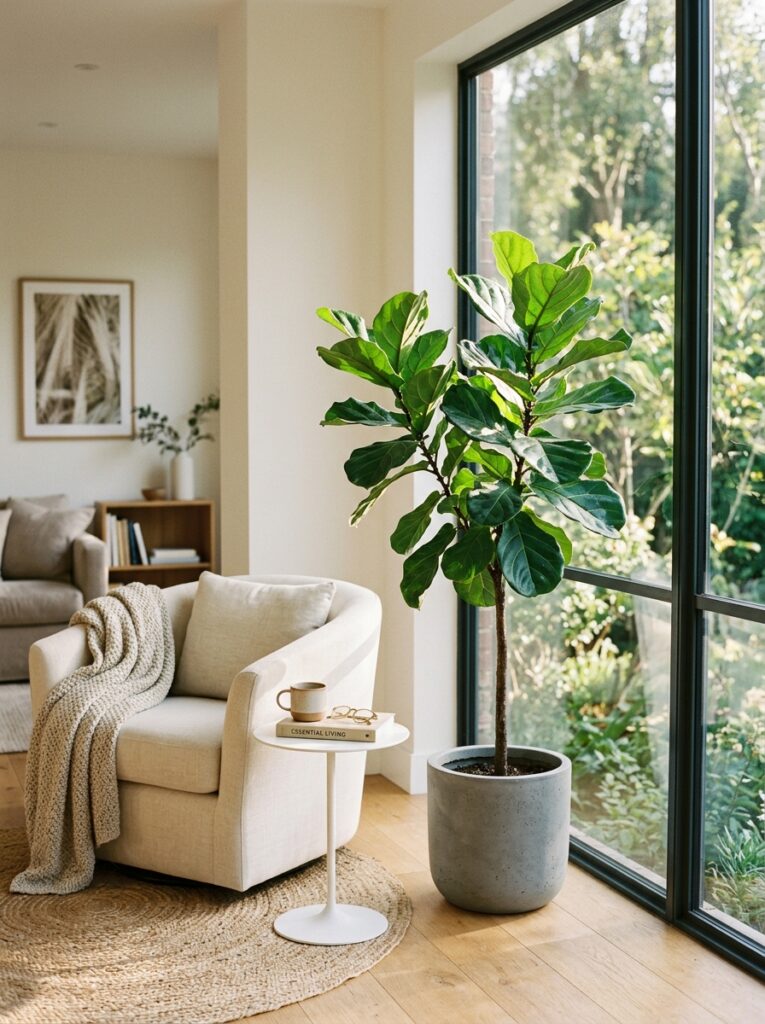
11. A Potted Fiddle-Leaf Fig That Makes a Room Feel Grown-Up
The fiddle-leaf fig has a reputation for being dramatic — and it is, a little — but when it’s happy, nothing looks more striking in a room. Its wide, waxy leaves and upright trunk give it an almost tree-like presence that no other houseplant quite replicates.
Buy a young fiddle-leaf fig at least two feet tall and pot it in a wide planter — terracotta or cement work well at $15–$30. Place it in your brightest spot, ideally a few feet from a south-facing window. Rotate it a quarter turn every two weeks so all sides get light and it grows evenly. The most important thing to know: fiddle-leaf figs hate to be moved. Once it’s happy in a spot, leave it there. Every time you move it, it drops leaves and sulks for weeks.
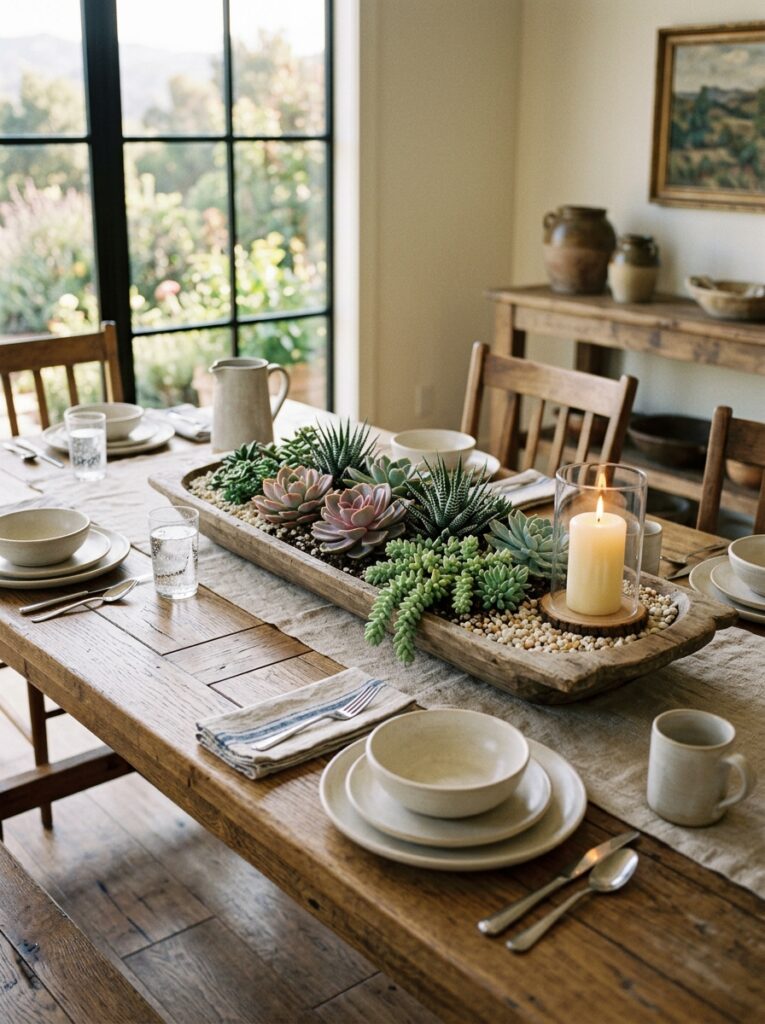
12. A Succulent Tray Centerpiece That Lasts for Months
Succulents are the most forgiving indoor plants alive. They’re affordable, slow-growing, and look beautiful grouped together in a single tray or shallow container — especially mixed textures and sizes.
Pick up a wooden or ceramic tray and fill it with cactus mix potting soil. Choose five to seven different succulents — echeveria, haworthia, sedum, aloe, and jade plant all work well together. Plant them snugly in the tray, leaving a little space to grow. Add a layer of decorative pebbles, coarse sand, or fine gravel on top of the soil — it makes everything look intentional and keeps moisture from sitting against the stems. Water just once every two weeks, less in winter. The mistake most people make is overwatering. When in doubt, wait another week.
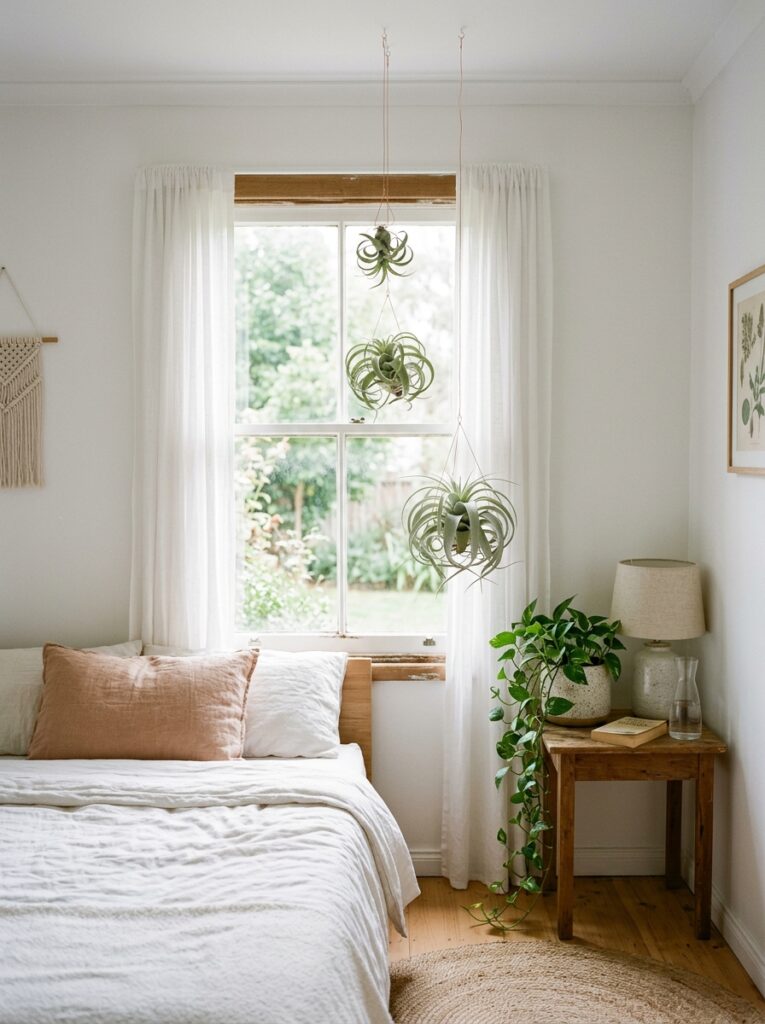
13. Hanging Air Plants in a Bedroom That Require Zero Soil
Air plants (Tillandsia) are technically the easiest indoor garden idea on this list. They need no soil. They grow on air and occasional water. They can be hung, mounted, placed in shells or glass globes, or tucked into a driftwood arrangement. They’re endlessly flexible.
Buy a pack of mixed air plants for around $15–$25 online or at most garden centers. Hang them from the ceiling with thin copper wire or fishing line, place them in small geometric glass terrariums, or rest them on a piece of driftwood. Mist them two to three times a week or soak them in water for 30 minutes every ten days. After soaking, turn them upside down to shake out excess water — leaving water in the center of the rosette causes rot.
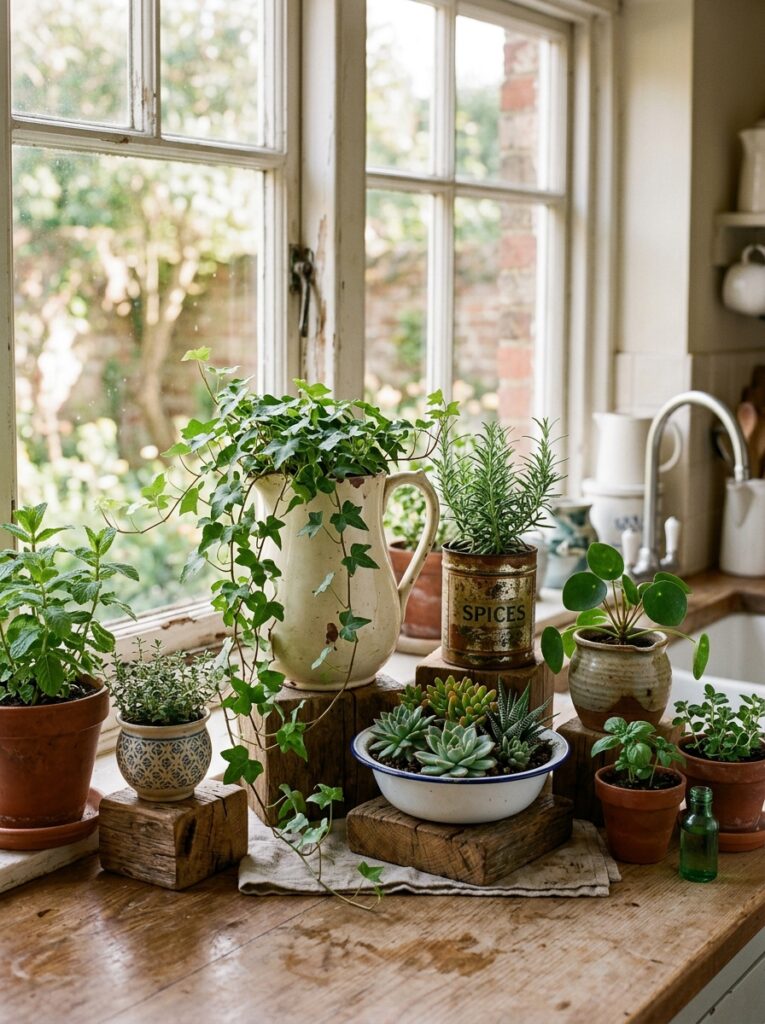
14. A Vintage Pot Collection on a Windowsill That Tells a Story
Not every plant needs a brand-new pot from a home store. In fact, a collection of mismatched vintage pots — old pitchers, ceramic mugs, tin cans, thrifted bowls — often looks far more personal and interesting than anything you’d buy as a set.
Hit your local thrift store or estate sales and grab anything with drainage potential — old ceramic pitchers, enamel bowls, vintage crocks, even wooden boxes lined with plastic. Drill drainage holes if needed. Plant succulents, trailing ivy, small herbs, or low-maintenance peperomias. Group them at different heights on a windowsill using small books or wooden risers as pedestals. What I love about this approach is that it looks like it happened organically over time — because it did.
Image Prompt: A wide kitchen windowsill covered in a mix of vintage and mismatched pots — an old cream ceramic pitcher with a trailing ivy, a small tin can with rosemary, a blue-rimmed enamel bowl with succulents. Some pots are elevated on small wooden blocks. Soft morning light floods the window. The scene looks genuinely collected over time, warm and full of quiet personality.
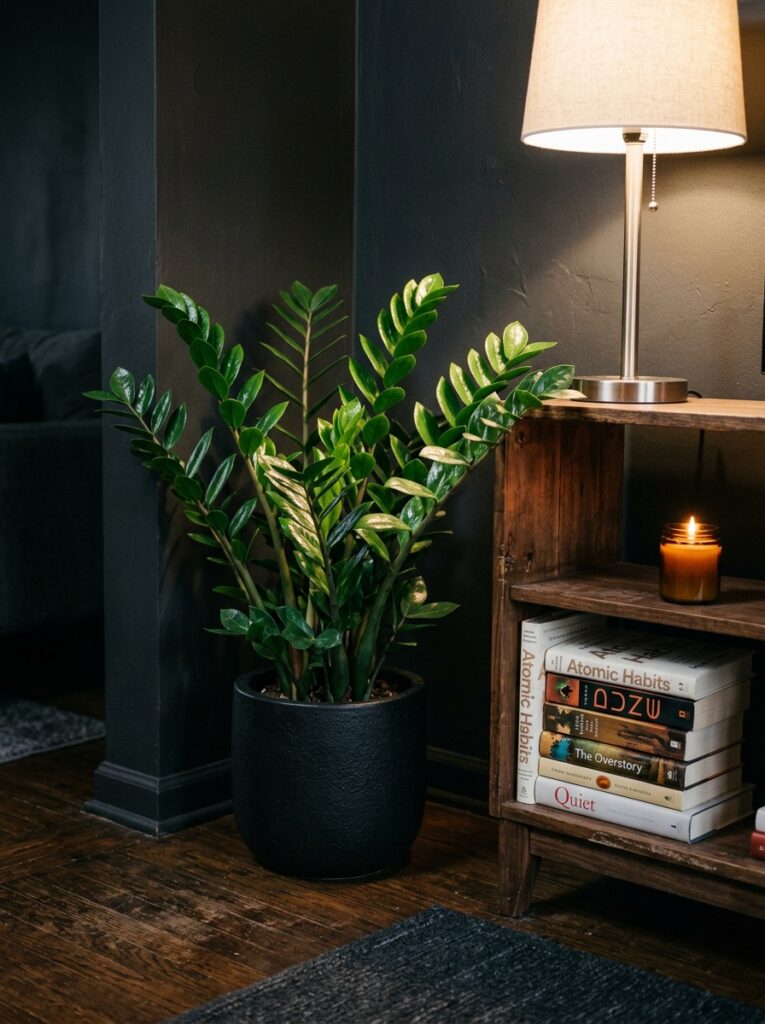
15. A ZZ Plant in a Dark Corner That Actually Stays Alive
The ZZ plant is the plant for people who believe they can’t keep plants alive. It tolerates incredibly low light, goes weeks without water, and just sits there looking polished in its glossy, upright way. It’s almost indestructible.
Buy a ZZ plant in a 6-inch nursery pot ($15–$25) and repot it into a slightly larger matte planter — black, white, or terracotta all look great. Place it in any corner, even one with almost no natural light. Water every two to three weeks, letting the soil dry completely between waterings. The biggest mistake is overwatering — ZZ plants have rhizomes (water-storing bulbs) underground and will rot if kept too wet. Leave it alone and it will reward you with new growth for years.
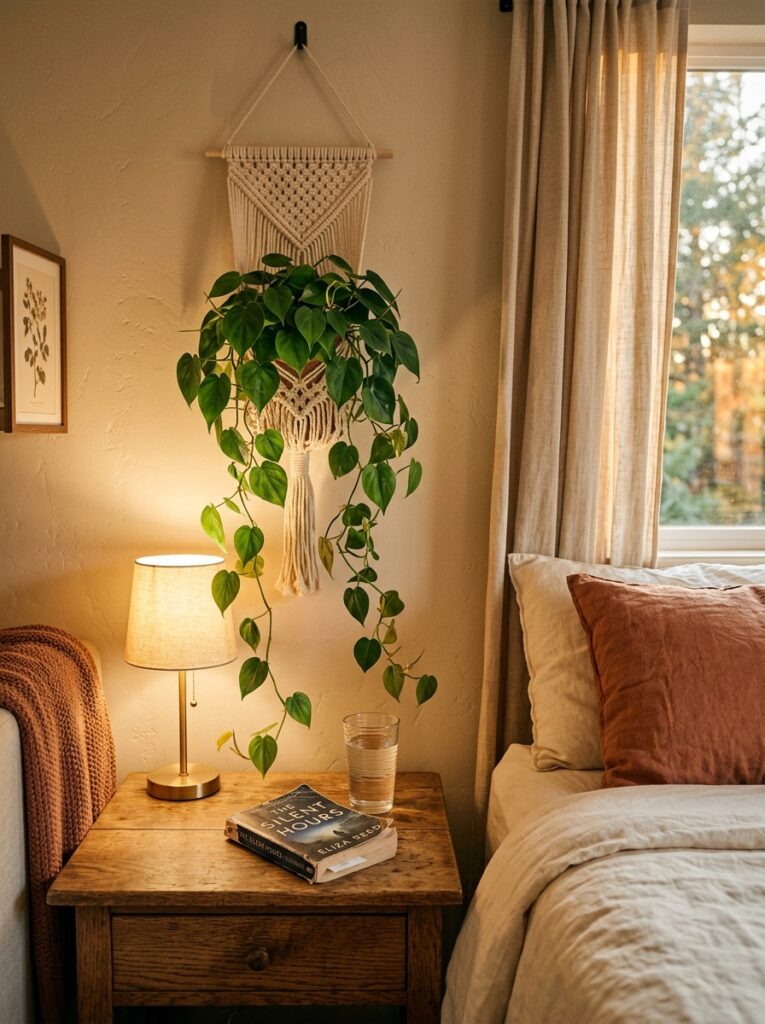
16. A Bedroom Hanging Planter Above the Nightstand for a Romantic Look
Hanging a plant directly above or beside the nightstand changes the whole energy of a bedroom. It feels cozy, a little wild, and incredibly personal — like sleeping in a garden.
Use a simple ceiling hook and a macramé hanger or a minimal rope planter. Pick trailing plants — string of pearls, heartleaf philodendron, or pothos — so the growth cascades naturally toward the nightstand. Keep the planter at least 24 inches above the nightstand surface so nothing drips onto books or electronics. Water carefully so it doesn’t overflow. A lot of people worry this will look cluttered. When it’s the right scale — one medium plant, not five — it grounds the whole side of the bed beautifully.
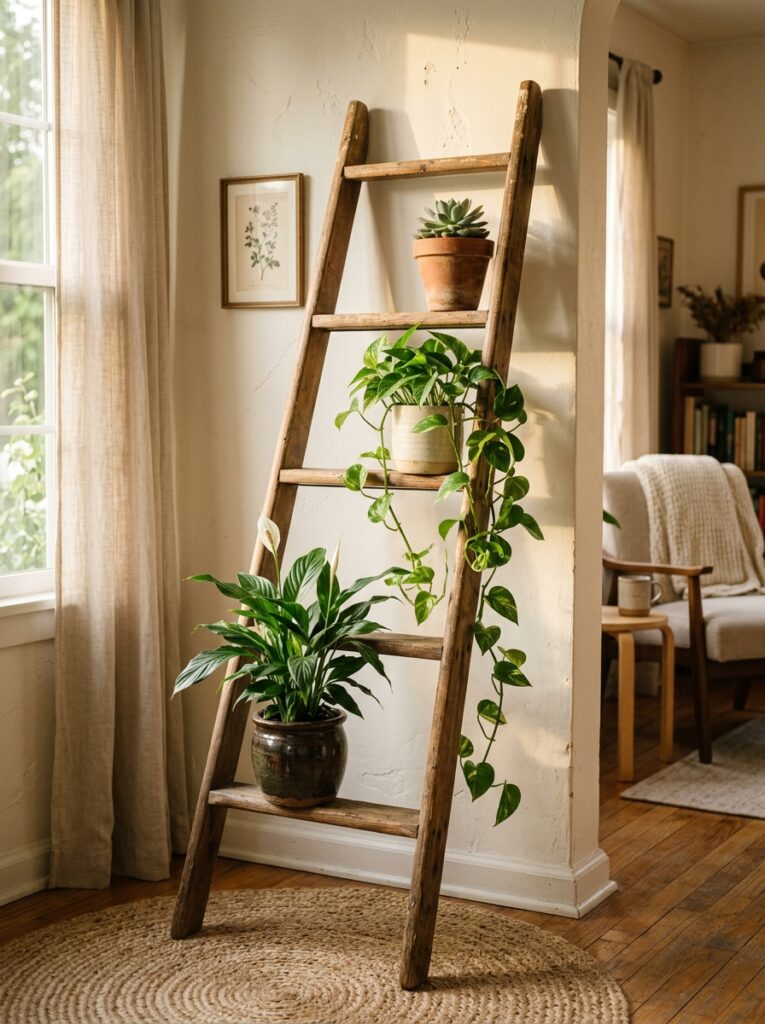
17. A Plant Ladder in the Living Room That Uses Vertical Space Smartly
A plant ladder is one of the best indoor garden ideas for small spaces because it goes up instead of out. It’s a leaning wooden ladder that holds multiple plants at different heights — and it looks like a piece of furniture.
Buy a decorative leaning ladder ($30–$80 at Target, IKEA, or Amazon) or make one from raw wood dowels. Lean it against a wall in your living room or bedroom corner. Place potted plants directly on the rungs — wrap the pots in natural twine or set them in small wooden crates if they’re slipping. Mix plant heights and textures: something tall on the bottom, trailing on the middle rung, and something small and compact at the top. This is one setup where having an odd number of plants — three or five — always looks better than even numbers.
18. A Dining Table Centerpiece With Cut Greenery in a Simple Vase
Not every indoor garden idea needs a living plant. Sometimes fresh-cut greenery from the garden or farmer’s market does the same visual work, costs almost nothing, and lasts weeks in water.
Grab a few long sprigs of eucalyptus, olive branches, or even grocery-store rosemary. Trim the stems at a 45-degree angle and place them in a tall, narrow vase with a few inches of water. Set it in the center of your dining table or on a kitchen counter. Eucalyptus lasts three to four weeks in a vase, and it smells incredible while it slowly dries. Change the water every few days. When it dries, it looks just as beautiful — the color just shifts from blue-green to a warm silver. That’s a win.
19. A Greenhouse Cabinet That Turns a BILLY Bookcase Into a Planter
A greenhouse cabinet — sometimes called a “IKEA greenhouse hack” — is exactly what it sounds like. You take a standard bookcase and turn it into an enclosed, humid mini-greenhouse for plants by adding glass doors and a small grow light. It looks like a designer piece and costs a fraction of the real thing.
Start with an IKEA BILLY bookcase ($50–$80) and add the OXBERG glass-panel doors. Install a small LED grow light strip on the inside of the top shelf ($15–$25) on a timer. Fill the shelves with humidity-loving plants — ferns, calatheas, orchids, or even a small monstera. The enclosed environment retains moisture and boosts humidity naturally. This whole setup runs $100–$150 and looks genuinely impressive. Line the base of each shelf with cork tiles to protect from water damage.
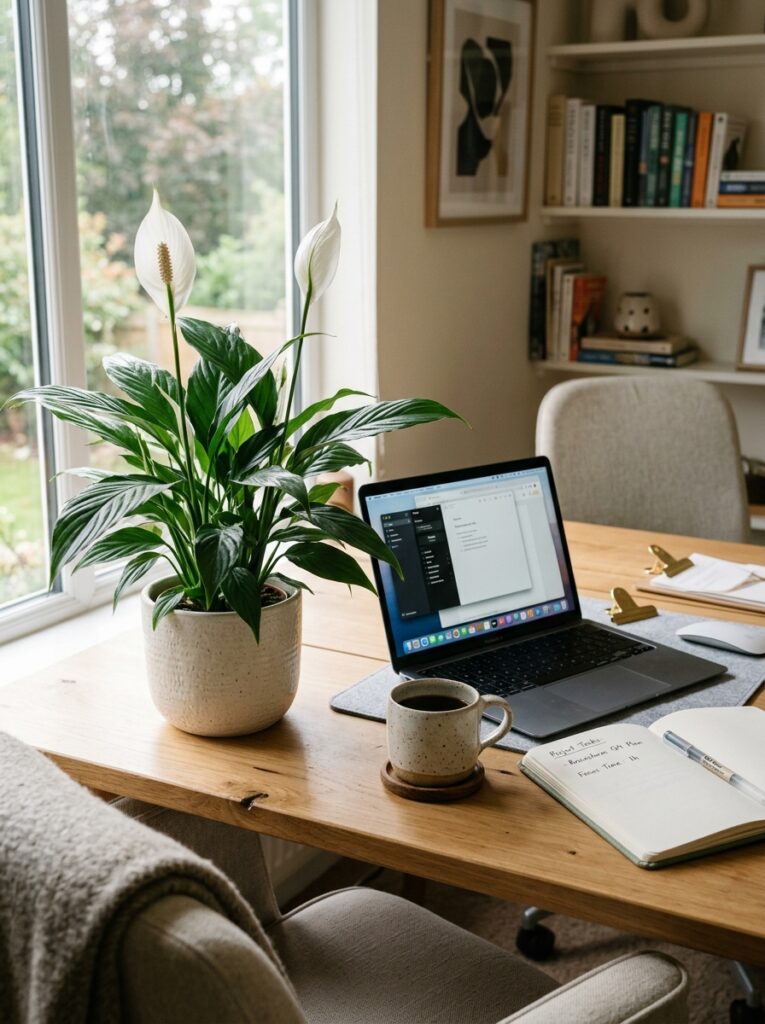
20. A Peace Lily on a Work Desk That Reduces Stress (Literally)
Peace lilies are one of the few flowering indoor plants that genuinely thrive in low light, and they’ve been shown in multiple studies — including NASA’s clean air study — to help remove toxins from indoor air. But honestly, they’re on this list because they’re beautiful and deeply calming to look at while you work.
Place a peace lily in a 6–8 inch pot on your desk or beside your monitor. They like indirect light and hate direct sun, making them ideal for typical home office setups. Water when the top inch of soil feels dry — about once a week. They’ll tell you when they’re thirsty by drooping slightly, and they perk back up within hours of watering. That visual feedback makes them one of the most satisfying plants to care for.
21. A String of Pearls Hanging Planter That Looks Like Jewelry
String of pearls — Senecio rowleyanus — is one of those plants that genuinely doesn’t look real. The small, perfect spheres of leaves cascade out of the pot in long strands that look more like a sculptural object than a living thing. It’s delicate, unusual, and deeply satisfying.
Buy a small, established string of pearls plant ($8–$20) and plant it in a small hanging pot or place it in a pot on a high shelf where the strands can trail freely. It needs bright indirect light and very infrequent watering — once every two weeks in summer, even less in winter. The pearls store water, so more plants die from overwatering than underwatering. Put it somewhere you’ll actually see it — this plant deserves a prominent spot.
22. A Moss Wall Art Frame That Doesn’t Need Watering
Preserved moss art is one of the most underrated indoor garden ideas on this list. It looks like a living wall, it stays green for years, it requires zero water, zero light, and zero maintenance. The moss is preserved — not alive — but visually indistinguishable from fresh.
Buy a ready-made preserved moss frame ($30–$90 depending on size from Etsy, Amazon, or HomeGoods) or DIY one using a shadow box frame, hot glue, and sheets of preserved sheet moss or reindeer moss. Arrange the moss by texture — flat sheet moss against a backdrop, with clumps of curly or reindeer moss layered in front. Hang it on the wall like a painting. In my experience, this works especially well in bathrooms, offices, and bedrooms where real plants are harder to keep. It smells faintly earthy when new, which is a bonus.
23. A Corner Floor Plant Grouping That Acts as a Room Divider
Plants grouped together in a corner at different heights create natural visual division in open-plan spaces — and they do it without walls, curtains, or furniture. It’s one of the most functional indoor garden ideas for studio apartments or open living areas.
Choose three to five plants in graduating heights — a tall fiddle-leaf fig or dracaena for the back, a medium ZZ plant or rubber tree in the middle, and a low trailing plant or succulent in front. Use complementary pots (all terracotta, all black, or all white) for cohesion. A lot of people mix too many pot colors and it looks chaotic. Stick to one material or one color family and you’ll be amazed how put-together it looks. Budget: $40–$120 for the full grouping if you shop nurseries or garden center sales.
24. A Bathroom Aloe Vera Plant That Earns Its Place Twice
Aloe vera is the most useful indoor plant you can own. It looks striking, requires almost nothing, and has a bottle of sunburn and minor burn relief growing right in the pot. Keeping one in the bathroom means it’s always within reach when you actually need it.
Plant aloe in a terracotta or unglazed ceramic pot — aloe hates sitting in moisture, and porous terracotta lets the soil breathe. Use cactus soil mix and plant in a pot only slightly larger than the root ball. Place it in a bright bathroom window — south or west-facing is best. Water it every three to four weeks. In my experience, the biggest mistake is putting aloe in a glazed ceramic pot with no drainage. It holds moisture and the roots rot within months. Terracotta and cactus mix is the combination that works.
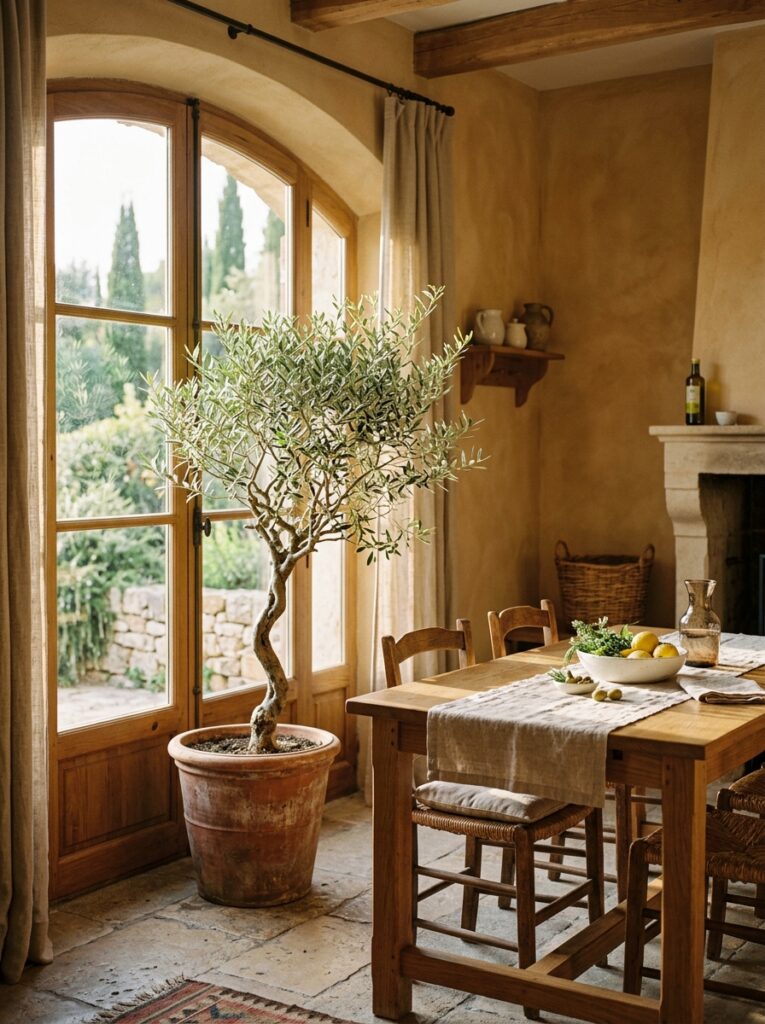
25. A Dining Room Potted Olive Tree That Makes Everything Feel Mediterranean
An indoor olive tree is the kind of plant that changes the feeling of a room — not just adds to it. The silvery-green leaves, the gnarled trunk even on young trees, and the way they gently move in air currents gives any room a calm, warm, European atmosphere.
Look for a dwarf olive tree, 2–3 feet tall, at your local nursery ($30–$60) or online. Plant it in a large terracotta or stone-effect pot with excellent drainage. Olive trees need the most light of any plant on this list — place it right in your sunniest window, ideally south-facing. Water only when the top two inches of soil are completely dry. They’re drought-tolerant once established. A lot of people expect olives to grow fast indoors — they don’t, and that’s actually fine. The shape stays compact and beautiful for years.
Conclusion
Here’s what I want you to take away from this: you don’t need a perfect apartment, a south-facing window, or a botanical degree to pull off any of these indoor garden ideas. You just need one plant and one good spot for it. That’s actually where every great plant collection starts — one thing that didn’t die, and the confidence that came from it.
If you’re starting from scratch, pick one idea from this list that matches your actual light and your actual schedule. A snake plant in a dark corner. A pothos trailing from a shelf. A windowsill herb garden above your kitchen sink. Any one of those will shift how your home feels in a way that surprised even me the first time I tried it.
Living with plants is quieter than any other kind of home decor. It doesn’t shout. It just makes the air feel different, the mornings feel a little slower, and the space feel like something is growing alongside you.
Which of these 25 indoor garden ideas are you going to try first? Tell me in the comments — I genuinely want to know which one caught your eye.
FAQs
What are the easiest indoor garden ideas for beginners?
The absolute easiest starting points are the snake plant, ZZ plant, and pothos — all three tolerate low light, irregular watering, and general neglect better than almost any other houseplant. For a beginner, I always recommend starting with just one plant in a spot where you’ll actually see it every day. Visibility is half the battle — you’re more likely to water something you notice. A pothos on a shelf or a snake plant in a bedroom corner is the best possible first move.
How do I keep indoor plants alive in low-light apartments?
Your best friends in low-light apartments are ZZ plants, snake plants, peace lilies, cast iron plants, and heartleaf philodendrons. All of them are adapted to forest floors where little sunlight filters through. The other thing that genuinely helps is a basic LED grow bulb — you can screw one into a regular lamp socket for $10–$15, and it extends usable light significantly. Avoid placing plants more than 6–8 feet from any light source, even artificial, if you want consistent growth.
How many plants do I need to make a room feel like an indoor garden?
Honestly, three well-placed plants do more than a dozen scattered randomly. The visual impact comes from placement, not just quantity. One large statement plant, one mid-height piece, and one trailing or hanging plant creates layered depth that reads as an actual indoor garden. Once you’ve got the base, adding more feels natural. But start with three — it’s cheaper, easier to manage, and more effective than most people expect.
What’s the best indoor plant for someone who travels frequently?
ZZ plants and succulents are by far the most travel-tolerant options. ZZ plants can go three to four weeks without water, and succulents even longer. If you travel frequently, avoid anything that needs consistent moisture — ferns, peace lilies, and string of pearls will struggle with neglect. You can also set up a simple self-watering setup using terracotta stakes or plant water globes ($8–$15 for a pack) that slowly release water into the soil while you’re away.
Can indoor plants actually improve air quality?
The NASA clean air study is often cited here, and while the research showed that certain plants do absorb toxins like formaldehyde and benzene, later research suggests you’d need a lot of plants — roughly one per 100 square feet — to make a measurable difference in a real home. That said, plants absolutely raise humidity levels slightly, which helps in dry indoor air, and the psychological benefit of being around greenery is well-documented. In short: yes, a little. But even if the air quality benefit is modest, the mood benefit is real.