You want more greenery at home, but every pretty indoor garden photo seems to need a big window, fancy planters, and money you would rather not spend on pots. Maybe your apartment feels a bit flat. Maybe your kitchen window is empty. Or maybe you keep buying plants, then they end up scattered around with no real style.
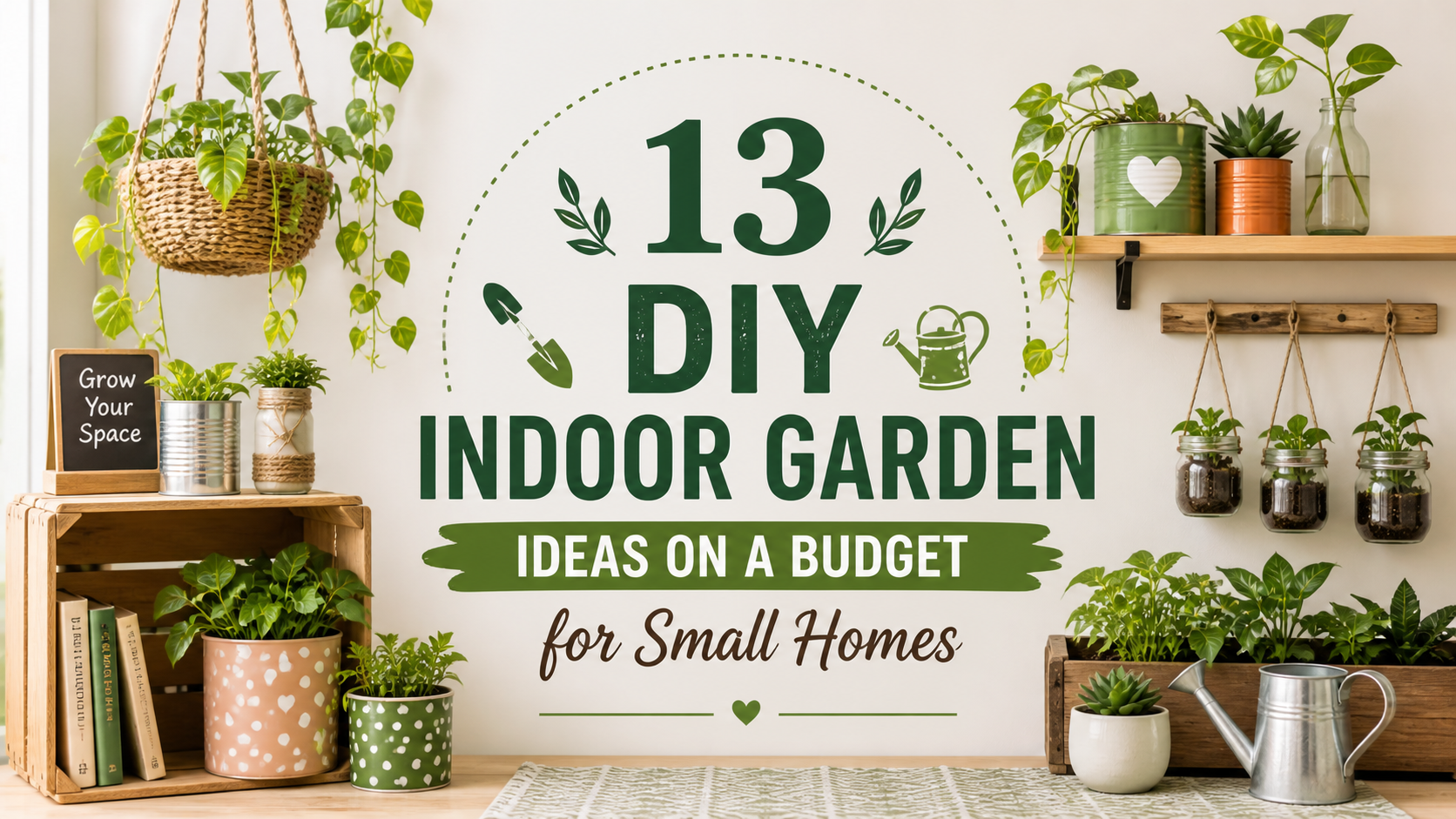
These 13 DIY Indoor Garden Ideas on a Budget are for real homes where space, light, and money all matter. You can use thrifted shelves, old jars, baskets, wooden crates, tin cans, and simple hooks to create a cozy little plant setup that feels fresh without looking forced.
You will find easy home decor ideas, small space storage tricks, and Pinterest-worthy home styling that works in apartments, rentals, bedrooms, kitchens, and tiny corners. Some ideas cost less than dinner out. Others use things you may already have.
Start with one corner, one shelf, or one window. That is enough to make your home feel more alive.
1. DIY Indoor Garden Ideas on a Budget Using Recycled Glass Jars
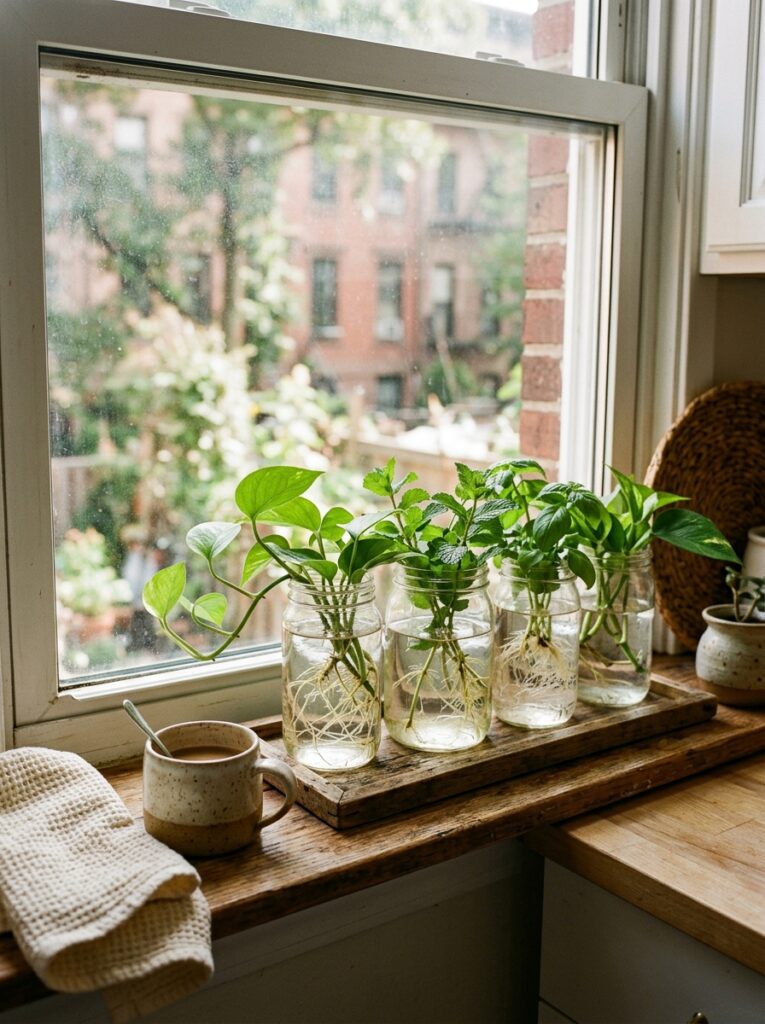
Glass jars can turn a plain windowsill into a tiny green garden with almost no cost. A row of clear jars with plant cuttings looks fresh, light, and sweet, especially when the sun hits the water and tiny roots start to show. It feels like a calm little plant moment in the middle of your day.
Use old jam jars, pasta sauce jars, or small bottles. Wash them well, remove labels, then place pothos, mint, basil, or philodendron cuttings in water. Keep them near bright indirect light, not harsh afternoon sun. Change the water every five to seven days so it stays clear. In my experience, the biggest mistake here is leaving cuttings in water for months after roots grow. Once roots reach around two inches, move them into soil. This can cost $0 to $15 if you already have jars.
2. A Thrifted Wooden Crate Plant Shelf for a Cozy Corner
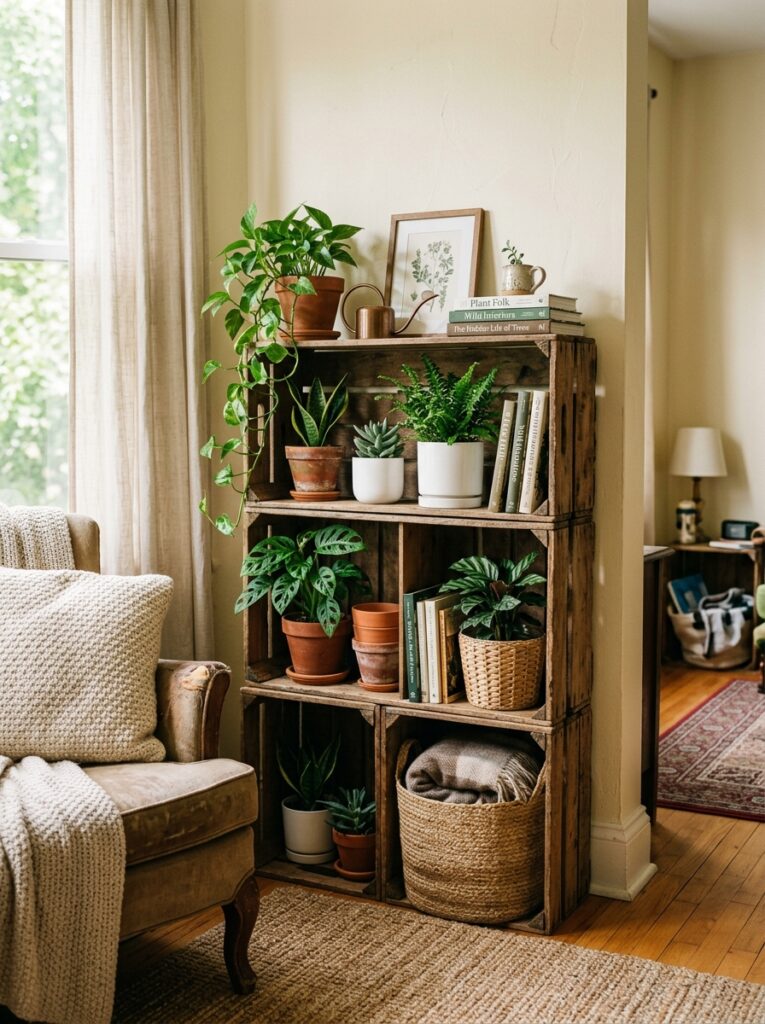
A wooden crate plant shelf gives your indoor garden a relaxed, collected feel. The wood adds warmth, while small plants bring softness and color to a dull corner. It works well beside a sofa, near a bedroom window, or in a hallway that needs a little life.
Stack two or three thrifted crates vertically or sideways, then secure them with small brackets if they feel wobbly. Place heavier pots on the bottom and lighter plants on top. Use small terracotta pots, woven baskets, or plain nursery pots hidden inside mugs. What I personally love about this is how forgiving it looks. A few scratches on the crate make it feel more natural. Avoid placing wet pots directly on raw wood. Use saucers or cork mats to stop water marks. Expect to spend around $10 to $40, depending on whether you find crates secondhand.
3. Tin Can Herb Pots for a Budget Kitchen Garden
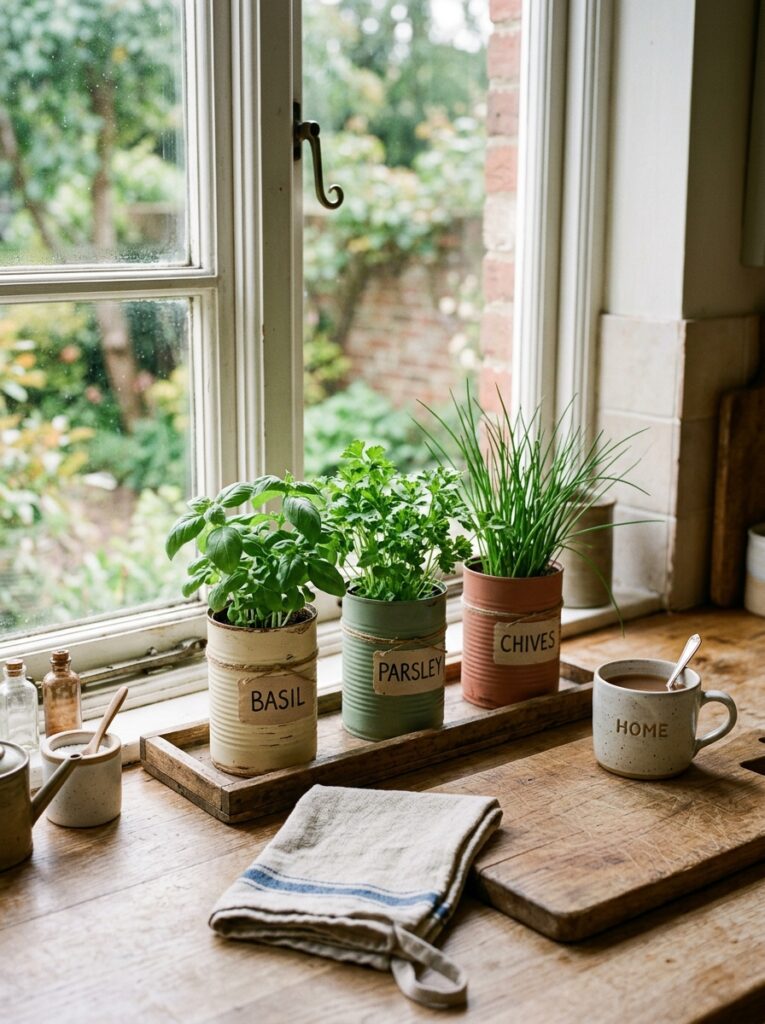
Tin cans make charming herb pots when you clean them up and give them a little care. They bring a casual, handmade feel to the kitchen, especially with green basil, parsley, and chives spilling over the top. It feels useful too, because you can snip fresh herbs while cooking.
Use empty food cans, remove sharp edges, then paint them in warm ivory, sage green, muted terracotta, or soft blue. Add small drainage holes with a nail and hammer, then place the cans on a tray to catch water. Plant herbs in potting mix and keep them near a bright window. A lot of people skip the drainage holes, but herbs hate sitting in soggy soil. If you rent or do not want mess, keep herbs in their nursery pots and use the cans as covers. This project usually costs $5 to $25.
4. A Hanging Macrame Plant Corner With Cheap Cotton Cord
A hanging plant corner adds greenery without taking up floor space. The soft cotton cord, trailing leaves, and warm light create that cozy interior inspiration people love saving on Pinterest. It works especially well in small apartments where every table and shelf already has a job.
You can buy cheap cotton cord and make a basic macrame hanger, or use a ready made one if you are not in a DIY mood. Hang one or two lightweight pots near a bright window using a strong ceiling hook or a renter friendly tension rod. Pothos, heartleaf philodendron, and spider plants work well because they trail beautifully and do not need constant care. I always recommend this when someone wants a change without starting over. Just avoid heavy ceramic pots unless your hook is properly installed. Budget range is around $12 to $45.
5. DIY Indoor Garden Ideas on a Budget With a Rolling Cart
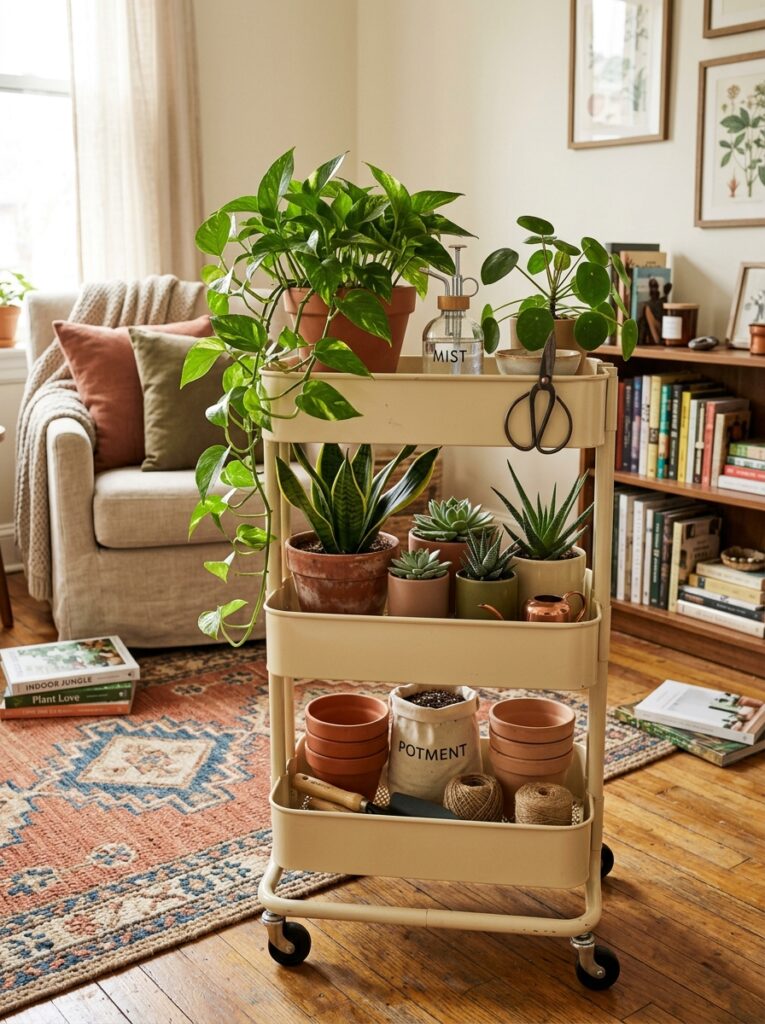
A rolling cart can become a mini indoor garden that moves with your light. It feels tidy, flexible, and a little playful, with plants stacked by height and care needs. If your home has one sunny patch that changes during the day, this idea makes a lot of sense.
Choose a slim three tier cart, ideally around 16 to 20 inches wide. Place light loving plants on the top shelf, medium light plants in the middle, and supplies like a spray bottle, pruning scissors, and extra nursery pots on the bottom. Use matching pot colors so the cart feels calm rather than cluttered. A common mistake is packing every shelf with too many plants. Leave space for air to move around the leaves. You can find carts for $25 to $60, or use an old bar cart as a budget swap.
6. A Pegboard Plant Wall for Small Space Storage and Greenery
A pegboard plant wall is part decor, part storage, and part indoor garden. It gives you a place for tiny plants, plant tools, propagation jars, and small baskets without using a full shelf unit. The look feels creative, practical, and clean when you leave enough breathing room.
Start with a wooden or white pegboard around 24 by 36 inches. Add hooks, small baskets, clip on planters, and a few glass jars for cuttings. Keep heavier items lower and lighter plants higher. Use small plants like peperomia, pothos cuttings, air plants, or mini ferns. A lot of people cover every inch of the pegboard, then it starts to look messy. Leave some blank space so each plant stands out. This setup can cost $30 to $80, depending on the board and accessories.
7. A Ladder Shelf Garden That Looks Full Without Taking Over
A narrow ladder shelf gives you the feeling of a full indoor garden while using very little floor space. The different shelf levels make plants look layered and rich, even if you only have a handful of them. It works in living rooms, bedrooms, balcony doors, and even wider hallways.
Choose a slim ladder shelf around 12 to 18 inches wide. Put taller, heavier plants on the bottom, trailing plants in the middle, and small plants or candles on the top. Stick to three pot colors, such as warm ivory, terracotta, and olive, so the display feels pulled together. A lot of people use too many tiny pots, which makes the shelf look busy. Mix two medium plants with four smaller ones instead. A budget shelf costs around $35 to $90, but you can also paint an old ladder and add simple boards.
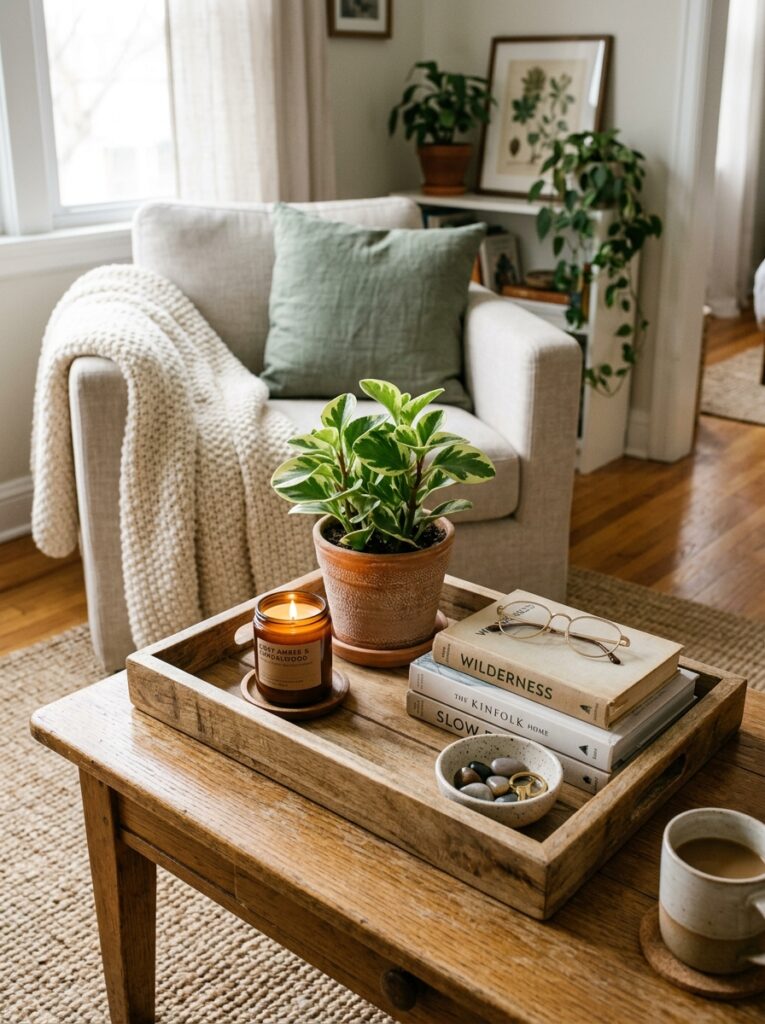
8. A DIY Plant Tray for Your Coffee Table
A plant tray is a small way to add greenery without changing the whole room. It makes your coffee table feel fresh, styled, and useful, especially when mixed with books, a candle, and one small plant. The tray keeps everything grouped, so it looks neat instead of random.
Use a wooden tray, ceramic plate, or thrifted serving tray. Add one small plant in a four inch pot, one candle, one book stack, and maybe a tiny bowl for matches or keys. Peperomia, pilea, and small snake plants work well because they stay compact. A lot of people choose a plant that needs too much water, then the table gets messy. Pick something low care and use a saucer under the pot. This idea costs around $10 to $35 if you already own a tray.
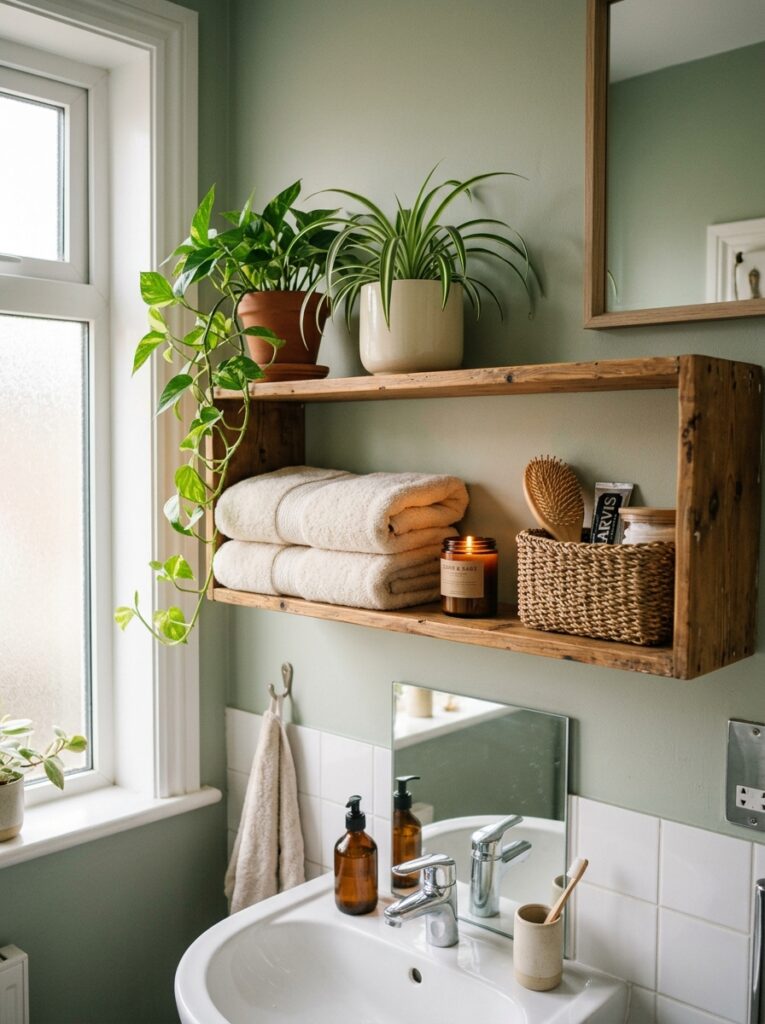
9. DIY Indoor Garden Ideas on a Budget for a Bathroom Shelf
A bathroom shelf garden can soften a cold rental bathroom fast. A few plants, folded towels, and a small candle can make the room feel fresh and cared for, even if the tiles are plain. Steam from showers also helps some plants stay happy.
Use a floating shelf above the toilet, a narrow wall shelf, or a small over toilet storage unit. Choose pothos, spider plants, bird’s nest fern, or peace lily if your bathroom has natural light. Keep pots in saucers so water does not stain shelves. If your bathroom has no window, rotate one real plant in for a few days at a time, or use one good faux plant with real textures around it. In my experience, the biggest mistake here is putting a light hungry plant in a dark bathroom. Budget range is around $20 to $70.
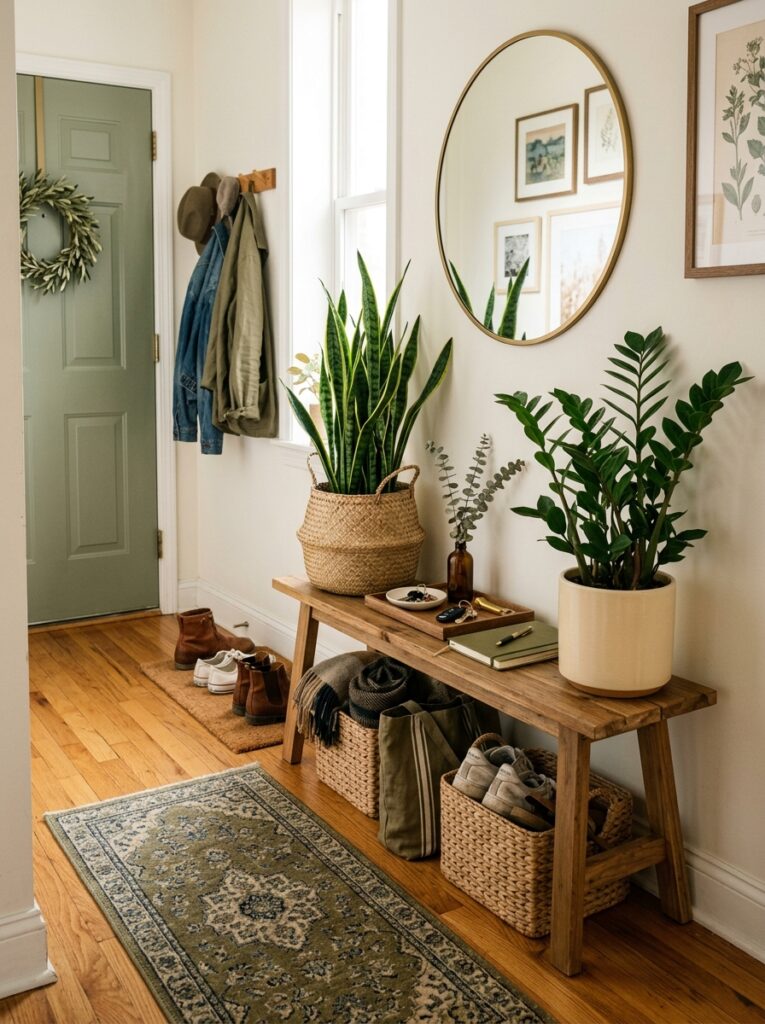
10. A Shoe Bench Entryway Garden With Tough Plants
Your entryway can hold more than shoes and keys. A small bench with tough plants can make your home feel welcoming the second you walk in. The greenery softens the practical stuff, while baskets and trays keep the area from looking cluttered.
Use a narrow shoe bench or console table. Add one tall snake plant on the floor, one zz plant on the bench, and a small tray for keys. Place woven baskets underneath for shoes, scarves, or everyday items. This works because hardy plants can handle lower light and missed watering better than delicate plants. A lot of people put ferns near the door, then wonder why they dry out. Pick strong plants for this spot. You can style an entry garden for $35 to $100, especially with a secondhand bench.
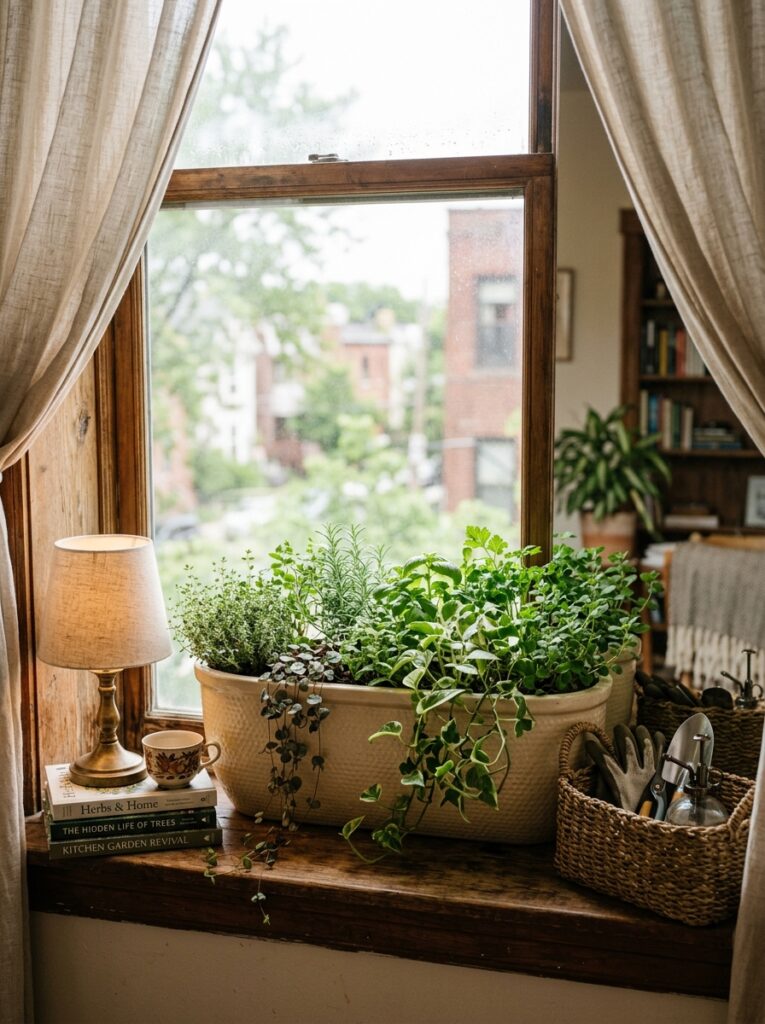
11. A Budget Window Box Inside Your Apartment
An indoor window box gives you a sweet garden row without needing outdoor space. It looks especially pretty in kitchens, bedrooms, or living rooms with a wide sill. The plants sit together in one long container, so the setup feels neat and full instead of scattered.
Use a narrow planter box around 18 to 30 inches long, depending on your window size. Add small herbs, succulents, or trailing plants, but do not mix plants with very different watering needs in the same soil. If you want flexibility, place small nursery pots inside the box and cover the top with moss or pebbles. A lot of people forget that window glass can heat up quickly, so check leaves during hot afternoons. This project can cost $15 to $50, and a thrifted wooden box lined with plastic can work too.
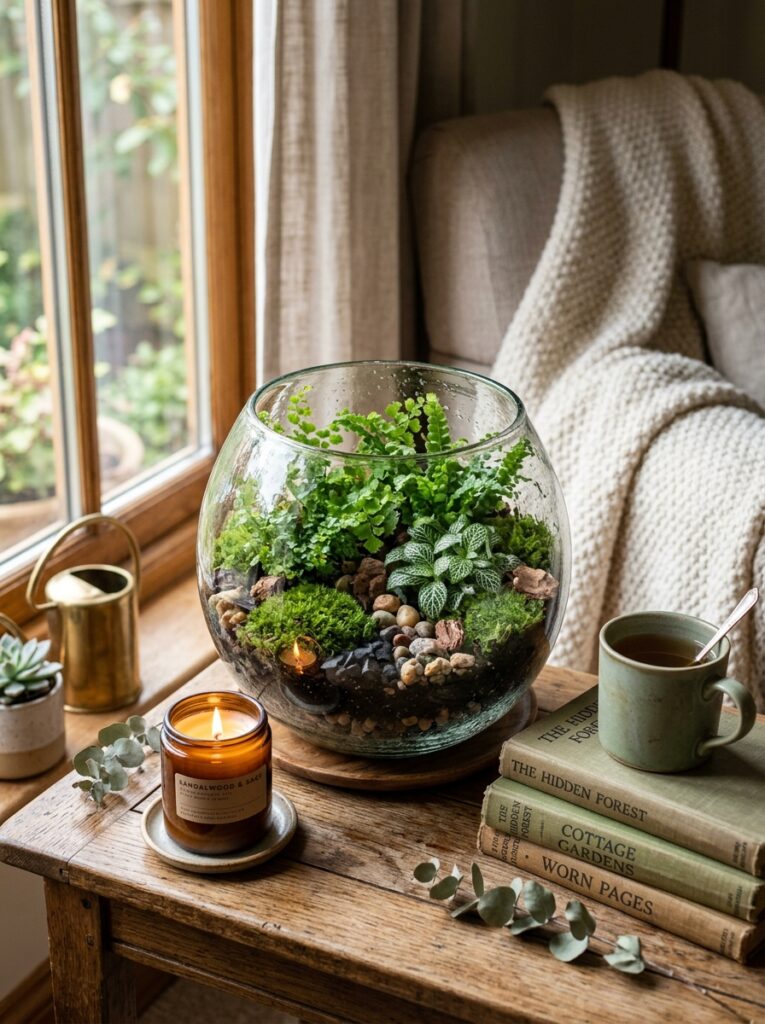
12. A Tiny Terrarium Garden Made From Thrifted Bowls
A terrarium gives you a tiny garden scene in a bowl. It feels quiet, soft, and almost storybook, with moss, pebbles, and small plants layered together. This is a lovely choice if you want greenery but do not have room for large pots.
Use a thrifted glass bowl, wide jar, or small vase. Layer pebbles at the bottom, then a little activated charcoal, potting mix, moss, and tiny plants like fittonia, small ferns, or baby tears. Keep the terrarium in bright indirect light and mist it lightly when the moss looks dry. A lot of people pour in too much water, which causes rot. Think of it as damp, not soaked. A small terrarium costs around $15 to $45, depending on the plants and glass container.
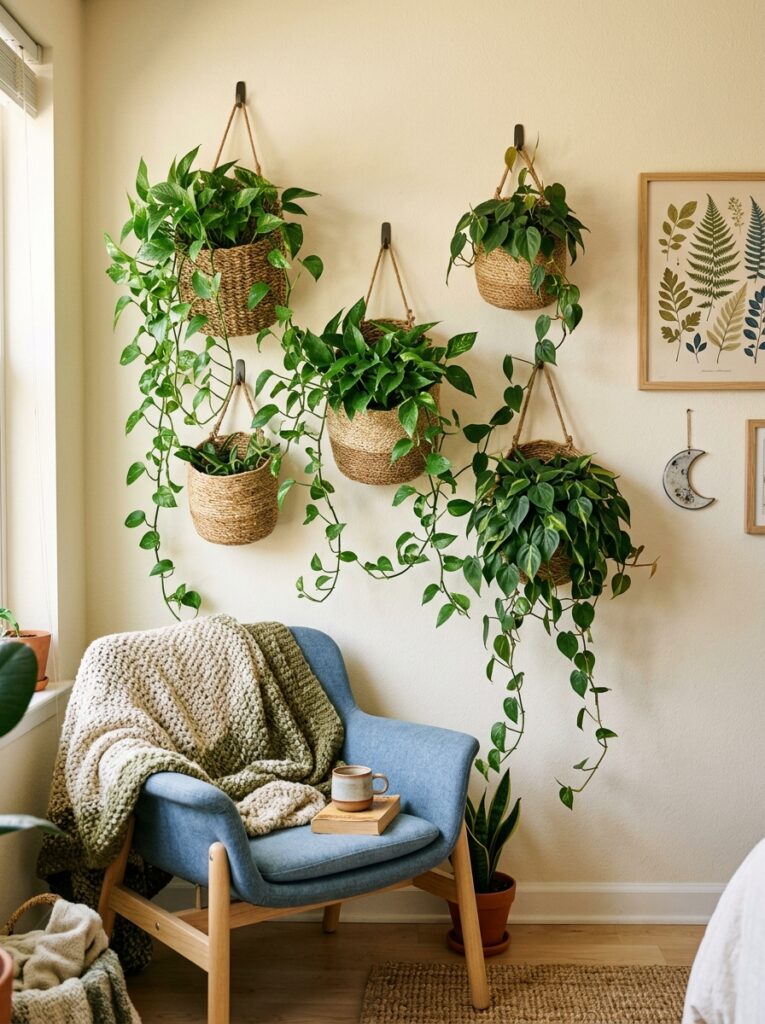
13. DIY Indoor Garden Ideas on a Budget With Wall Hooks and Baskets
Wall hooks and hanging baskets can turn an empty wall into a soft plant display. The woven texture adds warmth, while the plants bring shape and movement. This is one of the easiest affordable decor updates for renters because you can use removable hooks for lighter baskets.
Choose two or three lightweight woven baskets and place nursery pots inside them. Use trailing plants like pothos, philodendron, or string of hearts. Hang them at different heights so the wall feels layered, not stiff. A lot of people hang plants too high, then watering becomes annoying. Keep them within easy reach, around shoulder height or slightly above. If the wall is dim, use faux trailing greenery in one basket and real plants closer to the window. This idea can cost $20 to $60, depending on the baskets and hooks.
Conclusion
A cozy home does not need expensive furniture, fancy planters, or a huge room full of sunlight. Most of the time, it starts with one small corner that feels cared for. A few glass jars on a windowsill, a crate shelf, a rolling cart, or a bathroom plant shelf can make your home feel softer and more personal without stretching your budget.
These 13 DIY Indoor Garden Ideas on a Budget are simple enough to try slowly. Pick one or two that match your space first. If your kitchen gets good light, start with herbs. If your living room feels plain, try a ladder shelf or hanging baskets. If you love DIY organization ideas, the pegboard plant wall gives you storage and greenery at the same time.
You do not need to get everything right on the first try. Plants teach you as you go. Start small, watch your light, and let your indoor garden grow with your home.
Which idea would you try first? I’d love to hear what you’re planning.
FAQs
What is the cheapest way to start an indoor garden?
The cheapest way is to start with cuttings in recycled glass jars. Pothos, mint, basil, and philodendron root well in water, and you can often get cuttings from a friend or an existing plant. Use jars you already have and place them near bright indirect light. Once the roots grow a few inches, move them into small pots with soil.
What indoor plants are best for beginners on a budget?
Pothos, snake plants, zz plants, spider plants, and philodendrons are great beginner plants. They are usually affordable, easy to find, and more forgiving if you miss a watering day. Herbs like mint and basil are also budget friendly if your kitchen gets enough sunlight. Start with two or three plants so care feels simple.
How can I make an indoor garden in a small apartment?
Use vertical space, windowsills, carts, shelves, and hanging planters. A rolling cart or ladder shelf can hold several plants without taking over the room. Wall hooks and pegboards are also useful when floor space is tight. Keep your setup close to natural light and choose plants that match the brightness of that spot.
Can I create an indoor garden without buying planters?
Yes, you can use recycled jars, tin cans, mugs, bowls, baskets, and thrifted containers. The main thing is drainage. If the container has no drainage hole, keep the plant in its nursery pot and place that inside the decorative container. This protects the roots and makes watering easier.
How do I keep a budget indoor garden from looking messy?
Choose a simple color palette for pots and containers, such as warm ivory, terracotta, olive, or natural wood. Group plants on trays, shelves, carts, or benches instead of scattering them around the room. Mix plant heights, but leave space between them. A little empty space makes the whole setup look cleaner.