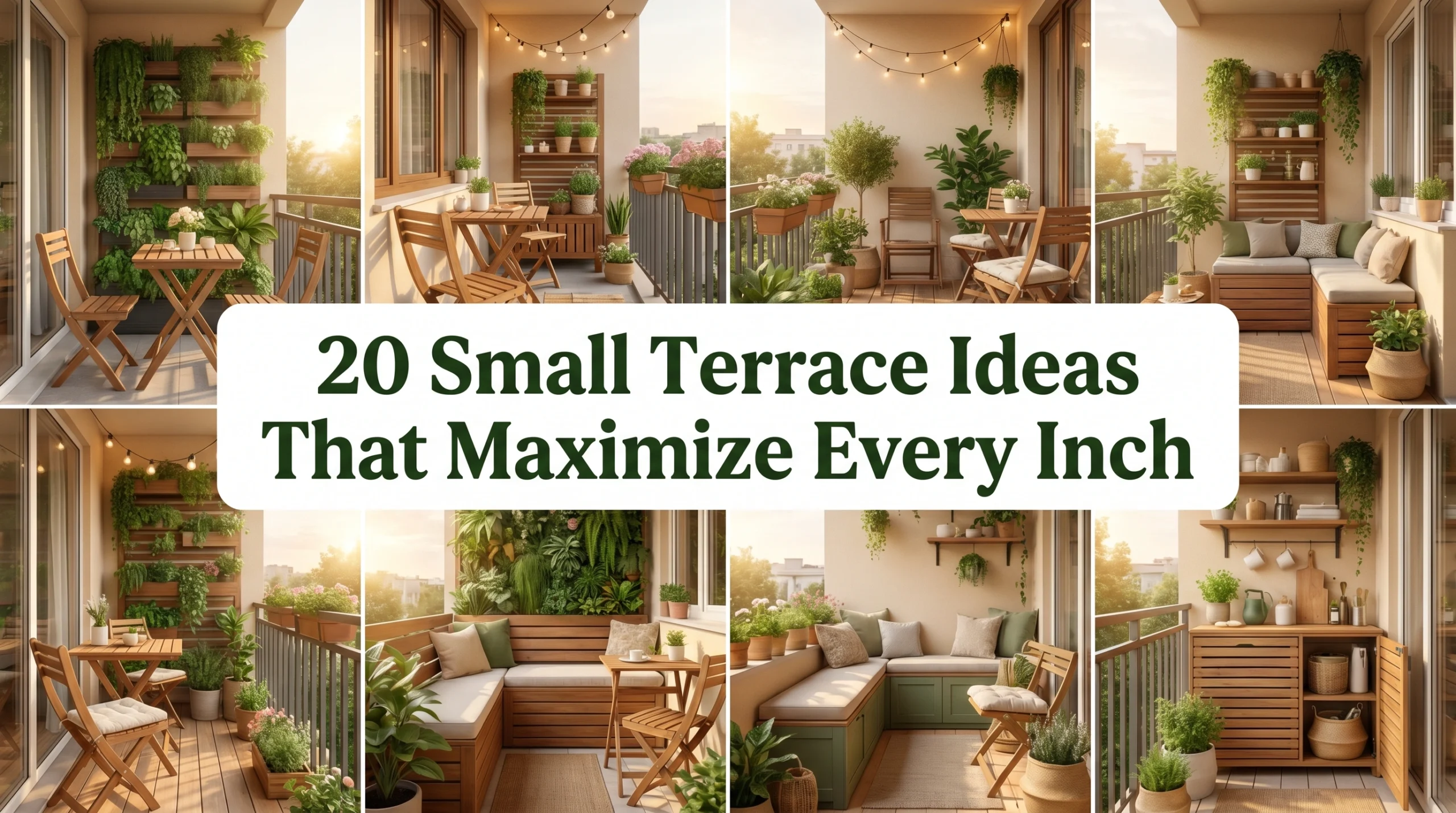
You know that feeling when you look out at your small terrace and just see a cramped concrete slab or a tiny balcony that’s currently home to nothing but a drying rack and a dead plant? It’s frustrating. You want that Pinterest-style outdoor oasis where you can sip your morning coffee or have a glass of wine at sunset, but it feels like you just don’t have the square footage to make it happen. I’ve been there, staring at a space so small you can’t even fully extend your arms, wondering how on earth people make these tiny spots look so inviting.
The truth is, you don’t need a sprawling backyard to create a sanctuary. In my experience, the biggest mistake people make is thinking they have to choose between “functional” and “pretty.” You can absolutely have both. By focusing on smart layouts and vertical space, you can turn even the narrowest ledge into a functional room. In this post, I’m sharing 20 small terrace ideas that maximize every inch without making the space feel cluttered or claustrophobic. We’re going to cover everything from seating hacks to lighting tricks that make your terrace feel like a true extension of your home. Ready to stop ignoring your outdoor space and start living in it?
1. The Fold-Down “Bistro” Railing Table
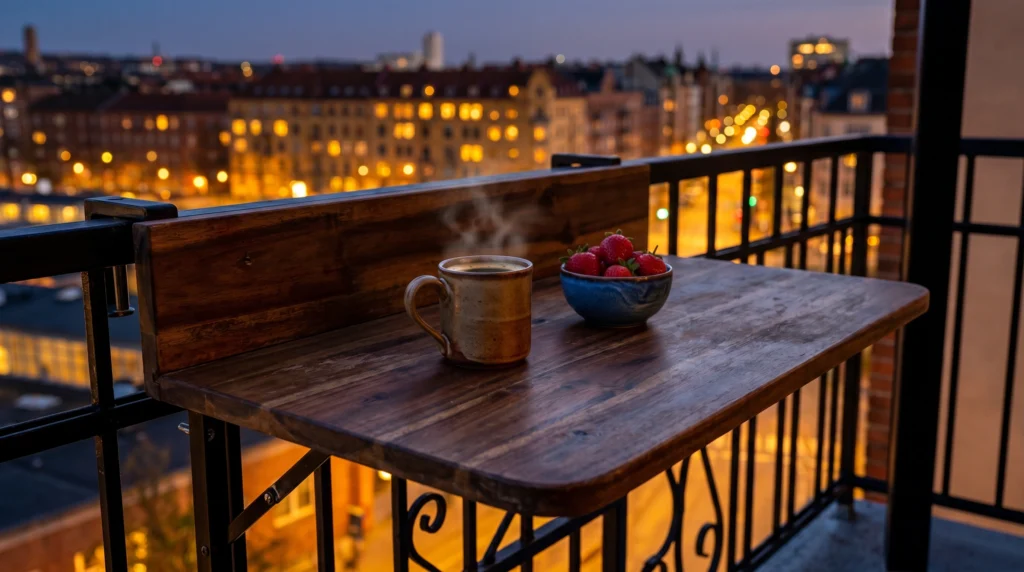
If your terrace is so narrow that a standard table blocks the walkway, you have to look at your railings. A fold-down table attaches directly to the balustrade, giving you a solid surface for a laptop or a meal that simply vanishes when you’re done. It’s a total game-changer for “postage stamp” balconies.
I always recommend this to anyone who asks me about working from home outdoors. You want to look for a model with adjustable brackets so it sits level. Avoid the cheap plastic ones; go for powder-coated metal or treated acacia wood. You can find these for $40–$80. Pro Tip: Measure your railing thickness twice before ordering, as some “universal” mounts don’t fit wide masonry walls.
2. Corner L-Shaped Bench with Hidden Storage
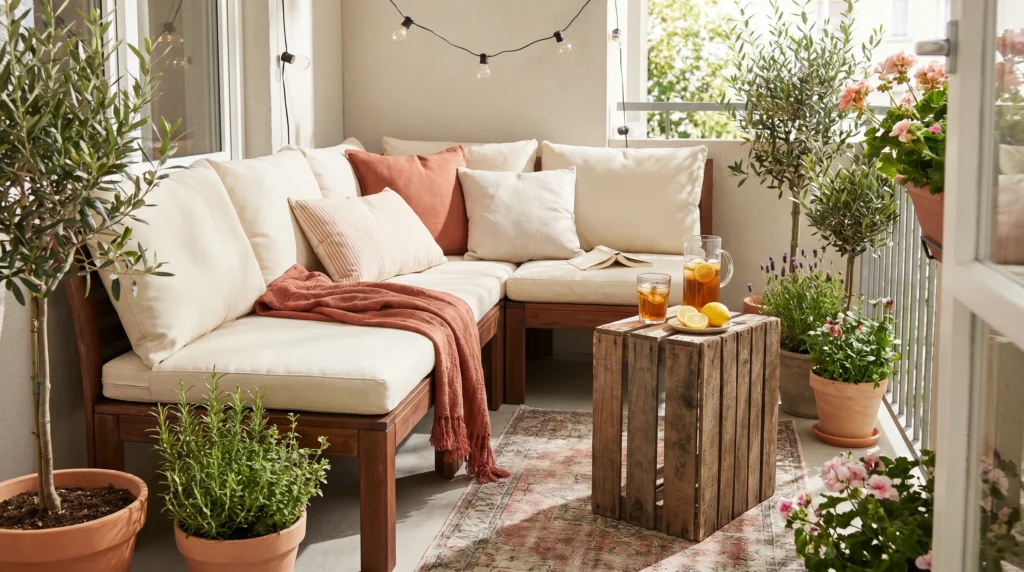
When space is tight, every piece of furniture needs to do two jobs. A custom or modular L-shaped bench tucked into a corner provides way more seating than two chairs would, and it keeps the center of the terrace open. What I personally love about this is the “built-in” look it gives even a rental space.
You can build these using basic wooden crates or buy modular outdoor ottomans. Ensure the cushions are high-density foam so they don’t bottom out. A common mistake is buying a bench that is too deep; stick to a 15-18 inch seat depth to save floor space. Budget around $150–$300 depending on the materials.
3. Vertical Herb Gardens on Wood Pallets
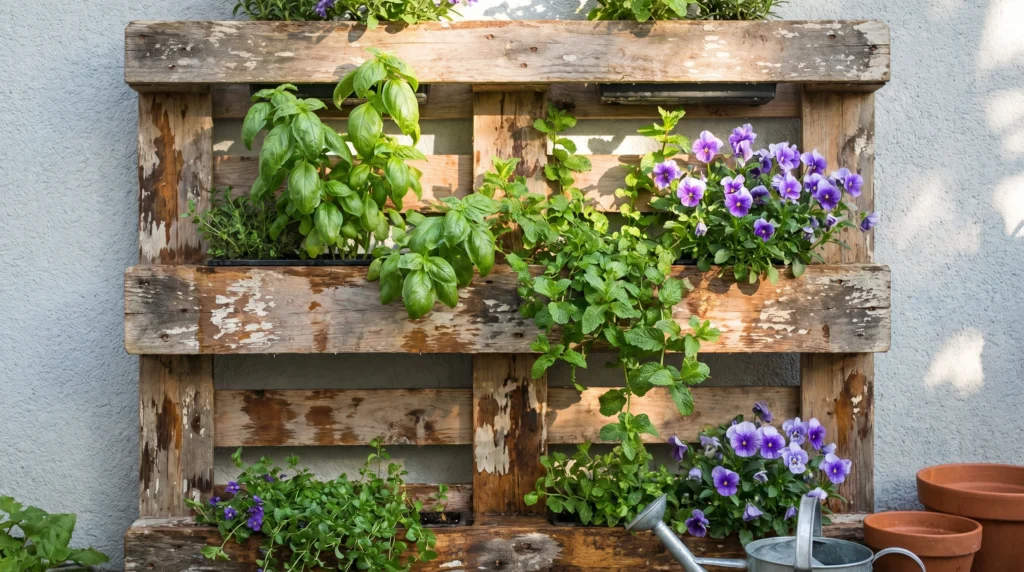
If you love greenery but don’t have floor space for pots, go vertical. A reclaimed wood pallet leaned against a wall becomes a living mural. It brings that lush, earthy scent right to your nose and makes the space feel private and enclosed in a good way.
To do this right, staple landscape fabric inside the pallet “shelves” to hold the soil. I’ve found that mint and rosemary thrive here because they like the drainage. Avoid planting heavy vegetables like tomatoes; stick to light herbs and trailing vines like ivy. This is a great $20 DIY project.
4. Hanging Egg Chairs for a Floating Feel
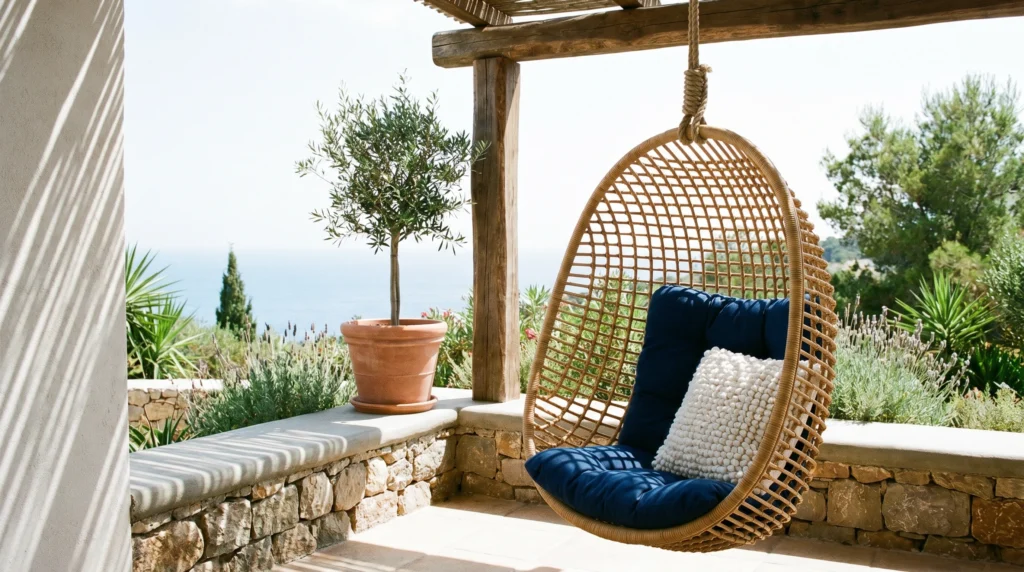
There is something about a hanging chair that feels much lighter than a bulky armchair sitting on the ground. Because you can see the floor underneath it, the terrace actually feels larger. It’s the ultimate spot for getting lost in a book.
Make sure your ceiling hook is professionally installed into a joist, or use a C-stand if you have the room. A lot of people skip the “spin test”—ensure you have at least 20 inches of clearance from the wall so you don’t bang your head when you move. These usually run $150–$400.
5. Outdoor Floor Mirrors to Double the Space
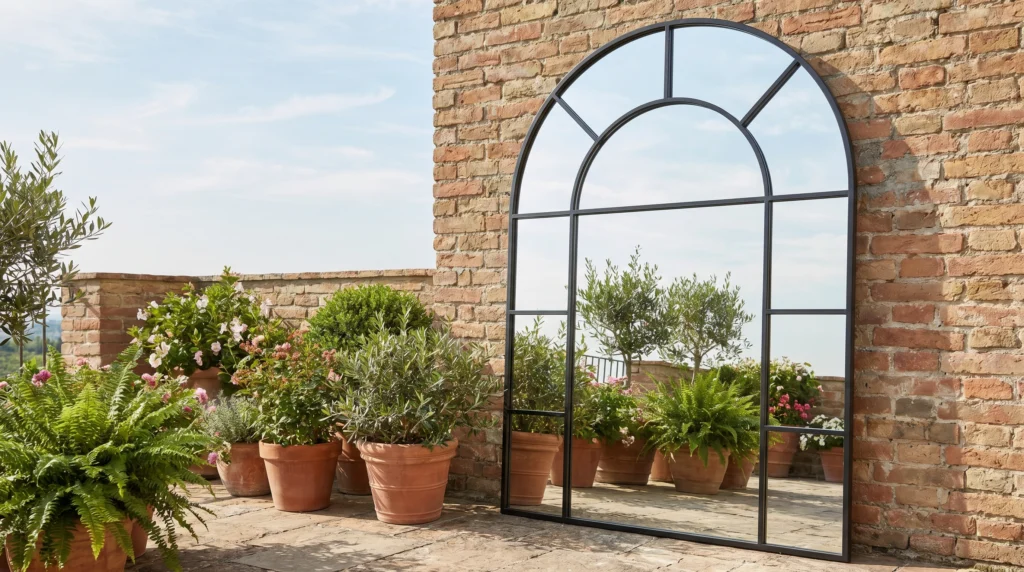
This is a classic interior design trick that works wonders outdoors too. Leaning a large, weather-proof mirror against a terrace wall reflects the sky and any plants you have, instantly making the area feel twice as wide.
Choose a mirror with a galvanized metal frame to prevent rust. Avoid thin glass that might shatter in high winds; secure it to the wall with a hidden bracket. You can often find great frames at thrift stores for $30 and just spray paint them with rust-oleum.
6. Weatherproof Outdoor Rugs to Define the Zone
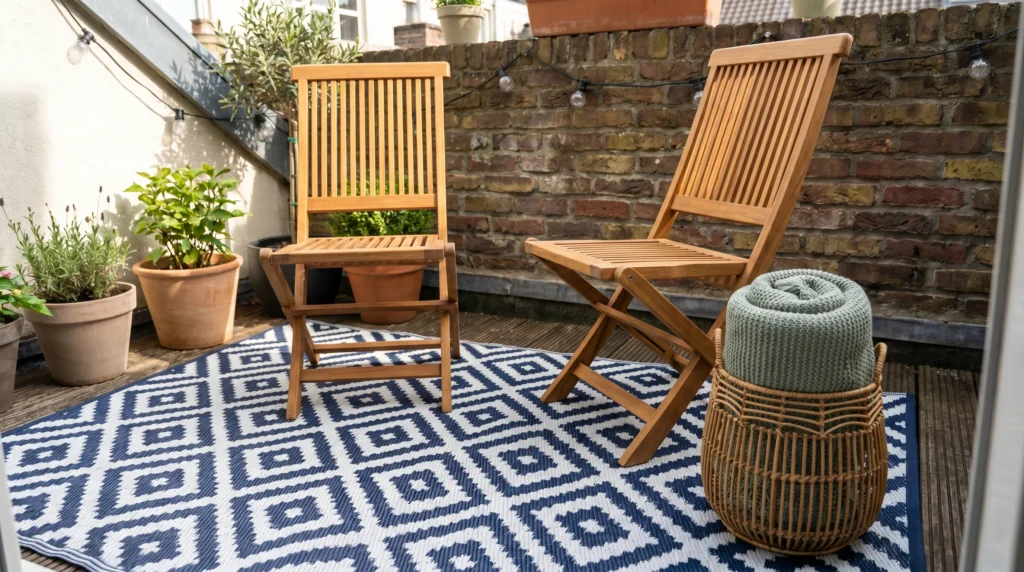
A bare concrete floor can feel cold and industrial. A rug acts as an “anchor,” telling your brain that this is a room, not just a ledge. I like using bold patterns or deep textures to add a sense of luxury to an otherwise plain area.
Look for 100% polypropylene rugs—they can be hosed down and won’t mold. In my experience, a rug that is too small makes the terrace look smaller; try to get one that tucks under the front legs of your seating. Budget: $50–$120.
7. Layered String Lights for “Golden Hour” Vibes
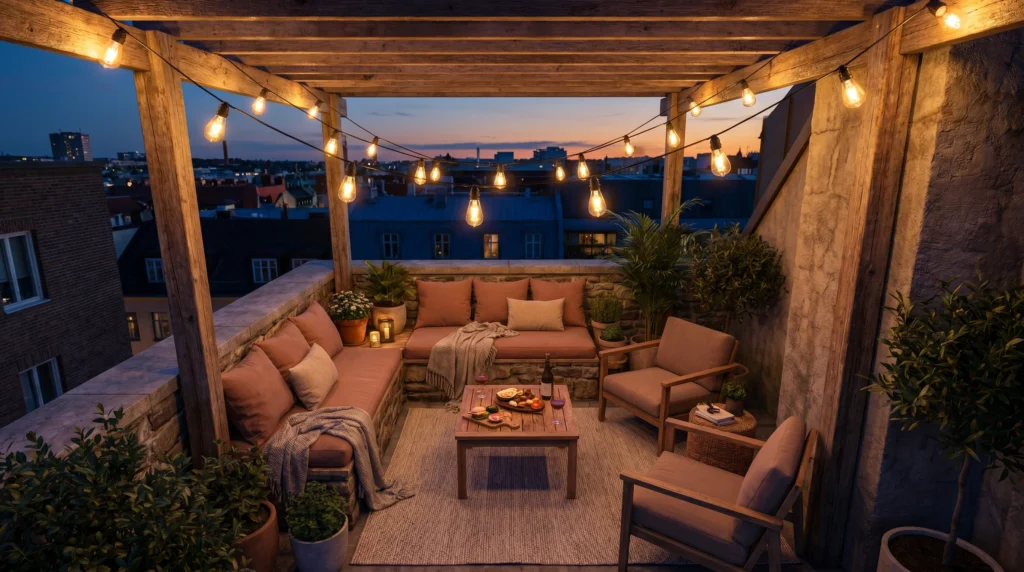
Lighting is everything. If you only have one harsh overhead porch light, you’ll never want to sit out there at night. Layering Edison-style string lights across the ceiling or along the railing creates a soft, glowing canopy that hides a multitude of design sins.
Don’t just string them in a straight line; drape them in “swags” for a more relaxed look. Use warm white bulbs (2700K) rather than cool white to keep it cozy. A 25-foot strand is usually $20–$35. Tip: Use zip ties to secure them to railings so they don’t blow away during a storm.
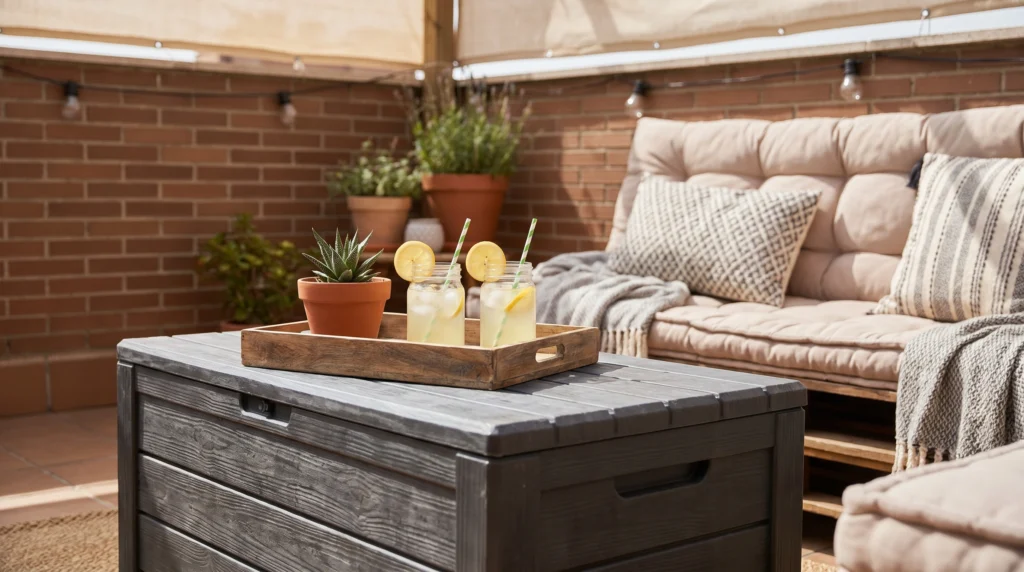
8. Multi-Functional Storage Trunks as Coffee Tables
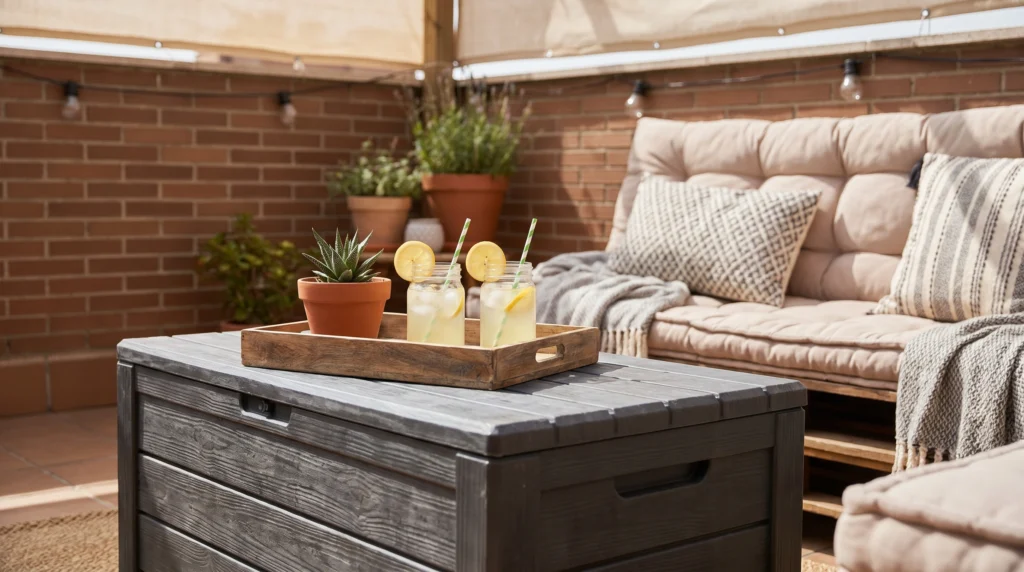
In a small space, a coffee table that doesn’t hold anything inside is a missed opportunity. A wooden or resin storage trunk gives you a place to rest your drink and a spot to hide your cushions when it rains.
Choose a flat-topped trunk so your glass doesn’t tip over. If it’s wood, make sure it’s teak or cedar to handle the moisture. A common mistake is buying a trunk that’s too tall—keep it around 16–18 inches high to match your seating. Expect to pay $80–$200.
9. Slim-Profile Bar Stools and a High Ledge
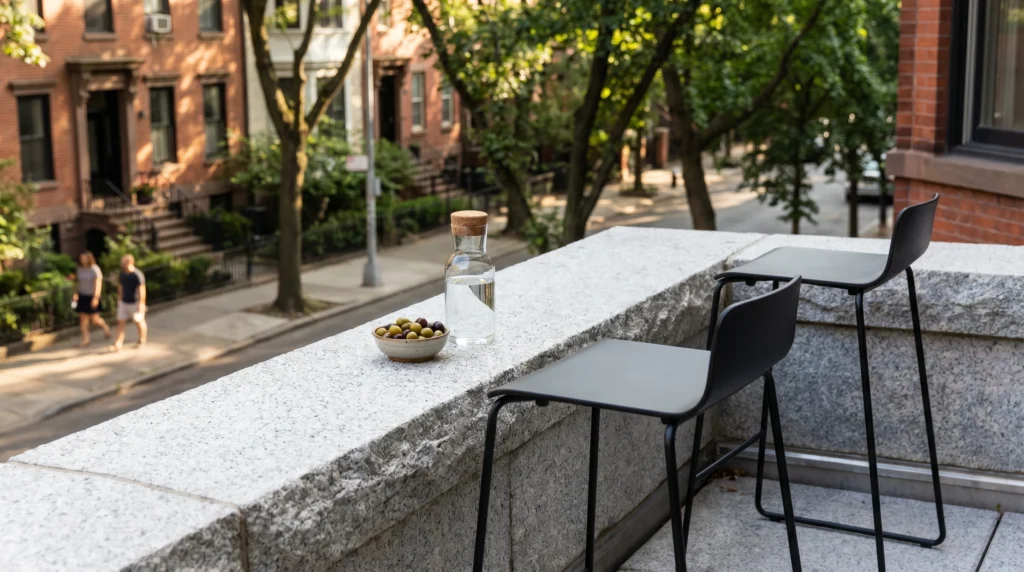
If your terrace has a wide masonry wall or a high railing, don’t fight it with low chairs. Use bar stools. This raises your line of sight so you’re looking over the railing at the view, rather than at the bars.
Opt for “armless” stools to save several inches of width. Make sure they have a footrest, or they’ll be uncomfortable after ten minutes. Metal stools are great because they’re heavy enough not to blow over. Budget: $60–$150 for a pair.
10. Privacy Screens with Climbing Vines
Feeling like your neighbors are watching you eat your toast is the fastest way to ruin a terrace. A simple wooden trellis or a laser-cut metal screen provides privacy without blocking the breeze.
I love using Jasmine or Clematis for this because they grow fast and smell incredible. Avoid “solid” walls which can make a small terrace feel like a box; the “breathability” of a trellis is key. You can get a basic wooden trellis for $15–$30 at any hardware store.
11. Built-in Perimeter Planting
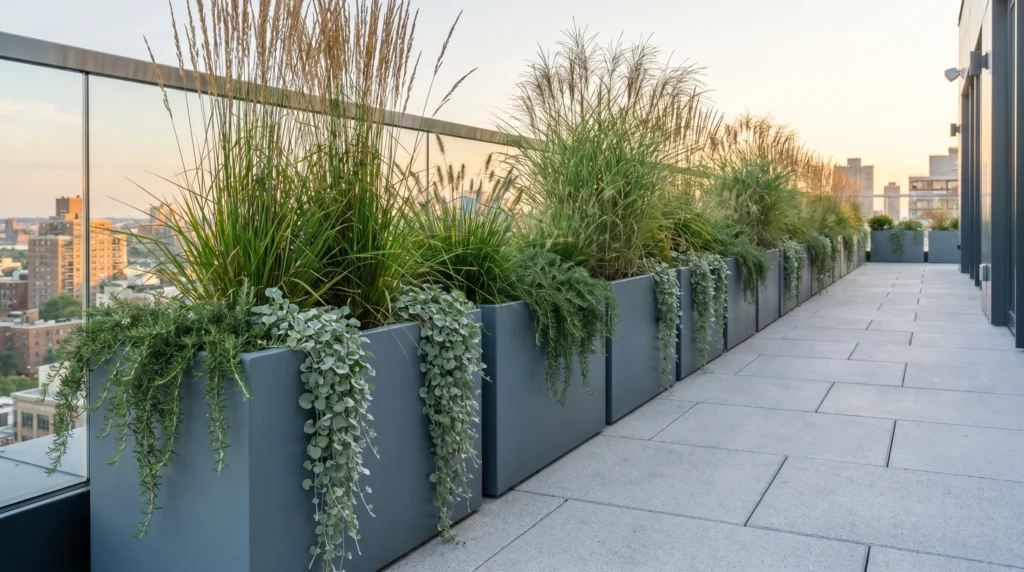
Instead of scattered pots that trip you up, try long, narrow rectangular planters that hug the perimeter of the floor. This creates a “border” of nature that feels integrated into the architecture.
Ensure the planters have proper drainage so your plants don’t drown. I often suggest mixing heights—tall grasses in the back and spilling “Silver Falls” dichondra in the front. Plastic resin planters are light and affordable ($30), while stone looks more permanent but is heavy.
12. Use a “Living Wall” for Texture
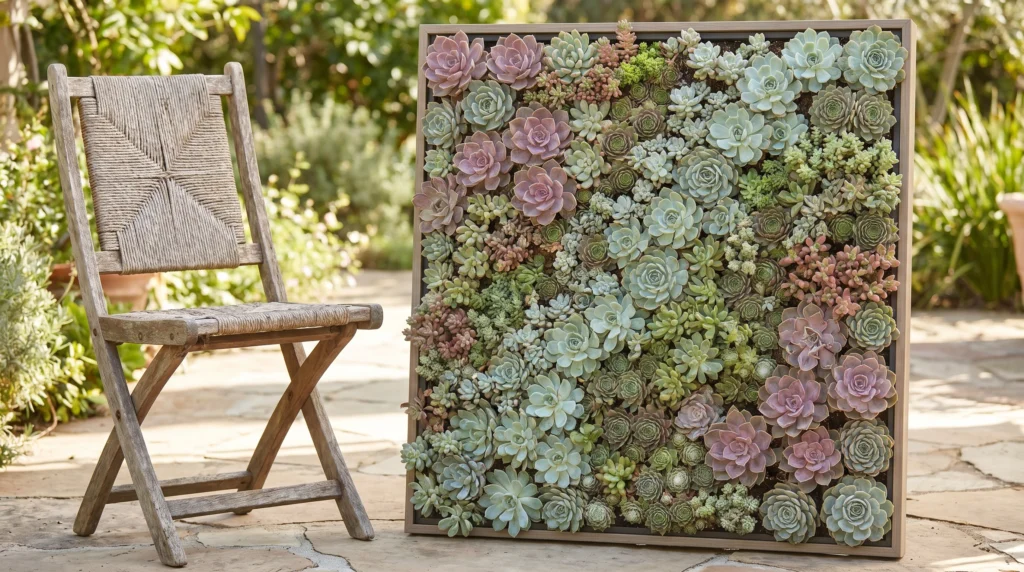
If your terrace wall is just a flat, boring expanse of stucco, turn it into a feature. Modular wall planters allow you to snap together a grid of plants that covers the vertical surface entirely.
This works best with succulents or ferns depending on your light. A lot of people forget about the weight—once watered, a living wall is heavy. Secure the frame into studs or use heavy-duty masonry anchors. This can cost $50–$200 depending on the scale.
13. The “C-Table” for Tiny Footprints
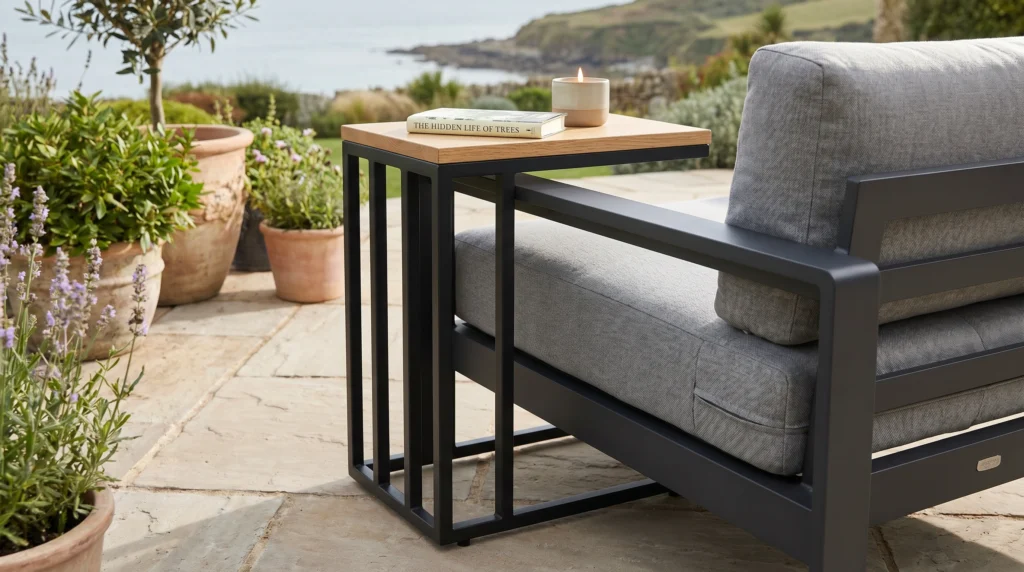
When you literally have no room for a coffee table, a C-table is the answer. The base slides under your chair or sofa, and the top hovers right over your lap. It takes up zero extra floor space.
Look for a style with a weighted base so it doesn’t tip over in the wind. I personally like the metal and wood combos for that “industrial-chic” look. These are very affordable, usually $25–$50.
14. Floor Cushions for Extra Guests
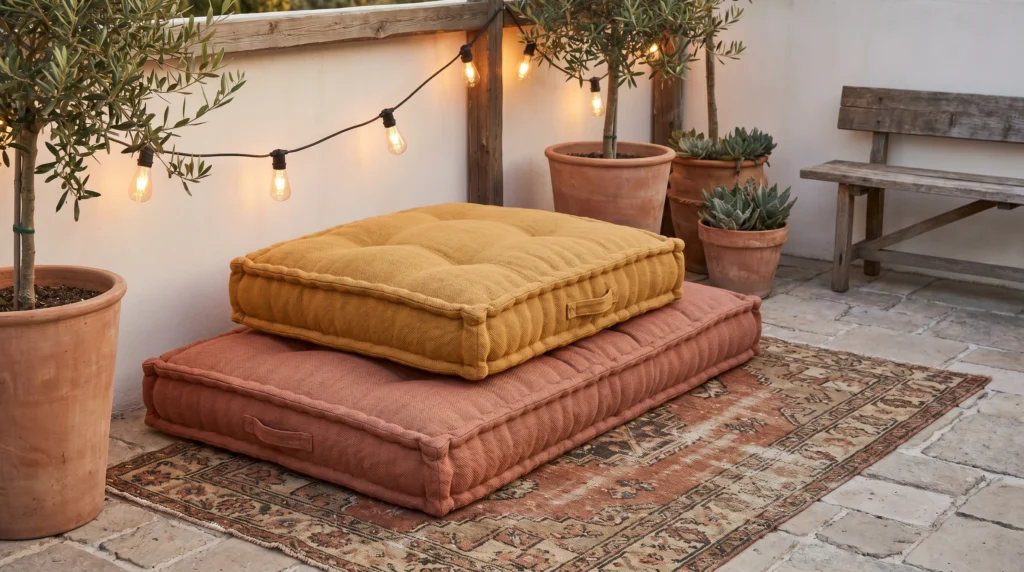
You might only have room for two permanent chairs, but what if friends come over? Oversized, weather-resistant floor cushions can be stacked in a corner and pulled out when needed. It creates a very relaxed, bohemian vibe.
Pick “sun-brella” fabrics so they don’t fade in a week. Avoid the thin “dining chair” pads; you want something at least 4 inches thick. You can find these for $20–$40 each.
15. A Corner Water Feature for Noise Masking
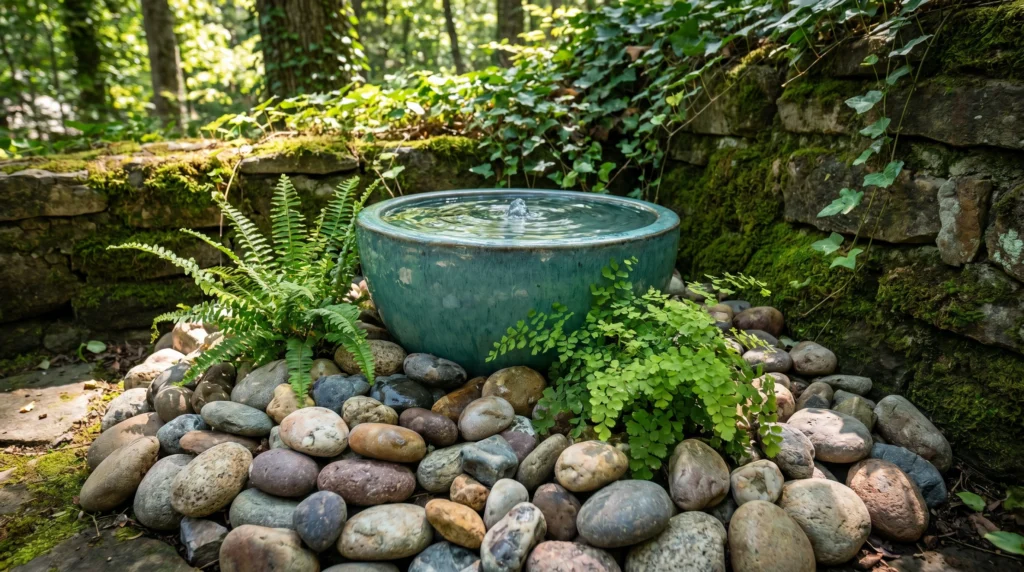
If your terrace is in a noisy city, the sound of a small bubbling fountain can mask traffic and make the space feel like a private spa. You don’t need plumbing; just a plug-in solar pump and a beautiful ceramic pot.
Fill the pot with river stones to hide the pump and create a better sound. Tip: Don’t get a fountain that “splashes” too much, or you’ll have a wet floor. A simple “bubbler” is best for small spaces. Budget: $40–$100.
16. Wall-Mounted Lighting Scounces
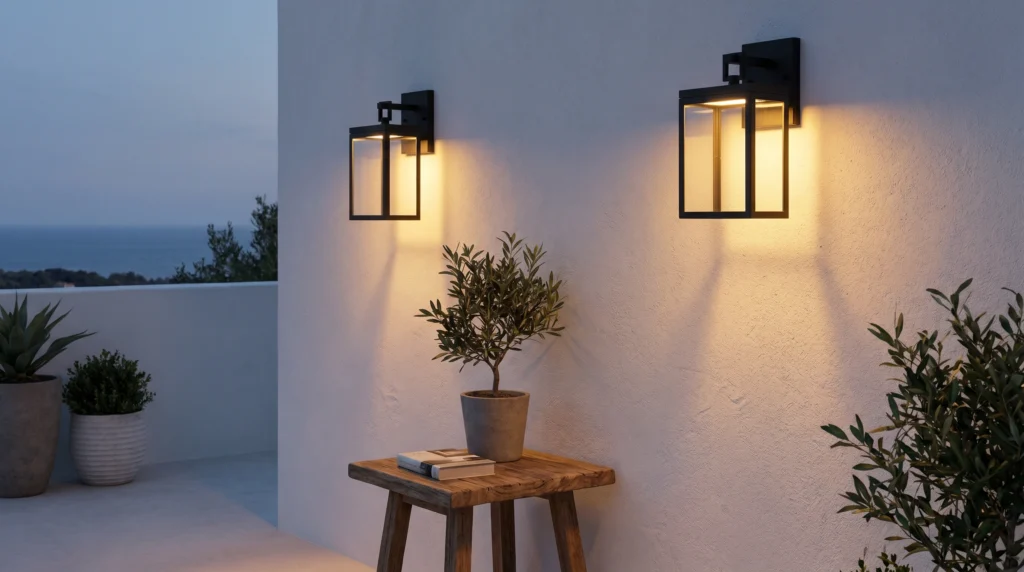
Floor lamps take up floor space, and string lights aren’t everyone’s style. Wall-mounted lanterns or modern LED sconces keep the ground clear and provide a more sophisticated “upscale hotel” feel.
If you can’t wire them in, use battery-operated “puck” lights inside a decorative sconce. This is a great hack for renters. A set of two stylish sconces can be found for $50–$120.
17. Use Transparent Furniture to “Disappear”
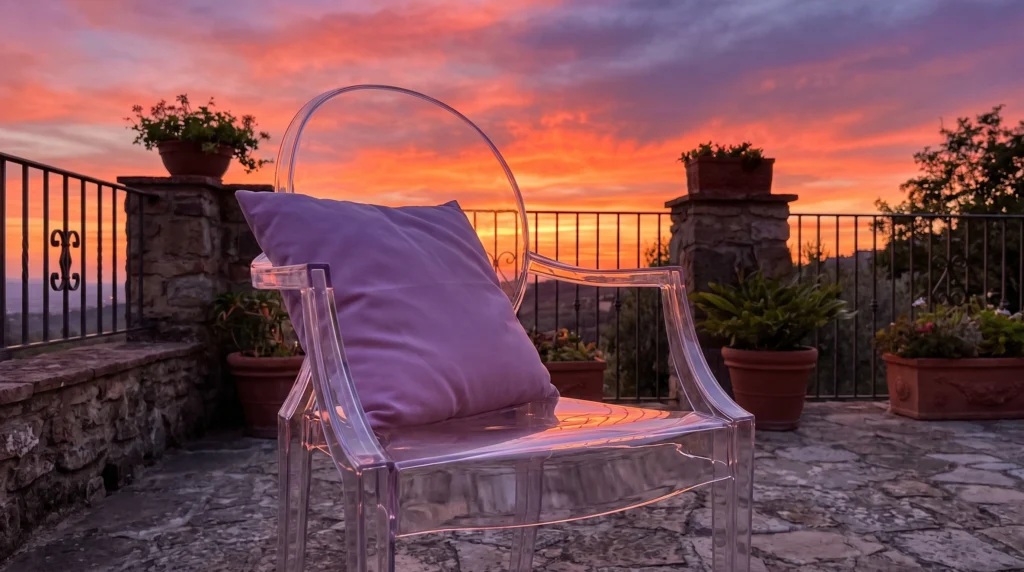
Acrylic or “ghost” chairs are a designer’s secret weapon for small spaces. Because they are clear, your eye travels right through them to the view beyond. The terrace looks empty even when it’s fully furnished.
Be careful with cheap acrylic as it can scratch easily. Wipe them down with a soft microfiber cloth—never paper towels. These usually cost $70–$130 per chair.
18. Hanging Planters at Varied Heights
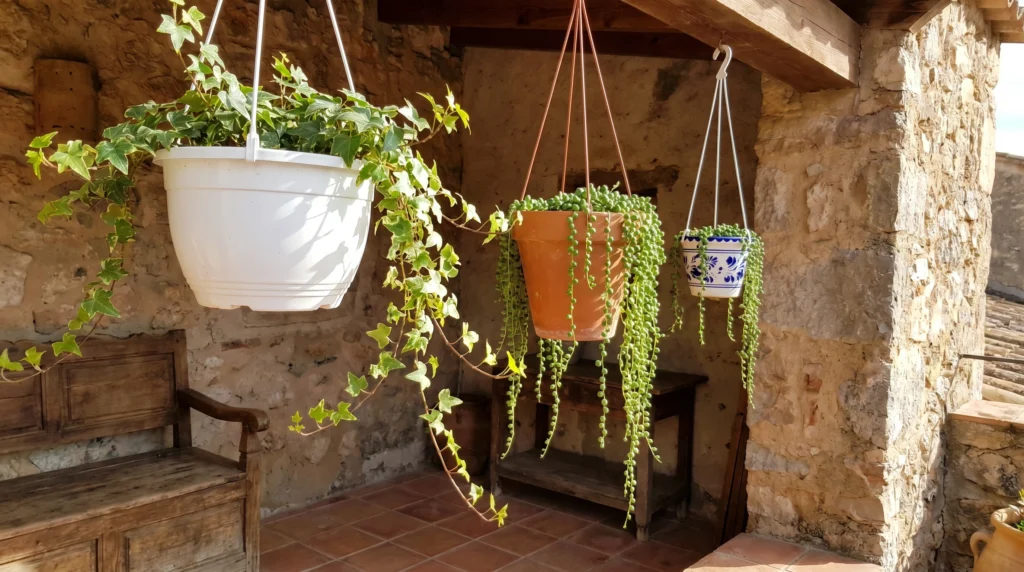
Don’t just hang one pot in the middle of the ceiling. Hang three or four at different levels in a corner. This creates a “curtain” of greenery that acts as a natural room divider.
Use macrame hangers for a boho look or sleek metal hoops for something more modern. Make sure your ceiling hooks are rated for the weight of wet soil. This is a very budget-friendly way ($15–$50) to add high-impact decor.
19. A “Sheer” Outdoor Curtain
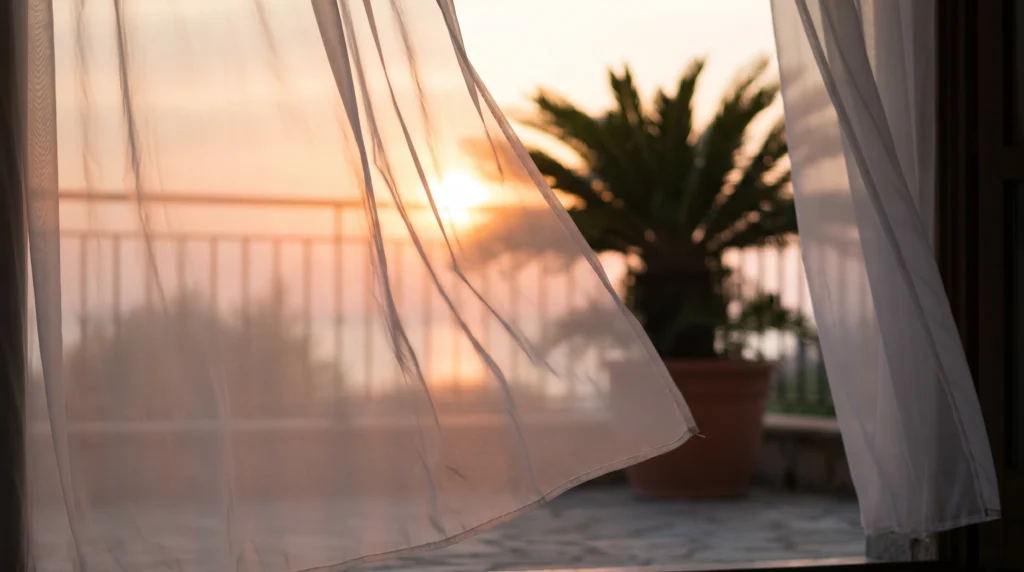
If you want to block the sun or a neighbor’s view without feeling boxed in, a sheer white outdoor curtain is the answer. It catches the breeze and adds a soft, romantic movement to the space.
Use a simple tension rod between two walls for an easy, no-drill installation. Make sure the fabric is “outdoor rated” so it doesn’t yellow or mildew. A single panel is usually $20–$40.
20. The “Shelf-ie” Wall
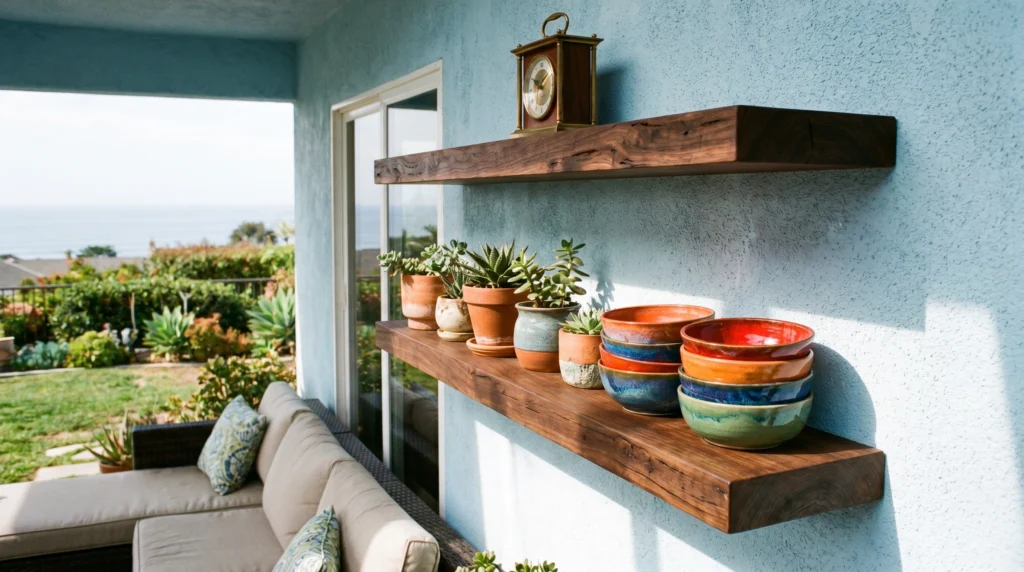
If you have a blank wall, install three narrow floating shelves. Use them for small plants, candles, and a weather-proof radio. It’s like a mantlepiece for your outdoor room.
Make sure the shelves have a slight “lip” on the front so items don’t slide off in a breeze. Metal or treated wood is a must. This adds vertical storage for about $30–$60.
Summary of Small Terrace Styling
| Idea | Primary Benefit | Estimated Cost |
| Rail Table | Saves floor space for dining | $40 – $80 |
| L-Bench | Maximizes seating/storage | $150 – $300 |
| Floor Mirror | Visually doubles the area | $30 – $100 |
| Outdoor Rug | Defines and warms the space | $50 – $120 |
| Vertical Garden | Adds greenery without footprint | $20 – $50 |
Conclusion
Turning a tiny outdoor area into a functional retreat doesn’t require a massive budget or a degree in architecture. In my experience, it really just comes down to being intentional with your vertical space and choosing furniture that works twice as hard. Whether you just add a single string of lights or go all out with interlocking deck tiles, the goal is to make the space feel like yours.
Remember, you don’t have to do all 30 of these ideas at once. In fact, I usually suggest starting with just one or two—maybe a rug and some lighting—and seeing how the mood of the space changes. You’ll be surprised how much more time you spend outside once there’s a comfortable place to sit and something beautiful to look at. Which of these small terrace ideas that maximize every inch are you going to try first? I’d love to hear your plans in the comments!
FAQs
How do I make my small terrace look bigger on a budget?
The fastest way to create the illusion of space without spending much is to use a large mirror and light-colored textiles. A mirror reflects light and the surrounding view, while light colors like cream or pale sage prevent the area from feeling “heavy.” Additionally, keeping the floor clear by using wall-mounted planters or a railing table makes the actual square footage feel much more open.
What are the best plants for a small, shady terrace?
If your terrace doesn’t get much sun, focus on plants with interesting foliage rather than flowers. Ferns, Hostas, and Caladiums thrive in low-light conditions and provide a lush, “jungle” feel. For a vertical element, English Ivy is very hardy and will climb a trellis even in the shade. These plants stay green year-round in many climates, keeping your terrace looking alive even in the winter.
Can I use regular furniture on my terrace?
I wouldn’t recommend it unless your terrace is fully enclosed and climate-controlled. Regular indoor furniture is usually made with glues and finishes that will warp, crack, or mold when exposed to humidity and temperature swings. If you’re on a tight budget, look for metal or plastic indoor chairs that you can “weatherproof” with a coat of outdoor spray paint, but always bring cushions inside when they’re not in use.
How do I secure terrace decor against high winds?
Wind is the enemy of small terraces, especially on higher floors. Use heavy ceramic or stone pots instead of light plastic ones, and use zip ties to secure string lights and privacy screens to the railings. For furniture, look for pieces with a bit of weight, or use “sandbag” weights hidden inside ottomans or storage trunks to keep them from shifting during a storm.