We’ve all been there. You find an apartment with the perfect location, great neighbors, and a kitchen you actually want to cook in—but the living room is the size of a shoe box and gets about twenty minutes of direct sunlight a day. It is incredibly easy to feel boxed in by dark, cramped spaces, and standard rental rules make it even harder to fix. You can’t exactly knock down walls or install a massive bay window.
But here is the good news: you do not need a sledgehammer or a massive budget to make your home feel open, airy, and inviting. What I love about interior styling is that small, intentional changes can completely trick your eyes into seeing a much larger space. By choosing the right shapes, placing your lights strategically, and playing with textures, you can completely change how your room feels.
In this guide, you are going to learn 15 practical, apartment-friendly design tricks to make your living room feel twice its actual size. We will cover everything from the way you hang your curtains to the types of furniture legs that actually save your floor space. Let’s get your living room looking bright, open, and incredibly cozy.
1. Low-Profile Modern Sofas
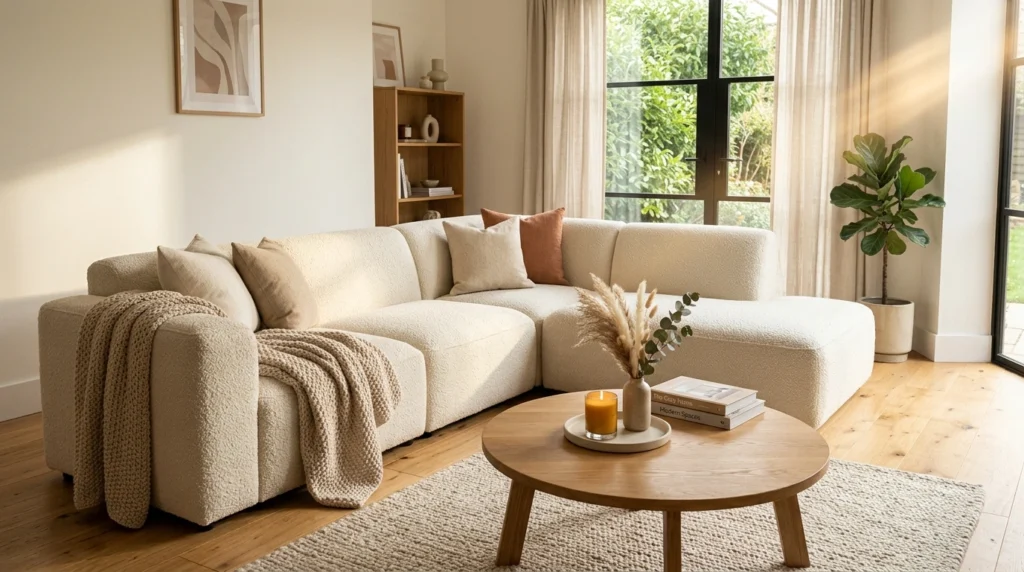
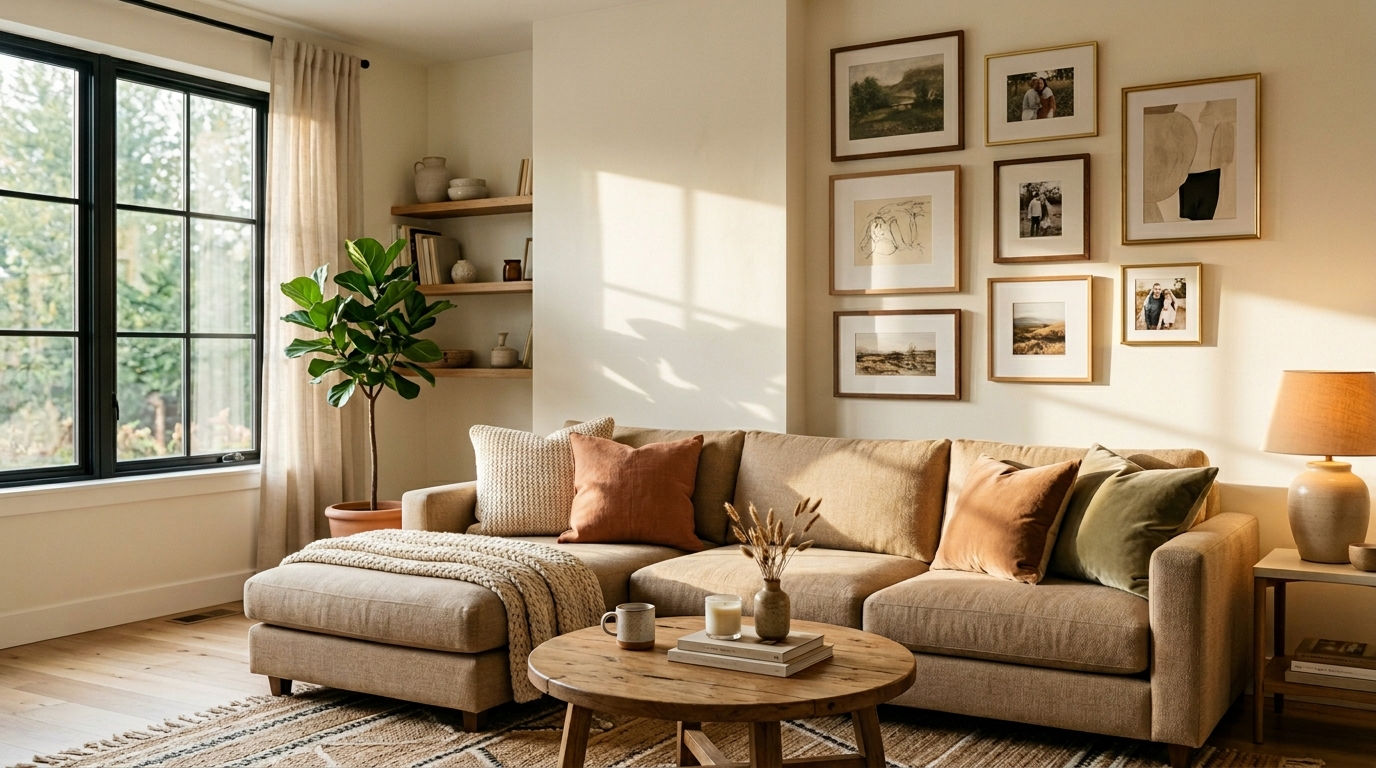
There is something so peaceful about a low-slung sofa sitting in a sunlit room. When your furniture sits closer to the floor, it leaves a massive amount of empty space on the wall above it, which immediately makes your ceilings feel feet higher than they actually are. Picture a cozy cream boucle sofa paired with light oak floors and a soft knit throw draped over the side—it looks relaxed, open, and incredibly inviting without crowding the room.
I always recommend starting with a sofa that has a back height under 30 inches. What a lot of people overlook is that bulky, high-backed couches act like giant visual blocks, cutting your room in half and stopping natural light from flowing through. Instead, look for a modular floor sofa or a sleek mid-century design with simple lines. Pair it with a low, round coffee table to keep the center of your room open.
- Suggested Budget: $450 – $1,200
- Common Mistake: Buying an overstuffed reclining sofa that swallows up the entire floor.
2. The Floor-Length Arch Mirror
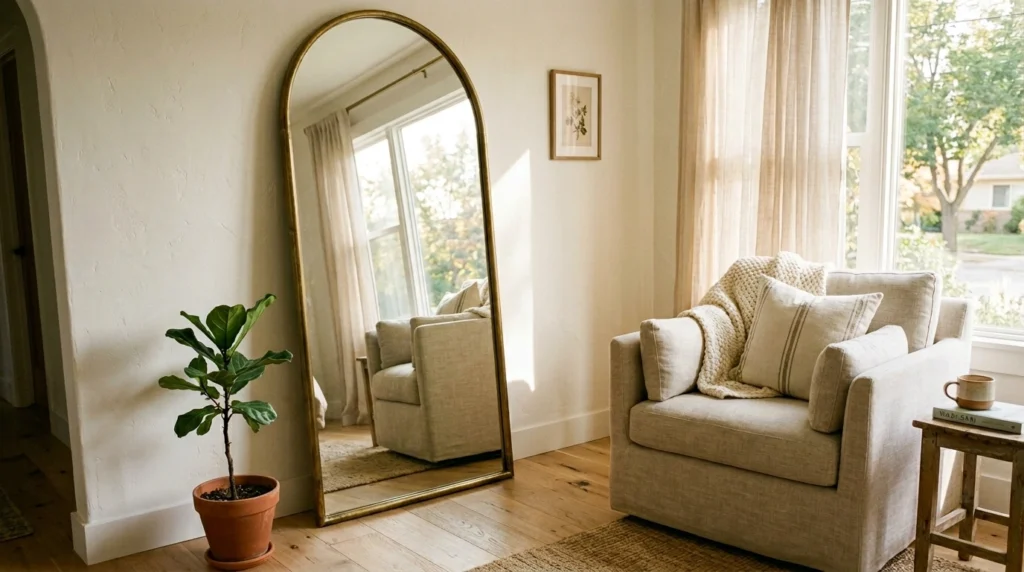
An oversized mirror is essentially a cheat code for a small apartment. It bounces the natural morning light from your windows directly into those dark, forgotten corners of the room, making it feel like you have an extra window where there isn’t one. Leaning a tall, gold-framed arch mirror casually against a wall next to a cozy linen armchair creates a gorgeous, reflective depth that tricks your brain into thinking the room keeps going.
The trick to making this work is placement. You want to place your mirror opposite or adjacent to your main window so it can actually capture and reflect the light. Make sure to secure it safely to the wall, especially if you have pets or kids. If you are on a tight budget, grab a simple, cheap plastic-framed mirror from a local thrift store and spray paint the frame a soft matte black or bronze.
- Suggested Budget: $80 – $250
- Common Mistake: Hanging a mirror that is too small, which ends up looking cluttered and doesn’t reflect enough light.
3. Floor-to-Ceiling Sheer Linen Curtains
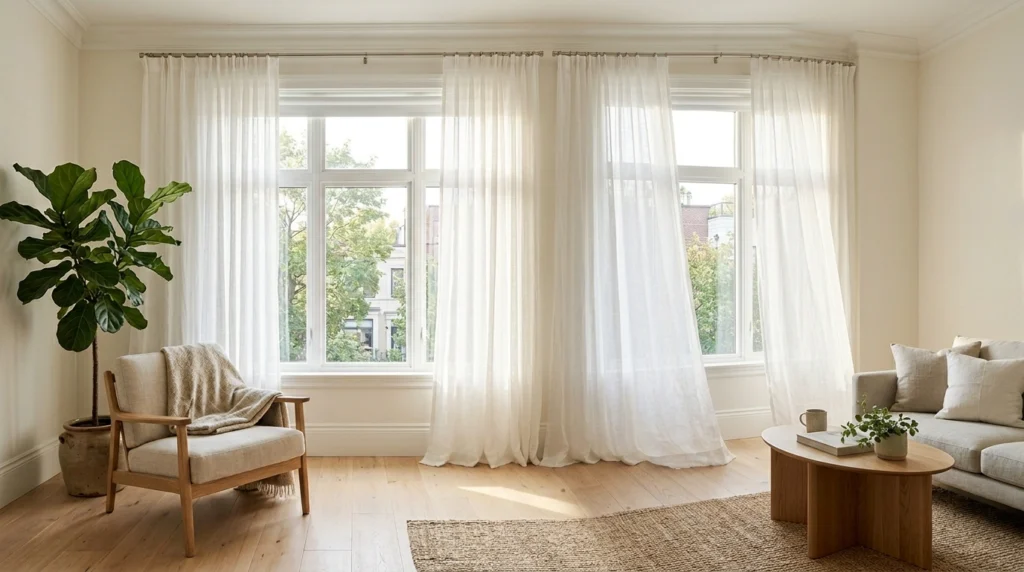
There is nothing quite like the look of breezy, white linen curtains catching a gentle afternoon draft. The sunlight filters through the fabric so softly, casting a warm, dreamy glow across your floor while keeping your privacy intact. It instantly gives your living room a loft-like feel and draws your eyes upward, making even the lowest rental ceilings feel airy and grand.
To recreate this look, install your curtain rod as close to the ceiling as possible—not right above the window frame. Let the rod extend about 10 to 12 inches past the window on each side so that when you pull the curtains open, the entire glass pane is exposed to let in every drop of light. Avoid heavy, dark velvet drapes at all costs, as they absorb light and make walls feel like they are closing in.
- Suggested Budget: $40 – $100
- Common Mistake: Buying curtains that are too short and hang like high-water pants above your baseboards.
4. Monochromatic Cream and Warm Wood Layering
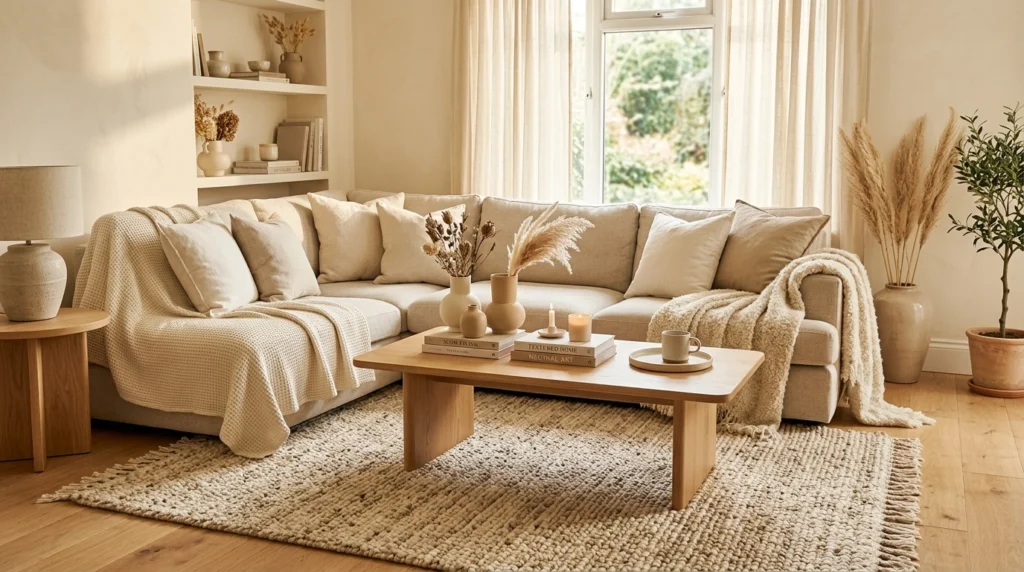
Using a cohesive, light color palette is one of the easiest ways to open up a room. When you layer soft off-whites, warm creams, and light oak woods, your eyes can sweep across the entire space without being interrupted by harsh, contrasting colors. It feels like a cozy, quiet sanctuary where you can actually breathe, and the room feels spacious simply because it is visually unified.
To keep a monochromatic room from looking sterile or boring, you need to mix your textures. Combine a nubby woven wool rug with a smooth oak coffee table, matte ceramic vases, and a soft waffle-knit blanket. In my experience, the biggest mistake people make is using cold, sterile grays. Stick to warm creams and soft beiges to keep the space feeling cozy and sun-drenched.
- Suggested Budget: Varies (very easy to do with budget-friendly accessories)
- Common Mistake: Using cold, blue-toned whites that make your living room look like a clinical waiting room.
5. Leggy Mid-Century Modern Chairs
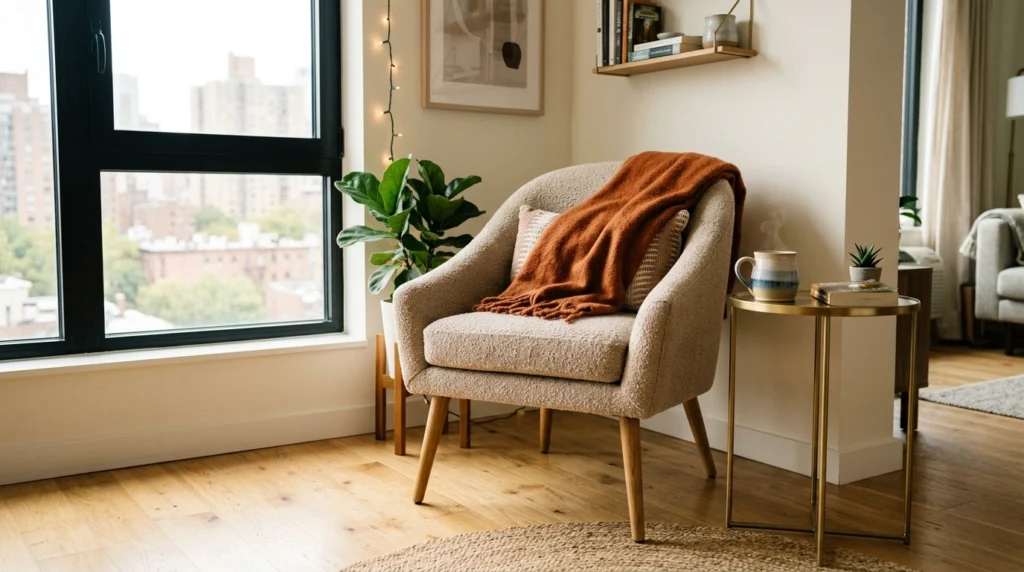
Your living room will instantly feel lighter when you can actually see the floor beneath your furniture. An accent chair with slender, tapered wooden legs sitting in a sunny corner creates a sense of weightlessness that boxy, heavy furniture simply cannot replicate. The light can flow underneath and around the chair, making the overall floor plan feel incredibly open.
Look for lounge chairs with exposed wood frames or slim metal legs. A woven cane chair or a simple leather sling chair works beautifully here because they have a small physical footprint but offer plenty of comfort. If you have a dark corner, tuck a leggy chair there with a small side table to create a bright, cozy reading nook.
- Suggested Budget: $120 – $350
- Common Mistake: Choosing heavy armchairs with fabric skirts that block the floor and trap shadows.
6. Clear Acrylic or Glass Coffee Tables
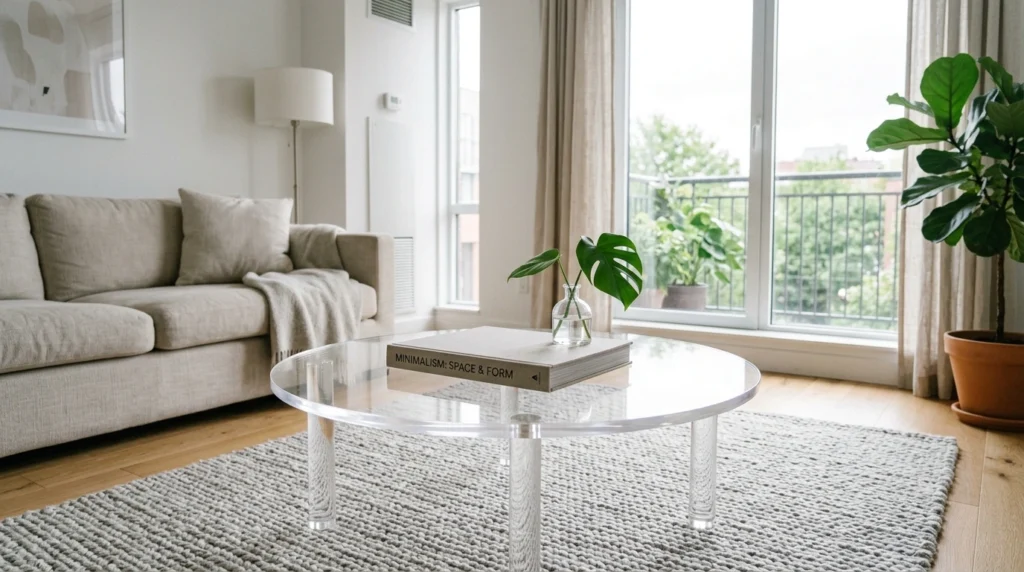
A glass or acrylic coffee table is a wonderful magic trick for a small living room. Because you can see right through it, the table virtually disappears into the room, showing off your beautiful textured area rug beneath. It keeps the center of your seating area feeling completely open and uncluttered, rather than blocked off by a massive slab of dark wood.
I always recommend choosing a round or oval glass table to soften the sharp angles of a typical small apartment. Style the surface very simply—just a single art book, a small dish for coasters, and a tiny glass vase with a green leaf. If you have kids or pets, look for high-quality acrylic with rounded edges, which is much safer and lighter than heavy glass.
- Suggested Budget: $90 – $220
- Common Mistake: Buying a heavy, dark wood storage trunk as a coffee table, which makes the center of the room feel incredibly heavy.
7. The “One Large Rug” Strategy
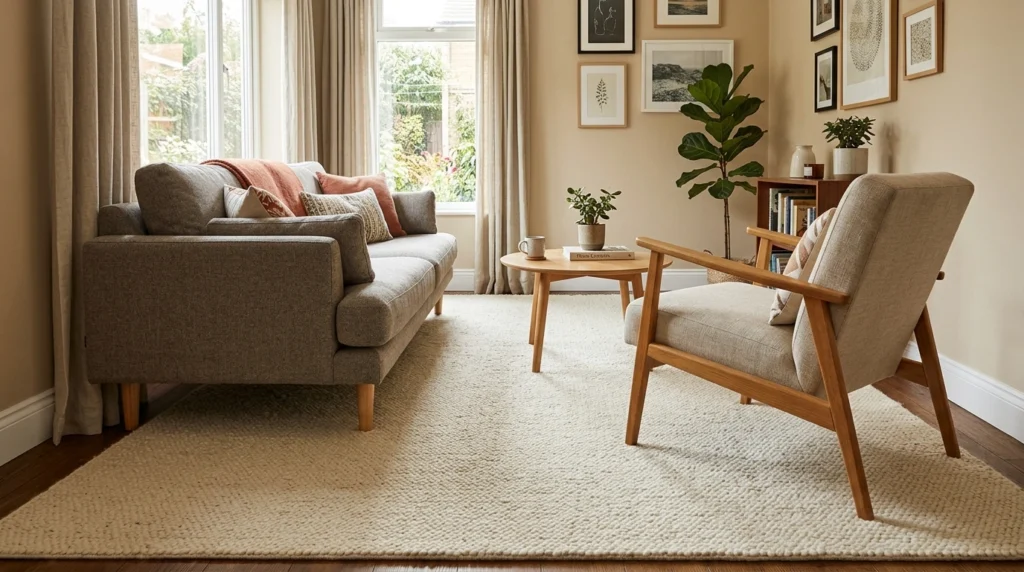
A large, expansive canvas of soft wool stretching nearly wall-to-wall makes a massive statement. It unifies your entire seating arrangement, making the floor plan feel continuous and grand rather than chopped up into tiny, awkward zones. Walking into a room with a large, beautiful rug feels incredibly luxurious and instantly warm.
The golden rule of apartment rugs is to buy one that is large enough for all the front legs of your furniture to sit comfortably on—usually an 8×10 or 9×12 rug for standard apartments. A lot of people overlook this detail, but buying a tiny 5×7 rug is a huge mistake. It makes your living room look like a tiny, cramped island floating in the middle of the floor.
- Suggested Budget: $150 – $400
- Common Mistake: Skimping on the rug size to save money, which actually shrinks the visual size of the room.
8. Floating Vertical Wooden Shelves
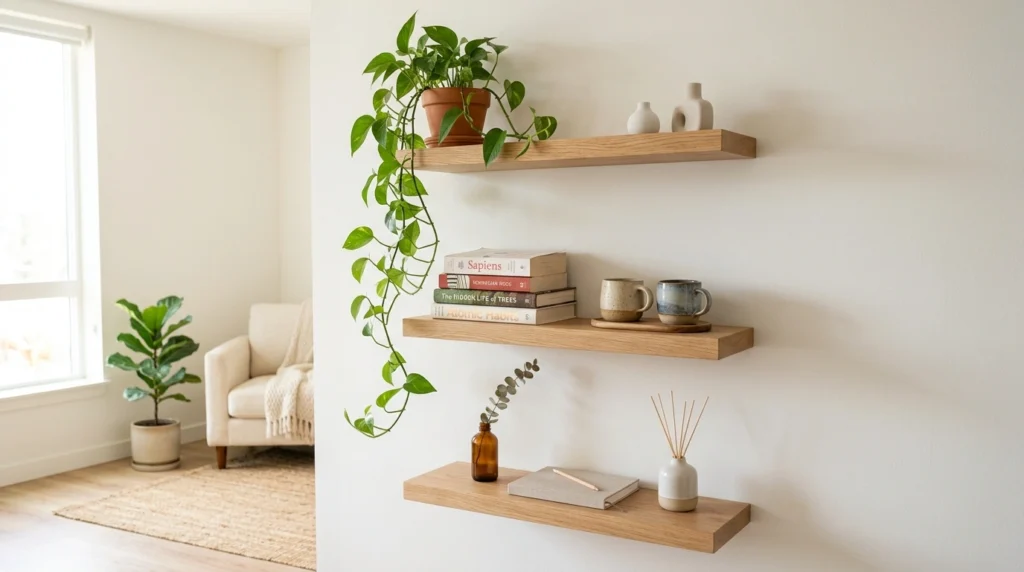
Using your walls is crucial when you don’t have a lot of floor space. Mounting beautiful, warm oak shelves in a vertical line draws your gaze upward, highlighting the height of your walls rather than the limited square footage on the floor. Filled with trailing green vines, a few favorite books, and handmade ceramic mugs, it adds tons of personality without taking up an inch of walking space.
Install your shelves in a staggered pattern or a clean vertical column. Be sure to leave plenty of empty space on the shelves so they do not look overcrowded—negative space is what makes a room feel light and airy. Use heavy-duty wall anchors, especially if you are renting and want to avoid damaging the drywall when you move out.
- Suggested Budget: $25 – $70
- Common Mistake: Jamming every single inch of the shelves with knick-knacks, which creates immediate visual clutter.
9. Plug-In Brass Wall Sconces
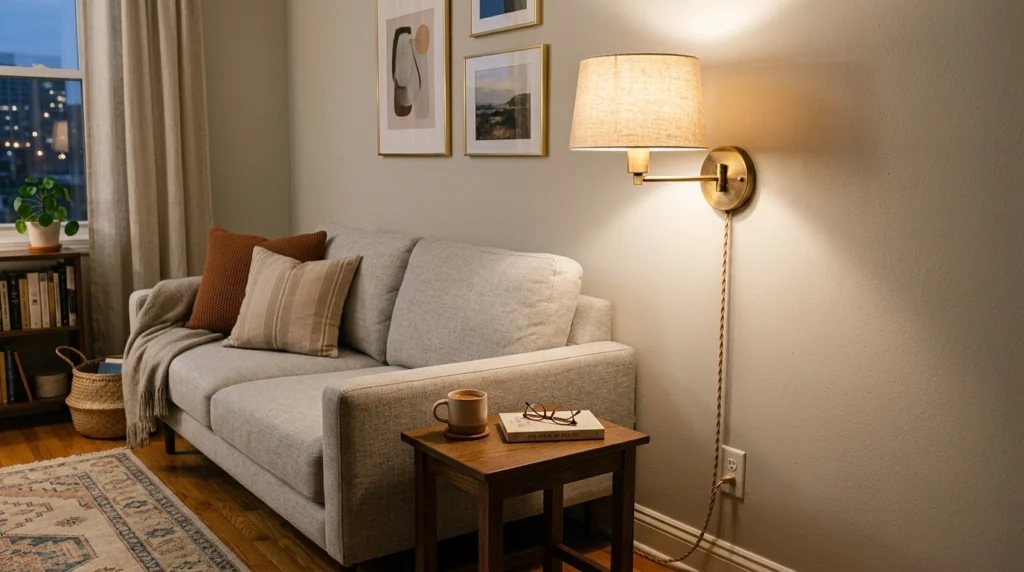
Warm, glowing light hovering right above your sofa cozy up the entire space without needing a bulky end table or a floor lamp base. It replaces heavy lighting options and washes the walls in a soft, welcoming glow that makes the room feel much wider at night. Plus, the brass finish adds a beautiful pop of warmth to light-colored walls.
Mount your sconces on either side of your main couch at about eye level when you are standing. If you don’t want cords hanging down, you can use brass cord covers that match the fixtures, or simply use rechargeable puck lights inside the sconces so you don’t have to plug them in at all. Avoid cool-white bulbs; always go for a warm 2700K color temperature to keep things cozy.
- Suggested Budget: $45 – $130
- Common Mistake: Hanging sconces too high or too low, which can cast harsh, awkward shadows across the room.
10. Woven Jute or Light Flatweave Rugs
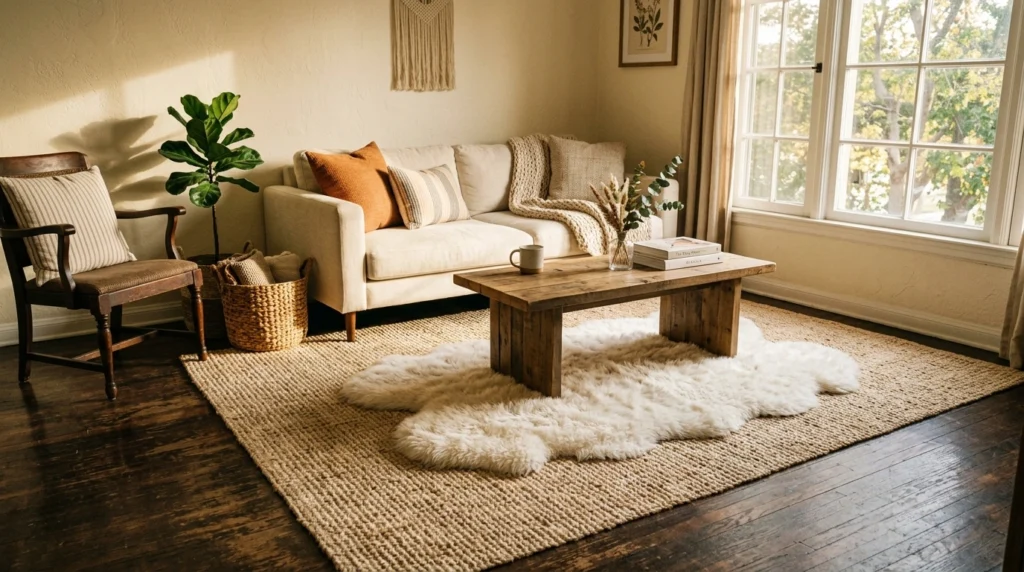
If you want to bring an organic, grounded feel to your apartment, a woven jute rug is the way to go. The natural light tan fibers catch the sunshine beautifully, adding a rustic texture that keeps a bright white room from feeling cold or sterile. It feels like a breezy, sunlit beach cottage, even if you are living in the middle of a noisy city.
For a softer feel underfoot, you can layer a small, plush sheepskin or a patterned flatweave rug directly on top of your large jute rug. Jute is incredibly durable and very affordable, making it perfect for high-traffic apartment living rooms. Just make sure to buy a rug pad to prevent it from sliding around on hardwood floors.
- Suggested Budget: $100 – $250
- Common Mistake: Buying rough, unlined jute rugs for areas where you want to lie down on the floor or walk bare-foot.
11. Oversized Art with Wide White Mats
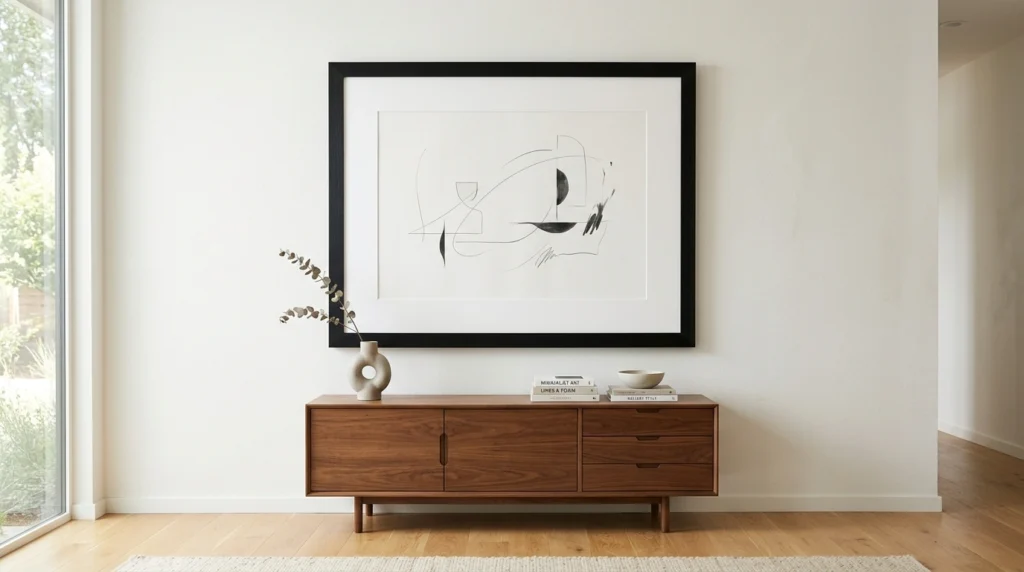
Instead of cluttering your wall with twenty tiny mismatched frames, hang a single, massive piece of art with a simple design. A beautiful abstract sketch or a soft watercolor print framed with a wide white border creates a clean, intentional focal point. It gives the wall plenty of breathing room and makes the entire apartment feel incredibly airy and expensive.
You can easily recreate this look on a budget by buying a large, inexpensive frame from a craft store and printing a minimalist digital art file at a local print shop. Make sure the mat board around the art is wide—at least 3 inches—to create that high-end gallery look. Hang the piece so the center sits at about eye level (around 57 inches from the floor).
- Suggested Budget: $50 – $150
- Common Mistake: Hanging art way too high on the wall, which disrupts the natural balance of the room.
12. Hidden Storage Coffee Tables or Ottomans
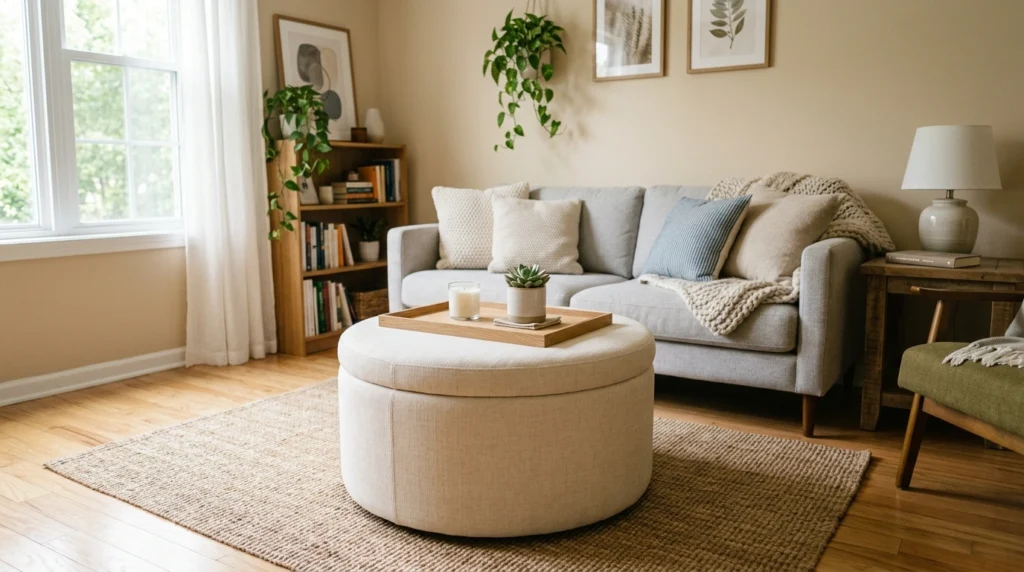
Clutter is the absolute number one enemy of a bright, spacious living room. A beautiful round storage ottoman upholstered in a soft linen fabric does triple duty: it acts as a comfy footrest, works as a coffee table when you place a flat wooden tray on top, and hides all your extra blankets, pillows, and remotes out of sight.
Look for storage furniture with clean lines and simple textures that blend into your color palette. By keeping your daily clutter tucked away, you allow the light to bounce off clean, open surfaces. Avoid dark, heavy chest trunks that feel like giant boxes sitting in the middle of your layout.
- Suggested Budget: $70 – $180
- Common Mistake: Leaving too many items sitting on top of your storage furniture, which defeats the purpose of hiding clutter.
13. Off-White Painted Walls with Warm Undertones
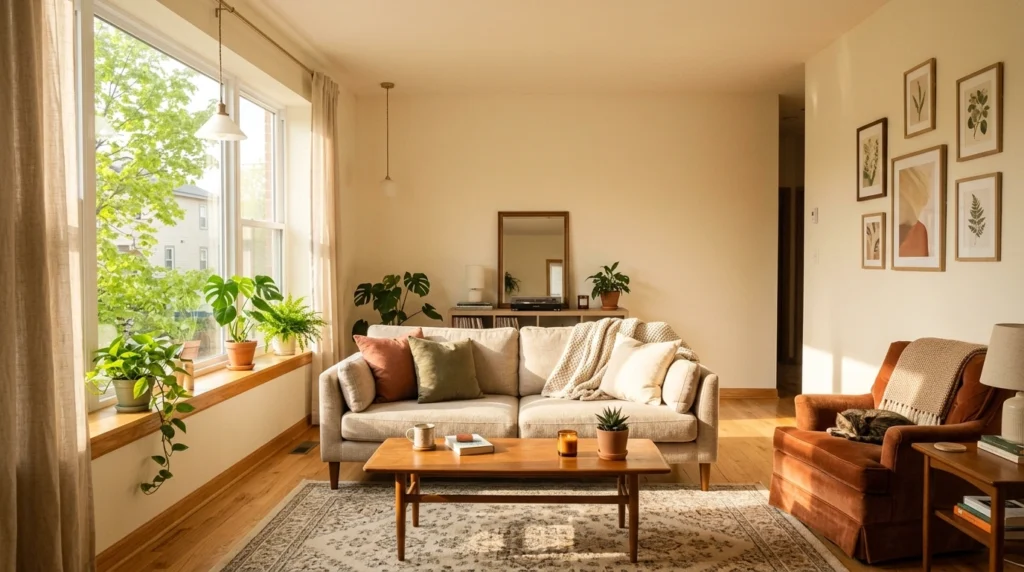
Painting your walls a soft, light shade can make them feel like they are gently receding, opening up the entire floor plan. The room catches every bit of natural light and bounces it from wall to wall, creating a bright, glowing canvas. It makes the entire apartment feel fresh, clean, and incredibly spacious.
In my experience, the key is choosing paint colors with warm yellow or peach undertones (like Alabaster or Swiss Coffee) rather than stark, cold blue-whites. Cold whites can look dingy and gray in low-light apartments, while warm whites look cozy and bright even on rainy days. Always check with your landlord first, or look into high-quality peel-and-stick white wallpaper.
- Suggested Budget: $40 – $90 (for paint or temporary wallpaper)
- Common Mistake: Picking a stark, bright primer white that makes your apartment look like a gallery with no warmth.
14. Corner Arc Lamp with a Slender Base
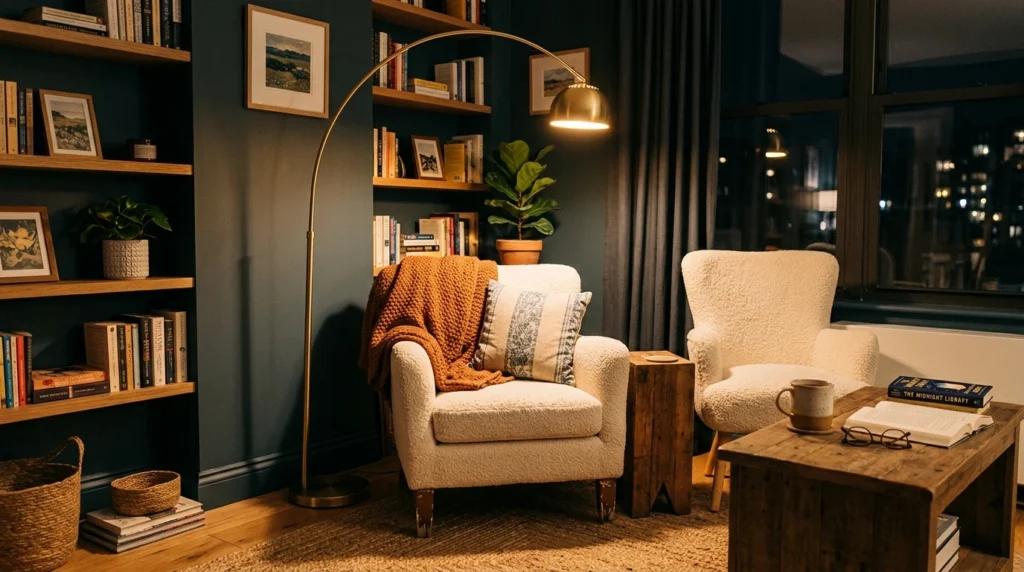
A graceful, sweeping brass arc lamp reaching over your favorite reading chair is both highly practical and incredibly stylish. It utilizes that empty, awkward corner space behind your sofa and arches high overhead, drawing the eye upward and highlighting the vertical space in your living room. It provides perfect overhead light without needing a hardwired ceiling fixture.
Position the heavy base of the lamp tucked neatly behind the corner of your sofa or armchair. Adjust the neck so the warm light bulb hangs directly over your lap when you are sitting down. Make sure the shade hangs high enough so that tall guests won’t bump their heads when they stand up from the couch.
- Suggested Budget: $90 – $220
- Common Mistake: Choosing an arc lamp with a massive, bulky base that juts out into your walking path.
15. Tall, Airy Greenery on Slender Stands
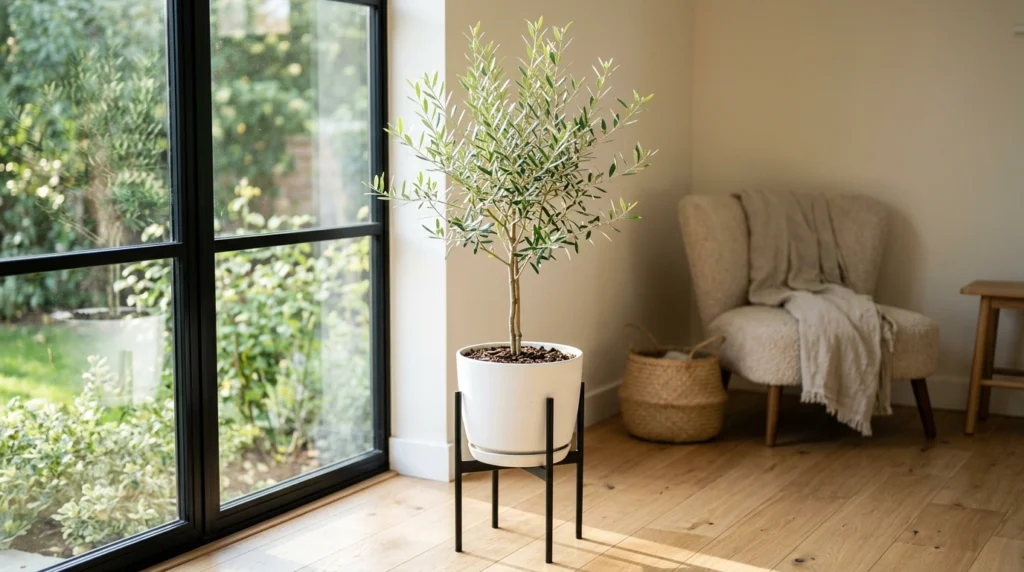
Bringing plants into your living room adds a fresh, lively energy that instantly makes a space feel more open and organic. A tall, slender plant like an olive tree or a fiddle leaf fig sitting in a simple ceramic pot makes a corner feel vibrant and sunny, breaking up the hard lines of your walls with beautiful green leaves.
To keep the floor space looking open, place your plants on slender, raised metal or wooden stands so light can pass underneath them. Choose airy plants with delicate, spaced-out leaves rather than dense, bushy plants that block too much light. If your apartment gets very little sun, go for a high-quality faux plant or a low-light loving snake plant.
- Suggested Budget: $30 – $100
- Common Mistake: Crowding the floor with dozens of tiny, mismatched plant pots, which creates immediate visual clutter.
Conclusion
At the end of the day, creating a beautiful home is all about confidence and comfort, not spending a fortune on luxury furniture. Your apartment does not need to look like a massive showroom to feel cozy, bright, and uniquely yours. By simply lifting your curtains higher, choosing leggy furniture, and playing with warm, light textures, you can easily make your small living room look bigger and brighter.
If you are feeling overwhelmed, don’t try to change everything at once. Pick just one or two ideas from this list to try out this weekend—perhaps moving a mirror to catch the light, or swapping out a tiny rug for a larger one. You will be amazed at how much of a difference a few small shifts can make.
Which of these living room ideas are you going to try first? I would genuinely love to know, so drop a comment below and let’s chat!
FAQ
How do I make basic apartment living rooms look more expensive?
Focus on scale and texture rather than high prices. Hanging a single piece of oversized art, using a large area rug that fits all your furniture legs, and layering high-quality fabrics like linen and wool will instantly make your space look cohesive and intentional.
What colors make small rooms look larger?
Warm off-whites, soft creams, pale beiges, and light pastel tones work best. These shades reflect natural light beautifully and prevent the walls from feeling like they are closing in, whereas cold grays can often look dark and sterile.
How can I make a dark living room look brighter without buying new furniture?
Clean your windows inside and out, hang sheer white curtains high and wide, and place a large mirror directly across from your main light source. You can also swap dark lightbulbs for warm-white 2700K LED bulbs to brighten up dark corners.
How do I style oversized furniture in a small space?
If you have a large couch you can’t replace, keep everything else in the room incredibly light and leggy. Pair it with a clear glass coffee table, keep the walls a light cream color, and avoid adding any other bulky storage pieces or heavy armchairs.
What is the easiest way to hide apartment clutter?
Invest in multi-functional furniture, such as a hollow storage ottoman or a media console with closed cabinets. Keeping surfaces clean and hiding everyday items like blankets and remotes will instantly make your room feel larger and more organized.