Have you ever scrolled through Pinterest, saved a dozen gorgeous minimalist kitchen ideas, and then realized they all look a bit like a sterile science lab? It is a incredibly common problem. We love the clean lines, the lack of clutter, and the sense of calm that minimalism brings. But when you actually stand in a kitchen that is nothing but cold white lacquer and polished chrome, it can feel uninviting and flat. A kitchen is the heart of the home; it should feel like a cozy place where people actually want to hang out, sip coffee, and talk about their day.
The secret to making minimalism work in a real, lived-in home is introducing tactile warmth. You do not need to fill your counters with unnecessary knick-knacks or abandon your love for clean, uncluttered surfaces. Instead, you just need to know how to use organic textures, soft tones, and thoughtful lighting to bring the space to life. In this guide, I will walk you through 12 gorgeous, highly functional, warm minimalist kitchen designs. You will learn exactly why these spaces work, how to avoid common styling mistakes, and how to replicate these high-end looks on a realistic budget.
1. The Honey Oak and Cream Plaster Kitchen
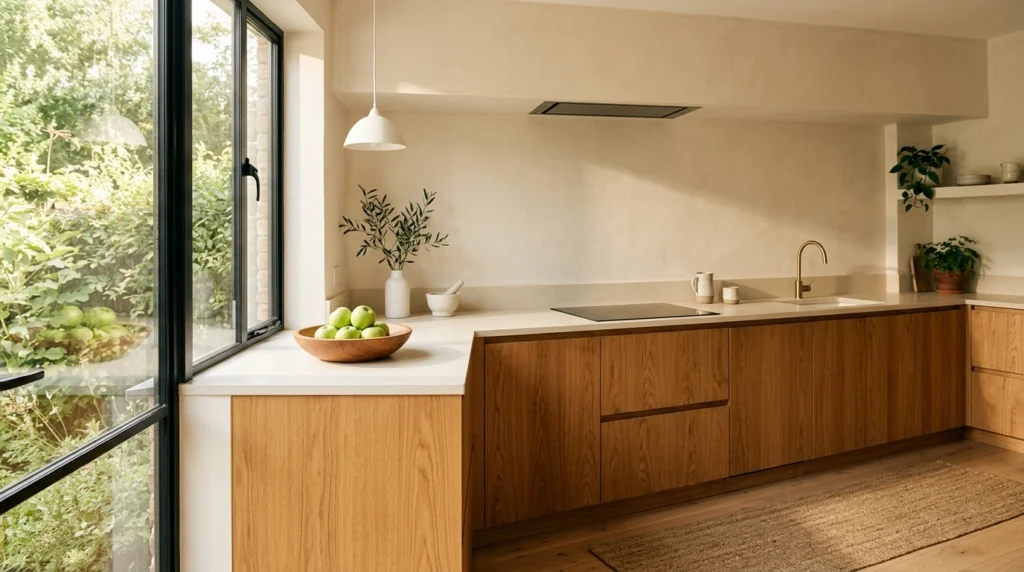
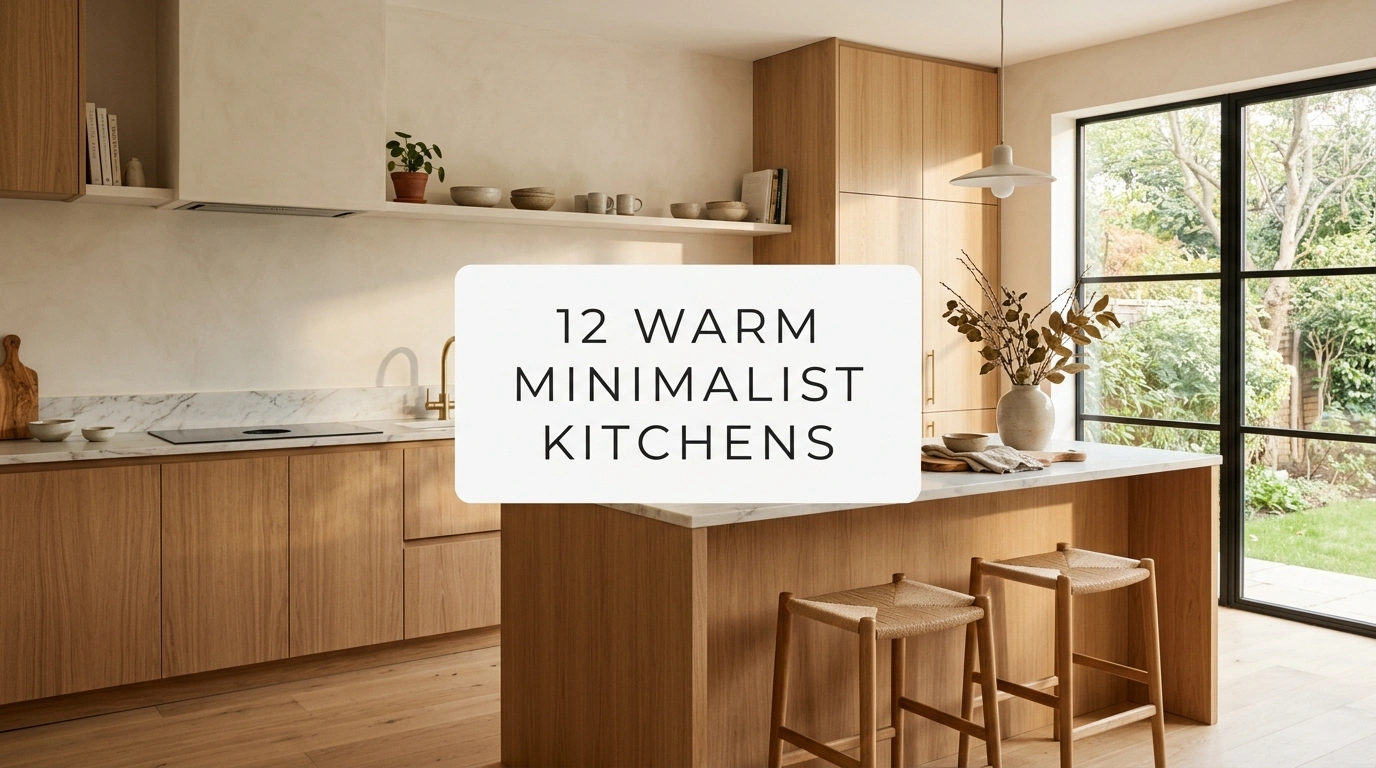
What I personally love about this look is how incredibly soft and gentle it feels on the eyes. Instead of stark white walls and shiny cabinets, this design relies on a matte, hand-applied cream plaster on the walls and warm, honey-toned oak cabinets below. The lack of heavy upper cabinets keeps the space feeling open, while the textured plaster catches the natural sunlight beautifully throughout the day. It feels less like an industrial workspace and more like a quiet, sunny morning in a Mediterranean villa.
Recreating this look is easier than it looks, and you do not need a massive budget for real plaster. I always recommend starting with a high-quality lime wash paint or a textured Roman clay finish for your walls, which you can easily DIY over a weekend. Pair this with flat-panel cabinets in a light oak veneer or even a high-quality laminate with a realistic wood grain. The biggest mistake people make here is matching the wood floor too closely to the cabinets. To avoid a washed-out look, make sure your wood floors are either two shades lighter or two shades darker than your cabinetry.
- Estimated Cost Range: $8,000 – $15,000 (depending on cabinet brands and DIY wall finishes)
- Key Materials: Honey oak veneer, lime wash paint, matte cream quartz countertops.
2. The Terracotta and Zellige Tile Haven
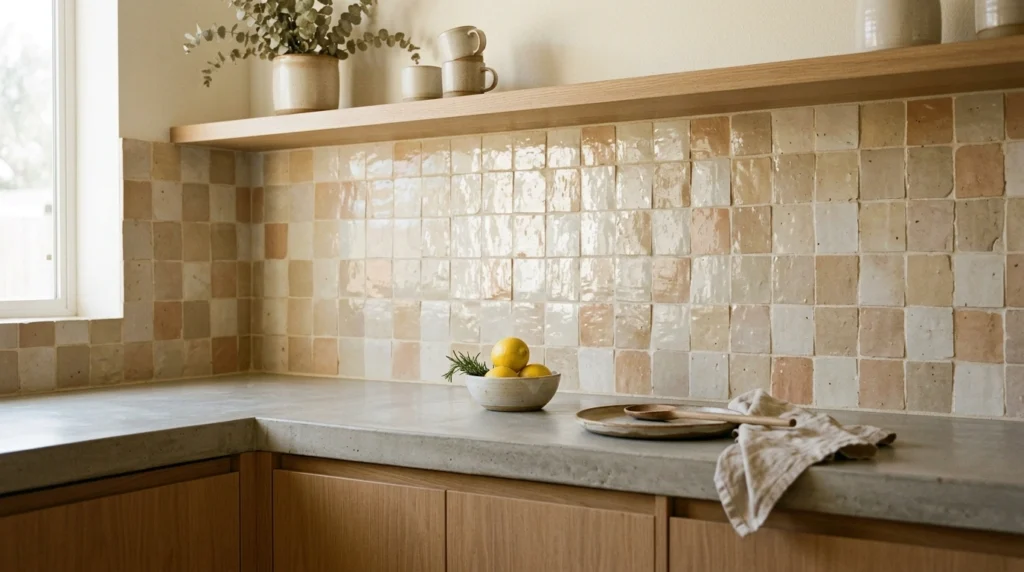
A lot of people overlook this detail, but the back-splash is actually the perfect place to inject warmth without cluttering your counters. This design pairs ultra-clean, flat-front beige cabinets with a back-splash made of handmade zellige tiles in soft cream and pale terracotta tones. Because each tile is slightly different in thickness and color tone, they reflect light unevenly, adding a gorgeous, organic movement to an otherwise simple and linear kitchen.
To make this work in your own home, look for tiles that have a “clinker” or handmade look rather than perfectly square, machine-cut tiles. Keep your countertop material incredibly simple—like a solid white or light gray concrete—so it does not compete with the beauty of the tiles. If real clay zellige tiles are out of your budget, look for glazed ceramic tiles with irregular edges. Avoid dark, heavy grout here; instead, use a grout color that matches the tiles as closely as possible to keep the look seamless and clean.
- Estimated Cost Range: $10,000 – $18,000 (Zellige tiles can be pricey to install, but ceramic alternatives save money)
- Key Materials: Handmade zellige tiles, matte sand-colored cabinets, unlacquered brass hardware.
3. The Matte Taupe and Travertine Classic
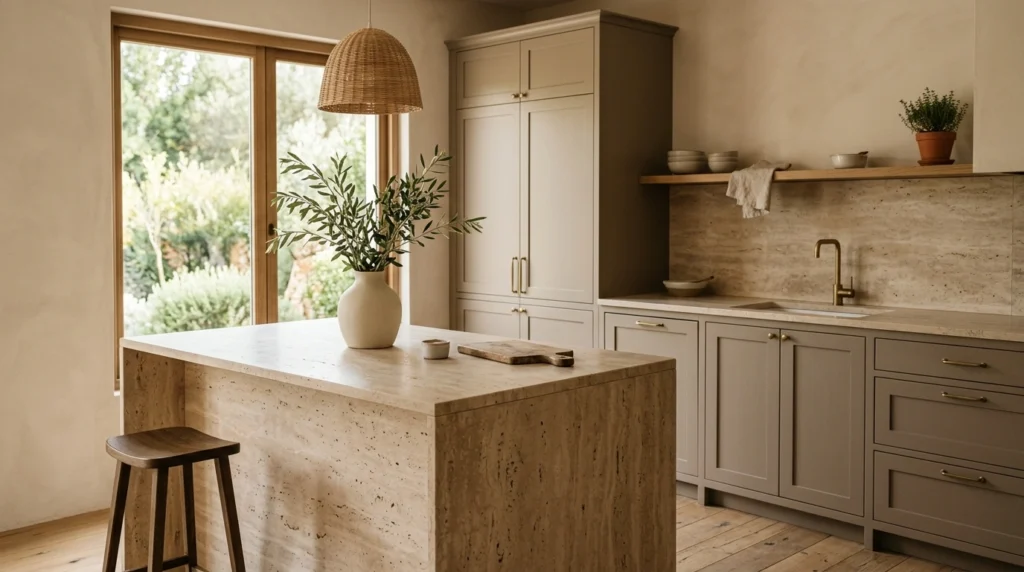
In my experience, the biggest mistake people make when designing a neutral kitchen is choosing a gray that is too cool. This kitchen design avoids that trap completely by using a beautiful, rich matte taupe for the cabinetry. Taupe has just enough brown and pink undertones to feel incredibly cozy under warm lighting. The star of the show is a solid travertine stone island with a honed, matte finish that feels earthy and substantial.
If you are on a budget, you can get a very similar look by painting existing flat-panel cabinets in a rich taupe paint. Instead of solid travertine, which is highly porous and requires a lot of maintenance, look for a durable quartz countertop that mimics the soft, sandy movement of natural limestone. This works especially well if you want your kitchen to feel put together without trying too hard. Keep accessories to a bare minimum: a single wooden bowl filled with green apples on the island is all you need.
- Estimated Cost Range: $7,500 – $14,000 (using painted cabinets and quartz alternatives)
- Key Materials: Matte taupe paint, honed travertine or quartz, brushed bronze faucets.
4. The Walnut and Ribbed Glass Showcase
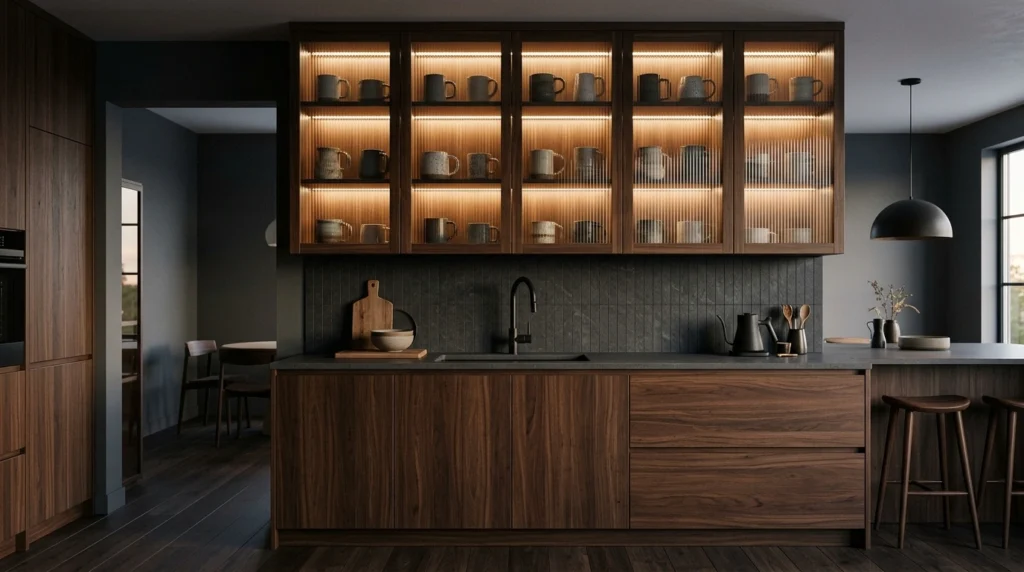
If you prefer a slightly darker, more dramatic aesthetic but still want to keep things minimalist and warm, this design is for you. It features rich, dark walnut wood cabinets on the lower half, paired with upper cabinets that feature fluted or ribbed glass doors. The ribbed glass is a brilliant design trick: it allows you to show off the silhouettes of your favorite ceramic mugs and bowls without displaying any actual clutter or mess.
When styling a kitchen with darker woods like walnut, lighting is absolutely critical. You want to install warm LED strip lights beneath the upper cabinets and inside the ribbed glass cabinets to create a soft, inviting glow at night. The biggest mistake to avoid here is using cold, blue-toned LED lights, which will make the beautiful walnut wood look dull and grayish. Stick to warm bulbs rated around $2700\text{K}$ to $3000\text{K}$ to keep the wood looking rich and inviting.
- Estimated Cost Range: $12,000 – $22,000 (walnut cabinetry is a premium material)
- Key Materials: Walnut flat-panel doors, ribbed glass inserts, matte black accent hardware.
5. The Soft Sage and Brass Retreat
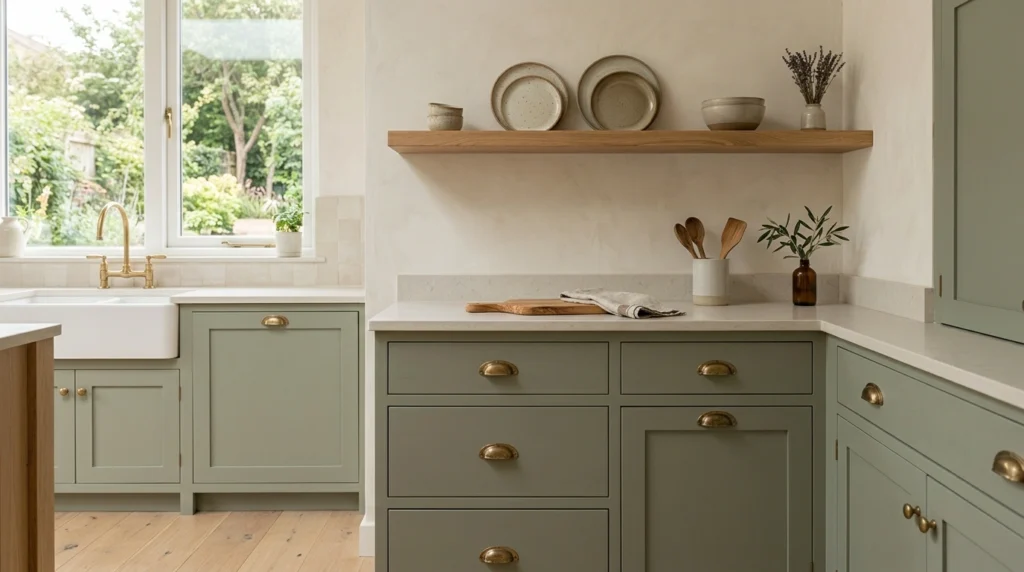
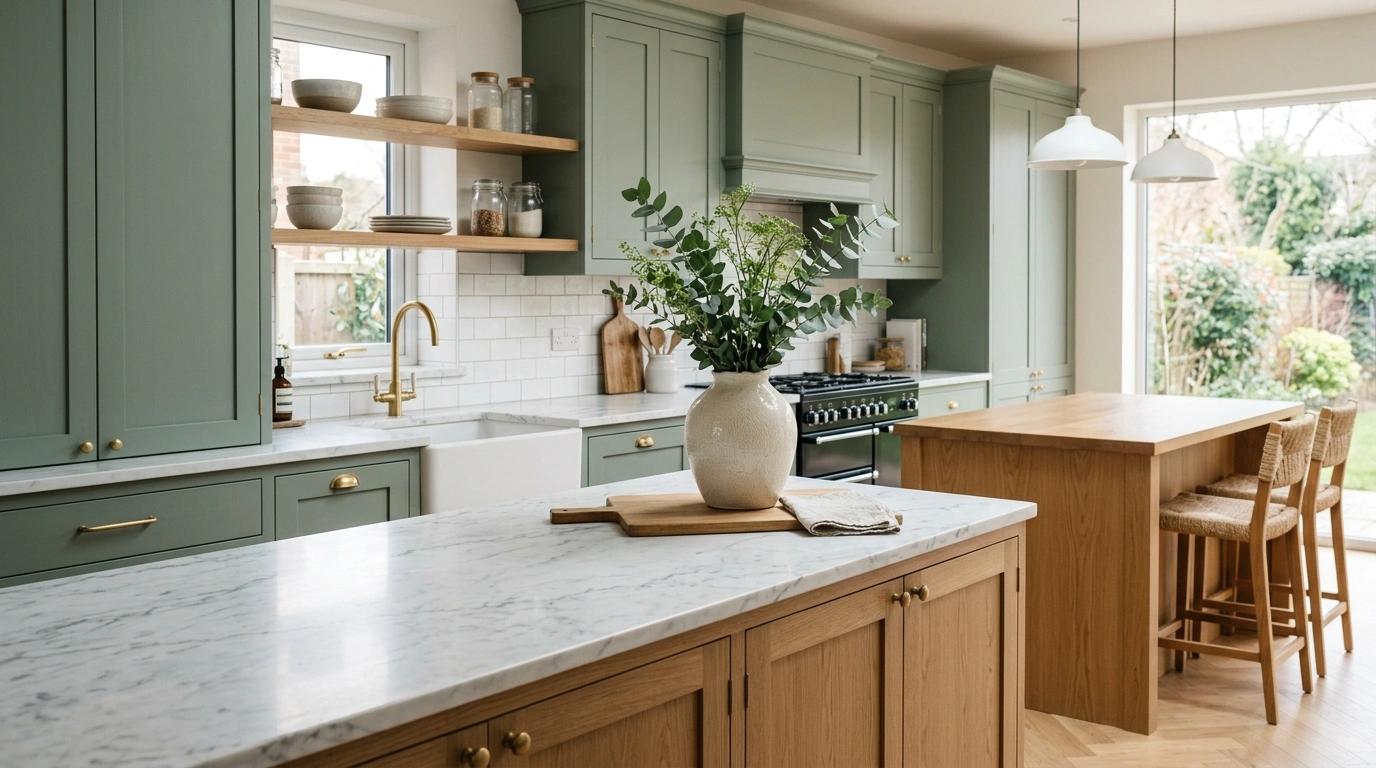
Green is technically a cool color, but when you choose a sage green with strong yellow undertones, it becomes incredibly warm and grounding. This kitchen layout pairs beautiful, muted sage cabinets with unlacquered brass hardware that will naturally patina and darken over time. It feels fresh, natural, and deeply connected to the outdoors, making it the perfect choice if your kitchen looks out onto a garden or yard.
To recreate this look without spending a fortune, you can use high-quality mineral paint to update your current cabinets. Sage green is highly forgiving and hides minor imperfections well. Pair this color with warm oak floating shelves where you can display a few hand-thrown ceramic plates. Avoid shiny, chrome-plated faucets here, as they will instantly pull the space back into “cold” territory. Opt for brushed gold, brass, or even a matte black faucet to ground the look.
- Estimated Cost Range: $6,000 – $11,000 (highly DIY-friendly with cabinet paint)
- Key Materials: Sage green satin paint, unlacquered brass pulls, natural white oak shelves.
6. The Bouclé Accent and Bleached Ash Studio
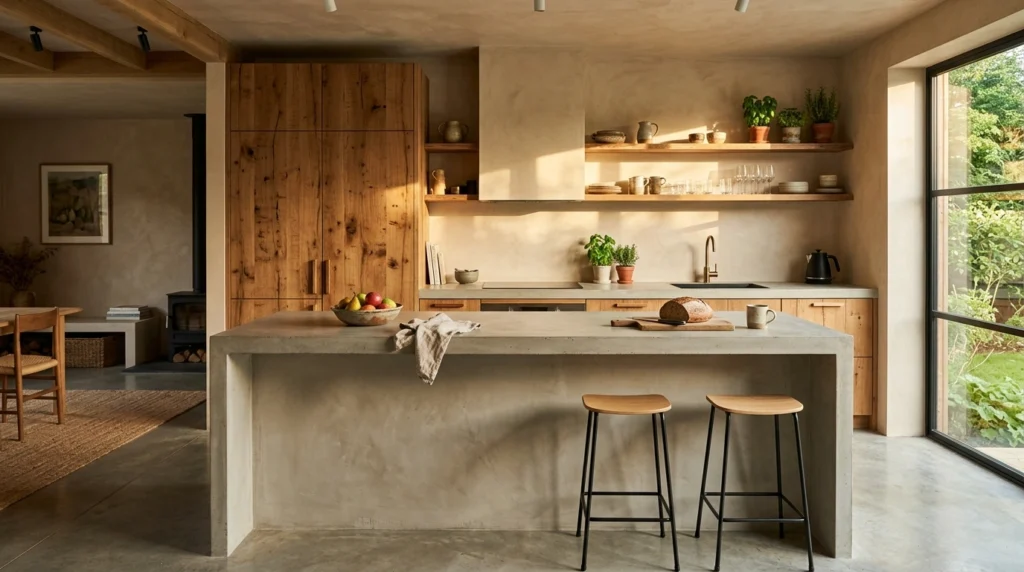
This design is heavily inspired by Scandinavian minimalism, focusing on very light woods and cozy textile elements. The cabinetry is made of bleached ash, which has a beautiful, visible grain that feels soft and organic. To keep this light palette from feeling cold, the kitchen barstools are upholstered in a thick, textured cream bouclé fabric, and a soft, woven runner rug sits along the main prep area.
When working with ultra-light woods like ash or birch, texture is your best friend. Without it, the room will look flat. I always recommend adding tactile elements like woven rattan pendant lights above the island, or choosing barstools with a highly textured fabric. If you have kids or pets and are worried about white bouclé, look for performance fabrics that are stain-resistant or opt for warm tan leather seats instead.
- Estimated Cost Range: $9,000 – $16,000
- Key Materials: Bleached ash wood, cream bouclé fabrics, natural woven rattan lighting.
7. The Reclaimed Wood and Cast Concrete Hearth
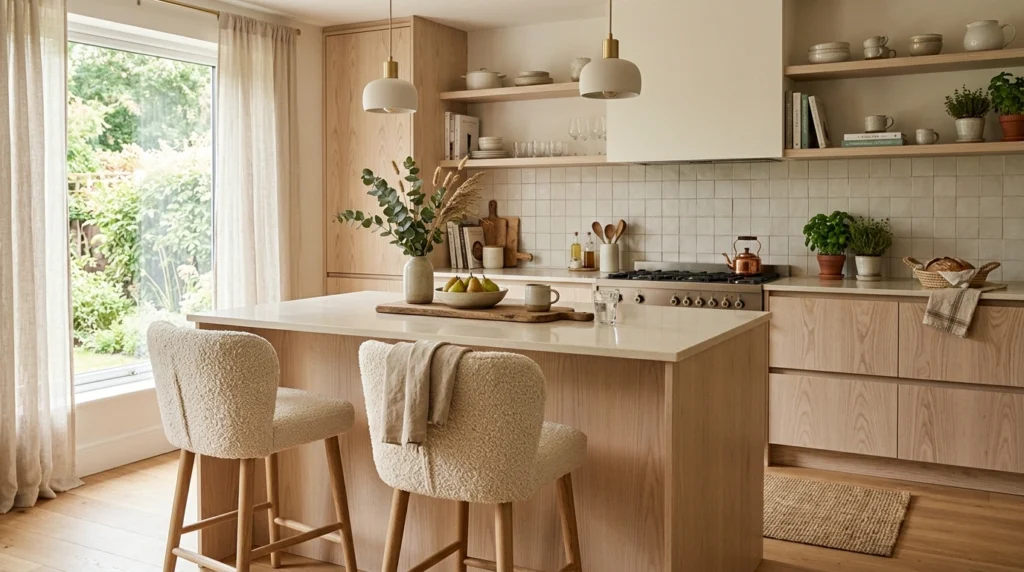
If you love a rustic touch but still want to maintain clean, minimalist lines, this design is the perfect balance. It features a sleek, seamless concrete island paired with cabinet doors made from warm, reclaimed timber. The natural cracks, knots, and color variations in the old wood give the kitchen an instant sense of history and soul, while the simple concrete surfaces keep the design firmly rooted in modern minimalism.
Working with real concrete can be challenging because it is incredibly heavy and prone to staining. For a budget-friendly and practical alternative, look into microcement finishes. Microcement can be applied directly over existing countertops or MDF substrates to give you that seamless, velvety concrete look at a fraction of the weight and cost. Pair this with reclaimed wood veneer doors to get the rustic look without the warping issues of solid old wood.
- Estimated Cost Range: $11,000 – $20,000
- Key Materials: Reclaimed oak veneer, microcement countertops, matte black plumbing fixtures.
8. The Greige and Linen Shaker Kitchen
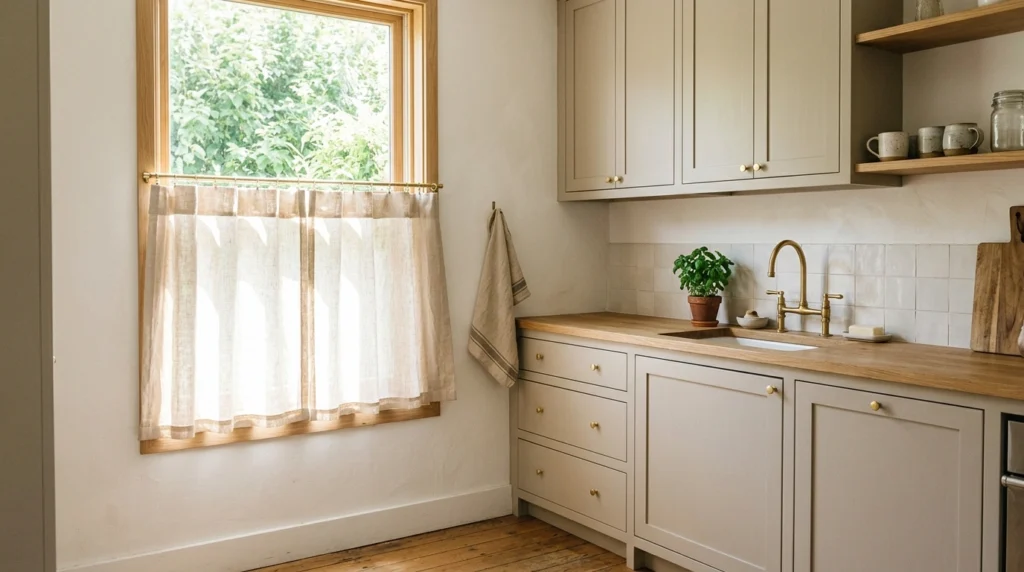
While flat-panel doors are the standard for modern minimalism, you can absolutely achieve a warm, minimalist feel using a highly simplified Shaker-style cabinet. The key is choosing a cabinet with a very thin, delicate frame (often called a “skinny shaker”) painted in a warm greige—a beautiful mix of gray and beige. This kitchen features linen cafe curtains on the window and soft linen tea towels hanging from simple wooden pegs.
To keep this look clean and uncluttered, avoid putting heavy hardware on every single cabinet door. Instead, use simple touch-latches for the upper cabinets and tiny, low-profile brass knobs on the lower drawers. The linen curtains add a soft, breezy movement that instantly diffuses harsh sunlight and makes the entire kitchen feel incredibly homey and relaxed.
- Estimated Cost Range: $8,000 – $13,500
- Key Materials: Warm greige cabinet paint, natural linen textiles, delicate brass knobs.
9. The Charcoal, Wood, and Warm LED Glow Layout
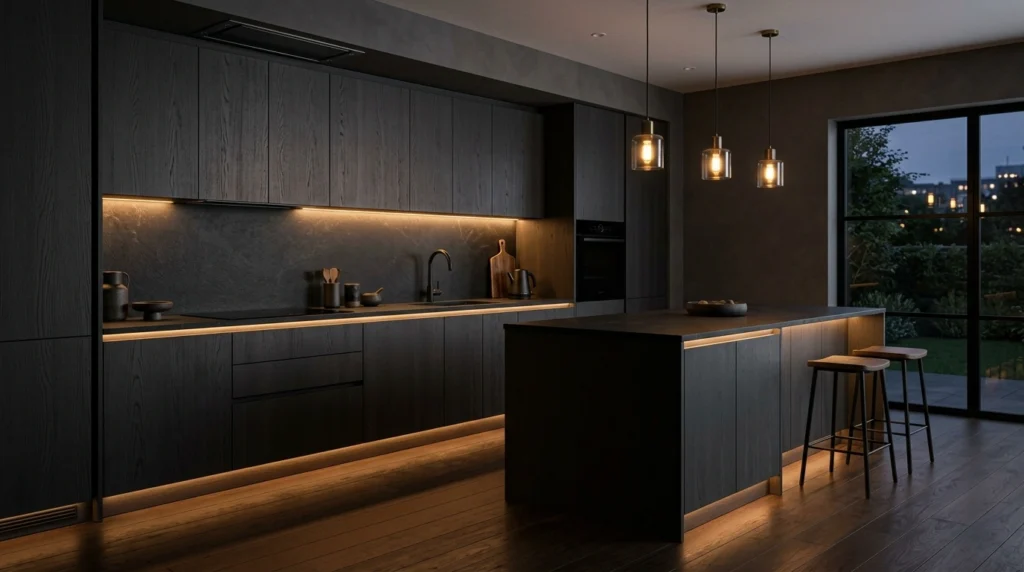
Can a black or dark charcoal kitchen really feel warm? Absolutely, if you style it correctly. This moody, minimalist kitchen uses charcoal-stained oak cabinets that still allow the natural wood texture to show through. The warmth comes entirely from the strategic placement of hidden LED lighting under the countertops, behind the floating shelves, and along the toe-kick at the bottom of the cabinets.
A lot of people overlook the power of toe-kick lighting, but it changes the entire mood of the room at night, making the island look like it is floating in a warm pool of light. When using dark charcoal colors, avoid high-gloss finishes at all costs; they reflect too much light and show every single fingerprint. Stick to ultra-matte finishes and pair them with a warm, natural wood cutting board resting on the counter to break up the dark surfaces.
- Estimated Cost Range: $13,000 – $24,000
- Key Materials: Charcoal-stained oak, warm LED strip lighting ($3000\text{K}$), absolute black honed granite.
10. The Marble Veining and Warm Oak Statement
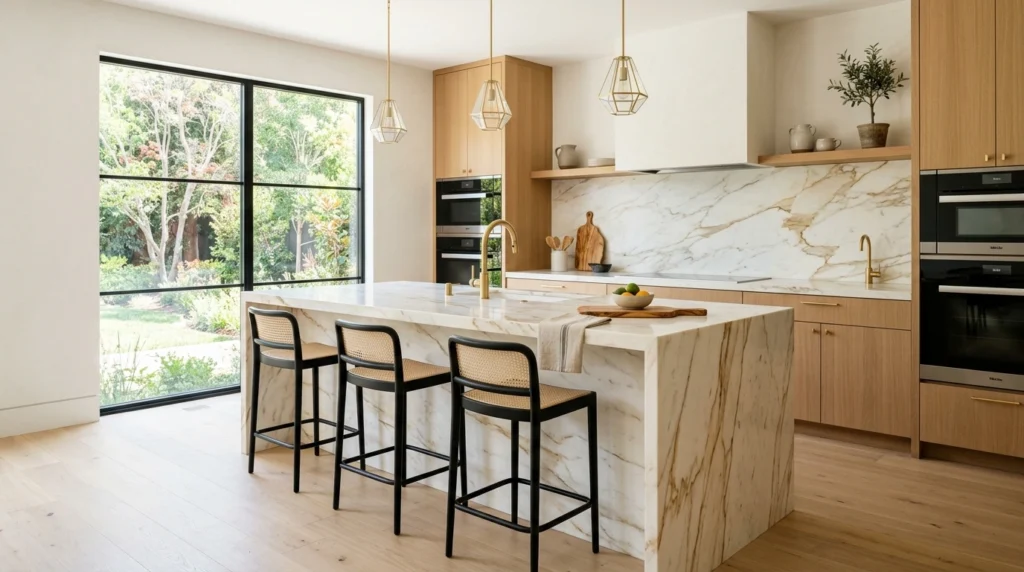
This design is for those who want a touch of high-end luxury without sacrificing their minimalist principles. The kitchen features a stunning slab of white marble on the island and back-splash, but instead of cool gray veining, this marble features warm, golden-brown and amber veins. This luxury stone is balanced perfectly by flat-panel cabinets made of rift-sawn warm white oak.
Because the veining in the marble is so dramatic, you do not need any other decorative elements in this kitchen. The stone itself acts as the art. If a full slab of Calacatta Gold or Paonazzo marble is out of your budget, look for quartz options that specifically feature warm gold or tan veining rather than stark black or gray. Keep your sink faucet simple and matched to the warm veins in the stone.
- Estimated Cost Range: $15,000 – $30,000 (premium stone finishes increase the cost significantly)
- Key Materials: Warm-veined marble or quartz, rift-sawn white oak, integrated panel appliances.
11. The Bare Plaster and Floating Oak Shelf Minimalist
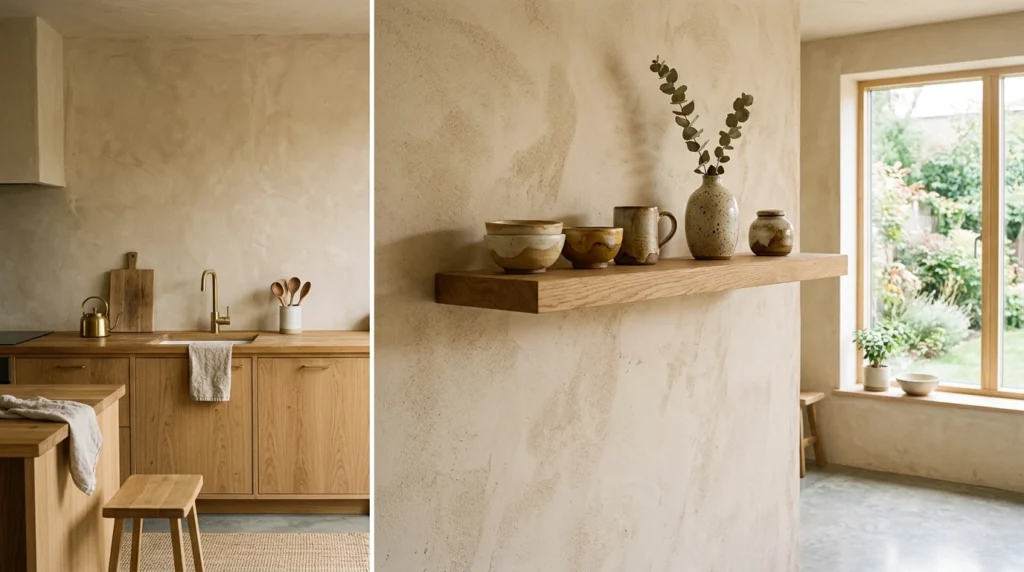
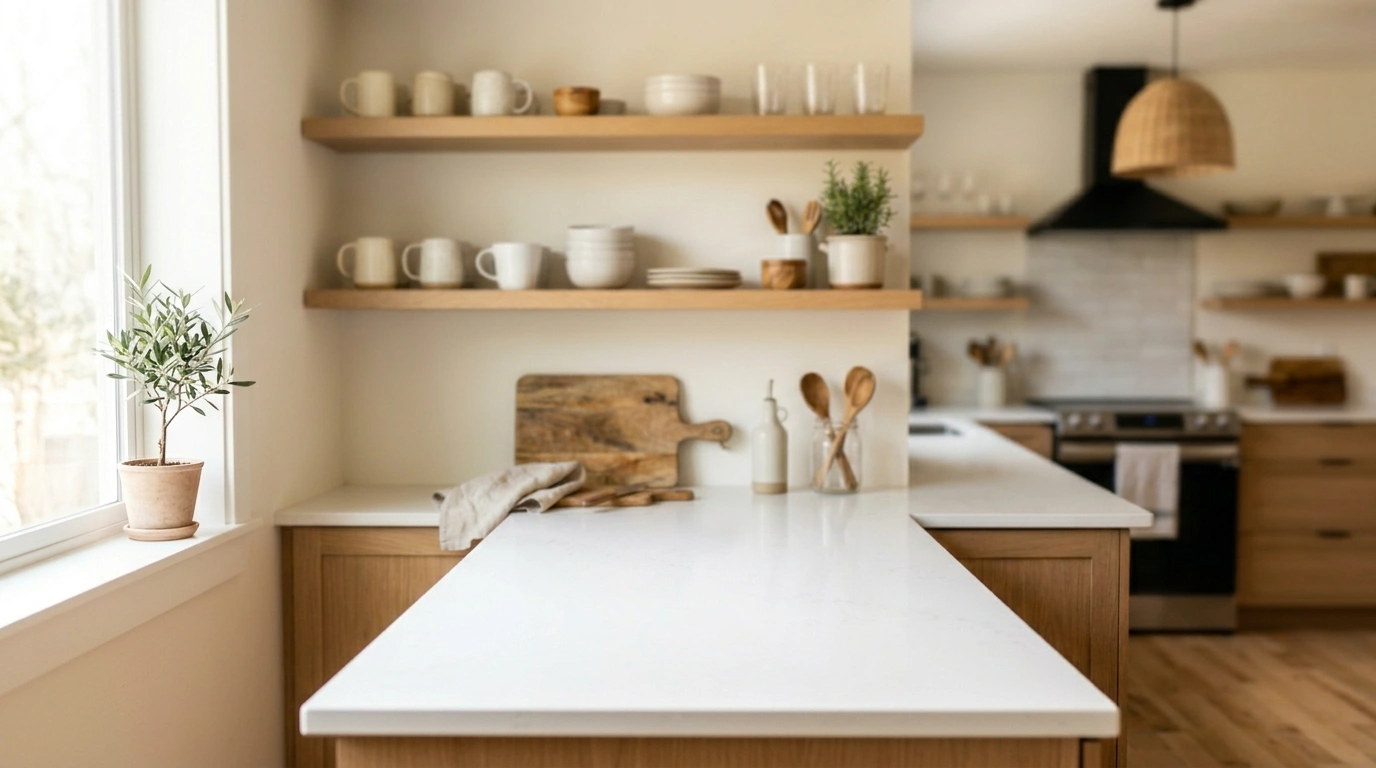
Inspired by Japanese and Scandinavian fusion design (often called Japandi), this kitchen focuses on the beauty of raw, unfinished textures. The walls are finished in a warm, sandy-colored bare plaster, and there are no upper cabinets at all. Instead, a single, thick, solid oak floating shelf runs the entire length of the back-splash, holding just a few everyday items like handmade ceramic bowls and a small green plant.
This look works especially well if you are someone who naturally keeps their kitchen tidy, as the open shelf requires a bit of discipline. If you are worried about storage, make sure your lower cabinets are deep and feature pull-out organizers so you can keep all your pots, pans, and small appliances completely out of sight. Keep the sink area clean by using an under-mount sink paired with a simple wall-mounted faucet.
- Estimated Cost Range: $5,500 – $10,000 (very affordable due to fewer cabinets)
- Key Materials: Sandy plaster walls, solid oak floating shelf, handmade ceramic accents.
12. The Caramel Leather and Seamless Microcement Workspace
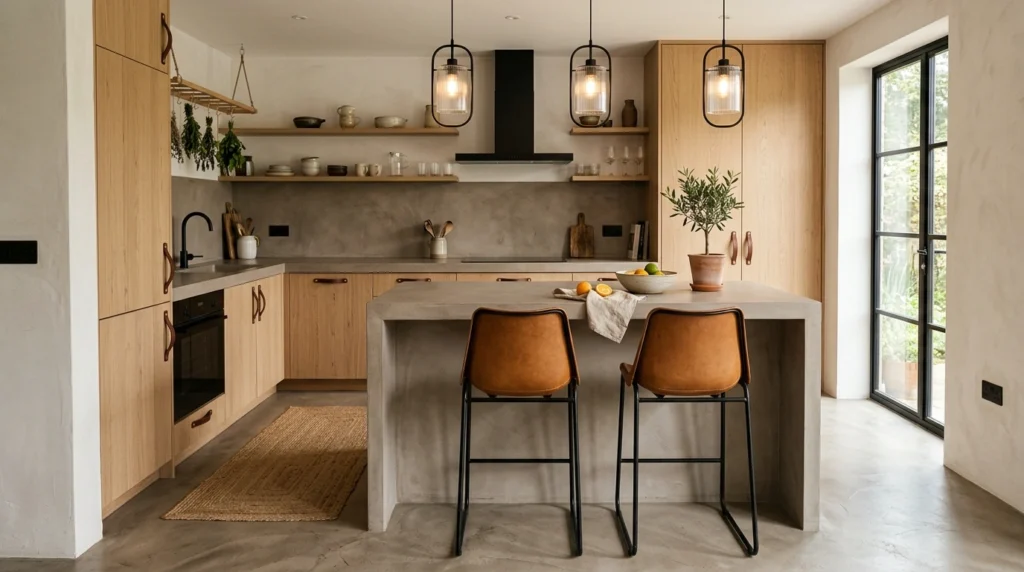
This highly contemporary kitchen design uses a seamless, warm gray microcement on both the countertops and the floor, creating an incredibly clean, industrial look. To prevent it from feeling cold or impersonal, the space is balanced with beautiful, caramel-colored leather accents, including leather-wrapped cabinet pulls and comfortable leather sling stools at the kitchen island.
Using leather in the kitchen might sound intimidating, but high-quality, full-grain leather is incredibly durable and develops a gorgeous patina over time with use. If you want a cheaper or more vegan-friendly option, you can achieve a very similar warming effect by using warm cork barstools or faux-leather pulls that are easy to wipe clean.
- Estimated Cost Range: $9,500 – $17,000
- Key Materials: Warm gray microcement, caramel leather details, matte black framework.
Conclusion
At the end of the day, creating a beautiful home is about building a space that feels supportive, comfortable, and uniquely yours. You do not need to follow strict, cold design rules to have a clean and minimalist home. In fact, the most successful minimalist spaces are those that embrace natural imperfections, soft textures, and warm, inviting tones.
If you are planning to update your kitchen, I always recommend starting with just one or two small ideas first. Maybe you can swap out your cold, silver cabinet handles for warm brass ones, or paint your kitchen island in a rich, warm greige. You will be amazed at how much of a difference these small, intentional styling choices can make in how cozy and inviting your kitchen feels.
Which of these warm minimalist kitchen designs would you actually want in your own home first? I’d genuinely love to know!
Frequently Asked Questions
How do I make basic white kitchen cabinets look warmer?
You can instantly warm up basic white cabinets by swapping out cold chrome hardware for brushed brass, bronze, or leather pulls. Adding warm wood floating shelves and using warm LED under-cabinet lighting (around $2700\text{K}$) will also make a massive difference.
What wood tones work best for a warm minimalist style?
Light to medium woods with warm undertones—such as honey oak, rift-sawn white oak, natural ash, and rich walnut—work beautifully. Avoid cool gray-toned wood stains or extremely dark espresso finishes, which can look flat.
How do I keep a warm minimalist kitchen looking clean and uncluttered?
The key is smart, hidden storage. Ensure your lower cabinets have deep pull-out drawers for heavy appliances, and keep only one or two highly functional, beautiful items on your countertops, like a wooden cutting board or a single ceramic bowl.
What countertop materials look warm but are easy to maintain?
Look for durable quartz options that feature warm gold or tan veining, or choosing a quartz with a soft, honed matte finish in sand or taupe tones. These materials are non-porous and far easier to maintain than natural marble or limestone.
Can I mix different wood tones in a minimalist kitchen?
Yes, but try to limit yourself to two different wood tones to keep the look cohesive. Ensure one wood is dominant (like your cabinets) and the other is an accent (like your barstools or a floating shelf), making sure they have similar warm undertones.