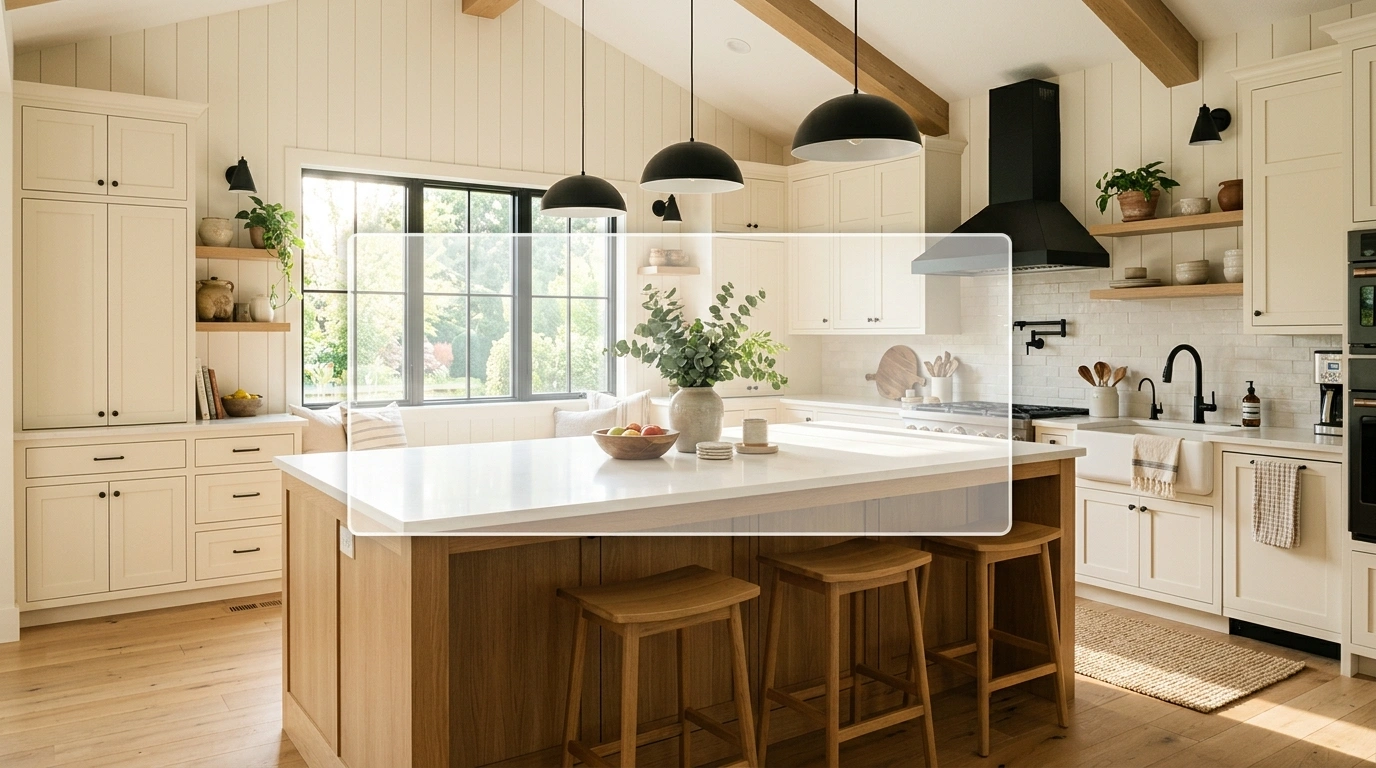
Have you ever walked into a kitchen that felt so stuffed with distressed wood, chicken wire, and signs reading “Bake” or “Gather” that it felt more like a museum than a home? If you love the cozy, welcoming warmth of rustic styling but worry about your space looking dated, you are definitely not alone. The biggest struggle I hear from homeowners is how to capture that relaxed, lived-in feel without making their home look like a 2012 home renovation TV show. It is entirely possible to create a space that feels deeply comforting, bright, and functional without sacrificing clean lines and contemporary styling.
What we are really aiming for is a balance of textures, smart contrast, and edited details. In my experience, the biggest mistake people make is going “all in” on every single rustic trend they see online, which ends up overwhelming the room. Instead, we want to focus on a few high-quality, tactile elements—think rich wood grains, soft plaster finishes, and clean-lined hardware—while keeping the overall layout simple and open. In this guide, I will walk you through 18 practical, modern farmhouse kitchen ideas that strike this exact balance beautifully. You will learn how to pair old-school charm with clean, updated finishes, so your kitchen feels incredibly inviting and completely current.
1. Flat-Panel Shaker Cabinets in Muted Olive
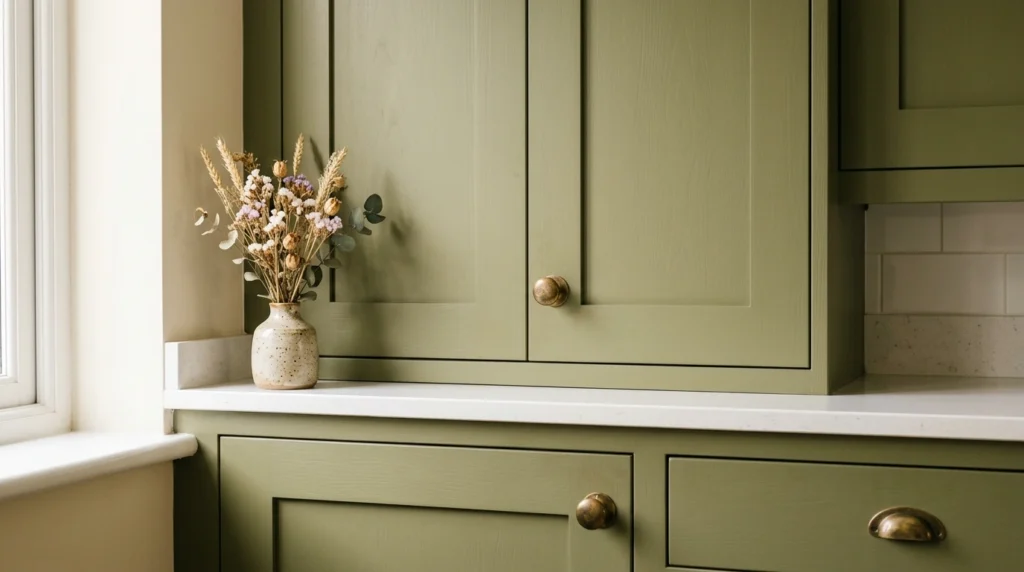
There is something incredibly grounded about introducing earthy tones to your cabinetry instead of sticking to the standard bright white. Opting for a soft, desaturated olive green on flat-panel Shaker cabinets instantly brings a sense of the outdoors inside, making the kitchen feel calm and organic. Under morning sunlight, these cabinets glow with a quiet warmth that feels cozy yet incredibly clean. This design works exceptionally well if you love the idea of color but want to avoid anything that feels too bold or trendy, especially when paired with simple neutral walls and light wood elements.
To recreate this look, I always recommend starting with a paint swatch like Sherwin Williams Sandstone Cove or Benjamin Moore Olive Branch to see how the color shifts throughout the day. Opt for a slim-profile Shaker door where the inner recess is subtle, which keeps the lines feeling modern rather than heavy. Pair these cabinets with unlacquered brass hardware that will develop a natural patina over time, and keep your countertop simple—a clean white quartz with minimal veining is perfect here. Avoid heavy scrollwork or ornate trim on your crown molding to keep the look clean. Expect to spend around $150 to $300 per cabinet door for custom painting or refacing.
2. Honed Soapstone Countertops with Soft Veining
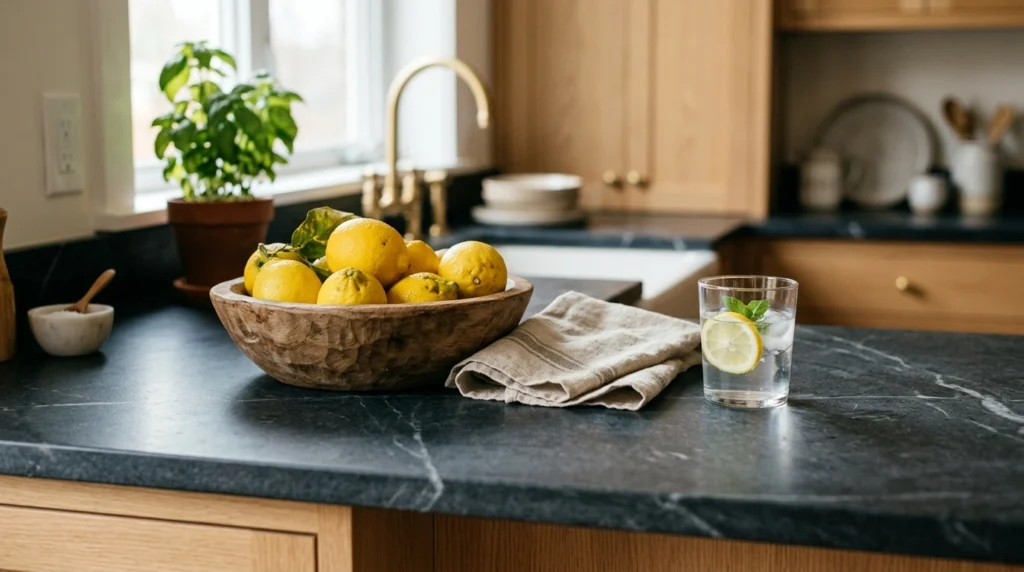
If you want a countertop that tells a story and feels incredibly soft to the touch, honed soapstone is an absolute masterpiece. Unlike polished granite or high-gloss quartz, soapstone has a matte, charcoal-gray finish with delicate, milky white veins running through it. It brings a moody, organic weight to the kitchen that grounds the lighter elements of a farmhouse design, making it feel older and more authentic. It is the kind of surface where you want to roll out pasta dough on a lazy Sunday morning, enjoying the tactile, cool surface under your hands.
When installing soapstone, a lot of people overlook this detail, but you have a choice to make regarding maintenance: leaving it natural will allow it to turn a lighter, chalky gray over time, while mineral oil treatments will deepen it to a rich, dark charcoal. I personally love the natural, evolving look because it embraces minor scuffs as part of its character. Pair this dark stone with light oak cabinetry to keep the kitchen from feeling too heavy or dark. If you are on a tight budget, look for dark gray matte quartz alternatives, which mimic the look without the natural stone price tag. Natural soapstone runs about $80 to $120 per square foot installed.
3. Reclaimed Wood Open Shelving over White Stacked Subway Tile
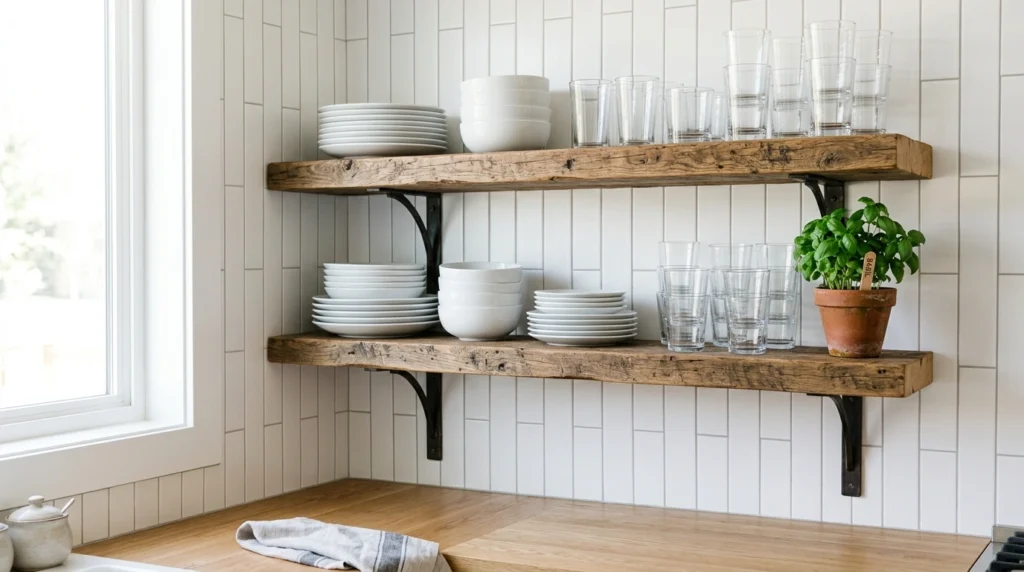
Ditching a few upper cabinets in favor of open shelving is a classic way to make a kitchen feel larger and airier, but the magic lies in how you style it. Imagine thick, rough-sawn planks of white oak or pine, showing off their natural knots and saw marks, floating against a clean backdrop of stacked white tiles. This creates a beautiful contrast between the rustic, tactile nature of the wood and the clean, geometric lines of the modern tile layout. It turns your everyday plates, bowls, and coffee mugs into a warm, visual display that makes the kitchen feel instantly lived-in.
To keep this looking modern rather than cluttered, the secret is a stacked (rather than running bond) tile pattern, which adds a clean mid-century touch to the rustic wood. When installing the shelves, make sure your brackets are hidden or use simple black metal L-brackets for a touch of industrial contrast. Only display items you use daily—like plain white dinnerware and clear glassware—so dust doesn’t have time to settle on them. A common mistake is packing the shelves too tight; leave visual breathing room between your stacks. For a budget-friendly option, sand down affordable pine joists from the hardware store and stain them with a weathered oak finish. Expect to spend $100 to $300 for a set of high-quality shelves and brackets.
4. Matte Black Gooseneck Faucets with Industrial Vibes
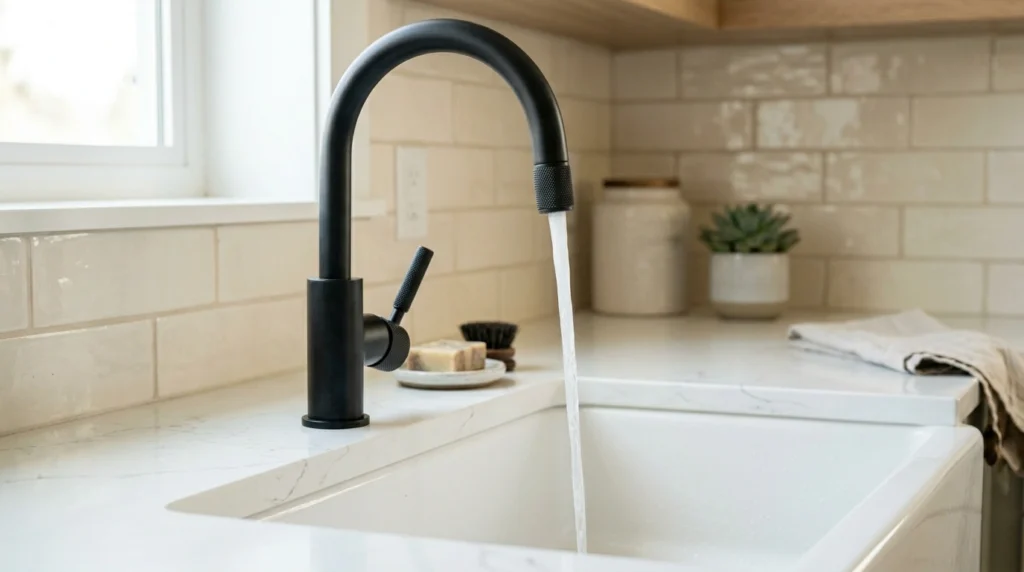
A high-arc gooseneck faucet acts like a piece of functional sculpture sitting right in the center of your kitchen island or sink run. Choosing a matte black finish with clean, industrial wheel valves or knurled details provides a sharp, graphic contrast against soft farmhouse backdrops. It cuts through the sweetness of rustic woods and creamy paint colors, bringing a necessary dose of contemporary edge that keeps the design feeling fresh. It is highly practical, too, making washing heavy cast-iron pans or rinsing fresh vegetables feel effortless while looking incredibly sharp.
When choosing an industrial-style faucet, avoid anything with overly complicated, spring-wrapped coils that look like a commercial restaurant kitchen—keep the lines simple and clean instead. Pair the matte black finish with matching black cabinet pulls or matte black light fixtures to create a cohesive, grounding thread throughout the space. A great mistake to avoid is pairing a black faucet with a black sink, which can look like a dark void; instead, set it against a white ceramic apron-front sink for that beautiful, high-contrast pop. High-quality fixtures generally range from $250 to $600.
5. Oversized Ceramic Apron-Front Sink with a Low Divide
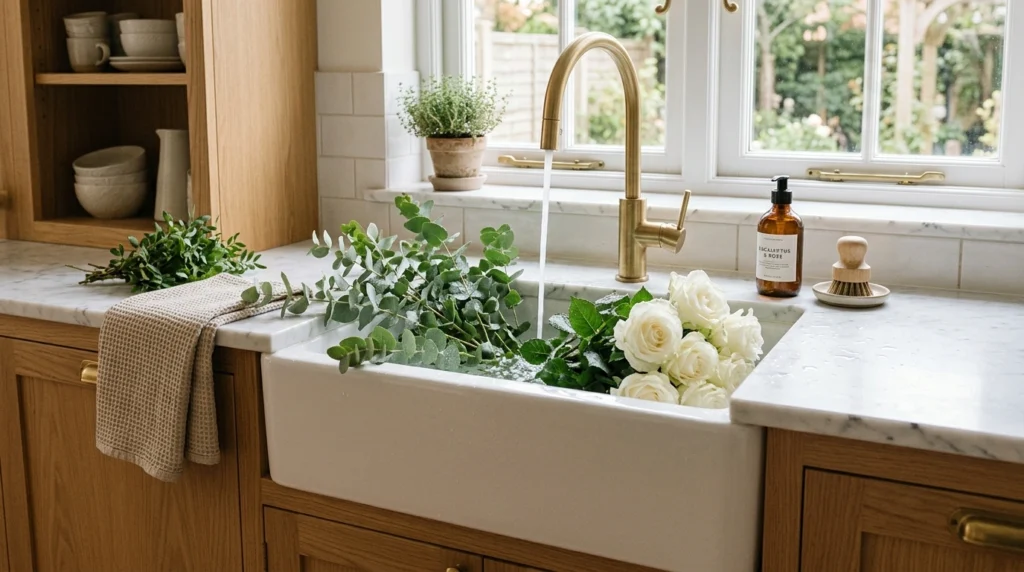
An apron-front sink is the ultimate crown jewel of farmhouse design, but the modern update is all about scale and functionality. A massive, single-basin or low-divide ceramic sink in a crisp white finish offers incredible utility while showing off a beautiful, thick front panel that breaks up your cabinet run. It evokes a sense of old-world utility, reminiscent of utility sinks in historic country estates, but is designed for the demands of modern cooking and hosting. Whether you are scrubbing large baking sheets or washing fresh flowers, it feels incredibly spacious and satisfying to use.
I always recommend choosing a fireclay ceramic sink rather than cast iron, as fireclay is much more resistant to chipping and staining over years of heavy use. If you host often, a “low-divide” option is fantastic because it gives you the look of a double sink but allows pot handles to lay flat across the center divider. Keep the surrounding countertops clean and dry, and avoid dark-colored sinks which can show water spots and soap scum easily. For a budget alternative, look into stainless steel apron-front options, though they tend to feel slightly more commercial than cozy. A quality fireclay apron sink ranges from $400 to $900.
6. Warm White Shiplap Walls with Vertical Installation
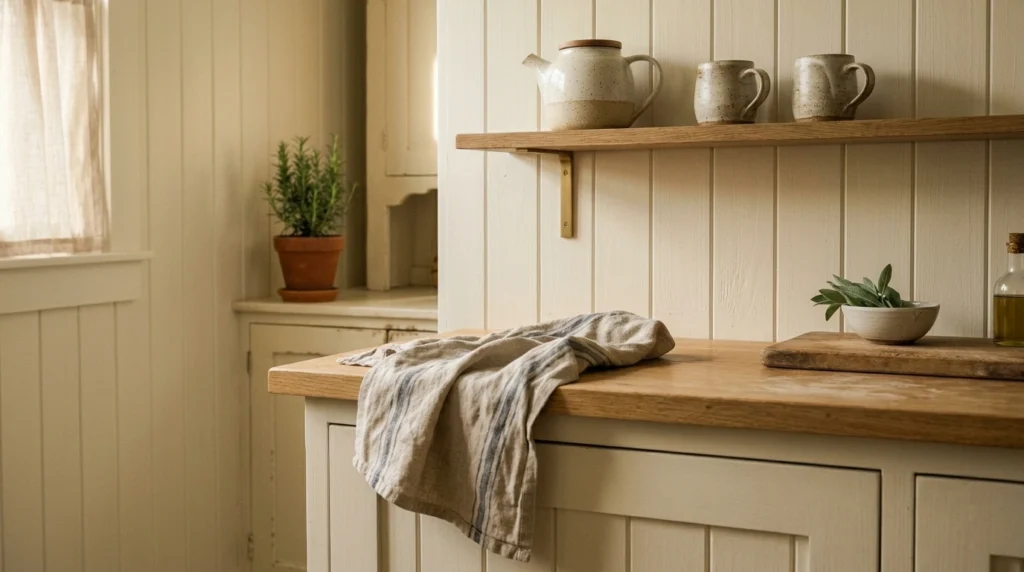
Traditional horizontal shiplap can sometimes feel a bit too synonymous with older, heavily themed farmhouse spaces. However, rotating those wooden planks ninety degrees and installing them vertically completely changes the game. Vertical shiplap draws the eye upward, making your ceilings feel significantly taller while adding a beautiful, subtle texture to the walls. Painted in a warm, creamy white, it provides a soft, tactile backdrop that feels light and bright without the cold, clinical feel of flat, drywall-only modern spaces.
When choosing your paint finish for vertical shiplap, always go with a satin or eggshell rather than flat paint so that the boards are easy to wipe down near cooking zones. Use a warm white with a yellow or beige undertone—like Benjamin Moore Swiss Coffee or Sherwin Williams Alabaster—to ensure the kitchen feels cozy rather than stark under LED lighting. The biggest mistake is running shiplap over every single wall; instead, use it as a feature wall behind a breakfast nook or on the face of your kitchen island. Recreating this on a budget is easy with thin MDF beadboard panels, which cost around $30 to $50 per panel.
7. Patinated Brass Cabinet Hardware and Cup Pulls
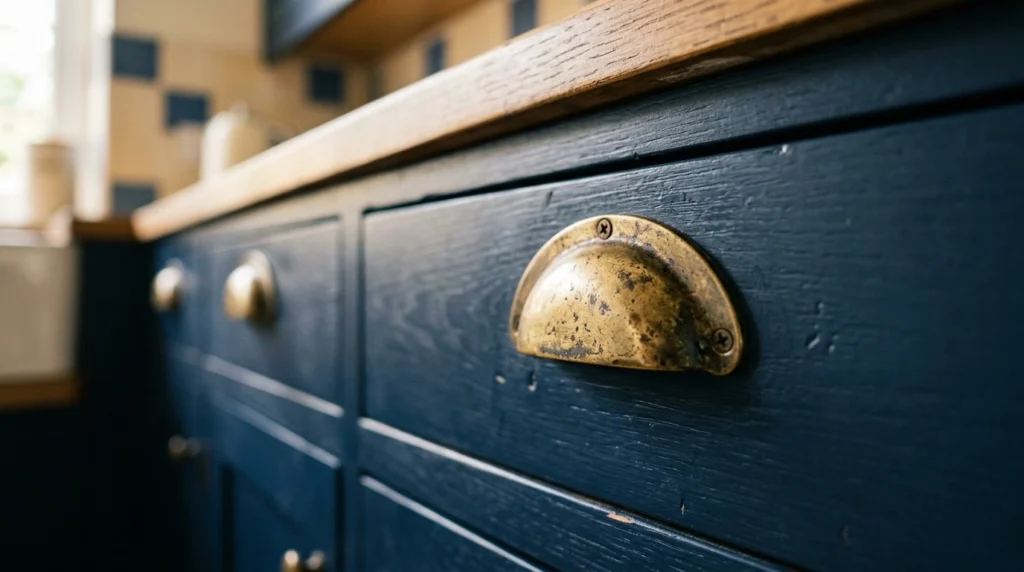
Hardware is often called the jewelry of the kitchen, and nothing brings a modern farmhouse to life quite like patinated brass. Unlike shiny, lacquered gold brass that can look overly modern or glitzy, unlacquered brass starts out with a warm, golden hue and naturally darkens, tarnishes, and reacts to the oils in your hands over time. This aging process gives the kitchen a sense of history and soul, making the cabinetry look custom-built and full of character. It feels beautifully tactile every time you pull open a drawer to grab a tea towel.
To make this look cohesive, I recommend mixing your hardware types rather than using the exact same pull on every door. Use classic cup pulls on your wide drawers and simple, clean-lined round knobs on your upper cabinet doors. Avoid overly ornate, vintage-replica shapes, and stick to simple, geometric silhouettes so the hardware remains grounded in modern design. If you dislike the idea of uneven tarnishing, look for “antique brass” finishes which are chemically aged at the factory and remain consistent. Quality brass cabinet hardware typically ranges from $6 to $20 per piece.
8. Woven Rattan or Seagrass Counter Stools
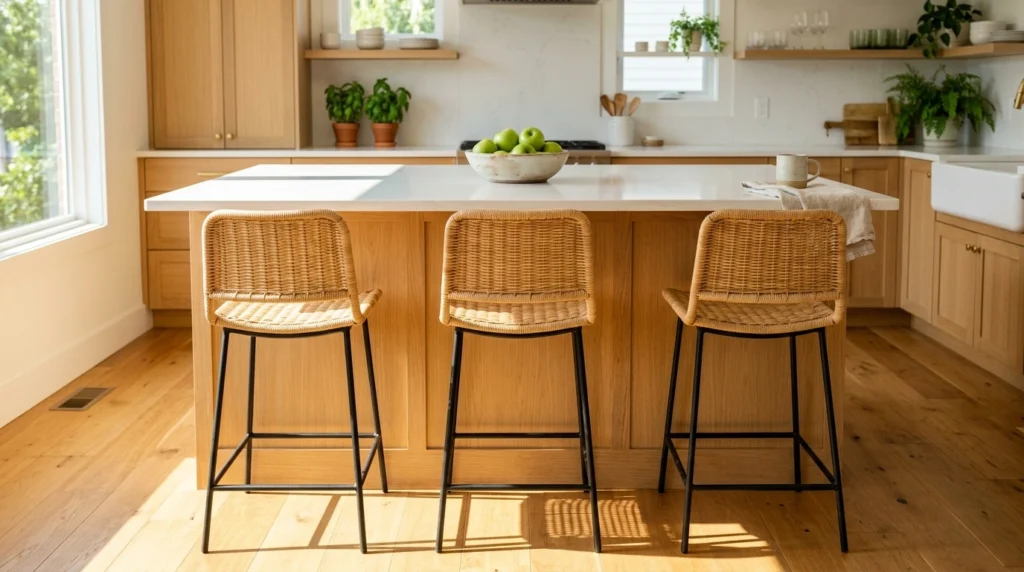
Introducing natural, woven materials is an absolute must to soften the hard surfaces of quartz, tile, and wood cabinetry. A set of barstools made from woven rattan or seagrass brings an earthy texture and casual, coastal-farmhouse warmth to your island seating area. The intricate weave patterns throw beautiful, subtle shadows when the morning sun streams through the kitchen windows, creating a laid-back, welcoming vibe that invites friends and family to sit down and chat while you prep dinner.
When shopping for woven stools, look for designs that feature clean, simple frames—such as black metal legs or natural oak frames—to keep the overall look modern and structured. Avoid stools that are entirely made of chunky, thick wicker, which can look heavy and lean too tropical or dated. A common mistake is forgetting about comfort and cleanability; look for stools with a low back for support, and apply a fabric protector spray to woven seagrass to prevent stains from spilled drinks or food. You can find beautiful, high-quality woven counter stools for around $120 to $300 each.
9. Exposed Ceiling Beams Left in Natural Light Oak
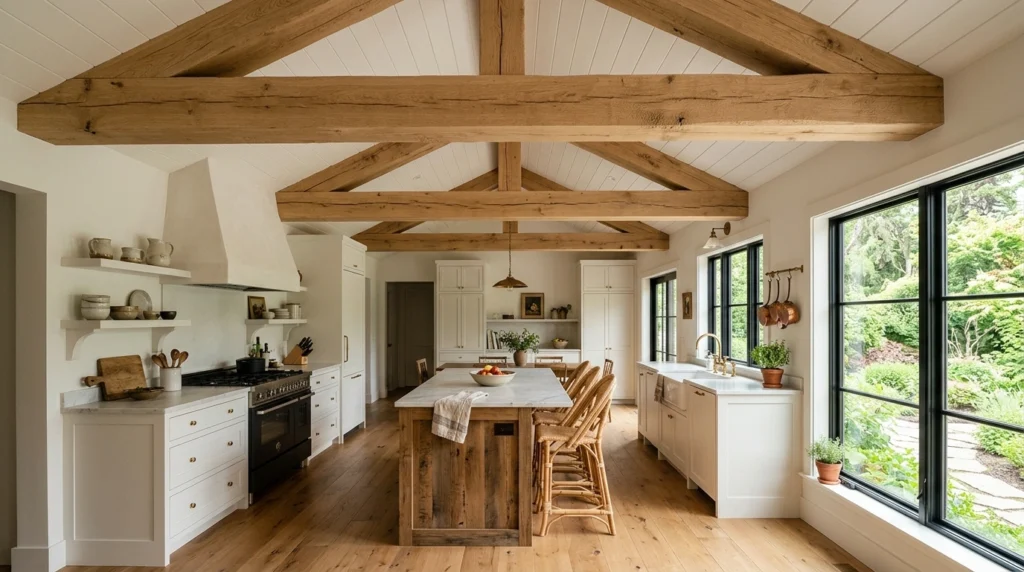
There is nothing quite like structural woodwork to give a kitchen a sense of architectural permanence and cozy shelter. Leaving exposed ceiling beams in their natural, light oak state—rather than staining them dark brown or painting them white—creates an incredibly airy, warm ceiling detail. The natural grain patterns, cracks, and soft honey tones of the wood bring an earthy warmth overhead, making the entire kitchen feel grounded, cozy, and incredibly expansive.
If your home doesn’t have structural beams, you can easily achieve this look using three-sided faux wood beams made from lightweight polyurethane or thin mitered oak boards. I always recommend keeping the wood tone light and dry-looking, avoiding high-gloss varnishes which can look synthetic and cheap. Ensure the beams run in the same direction as your flooring planks to create visual harmony and flow. The biggest mistake is installing beams that are too small or thin, which can look like an afterthought; they should look substantial enough to actually hold up a ceiling. A DIY faux beam project typically costs between $300 and $1,000 depending on the kitchen size.
10. Plaster-Finish Range Hood with Clean Lines
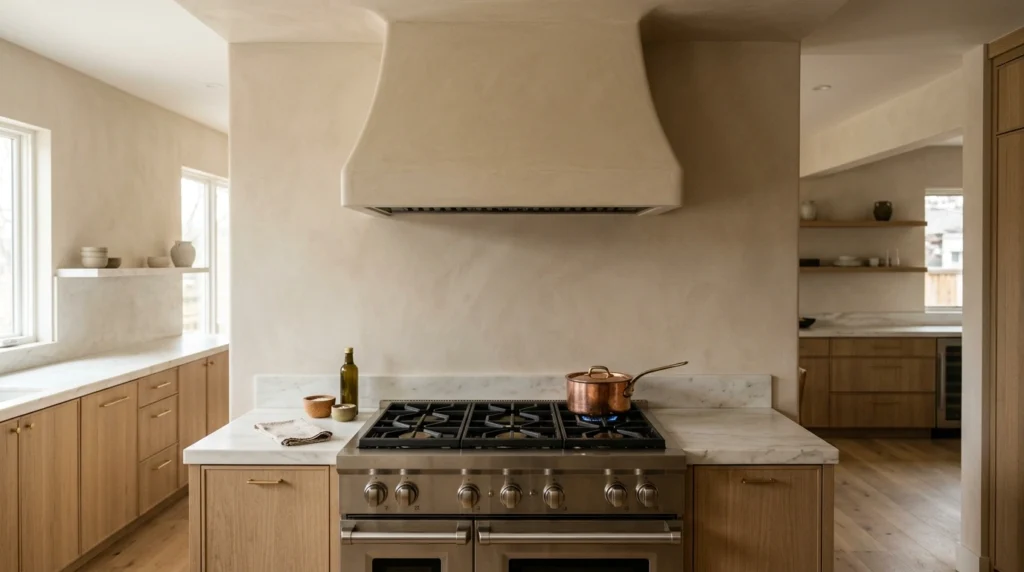
The range hood is the natural focal point of any kitchen, and a plaster-finish hood is a stunning way to make a modern statement with a nod to old-world European farmhouse styling. A custom hood coated in a soft, hand-applied Roman clay or micro-cement plaster offers a beautiful, velvety matte texture with subtle movement. Because it has no grout lines or heavy trim, its clean, minimalist silhouette feels incredibly modern, while the hand-finished texture keeps it from looking cold or sterile.
To implement this design, have your contractor build a simple, straight box or a gently tapered chimney hood out of drywall, and then coat it with a heat-resistant, wipeable plaster finish. I always recommend using a soft, warm gray, beige, or off-white tone that matches your wall paint to keep the look seamless and calm. Avoid adding heavy wooden corbels or thick wood trim at the bottom, which can detract from the clean, modern lines of the plaster. Make sure the plaster is properly sealed with a matte, water-based sealer so you can easily clean grease and steam from cooking. A custom plaster hood installation typically costs between $800 and $2,000.
11. Vintage-Inspired Terracotta Floor Tiles
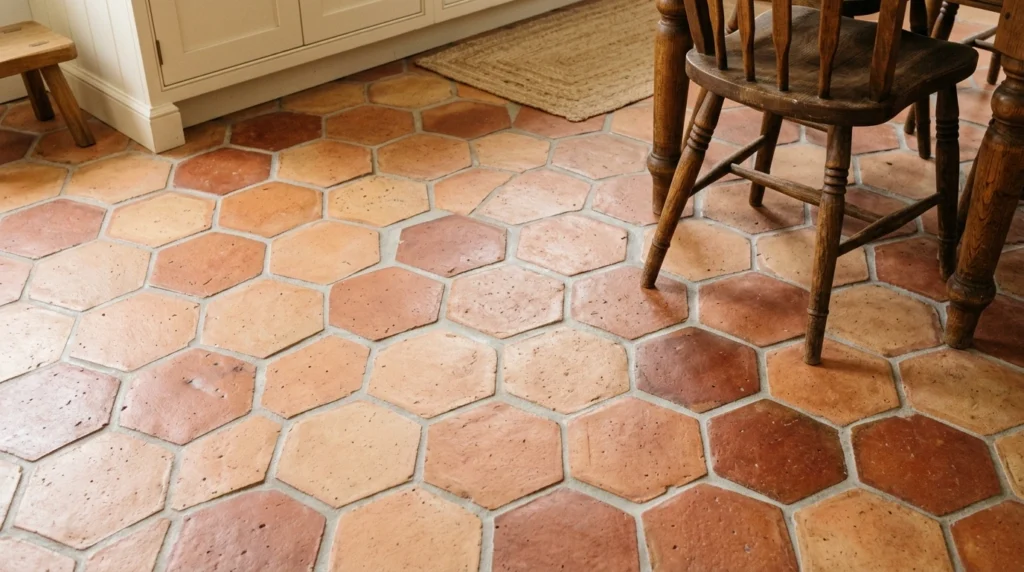
If you want to bring an earthy, Mediterranean-meets-farmhouse warmth to your kitchen floor, terracotta tiles are unmatched in their rich, rustic beauty. These kiln-fired clay tiles feature deep, warm tones ranging from dusty peach to rich sienna red, instantly grounding the kitchen with a sense of sun-baked warmth and historical charm. Underfoot, they feel incredibly solid, earthy, and warm, making the entire room feel like a cozy, European cottage kitchen where slow meals are cooked and shared.
To keep terracotta floors looking modern rather than dated, choose a clean geometric shape like a picket tile, a classic hexagon, or a simple square, and pair them with a light, warm gray grout rather than a dark contrast grout. What I personally love about this look is how beautiful it looks paired with simple, modern white cabinets and sleek black metal fixtures, which balance the rustic floor perfectly. A common mistake is failing to seal natural terracotta, as raw clay is highly porous and will stain easily; use a high-quality matte sealer to protect it without adding a shiny, artificial gloss. Expect to pay around $8 to $20 per square foot for quality terracotta tile.
12. Floating Kitchen Island with a Butcher Block Top
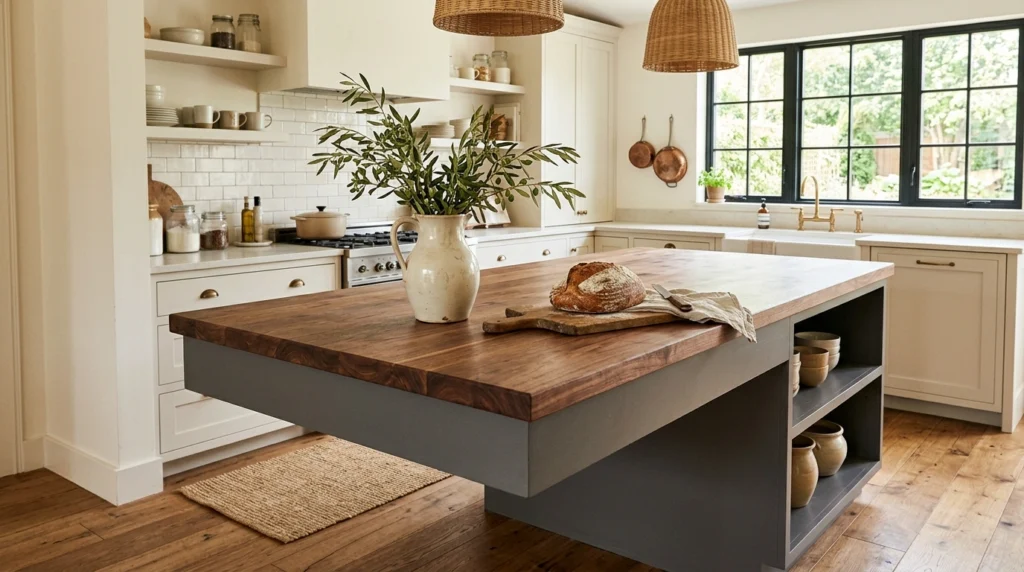
A heavy, built-in kitchen island can sometimes make a kitchen feel crowded, but a floating, table-style island with a thick wood butcher block top brings a wonderful sense of light, air, and furniture-like charm. Featuring open space underneath and simple, sturdy wooden legs, it feels more like an antique baking table than a modern fixture. The warm, rich tones of a walnut or maple butcher block top provide a beautiful, hard-working surface that wears its cutting marks and kitchen prep history like a badge of honor.
When styling a floating island, utilize the open space underneath to store beautiful, oversized woven baskets for root vegetables or extra linens, which keeps the look clean while adding texture. If you choose a wood top, make sure you treat it regularly with food-safe mineral oil to keep the wood hydrated and split-free. A common mistake is using a wood butcher block top on every single countertop run, which can look dark and overwhelming; instead, use wood strictly on the island and a clean, light quartz on the surrounding wall counters. You can find pre-built table islands or custom-build one for about $500 to $1,500.
13. Minimalist Black Metal Pendant Lights
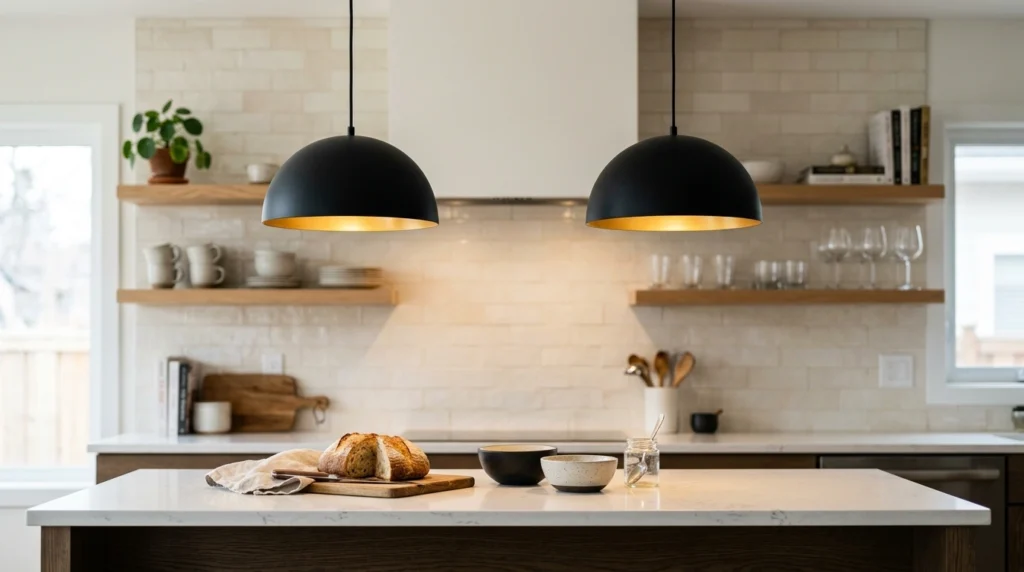
Lighting has the power to completely redefine the style of a room, and minimalist black metal pendant lights are the perfect tool to inject some modern architectural structure into a warm farmhouse kitchen. Clean, geometric frames, simple cone shapes, or sleek dome pendants in a matte black finish hang like art pieces over an island. They draw the eye up, balancing the soft textures of wood and tile with a crisp, graphic touch that keeps the design feeling incredibly current and balanced.
When hanging pendants over your island, I always recommend placing them roughly 30 to 36 inches above the countertop surface, and spacing them so they don’t block your sightlines across the room. Opt for fixtures that feature a warm brass or copper interior finish, which reflects a beautiful, cozy golden light downward while maintaining a sleek black exterior. Avoid overly ornate, heavy wire cages or mason-jar light fixtures, which have become synonymous with dated farmhouse trends. High-quality minimalist pendant lights generally cost between $100 and $300 per fixture.
14. Creamy Zellige Tile Backsplash with Hand-Cut Imperfections
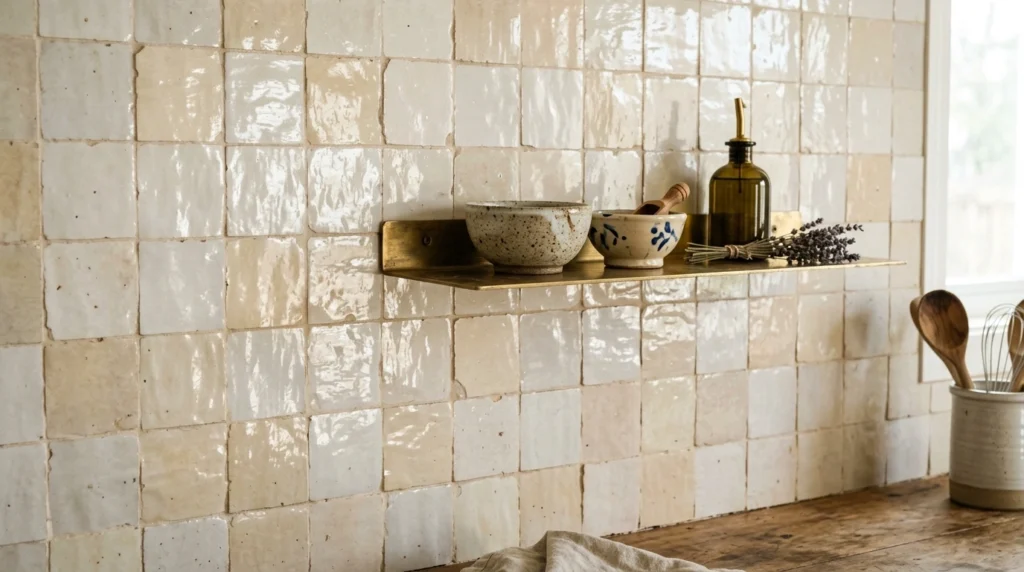
If you love the clean look of a white tile backsplash but find standard subway tile a bit too sterile or common, creamy Moroccan Zellige tiles are the ultimate luxury upgrade. These hand-molded clay tiles feature uneven surfaces, chipped edges, and beautiful variations in glaze color, ranging from soft cream to pale pearl gray. When the light hits the backsplash, it bounces off the uneven glazes in a beautiful, shimmering way, making the wall feel incredibly dynamic, organic, and artful.
Because Zellige tiles are naturally irregular, they should be installed tightly together with minimal to no grout lines to let the hand-cut edges shine. I always recommend using a professional installer who has experience with handmade tiles, as they require a delicate touch to lay correctly. Pair this shimmering backdrop with simple, matte cabinetry and unlacquered brass fixtures to let the texture of the tile be the star of the show. If Zellige is out of your budget, look for “cotto” style glazed ceramic tiles, which offer a similar wavy, light-reflective surface at a lower price point. Real Zellige tiles run about $15 to $30 per square foot.
15. Integrated Panel Appliances for a Clean Run
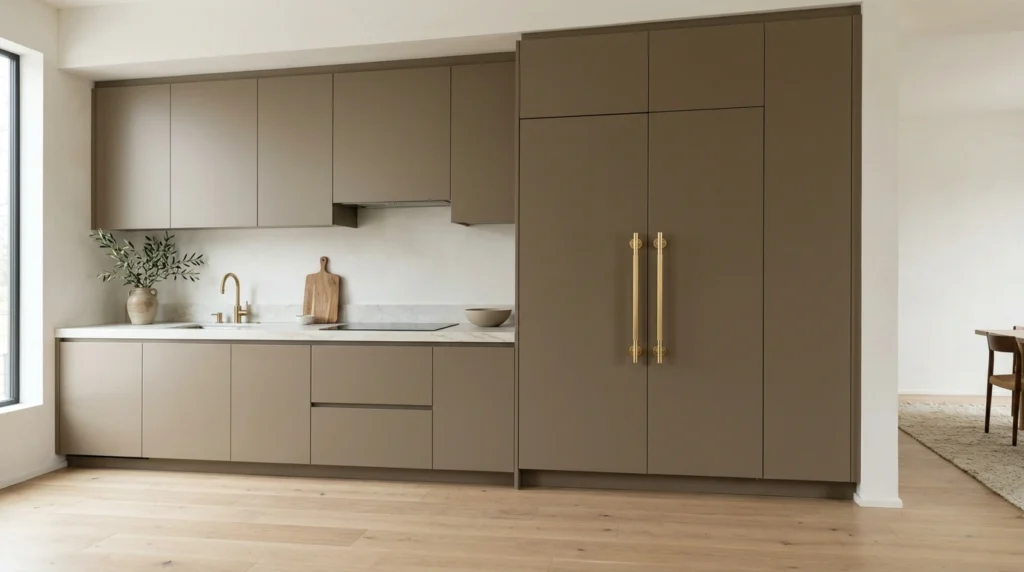
Nothing breaks up the visual flow of a beautiful, warm farmhouse kitchen quite like a massive expanse of stainless steel from a modern refrigerator or dishwasher. Opting for integrated panel-ready appliances allows you to cover your fridge and dishwasher in the exact same cabinetry doors as your cupboards. This creates a seamless, uninterrupted run of beautiful woodwork, making the kitchen feel more like a cozy, customized living room or historical larder than a utility-focused cooking space.
This works especially well in smaller kitchens where minimizing visual clutter is key to making the space feel larger and more serene. When planning your layout, make sure to work closely with your cabinet maker to ensure the integrated panels align perfectly with the surrounding door lines for a truly flush, hidden look. A common mistake is forgetting to order the heavy-duty appliance pull hardware, which needs to be sturdier than standard cabinet pulls to pull open heavy refrigerator doors. While panel-ready appliances carry a price premium, the seamless look is incredibly high-end. Expect to spend an extra $500 to $1,500 per appliance for panel-ready options.
16. Cozy Breakfast Nook with Built-In Bench Seating
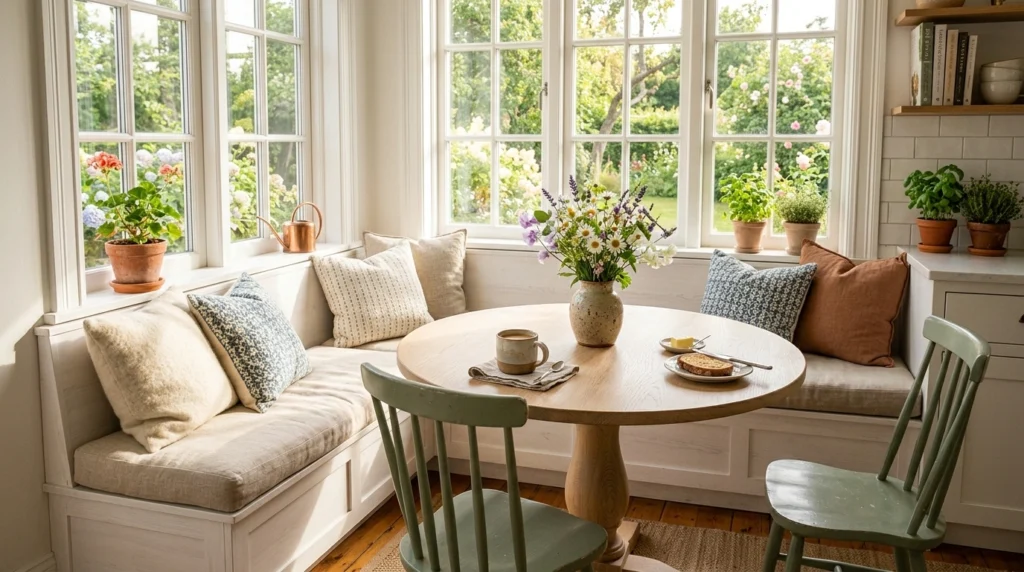
A built-in breakfast nook is the ultimate way to bring a cozy, family-centered farmhouse feel into your daily routine. Tucked into a sunny corner of the kitchen, a custom bench seat paired with a round wooden pedestal table and a couple of modern dining chairs creates an incredibly inviting spot for morning coffee, casual family meals, or homework sessions. It makes the kitchen feel less like a clinical work zone and more like the true, warm heart of the home.
To keep the nook feeling modern and fresh, design the bench seating with clean, simple lines—such as a floating bench or a simple panel-front base painted to match your walls—and top it with custom cushions in a durable, textured fabric like performance linen or leather. A lot of people overlook this detail, but adding built-in drawers or lift-up tops to your bench seats is an incredible way to sneak extra storage into your kitchen for seasonal items. Avoid heavy, high-backed wooden benches that can feel dark and block window light. A custom-built breakfast nook bench typically ranges from $600 to $2,000.
17. Layered Styling with Vintage Wooden Cutting Boards
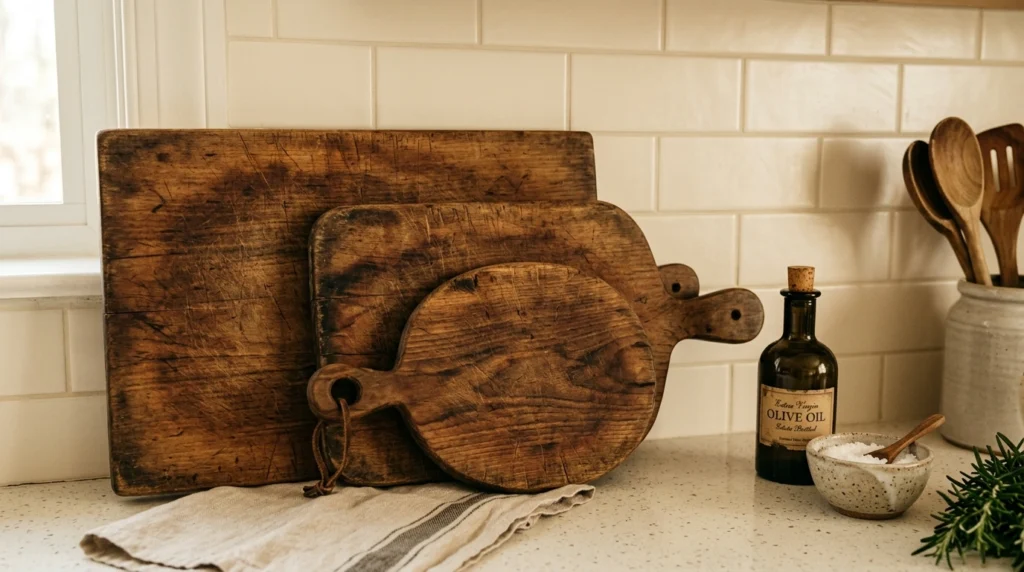
The secret to a kitchen that looks like a high-end designer styled it is all in the small, layered details on your countertops. Propping a collection of vintage wooden breadboards and cutting boards in various shapes, sizes, and wood tones against your backsplash brings a beautiful, casual warmth to the space. It softens the hard surface of your countertops while keeping your most-used prep surfaces within arm’s reach, celebrating the natural beauty of aged wood, knife marks, and rich grains.
When styling your cutting boards, layer them slightly overlapping each other, starting with the largest board in the back and smaller ones in the front. I always recommend mixing shapes—pair a tall, rectangular board with a round board with a beautiful handle to create visual interest. Keep the look modern by avoiding boards with cheesy screen-printed quotes or artificial distressing; stick to genuine antique boards or high-quality handmade boards instead. Keep them clean and conditioned with food-safe mineral oil so the wood grain looks rich and healthy. You can collect beautiful vintage boards at flea markets or online shops for $20 to $100 each.
18. Glass-Front Display Cabinets with Dark Contrasting Backing
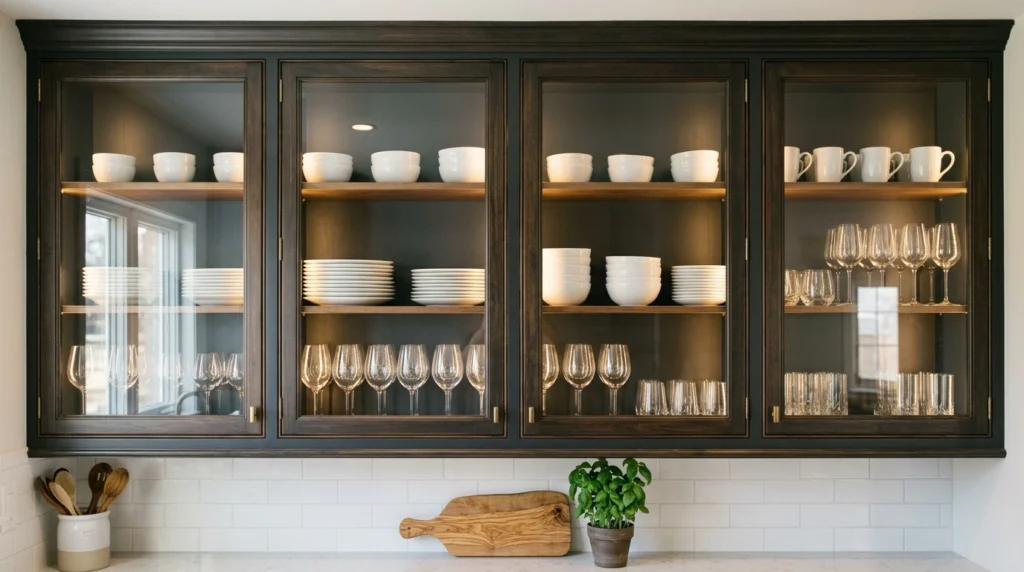
If you have a collection of heirloom glassware, ceramic bowls, or vintage cookbooks, a run of glass-front upper cabinets is a gorgeous way to display them. To give this classic farmhouse feature a striking, modern update, paint the interior back wall of the cabinet in a deep, contrasting color like charcoal gray, forest green, or matte black. This dark backdrop makes your white dishes and clear glassware absolutely pop, adding a beautiful depth and high-contrast drama to your kitchen storage.
To keep this display looking clean and edited, only stock these cabinets with items in a cohesive color palette—like all-white dinnerware, clear glassware, and natural wood accents. Install subtle, warm LED strip lighting inside the cabinets to cast a soft, ambient glow over your collection in the evenings, which acts as beautiful secondary lighting for the entire room. A common mistake is overpacking glass cabinets with mismatched, colorful plastic containers or messy packaging, which can look incredibly cluttered; keep those hidden away in solid lower drawers. Adding glass fronts and interior painting typically adds $200 to $500 to your cabinet costs.
Finding Your Perfect Balance
At the end of the day, creating a beautiful, welcoming home is about confidence over perfection. You don’t need a massive budget or a complete down-to-the-studs remodel to bring these modern farmhouse kitchen ideas to life. In fact, starting small with just one or two changes—like swapping out tired, dated cabinet hardware for unlacquered brass, hanging a pair of minimalist black metal pendants, or layering a few rustic cutting boards against your backsplash—can completely shift the energy of your space and make it feel incredibly fresh and put together.
The absolute best homes are the ones that feel lived-in, loved, and reflective of the people who cook, eat, and gather inside them. Don’t be afraid to mix modern, clean lines with rustic, textured elements to find a balance that feels authentic and comforting to you.
Which of these modern farmhouse kitchen ideas are you most excited to try out in your own home first? I would genuinely love to know in the comments below!
Frequently Asked Questions
How do I make a farmhouse kitchen look more modern?
The easiest way to modernize a farmhouse kitchen is to focus on contrast and clean lines. Swap out overly ornate or highly distressed rustic decor for items with simple silhouettes, such as sleek matte black cabinet pulls, minimalist pendant lights, and flat-panel Shaker cabinets. Keep your paint colors bright, warm, and simple, and use rustic elements—like reclaimed wood shelves or vintage breadboards—as intentional, textured accents rather than covering every single surface.
What paint colors work best for a modern farmhouse kitchen?
Look for warm, creamy whites like Benjamin Moore Swiss Coffee or Sherwin Williams Alabaster for your walls to keep the space feeling cozy rather than clinical. For cabinetry, earthy neutrals like muted olive green, soft sandy beige, warm taupe, or deep charcoal gray are fantastic choices that bring a modern, organic depth to the kitchen without looking cold.
How can I get the modern farmhouse look on a budget?
You can easily achieve this look without a major renovation by focusing on high-impact, affordable upgrades. Try sanding down and staining affordable pine boards to create floating open shelves, painting your existing cabinets in a soft earth tone, replacing basic chrome hardware with matte black or antique brass pulls, and styling your countertops with layered wooden cutting boards and woven storage baskets.
What is the biggest mistake people make with farmhouse styling?
The most common mistake is going too heavy on themed, heavily distressed decor, such as signs with words, chicken wire, and matching rustic sets. This can make the kitchen feel cluttered and dated very quickly. Instead, focus on high-quality, authentic materials—like genuine wood grain, real stone, ceramic, and hand-woven textiles—and allow their natural textures to provide the warmth.
Are open shelves practical in a busy family kitchen?
Yes, open shelves can be incredibly practical if you only use them to store your most frequently used everyday items, such as your daily dinner plates, cereal bowls, and drinking glasses. Because these items are constantly being used, washed, and put away, dust doesn’t have time to settle on them, and it keeps your workspace feeling incredibly open, bright, and easy to navigate.