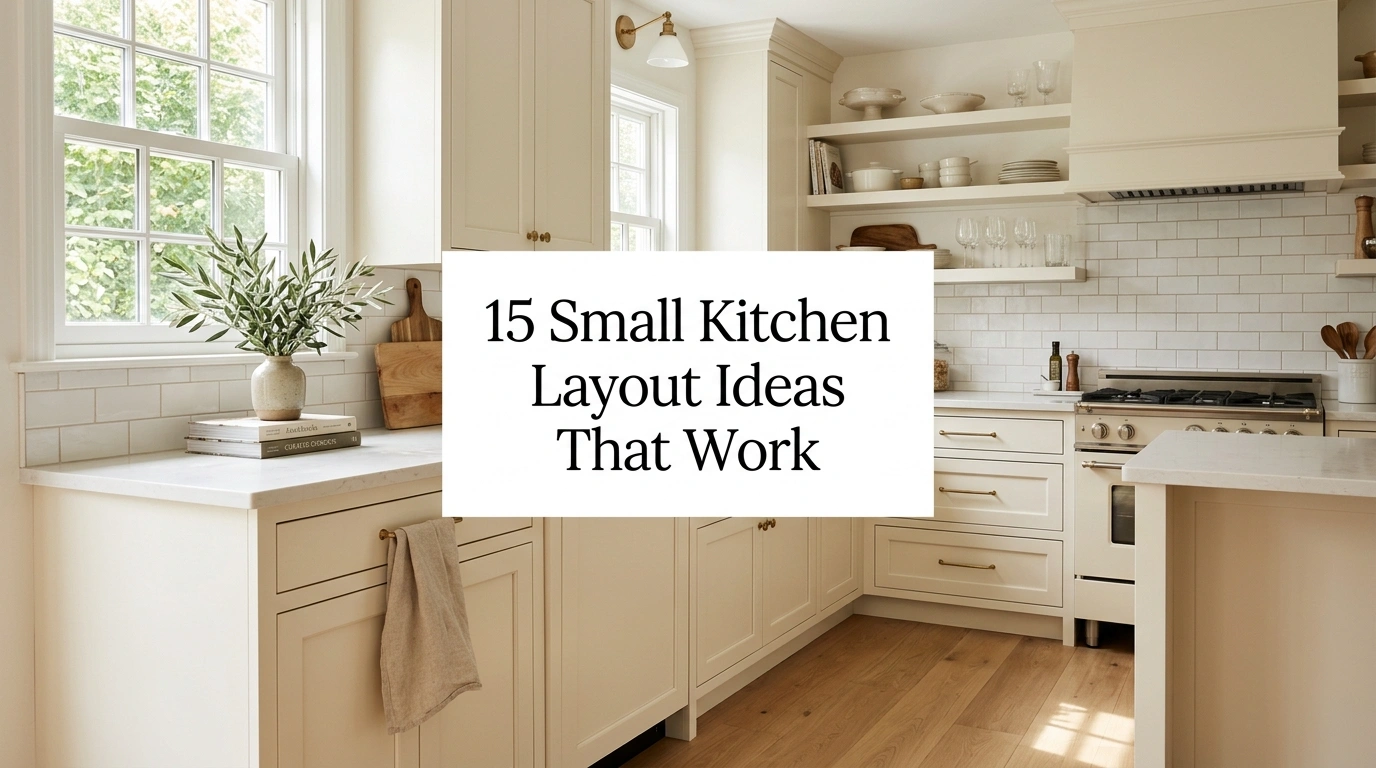
If you have ever found yourself bumping your elbows against a cabinet while trying to chop a single onion, you already know how frustrating a cramped cooking space can be. It is easy to look at massive, double-island chef’s kitchens on social media and feel like your own home is falling short. But here is the truth: you do not need hundreds of square feet to create a warm, functional, and beautiful cooking area. If you are currently dealing with a tiny, awkward space, finding 15 small kitchen layout ideas that work is the first step to reclaiming your sanity and enjoying your home.
In my experience, the secret to a great kitchen isn’t about throwing money at custom luxury finishes; it is about working smart with the space you actually have. True comfort in a home comes from a layout that supports your daily routines, whether that means making a quick morning espresso or hosting a casual Sunday brunch with friends. By making a few thoughtful styling choices—like swapping heavy upper cabinets for airy shelves or choosing furniture that can move when you do—you can make even the smallest layout feel incredibly spacious. Let’s look at fifteen practical, designer-approved layout ideas that will make your compact kitchen your favorite room in the house.
1. The Single-Wall Layout with a Mobile Prep Cart
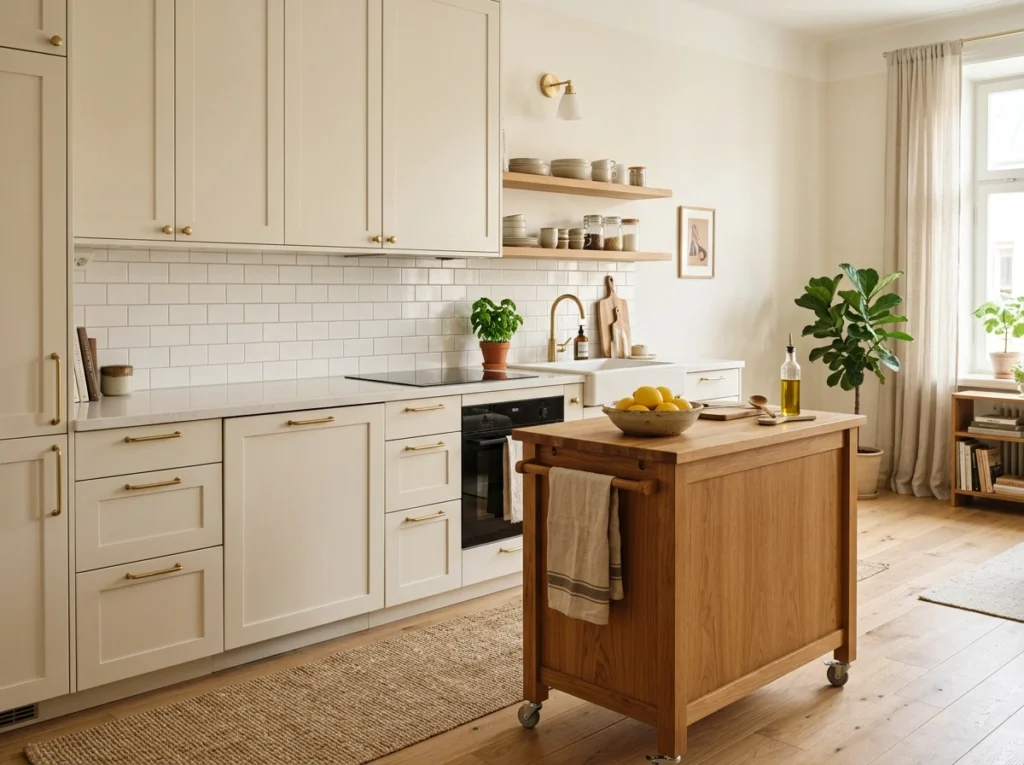
Walking into a tiny studio kitchen can feel instantly overwhelming, but a single-wall setup paired with a warm wooden cart feels open, relaxed, and deeply welcoming. Imagine soft cream-colored cabinets running along one wall, grounded by brass hardware that catches the morning light, while a sturdy oak butcher-block cart rests quietly in the center of the room. This layout keeps the floor plan open, making the kitchen feel less like a closed-off utility closet and more like a cozy, integrated part of your living space. It works beautifully for slow morning coffees and simple weeknight dinners where you want room to breathe.
In my experience, the biggest mistake people make with a single-wall kitchen is trying to pack too much onto the fixed countertops, which leaves no room for actual food preparation. I always recommend starting with a high-quality, rolling kitchen cart that can slide into the center of the room when you are chopping vegetables and tuck away against an empty wall when you need to sweep. Position your sink in the center of your single wall, leaving your stove on one side and your refrigerator on the other to create a natural, intuitive flow. Keep your cabinet fronts flat and simple to maintain a clean visual line, and expect a styling budget of around $150 to $300 for a solid, durable cart.
2. The High-Contrast Galley Kitchen
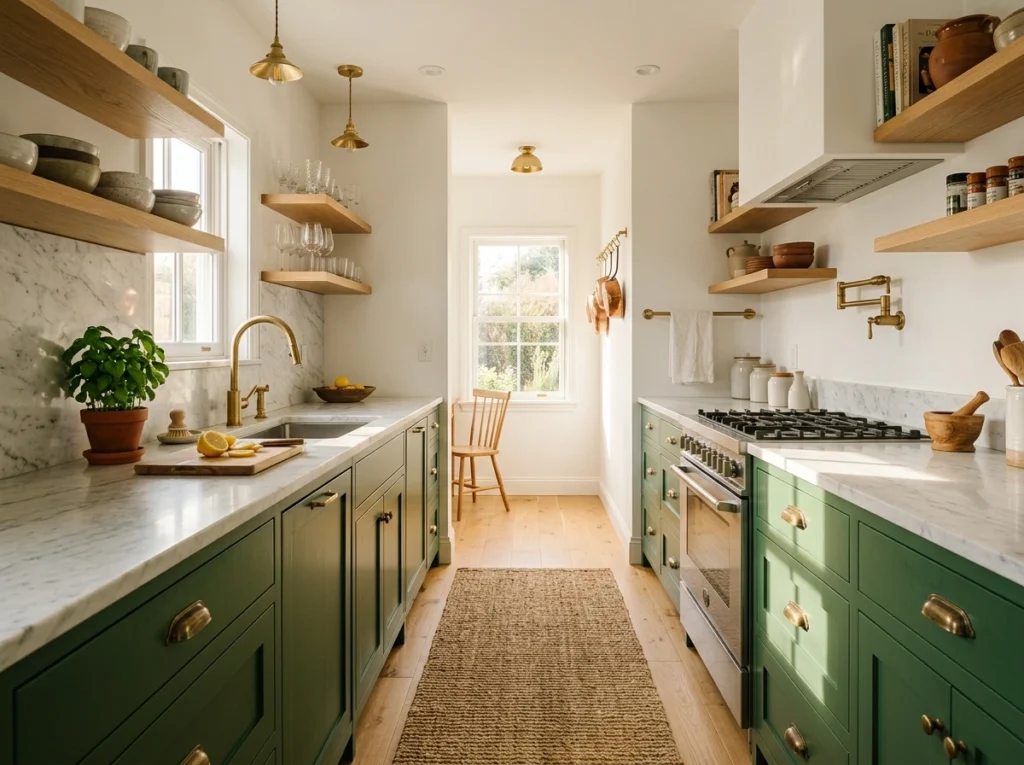
There is something incredibly comforting about a well-balanced galley kitchen where every essential ingredient and tool is within arm’s reach. Picture rich, forest-green base cabinets grounding the room, while crisp white upper walls and light oak floating shelves draw the eyes upward to make the narrow space feel double its actual width. This high-contrast look feels structured and intentional, creating a cozy workspace that makes you want to put on some music and bake bread on a rainy afternoon. It is the ultimate layout for anyone who loves a focused, quiet cooking rhythm without visual distractions.
A lot of people overlook the power of color blocking in narrow spaces, but it changes the entire layout’s feel by altering how light bounces through the room. Keep your heaviest, darkest paint colors on your lower cabinets to ground the room, and stick to bright, light-reflective white or cream tones for your upper walls or shelving. Ensure you have at least three to four feet of walking space between the two parallel runs of cabinets so you can easily open your oven and dishwasher doors without hitting the opposite wall. I always recommend using a woven runner rug in warm, earthy tones to soften the straight lines of the galley and add a layer of soft comfort underfoot.
3. The L-Shaped Layout with a Built-In Corner Banquette
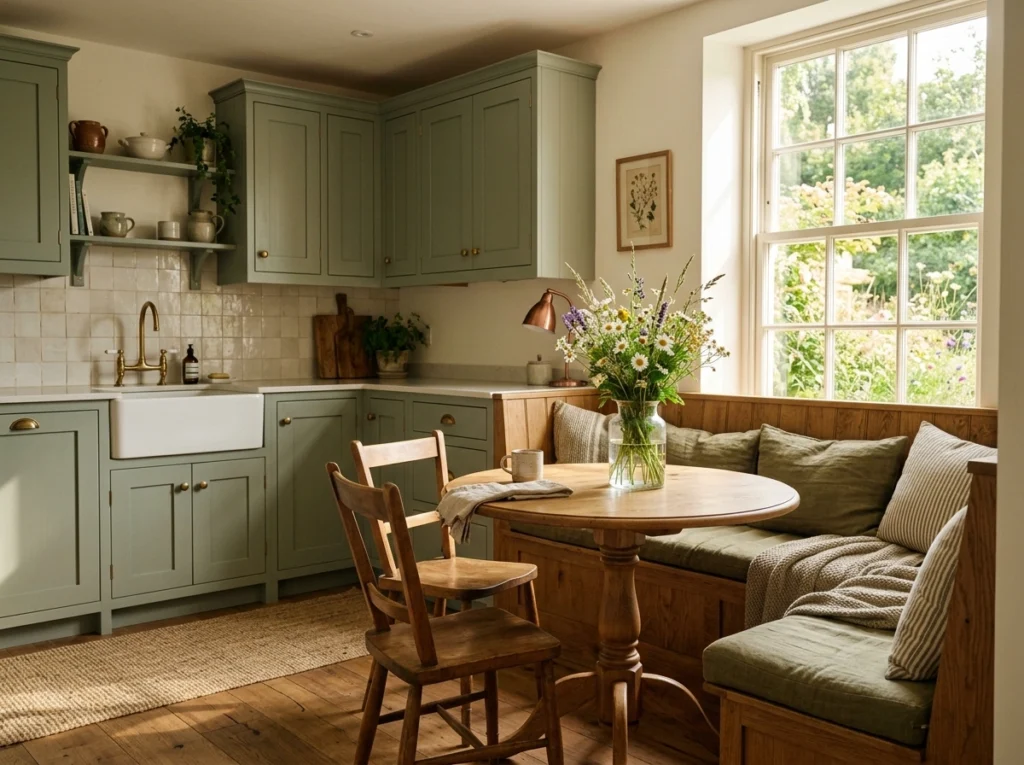
Imagine a bright, sunny morning where your breakfast seating and cooking prep space merge together into one fluid, highly functional corner. An L-shaped cabinet run paired with a cozy, built-in wooden banquette bench utilize awkward corner space that usually goes completely to waste. Soft sage-green cushions, warm tongue-and-groove wood paneling, and a small round pedestal table create an intimate, communal feeling that invites family or guests to sit and chat while you stir a pot of soup. This setup feels incredibly custom and lived-in, turning a basic kitchen corner into a multi-use dining nook.
What I personally love about this look is how easily it solves the dining table dilemma in tight apartments without blocking the natural flow of traffic. Instead of squeezing a standard table and chairs into the room, a built-in banquette hugs the walls tightly and provides hidden storage drawers beneath the seat cushions. Keep your main sink and stove along the longest run of the L-shape, ensuring you have at least two feet of clear counter space between them for prep work. Avoid bulky dining chairs that clutter the walkway; instead, stick to a single pedestal table that allows people to slide in and out with ease.
4. The Modified U-Shape with a Peninsula Breakfast Bar
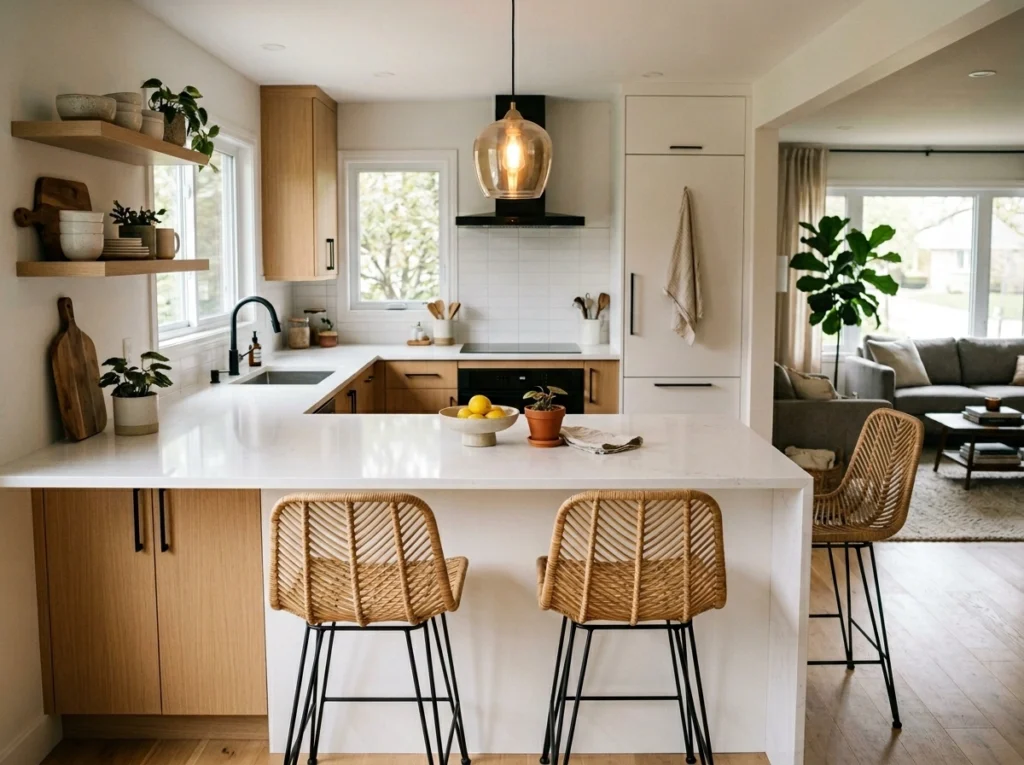
There is a distinct joy in having a designated spot for friends to sit with a drink while you finish preparing a meal. A modified U-shaped layout features three connected runs of cabinetry, with one short side extending out into the room as a peninsula bar to visually divide the kitchen from your living area. Woven rattan bar stools tucked under a smooth quartz countertop create a welcoming, relaxed vibe that feels like your favorite local neighborhood bistro. It lets you maintain a highly efficient workspace while still feeling connected to the rest of your home.
This works especially well if you want your kitchen to look highly styled and open without trying too hard or tearing down load-bearing walls. The key to making this layout work is keeping the peninsula countertop completely clear of major appliances like cooktops or sinks to maximize your uninterrupted workspace. If you are working with a tight budget, you can use a pre-cut birch butcher block for the peninsula stretch while keeping standard laminate or quartz on the back counters. Keep the color palette cohesive across the peninsula and your living room to make the two spaces feel like one continuous, airy room.
5. The Open-Shelving Galley with Under-Cabinet Task Lighting
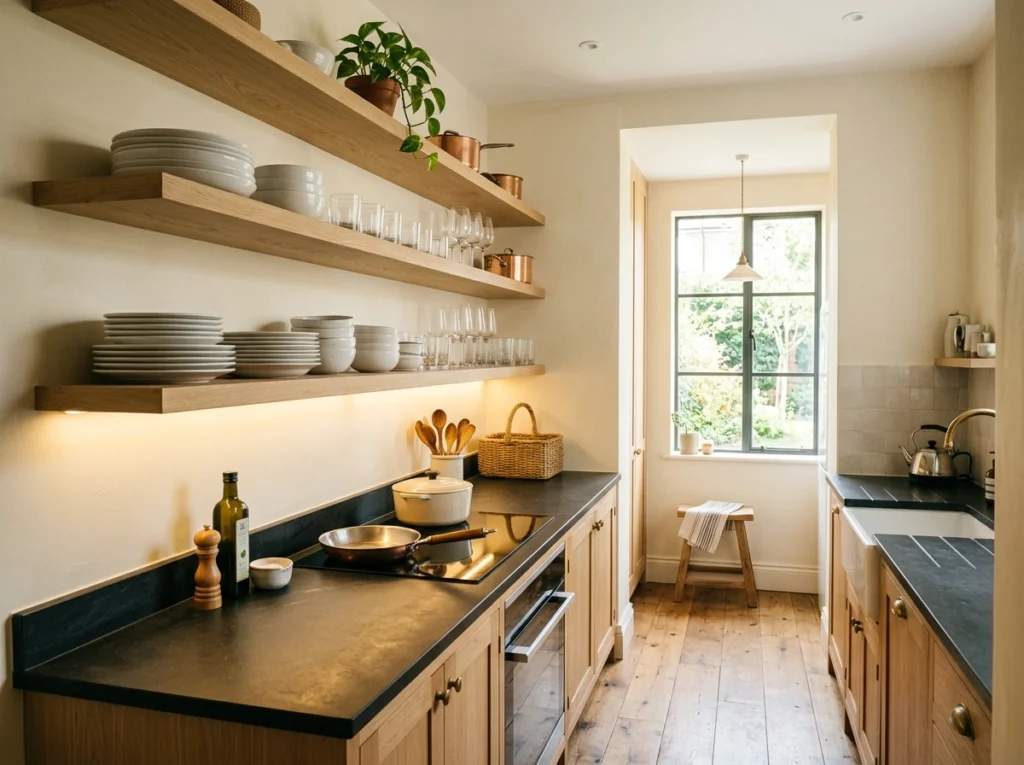
If you love displaying your favorite ceramic bowls, vintage glassware, and copper pots, an open-shelving galley layout feels incredibly bright, artistic, and breezy. Soft cream walls, natural white oak floating shelves, and warm, golden task lights shining down onto soapstone countertops create a gentle, lived-in atmosphere. This layout completely removes the heavy, boxy feeling that traditional upper cabinets often bring to a narrow room, letting natural window light flow freely across the space. It feels modern and personal, showing off your unique style while keeping your daily dishes easily accessible.
In my experience, the biggest mistake people make with open shelving is cluttering them with mismatched plastic containers and commercial packaging, which quickly looks messy. I always recommend starting with a strict color palette—like warm wood, matte white, and brushed brass—to keep your displayed items looking organized and intentional. Place your most-used dinner plates and coffee mugs on the lowest shelves for easy everyday reach, reserving the highest shelves for decorative plants or special cookbooks. To save money on your renovation, you can source thick, raw timber planks from a local lumberyard and sand and seal them yourself.
6. The Single-Wall Layout with Floor-to-Ceiling Pantry Towers
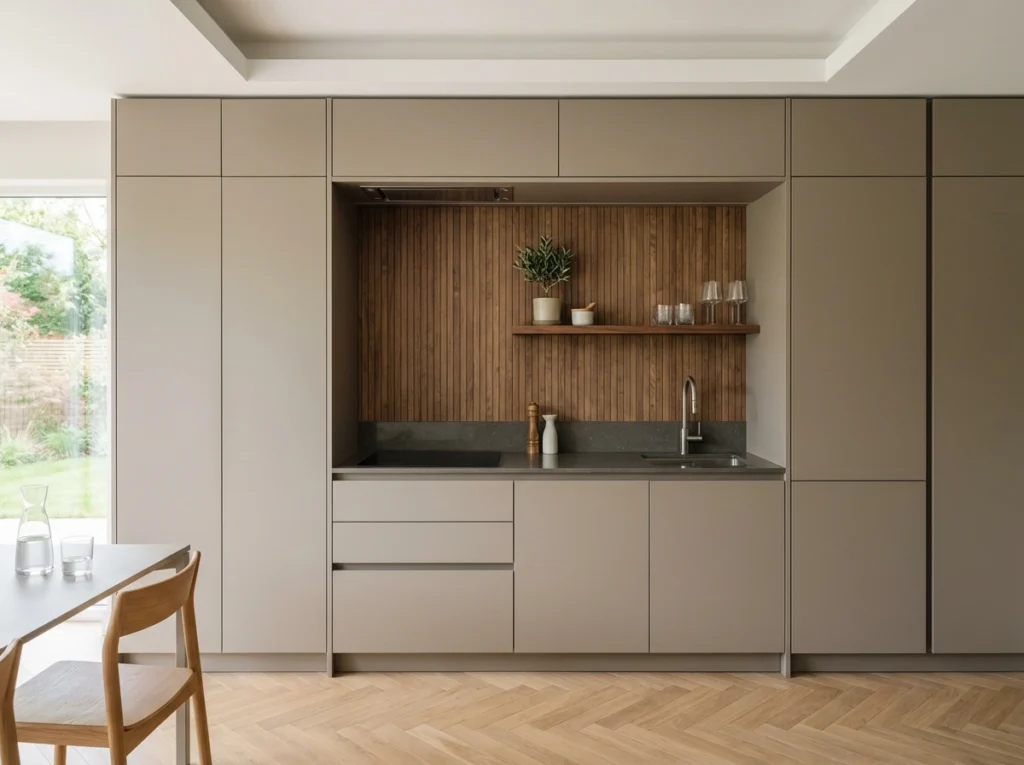
Walking into a kitchen where every single appliance, box of pasta, and cleaning tool has a hidden, dedicated home brings an instant sense of calm. A single-wall layout framed by deep, floor-to-ceiling pantry towers on both ends looks incredibly balanced, architectural, and sleek. Smooth, matte-taupe cabinet fronts hide all of your visual clutter, leaving a clean, recessed central niche lined with warm wood tiles for your stove, sink, and daily prep work. It is a highly organized layout that works beautifully for minimalists who want to keep their living spaces completely free of visual noise.
A lot of people overlook the power of vertical storage, but it changes the entire layout’s capacity by utilizing the unused space near your ceiling. By building your pantry cabinets all the way to the top of the wall, you gain massive storage space for seasonal items, like holiday platters or heavy Dutch ovens, that you only use once a month. Position your sink and stove within the center recess, and ensure you install high-powered, under-cabinet LED light strips to avoid casting dark shadows over your prep area. Choose push-to-open cabinet doors without external handles to keep the pantry towers looking like seamless, quiet architectural walls.
7. The Compact L-Shape with a Wall-Mounted Drop-Leaf Table
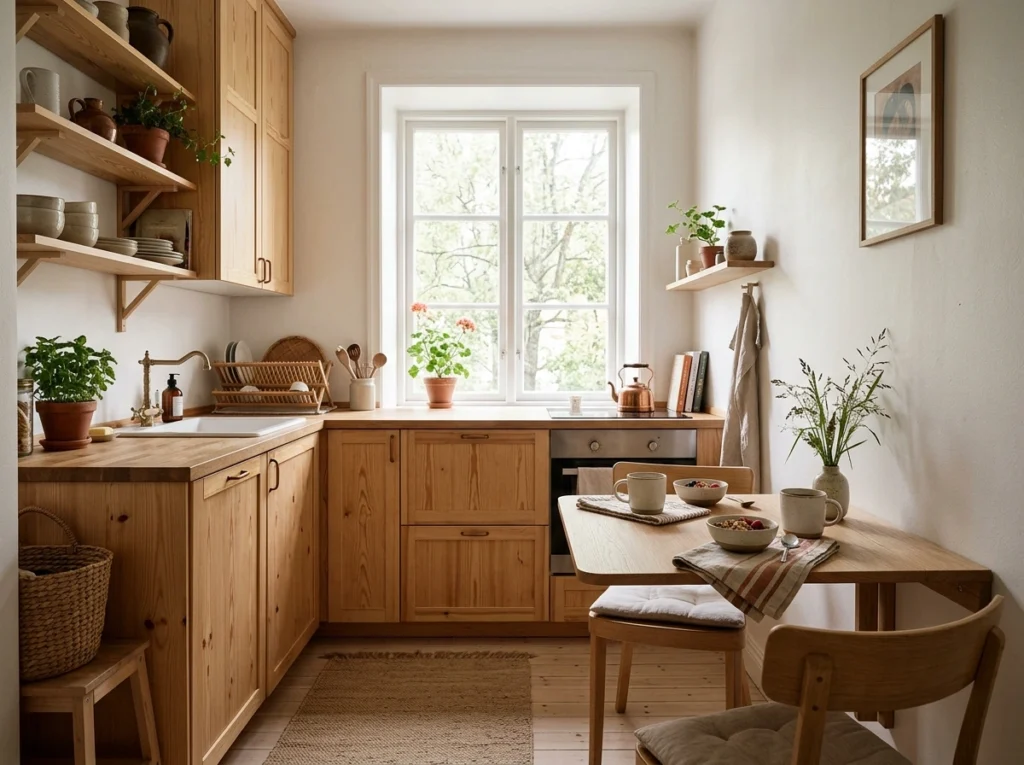
For those who love clever, adaptable furniture, a compact L-shaped layout paired with a wooden drop-leaf table mounted to an adjacent wall is a brilliant space-saver. This layout feels casual, smart, and deeply practical, allowing you to transition from an active, spacious cooking zone to a cozy dinner setting for two in a matter of seconds. Soft linen curtains, warm wall sconces, and light pine wood elements make this setup feel like a quiet, comforting Scandinavian cabin. It is perfect for tiny apartments where every single square inch of floor space has to earn its keep.
This works especially well if you need your kitchen to serve multiple purposes throughout the day, such as a daytime home office and an evening dining area. Keep your cooking zone strictly contained on the L-shaped countertops, ensuring your refrigerator is positioned at the outer edge of the L so guests can grab a drink without stepping into your hot cooking path. When choosing a wall-mounted drop-leaf table, look for a model with built-in shallow shelves underneath to hold salt, pepper, and linen napkins. This keeps your main countertops completely clear of dining clutter and maintains a highly organized kitchen.
8. The Hidden Workstation “Closet” Kitchen
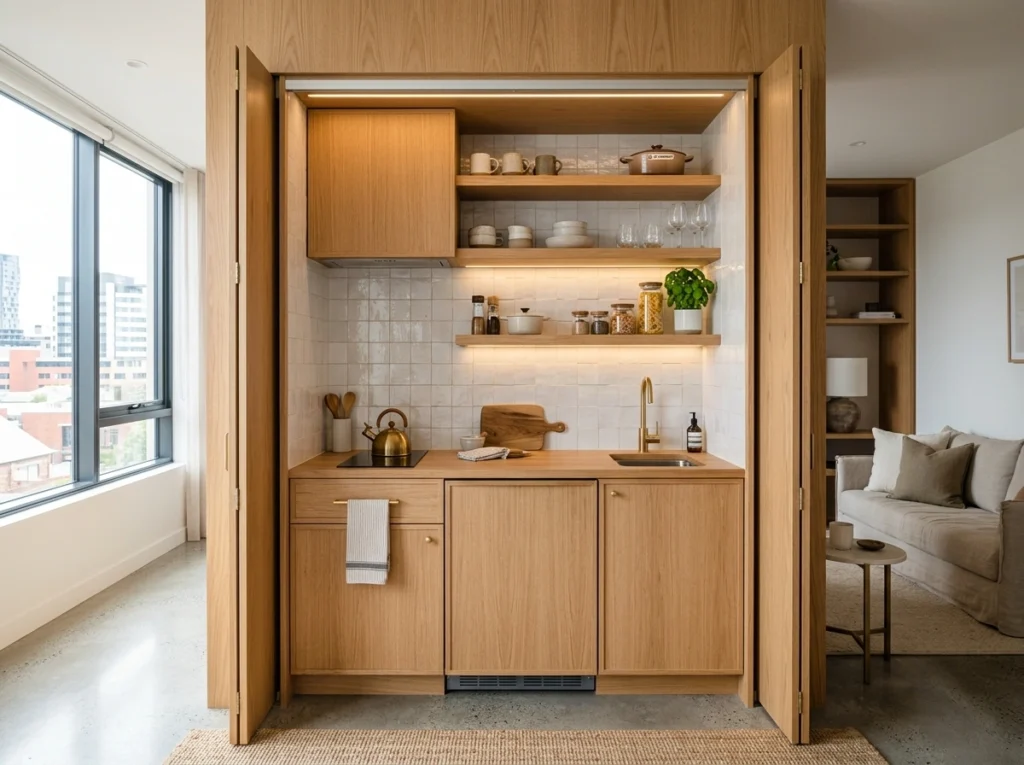
Imagine a fully functional kitchen that completely disappears when you are finished cooking, leaving your open-concept living space clean, quiet, and peaceful. Hidden behind beautiful, bi-fold pocket doors, this layout features a compact workspace complete with open oak shelving, a small induction cooktop, and a panel-ready under-counter fridge. When you slide the doors open, they reveal a gorgeous, warm wooden interior with handmade ceramic tiles that feels incredibly special, intimate, and custom-designed. It is an ingenious solution for modern micro-apartments, guest cottages, or multi-use studio spaces.
The main styling mistake to avoid with a hidden closet layout is choosing high-profile, deep appliances that prevent the exterior pocket doors from closing fully; always measure appliance depths twice before purchasing. Opt for a compact, single-bowl undermount sink paired with a pull-down spray faucet that can tuck low when not in use. While custom bi-fold pocket doors can be a larger upfront investment, the visual peace they bring to a tiny, shared living space is absolutely worth it. Stick to a simple, neutral paint finish on the outside of the doors so they blend seamlessly into your living room walls when closed.
9. The L-Shaped Layout featuring an Oversized Apron Sink
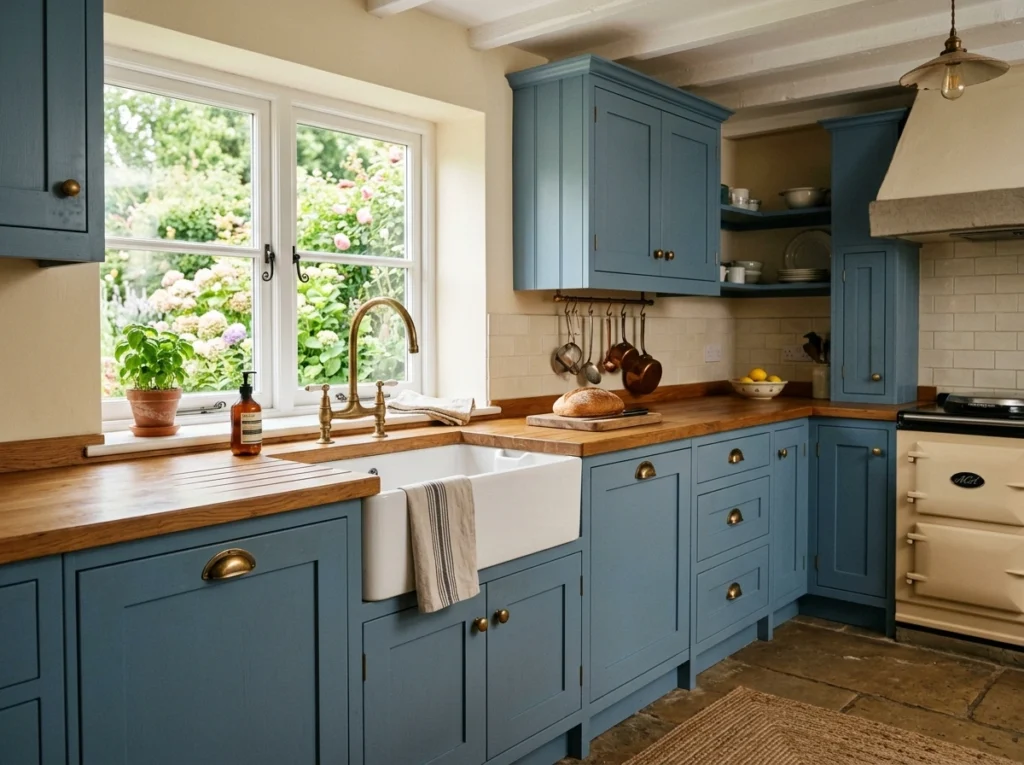
There is something incredibly grounding and comforting about a small kitchen designed around a beautiful, deep ceramic farmhouse sink. Paired with a simple, clean L-shaped cabinet run, the large white porcelain basin becomes a striking focal point against dusty-blue shaker cabinets and warm brass fixtures. It feels substantial, reliable, and full of classic character, turning even the mundane chore of washing dishes into a peaceful, relaxing ritual. It is a wonderful layout for home cooks who love the warm charm of cottage design but need a highly efficient workspace.
Many people think an oversized sink is a waste of precious counter space in a small kitchen, but in my experience, it is actually a massive functional upgrade. A deep apron-front sink easily hides unwashed pots and pans from view during dinner parties, keeping your small kitchen looking tidy and organized until you are ready to clean up. Keep the sink centered on the shorter leg of your L-shaped layout, leaving the longer counter stretch completely clear for chopping and baking. Pair the heavy farmhouse sink with a flexible, high-arc pull-down faucet to make rinsing large cutting boards and baking sheets simple and splash-free.
10. The Pass-Through Window Layout with Outer Counter Seating
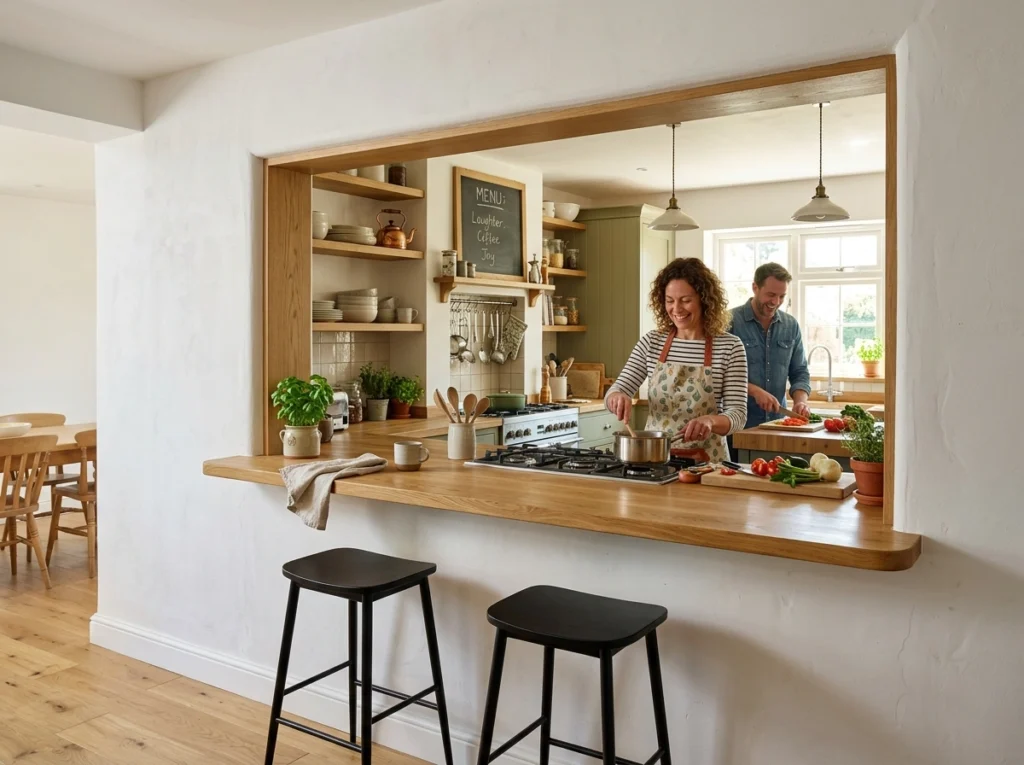
Connecting your small kitchen directly to your dining or living room with a wide pass-through opening feels incredibly social, bright, and wonderfully open. Picture a thick, polished oak sill running through the wall opening, flanked by simple metal bar stools on the living room side and warm glass pendant lights hanging overhead. This layout allows you to chat easily with family or watch your favorite show while prepping dinner, bringing a bright, breezy flow to your home without sacrificing valuable wall storage. It is the perfect compromise between a closed-off kitchen and a fully open floor plan.
In my experience, the biggest mistake people make with a pass-through layout is not extending the sill wide enough to comfortably hold dinner plates and glassware. I always recommend starting with a wooden or stone sill that overhangs the wall by at least 10 to 12 inches on the living room side to create a functional breakfast bar. This layout is incredibly budget-friendly compared to tearing down an entire load-bearing wall, yet it provides the exact same bright, airy feeling. Keep your cooking prep space directly adjacent to the opening so you can easily slide hot platters through to the seating area.
11. The Parallel Double-Galley with Pocket Doors
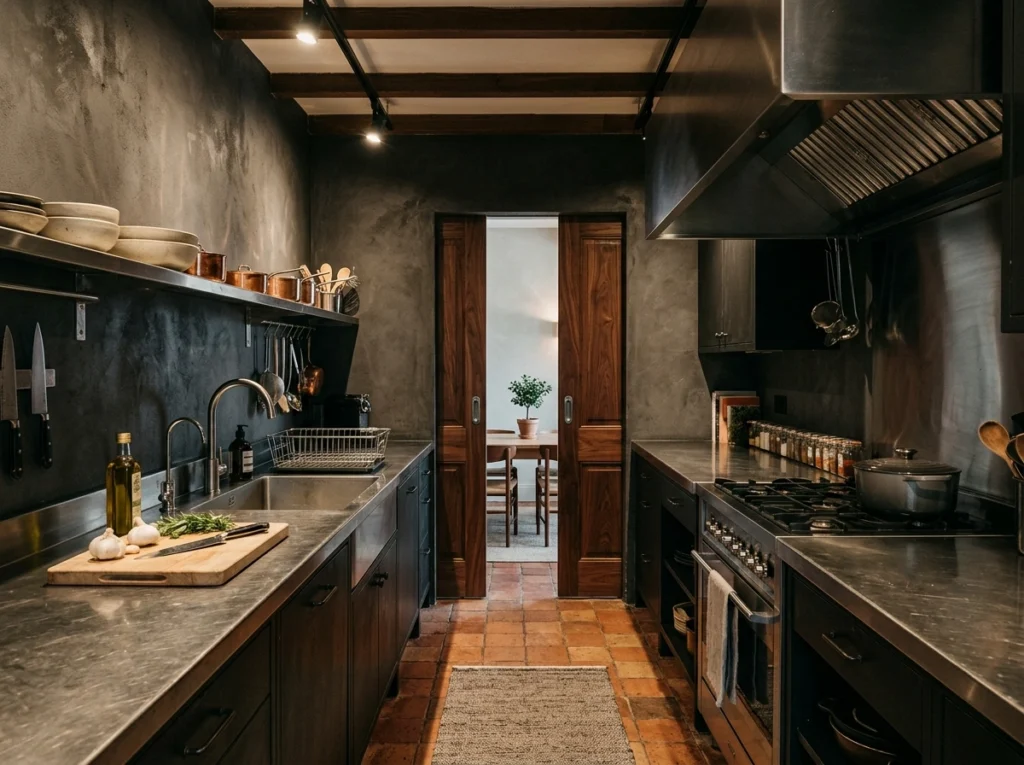
If you take your cooking seriously, a parallel double-galley kitchen offers the highly efficient, professional feel of a commercial workspace. Textured charcoal plaster walls, warm terracotta floor tiles, and clean stainless steel countertops create an industrial yet incredibly cozy culinary sanctuary. Having two full runs of deep countertops makes you feel organized, focused, and completely in control of your workspace, with plenty of room for specialized tools. It is a fantastic layout for passionate home cooks who want a dedicated, high-performance cooking zone that can be closed off when needed.
To make this double-sided layout work without feeling like a dark, narrow hallway, keep one side of the galley slightly lower in height or completely free of heavy upper cabinets. Use sliding pocket doors at both ends of the kitchen so you can close off the messy prep areas when you sit down to dine with guests in the adjoining room. Keep your stove and main prep sink on one wall run, and place your refrigerator, dishwasher, and heavy pantry storage on the opposite wall. This smart division of labor prevents you from constantly crossing paths with hot pans and open appliances.
12. The Single-Wall Kitchen with a Floating Butcher Block
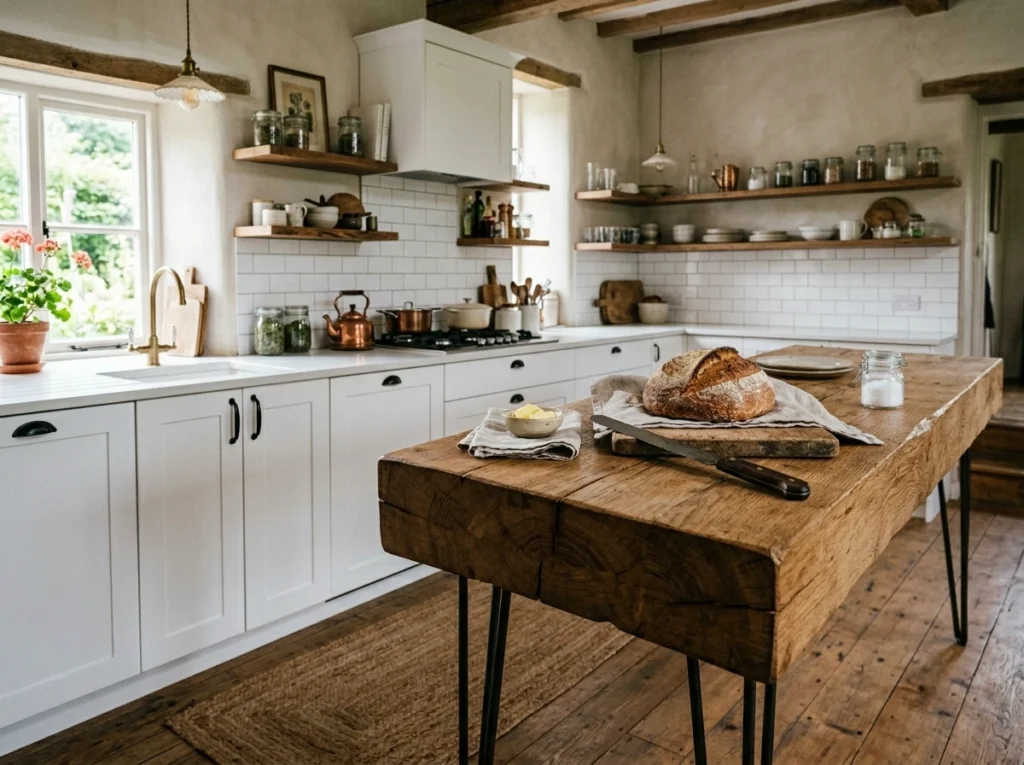
There is a beautiful, creative energy to a single-wall kitchen anchored by a gorgeous, heavy-duty wooden butcher block hanging from the ceiling or secured to the floor on thin metal legs. The contrast between sleek, modern white kitchen cabinets and a thick, weathered slab of natural wood feels grounded, textured, and deeply artistic. This layout encourages you to slow down, slice a fresh loaf of sourdough, and enjoy the simple, tactile process of preparing a meal. It is a wonderful setup for visual creatives who appreciate natural materials and open space.
This layout works exceptionally well if you love the idea of a central island but do not have the physical clearance for a bulky, permanent built-in cabinet unit. By choosing a floating block with open metal legs, light and air can pass underneath, keeping your floor area looking spacious, open, and easy to clean. If you are on a tight budget, look for vintage workbenches or industrial prep tables at local flea markets that you can sand down and finish with food-safe oil. Keep the block positioned parallel to your single-wall counter, leaving at least 36 inches of walkway space on all sides.
13. The L-Shape with Open Floating Corner Shelving
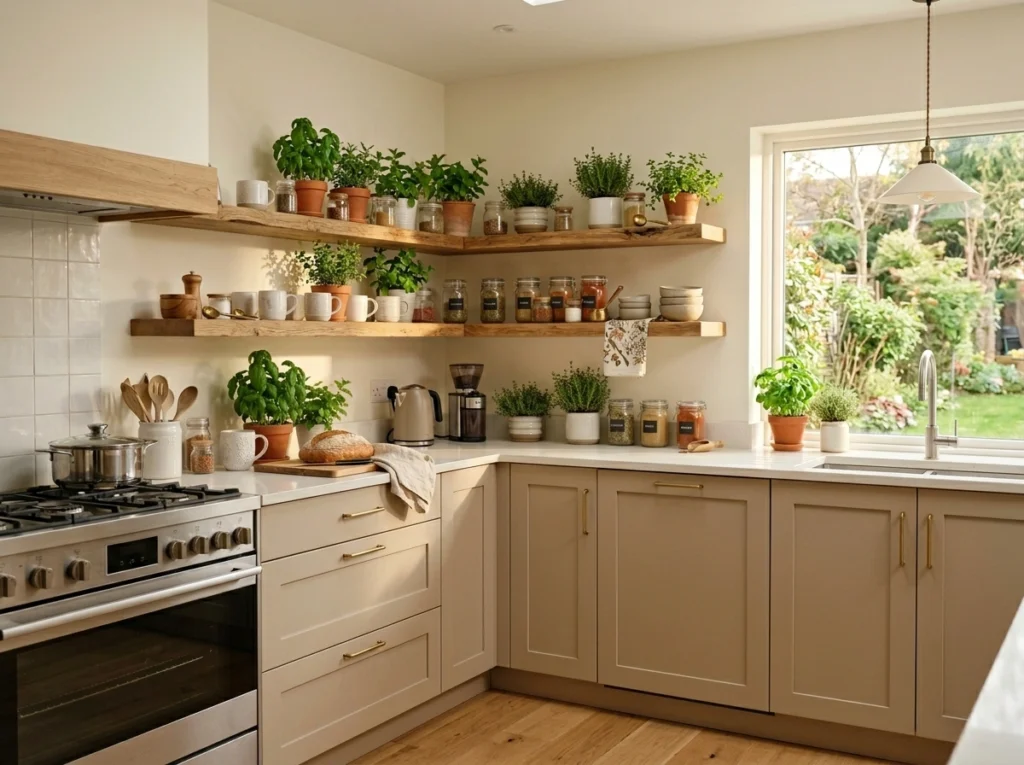
Corner cabinets in small kitchens are often dark, awkward, and frustrating to reach into, but replacing them with floating wood shelves completely changes the energy of the room. The corner transitions from an annoying design problem into a bright, sculptural display area where leafy green plants, white ceramic mugs, and spice jars bask in natural light. It feels fresh, intentional, and deeply comforting, bringing a modern touch to a traditional L-shaped layout. It is perfect for homeowners who want their kitchens to feel soft, artistic, and completely free of dark, dead zones.
A lot of people overlook corner shelving because they fear losing valuable storage space, but it actually keeps your kitchen far more organized by forcing you to curate your items. Use sturdy, low-profile iron brackets anchored directly into your wall studs to ensure the wood shelves can safely support the weight of heavy ceramic plates. Pair this open look with simple shaker-style lower cabinets in a warm taupe or soft beige to keep the kitchen grounded and calm. Keep your daily coffee station directly beneath these shelves for an intuitive, easy morning routine.
14. The Tiny U-Shape with Integrated Flush-Fit Appliances
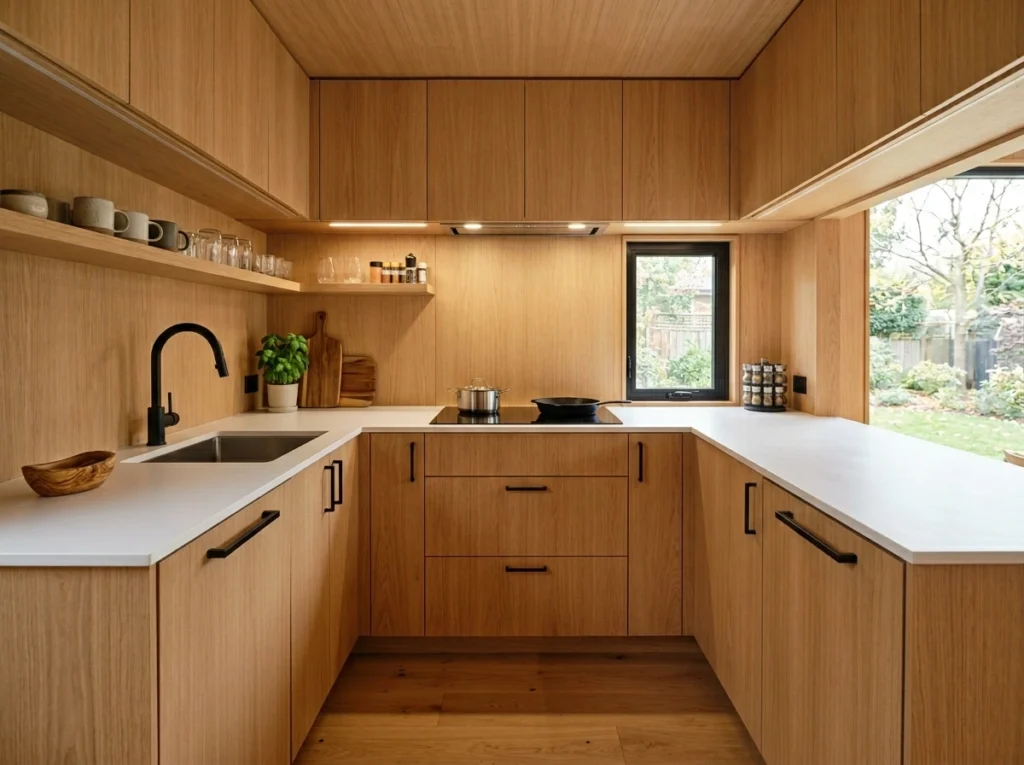
Walking into a perfectly tailored, hyper-efficient U-shaped kitchen feels like entering a cozy boat cabin where every single square inch is designed with absolute precision. Light oak wood paneling, seamless solid-surface countertops, and flush-integrated appliances create a clean, unbroken visual line that feels remarkably calm and uncluttered. It is an incredibly satisfying and comfortable space to work in, as everything you need to wash, chop, and cook is just a quick, easy pivot away. It is the ultimate layout for small-scale luxury and high-performance cooking in compact urban homes.
To keep a tiny U-shaped layout from feeling claustrophobic, it is vital to keep your appliance fronts matching your cabinetry exactly. Paneled dishwashers and integrated under-counter refrigerators keep the visual landscape simple, clean, and continuous. Avoid using dark paint colors on the walls; instead, stick to reflective gloss backsplash tiles or light plaster finishes to bounce natural light around your compact workspace. Choose a recessed induction cooktop that sits completely flush with your countertop to gain extra prep space when you are not actively cooking.
15. The Wrap-Around Window Sill Countertop Layout
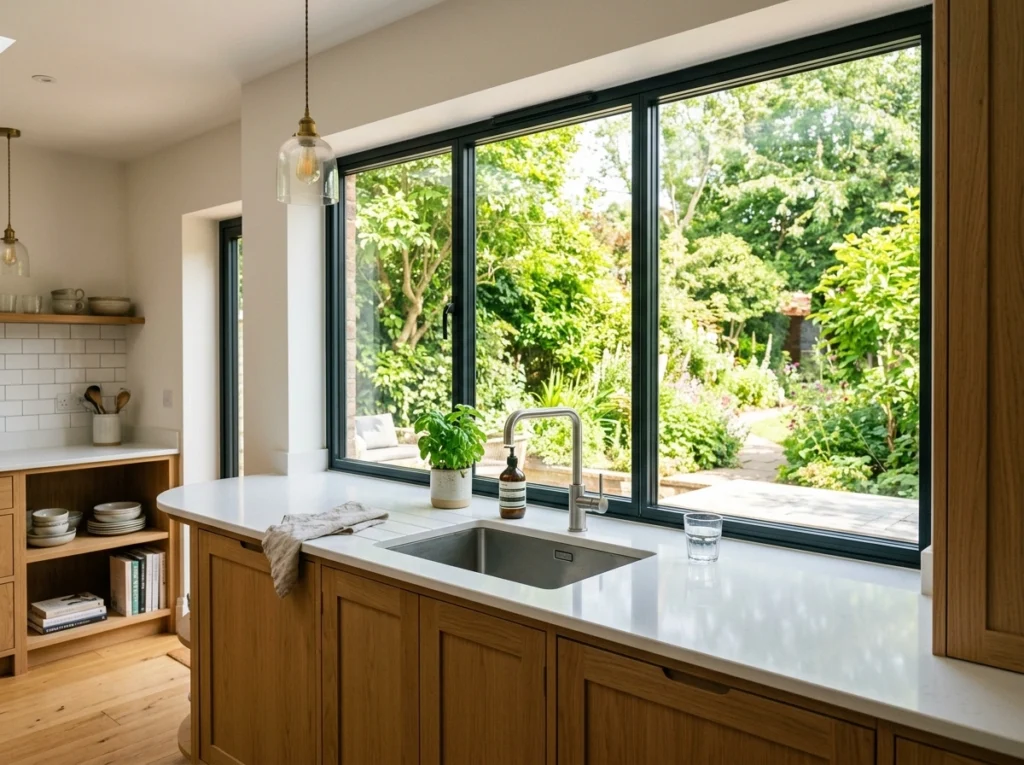
Imagine preparing dinner while looking out directly over a beautiful garden or a bustling street, with soft natural light flooding your entire workspace. This layout runs the countertop directly into your window frame, creating a wide, seamless surface that feels beautifully connected to the outdoors. The warmth of the sun, the view of the changing seasons, and the breezy feel of an open window make this small kitchen feel incredibly expansive, joyful, and bright. It is a stunning layout for anyone who wants to bring a sense of nature and light into their daily home routines.
In my experience, the biggest challenge with this layout is coordinating the physical height of your countertop with the bottom of your window frame. I always recommend consulting with a local carpenter to adjust your window trim so your stone or wood countertop can slide flush beneath the glass panes. This completely eliminates the awkward, hard-to-clean gap that usually exists behind a standard sink, creating a gorgeous and highly practical workspace. Keep your sink centered under the window, and use a low-profile faucet that will not block the view or prevent the window from swinging open.
Designing for Comfort Over Perfection
At the end of the day, the most beautiful kitchen is not the one with the most expensive marble or the largest square footage; it is the one that makes you feel comfortable, creative, and at ease in your own home. True style does not require an unlimited budget or a massive house—it simply requires a layout that works for your unique life. If your current kitchen is feeling cramped and chaotic, you do not have to tackle a massive, expensive renovation all at once. I always recommend starting with just one or two small, manageable ideas first, like adding a rolling prep cart or swapping out a single dark cabinet for an open wooden shelf, to see how much your daily routine improves.
By prioritizing smart zoning, natural materials, and open walkways, you can easily create one of these 15 small kitchen layout ideas that work in your own space. Focus on what brings you joy in your daily routine, whether that is a dedicated coffee corner or a clear view out your window, and let your kitchen’s layout grow naturally from there.
Which of these small kitchen layout ideas would actually work best in your home first? I would genuinely love to know!
Frequently Asked Questions
How do I choose the best layout for a small kitchen?
Start by analyzing how you naturally cook and move through the space. If you cook alone, a single-wall layout with a rolling cart offers great flexibility, whereas a galley layout is best if you want highly efficient, professional prep zones.
Can I fit an island in a very small kitchen?
Yes, but swap a permanent built-in cabinet island for a mobile wooden prep cart or a floating butcher block table with open legs. This provides the extra prep space of an island while allowing light to pass underneath and letting you move it out of the way when needed.
What colors make a tiny kitchen feel larger?
Stick to a high-contrast palette with deep, grounding colors on your lower cabinets and bright, light-reflective whites, creams, or warm taupes on your upper walls. This visual weight shift draws the eye upward and makes narrow rooms feel much wider and taller.
Is open shelving practical for a small kitchen?
Open shelving is highly practical if you stick to a simple color palette and display your most-used daily items like plates, mugs, and bowls. It keeps your dishes within easy reach while completely opening up the visual space that heavy upper cabinets normally block.
How can I maximize storage in an L-shaped layout?
Avoid dark, awkward corner cabinets by installing floating corner shelves or a rotating Susan tray inside the base cabinet. Extending your cabinets all the way to the ceiling and utilizing a built-in banquette bench with hidden under-seat drawers will also maximize your storage capacity.