We’ve all seen those stunning, pristine kitchen photos on social media where there isn’t a single stray toaster, bread bag, or coffee mug in sight. But let’s be completely honest for a second: real life is messy. Between school mornings, hosting family dinners, and trying to keep up with meal prep, our actual countertops end up covered in clutter. This is exactly why a functional butler’s pantry has become the ultimate dream addition. Getting a functional butler’s pantry ideas for a luxury kitchen setup isn’t just about showing off fancy cabinetry; it’s about creating a secondary, hard-working zone that keeps the chaos of cooking out of your main living space, giving you your sanity back.
In my experience, the biggest mistake people make is treating this secondary pantry as an afterthought or just a closet for extra cereal boxes. A truly luxury kitchen setup uses this space to bridge the gap between hard utility and beautiful, welcoming design. You don’t need a massive historical estate to make this work, either. By focusing on smart lighting, hard-working storage, and comfortable workflows, you can design a space that makes your daily routines feel incredibly smooth and organized. Let’s dive into fifteen practical, gorgeous ideas you can bring to your own home to make your kitchen function on a whole new level.
1. The Morning Coffee Station and Espresso Bar
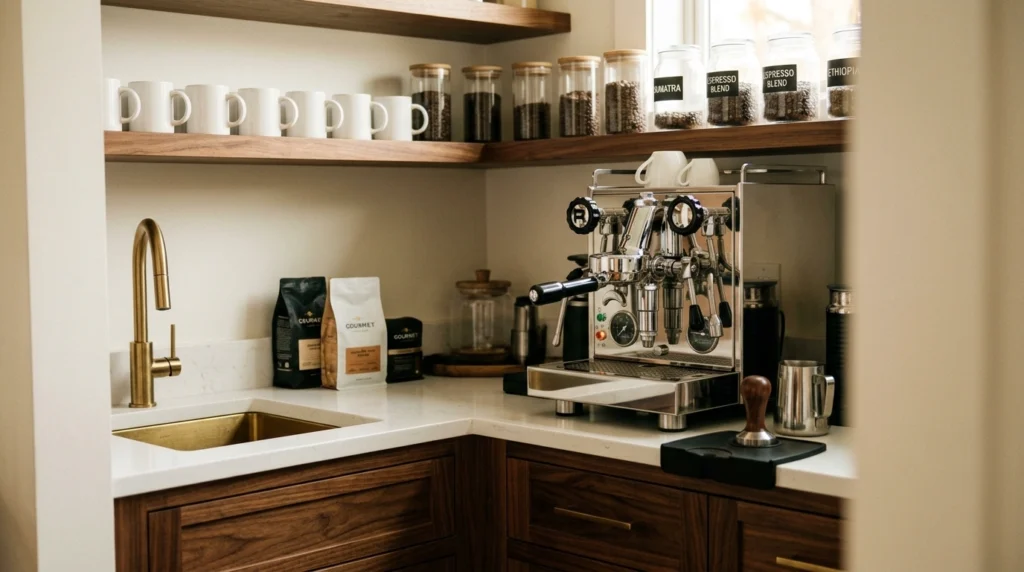
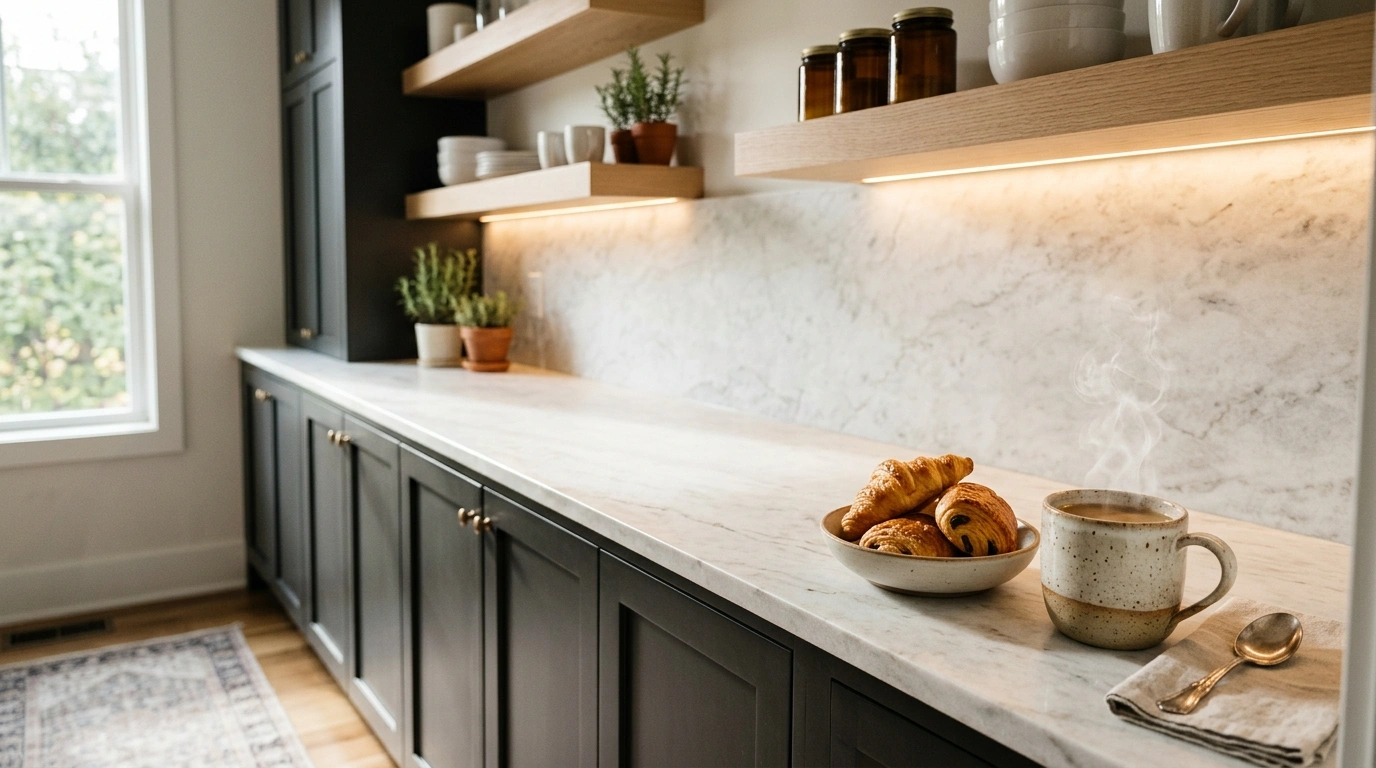
What I personally love about this look is how it completely changes the energy of your mornings. Instead of stumbling around the main kitchen trying to find mugs while someone else is making breakfast, this setup creates a dedicated, cozy corner where you can grind beans and steam milk in peace. Think dark, rich wood tones, a beautiful small sink, and deep drawers directly beneath the counter to keep your favorite mugs, coffee pods, and tea tins out of sight but right at your fingertips. It feels like stepping into a warm, quiet local coffee shop before the rest of the world wakes up.
To pull this off without spending a fortune, I always recommend starting with a small run of cabinets (even a 4-foot stretch is enough) and running your countertop material all the way up the wall as a backsplash. If a plumbing line is too expensive to install for a sink, don’t sweat it—just focus on having enough heavy-duty electrical outlets to run your espresso machine and grinder simultaneously. A common mistake to avoid is forgetting to measure the height of your coffee maker with the top lid open; make sure there is plenty of clearance under any floating shelves so you aren’t constantly pulling the machine forward just to refill the water reservoir.
2. Hidden Pocket Doors That Tuck Completely Away
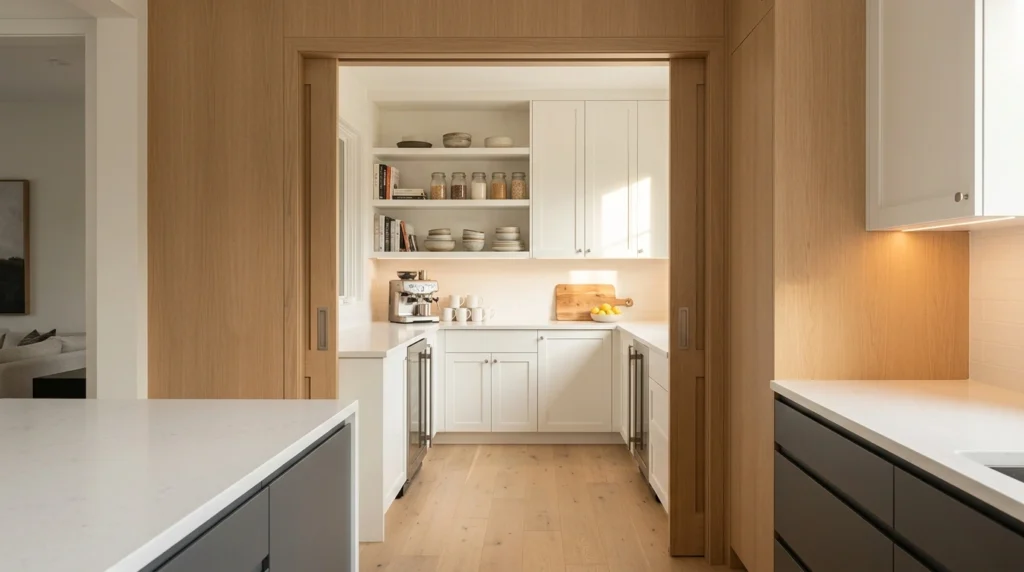
A lot of people overlook this detail, but it changes the entire flow of your kitchen when you are hosting. Pocket doors that slide back into the wall or cabinet frame allow you to keep your butler’s pantry completely open and accessible when you’re busy prepping dinner, and then instantly hide the dirty dishes and messy counters behind beautiful panels when guests arrive. It creates a seamless transition that makes your main kitchen feel instantly tidy and put together. The natural oak or painted wood door panels match your main cabinets, so when they are closed, the pantry looks like a beautiful, flush accent wall.
Recreating this requires working closely with a cabinet maker or a skilled contractor, as pocket-door hardware needs to be incredibly sturdy to avoid jumping off the tracks over time. If you are on a tighter budget, you can get a very similar look using classic bi-fold doors that swing open and fold flat against the adjacent walls. I highly recommend spending a little extra on soft-close mechanisms here because it keeps the doors quiet and prevents them from slamming. The biggest mistake to avoid is putting a light switch inside the pantry in a spot where the pocket door covers it when opened—always map out your electrical layout carefully beforehand.
3. Moody Charcoal Cabinets with Warm Brass Details
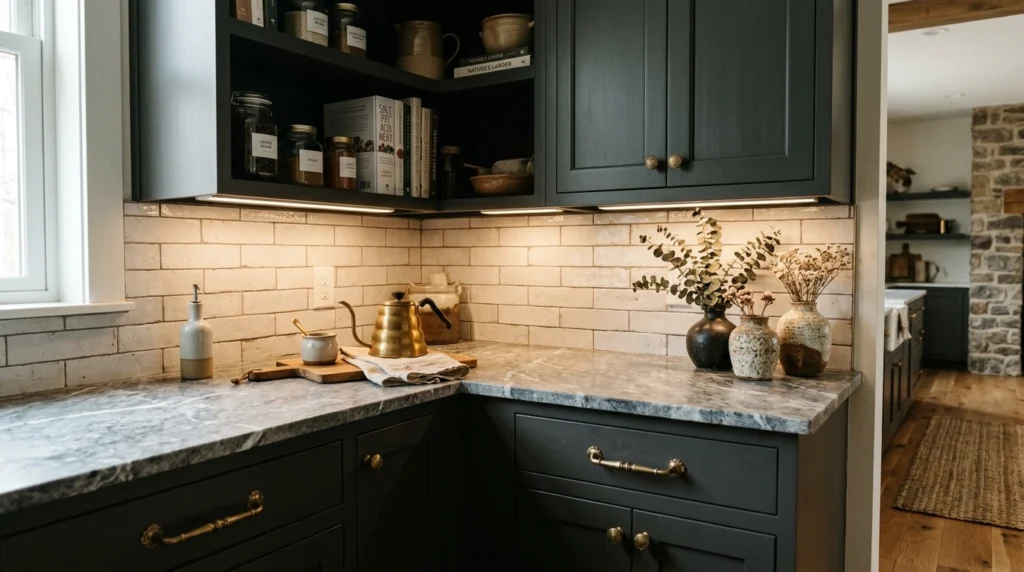
There is something so incredibly satisfying about stepping from a bright, airy main kitchen into a slightly darker, intimate pantry space. Painting your pantry cabinets a rich charcoal grey, deep navy, or forest green instantly makes the space feel expensive and cozy. The deep paint tones ground the small room, while brushed brass cabinet pulls and matching light fixtures catch the light beautifully, preventing the space from feeling dark or dingy. It’s a gorgeous contrast that turns a utility space into an architectural highlight.
When you go with dark paint, lighting becomes your absolute best friend to keep the space functional. Use under-cabinet LED strip lights to wash the countertops with bright, warm light so you can actually see what you’re doing. If buying custom brass hardware isn’t in your budget, look for high-quality solid brass pulls online from smaller hardware boutiques, which are often half the price of showroom brands. A classic mistake with dark cabinets is using a flat paint finish that shows every single fingerprint and water spot; instead, go for a durable satin or semi-gloss paint that you can easily wipe down.
4. Open-Shelf Cookbook Library and Baking Nook
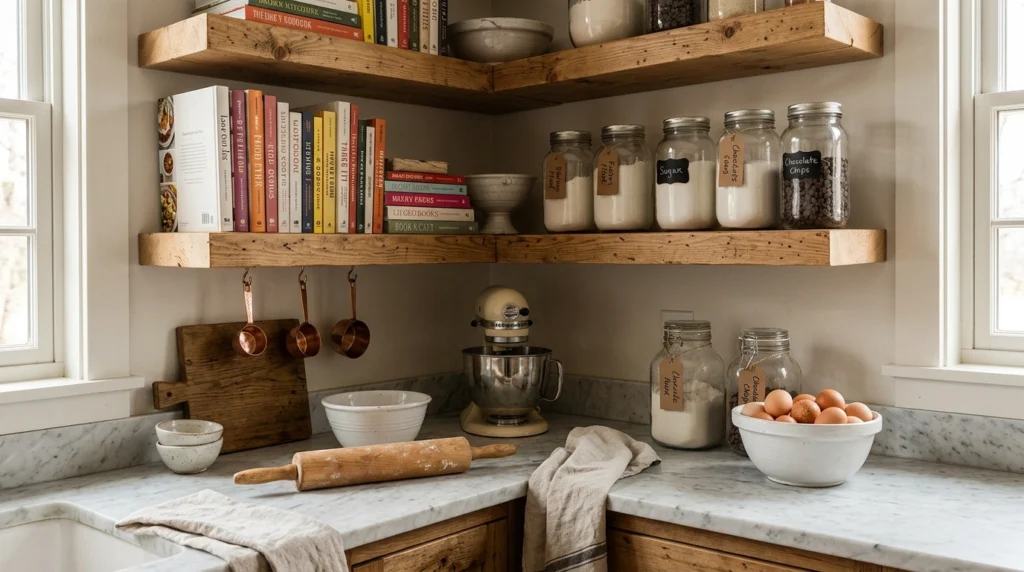
If you love baking, this setup is an absolute dream come true. Imagine thick, rough-sawn floating wood shelves loaded with colorful cookbooks, glass jars filled with flour and sugar, and a wide, uncluttered countertop dedicated entirely to rolling out dough or cooling fresh cookies. This design embraces the warmth and texture of a working kitchen, showing off your favorite baking tools rather than hiding them behind closed doors. It feels incredibly welcoming, creative, and practical all at the same time.
To build this beautifully, make sure your floating shelves are anchored directly into wall studs so they can safely support the heavy weight of dozens of hardback cookbooks. Using simple clear glass jars for your dry goods is a very budget-friendly way to get that organized look while making it easy to see when you are running low on pantry staples. In my experience, the biggest mistake people make here is using cheap shelf brackets that sag under pressure; spend a little extra on heavy-duty hidden steel brackets. For the countertops, a durable quartz that looks like natural stone gives you the beauty of marble without the stress of staining it with lemon juice or vanilla extract.
5. The Integrated Wine Fridge and Wet Bar Setup
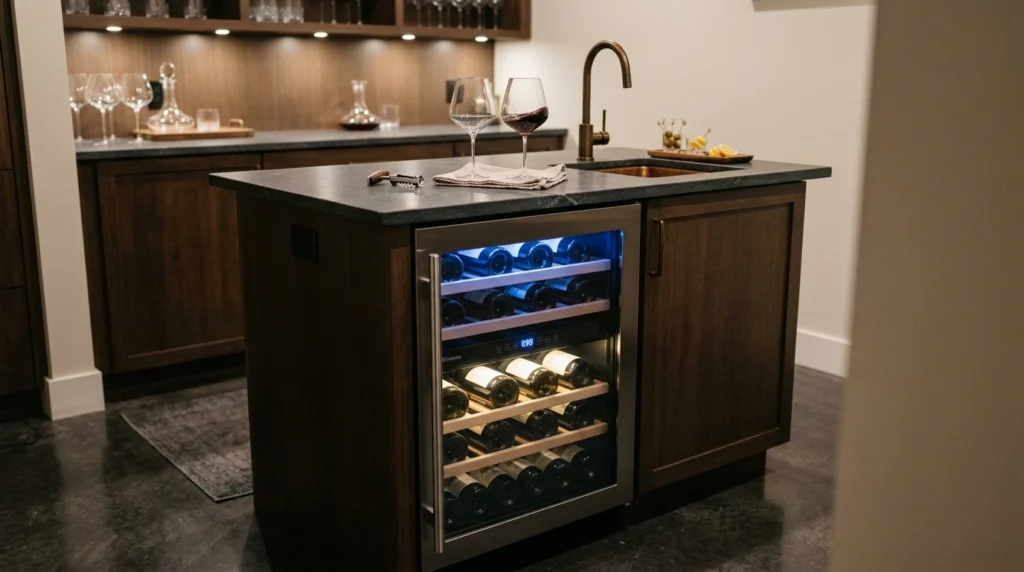
This works especially well if you want to keep your guests out of the main cooking zone while you finish up dinner prep. By tucking a quiet, dual-zone wine refrigerator under the counter and adding a small sink with a gooseneck faucet, you turn your butler’s pantry into a fully functioning beverage station. The shelves above can hold your glassware, cocktail shakers, and a small cutting board for slicing lemons and limes. It creates a fun, relaxed gathering spot that makes hosting feel smooth and incredibly casual.
You don’t need a massive commercial wine cooler to make this feel high-end; a high-quality 15-inch or 24-inch under-counter beverage fridge fits perfectly into standard cabinet layouts. To keep costs down, you can skip the wet bar sink and simply use the countertop for bottle prep and glassware storage. If you do go with a sink, choose a dark granite composite or copper prep sink to add some rich texture to the counter. Avoid placing your beverage center right next to a heating vent or dishwasher, as the ambient heat can force the fridge’s compressor to work twice as hard, raising your energy bill and shortening its lifespan.
6. Reclaimed Wood Floating Shelves with Beadboard Backing
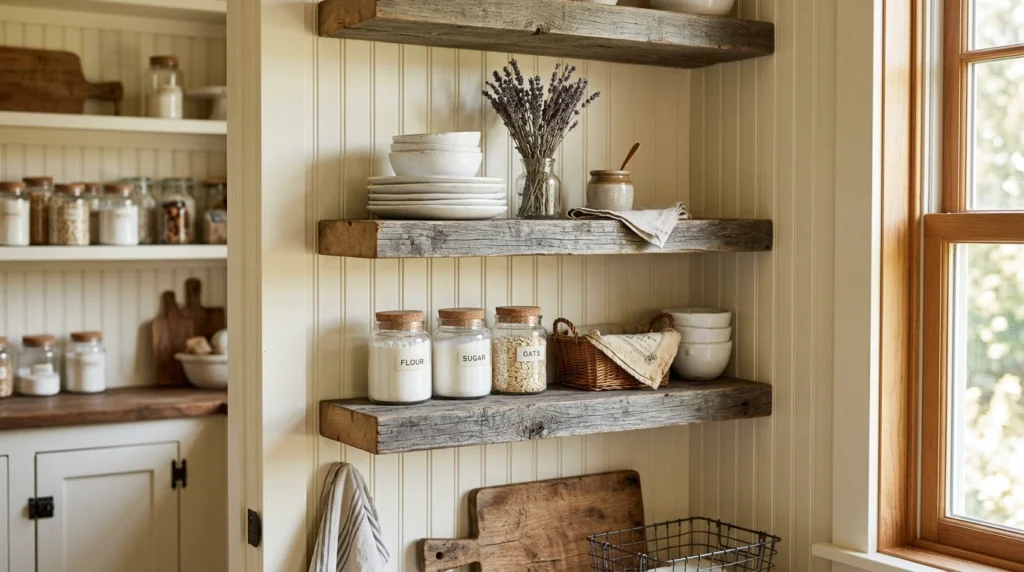
This look is perfect for anyone who wants their kitchen to feel grounded, rustic, and full of natural character. Painting the back wall of your pantry with a classic beadboard paneling in a soft, warm cream tone creates a lovely, textured backdrop for thick shelves made from reclaimed barn wood or thick pine. The natural cracks and grain of the wood give the pantry a sense of history and warmth, making it feel less like a clinical storage room and more like a charming cottage larder. It’s an incredibly cozy way to display everyday plates, bowls, and mugs.
You can easily recreate this look on a budget by purchasing tongue-and-groove beadboard panels from a local home improvement store and painting them yourself. For the shelves, look for local architectural salvage yards or even check online classifieds for old wood joists that you can sand down and seal with a matte, food-safe polyurethane. The biggest mistake to avoid here is leaving the wood completely unsealed; raw wood will quickly absorb grease, water, and food stains, making it impossible to clean. Always sand the wood smooth to prevent splinters when reaching for your morning coffee mugs.
7. Classic Reeded Glass Cabinet Doors
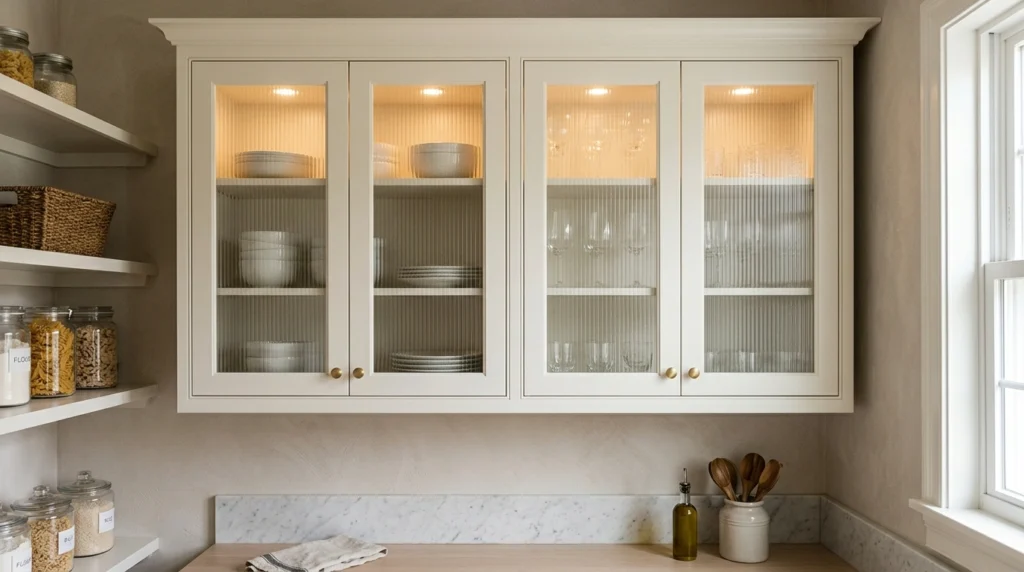
If you love the airy feel of open shelving but absolutely hate the idea of constantly dusting your plates and glassware, reeded or fluted glass is your saving grace. The textured ridges in the glass allow light to pass through, keeping the small pantry space feeling bright and spacious, while beautifully blurring the shapes of whatever is stored inside. It means your mismatched coffee mugs and messy stacks of plastic storage containers can sit on the shelves without making the entire pantry look cluttered from the outside.
To bring this into your home, you can order custom reeded glass inserts to fit into standard cabinet doors with open frames, which is much more affordable than buying entirely custom cabinets. If you are on an extremely tight budget, you can buy high-quality fluted window film and apply it directly to clear glass cabinet doors for an identical look at a fraction of the cost. I always recommend installing soft warm puck lights inside these cabinets because the light catches the ridges of the glass and glows beautifully in the evening. Just make sure to wipe down the glass with a lint-free cloth to keep the textured side free of dust.
8. The Heavy-Duty Utility Sink and Prep Zone
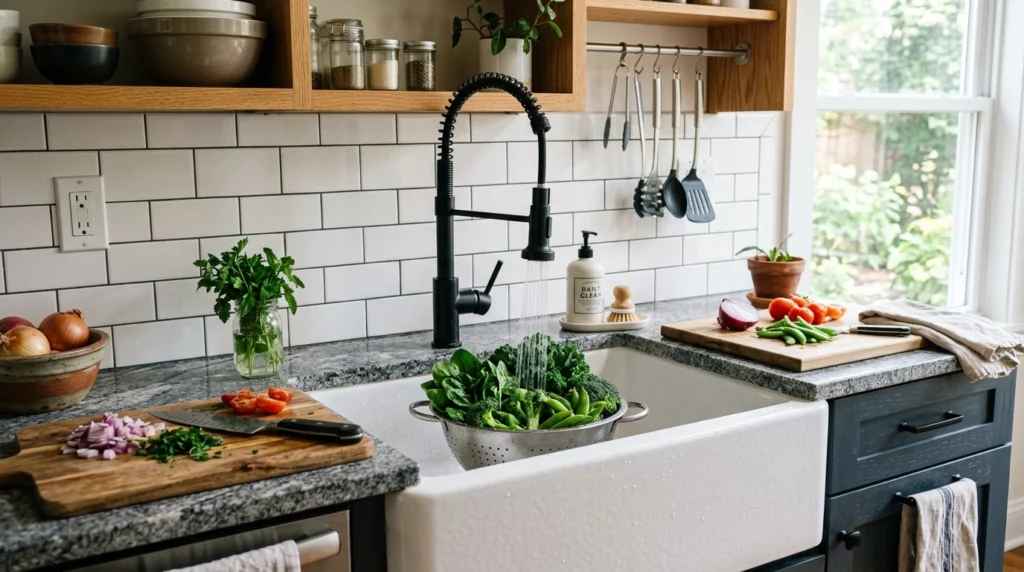
For the serious home cook, this setup is all about pure, uninterrupted utility. By installing a deep, single-basin apron-front sink and a powerful pull-down faucet, this pantry becomes the ultimate staging area for messy prep work. You can wash bulky pots, rinse muddy vegetables straight from the garden, or soak dirty baking pans completely out of sight of your main kitchen island. It takes the pressure off your main sink and lets you enjoy your meals without looking at a mountain of dirty dishes.
When designing a heavy-duty prep zone, durability is key. I highly recommend choosing a stainless steel or fireclay farmhouse sink because they can handle heavy cast iron pans without scratching or chipping easily. Pair this with a durable countertop like granite or solid surface that can handle frequent scrubbing and water spills without warping. A common mistake here is neglecting the backsplash area; water will inevitably splash when you’re washing large stockpots, so make sure to run a waterproof tile or stone backsplash at least 18 inches up the wall behind the sink to protect your drywall from mold.
9. Hidden Floor-to-Ceiling Cabinet Pull-Outs
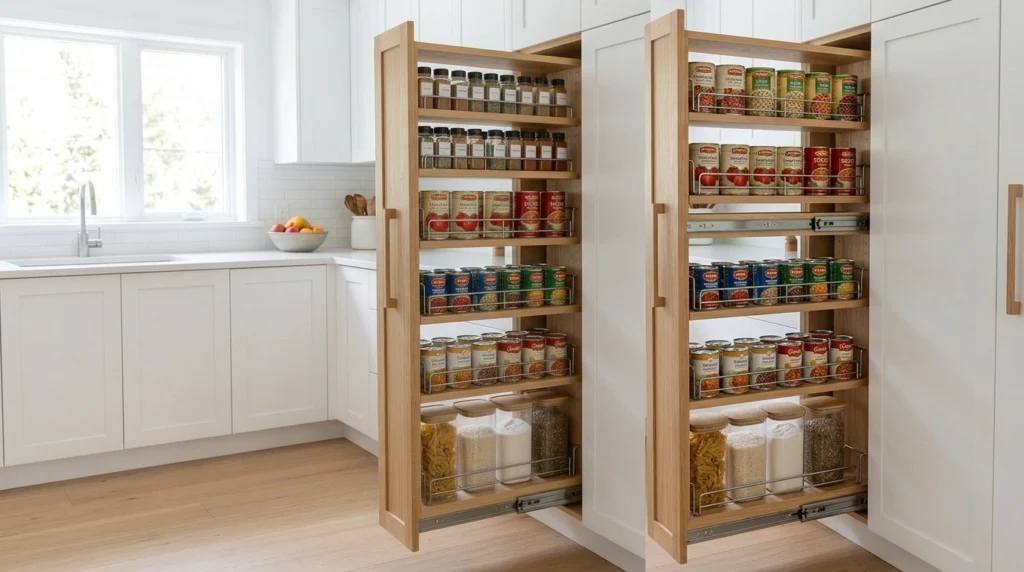
This works especially well if your pantry is more of a narrow hallway than a wide walk-in room. Instead of deep, dark shelves where cans of beans and jars of pasta sauce go to die in the very back, floor-to-ceiling pull-out larder units bring everything right out into the light. With a simple tug, the entire pantry glides forward on heavy-duty drawer slides, exposing wire or wooden baskets on both sides. It makes organizing your dry goods incredibly easy because you can see every single item instantly.
While custom pull-out mechanisms can be pricey, they are worth every single penny in terms of daily convenience and maximizing storage density. For a budget-friendly alternative, you can install individual pull-out wooden drawers inside standard deep pantry cabinets, which gives you the same easy access without requiring a massive, single pull-out structure. Always pay attention to the weight ratings on the drawer slides you purchase; you want hardware rated for at least 100 to 150 pounds so the drawers still glide smoothly when fully loaded with heavy cans and glass jars.
10. Classic English Larder with Brass Wire Mesh Inserts
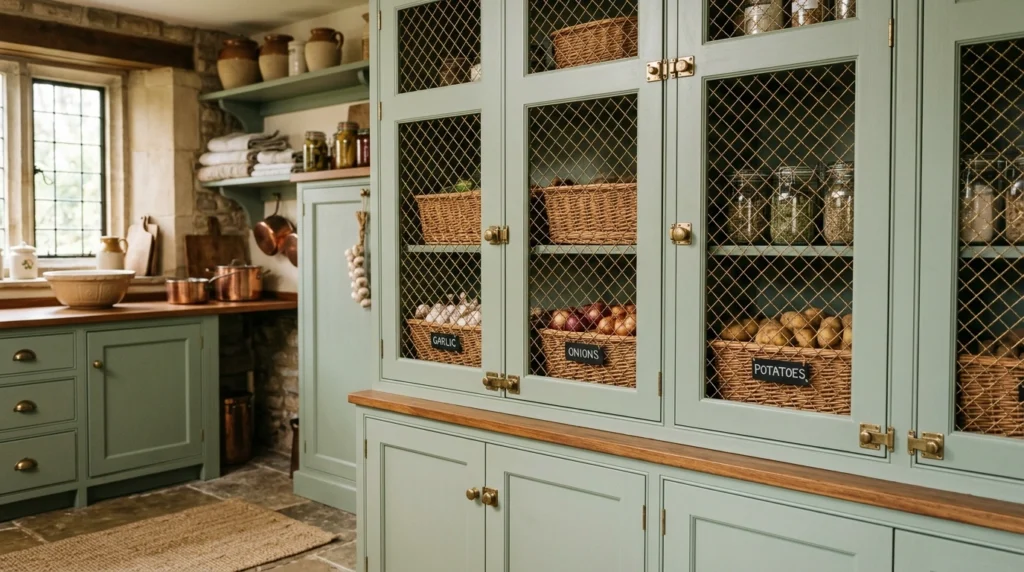
There is a reason this traditional look has been popular for centuries—it is incredibly charming and highly practical. Instead of glass or solid wood, the upper cabinet doors feature beautiful brass wire mesh inserts. This design allows air to circulate freely throughout the cabinets, which is ideal for storing dry goods, onions, potatoes, and garlic. Visually, the delicate brass mesh adds a gorgeous, soft texture that feels instantly warm, cozy, and nostalgic, reminiscent of an old English country manor.
To recreate this style, you can buy rolls of decorative wire mesh online in brass, bronze, or copper finishes. You simply cut the mesh to size and staple it securely to the inside frame of an open cabinet door. To keep the look organized, use matching ceramic bowls or woven baskets inside the cabinets to hold loose items like onions and potatoes. The biggest mistake people make with wire mesh is choosing a weave that is too loose, which allows too much of the cabinet’s messy interior to show through; look for a tight, double-crimped diagonal weave for the perfect balance of airflow and concealment.
11. Warm Under-Shelf LED Task Lighting
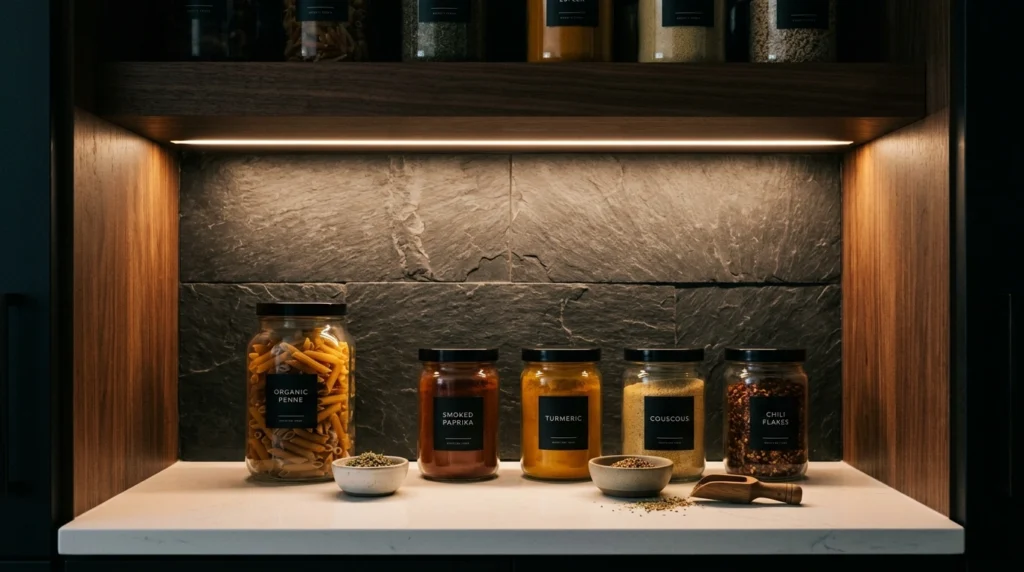
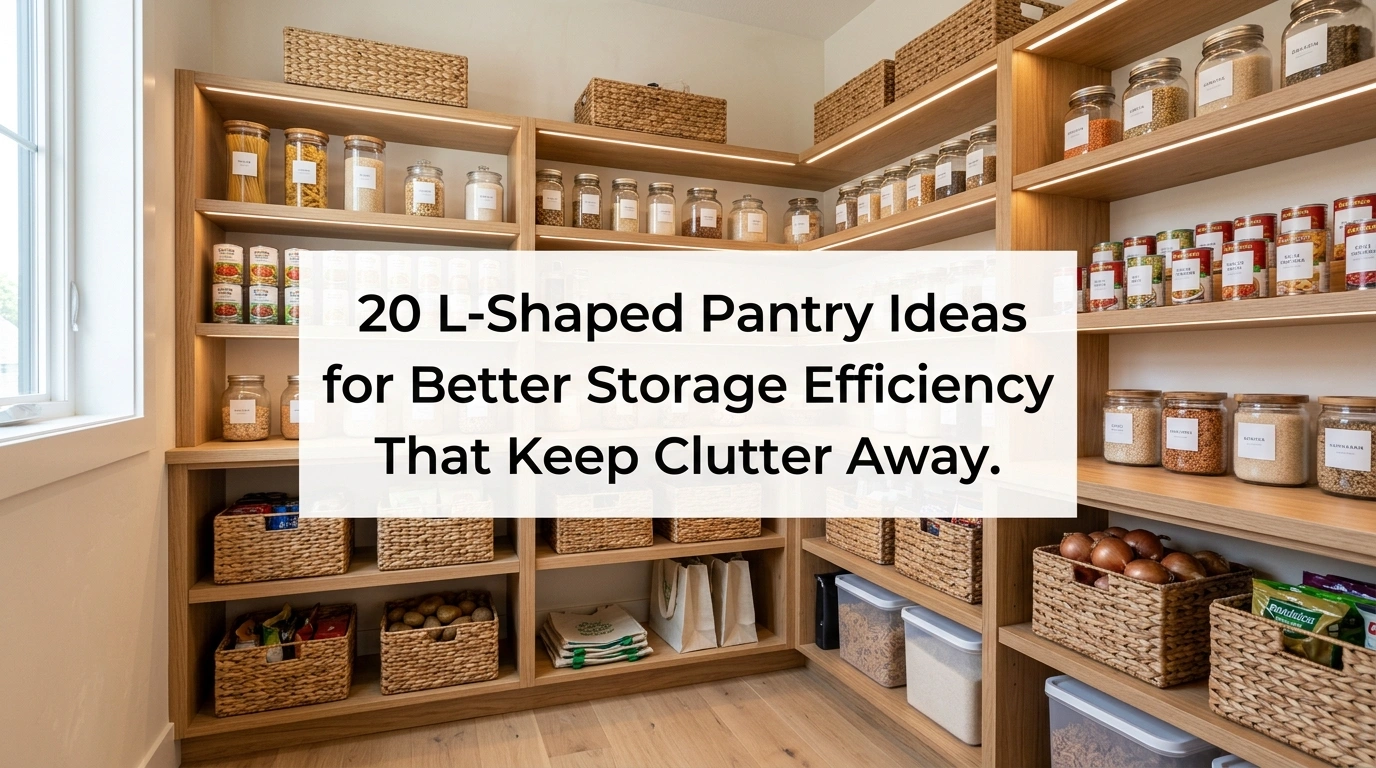
Lighting is the secret ingredient that makes any small space feel luxurious, safe, and clean. Running thin, low-voltage LED strip lights along the underside of every single shelf completely transforms a dark, cramped pantry into a glowing, high-end showcase. It eliminates all shadows on your countertops, making it incredibly easy to read recipes, measure out ingredients, or find that one specific spice bottle at the back of the shelf. It also creates a soft, beautiful nightlight for the kitchen when the main lights are turned off.
For a clean and polished look, buy LED aluminum channels with frosted diffusers. These channels sit flush inside a small groove routed into the bottom of your shelves, hiding the actual light strips from view so you only see the beautiful, even glow. If you are retrofitting an existing pantry and don’t want to deal with hardwiring electrical lines, you can find high-quality, rechargeable lithium-ion puck lights that mount with simple adhesive backing. Avoid cool-toned or blue LED lights at all costs; always choose “warm white” bulbs (around 2700K to 3000K) to keep your pantry feeling cozy, inviting, and natural.
12. Dramatic Slab Backsplash and Matching Counters
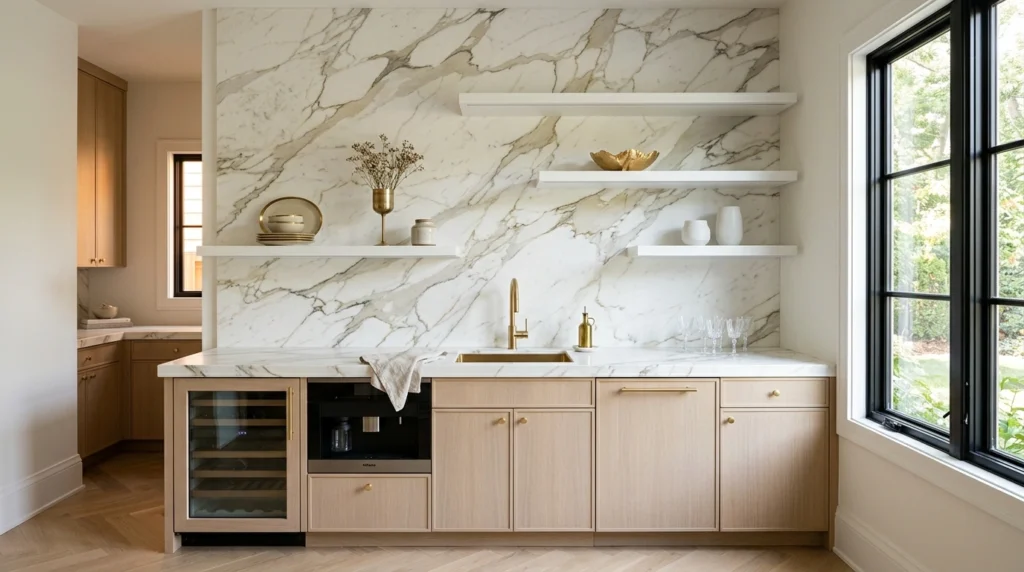
If you want to create a true showstopper moment in your home, run your countertop material—whether it’s a dramatic veined marble, a rich quartzite, or a beautiful quartz—all the way up the wall to the ceiling. Having a single, continuous sheet of stone behind your shelves creates an incredibly clean, seamless look that instantly feels high-end. The natural veins and patterns of the stone act as a beautiful piece of organic art, making the pantry feel like a carefully designed destination rather than just a storage closet.
Since a full slab backsplash can be quite expensive, you can save money by using a smaller, leftover piece (called a “remnant”) from your main kitchen countertop fabrication. Fabricators often have these smaller pieces sitting in their yards and will sell them at a deep discount, which is perfect for a smaller pantry footprint. The main mistake to watch out for is poor seam placement; if your wall is wide enough to require multiple pieces of stone, make sure to talk to your fabricator beforehand about how they will match the veining patterns so the seams look natural and clean.
13. A Dedicated Dual-Zone Kids’ Beverage and Snack Center
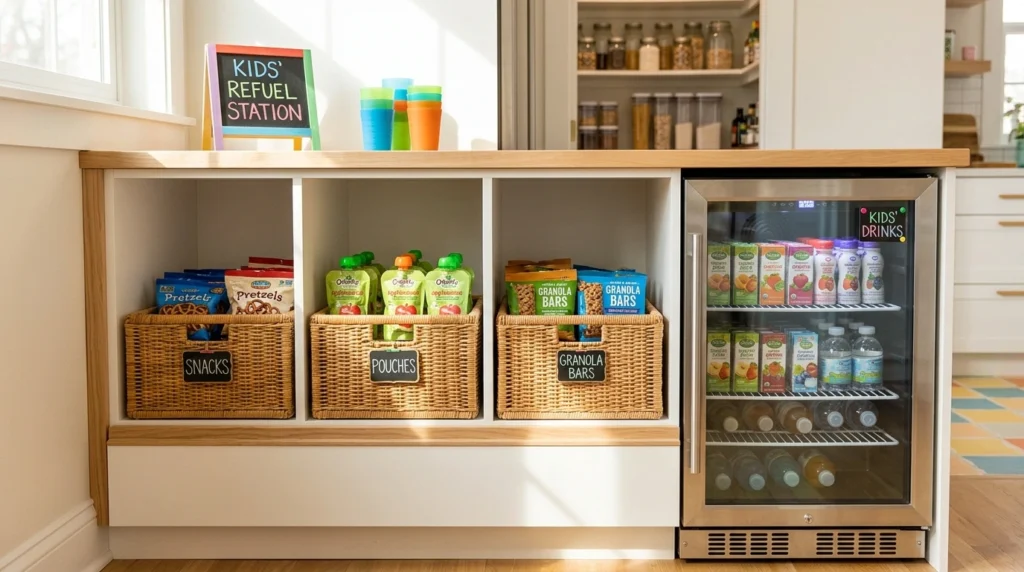
If you have kids or grandkids, you know that they are constantly searching for snacks and drinks, often cluttering up the main cooking area right when you’re trying to get dinner on the table. Setting up a dedicated kid-friendly zone in the butler’s pantry solves this beautifully. Keep a small under-counter beverage fridge stocked with juice boxes, milk, and water on the bottom shelf, and place low, pull-out wicker baskets filled with healthy snacks right at their eye level. It encourages independence while keeping the main kitchen calm and organized.
To set this up, choose sturdy, easy-to-clean storage containers that kids can handle without breaking. Woven plastic or wire baskets are fantastic because they are lightweight and won’t shatter if dropped. The biggest mistake to avoid is using heavy glass jars for kid-accessible snacks, which is a major safety hazard. I always recommend placing a small trash bin or recycling can directly next to this station so that snack wrappers and empty juice cartons go straight into the trash instead of ending up left on your clean countertops.
14. Deep Pull-Out Wicker Baskets for Organic Texture
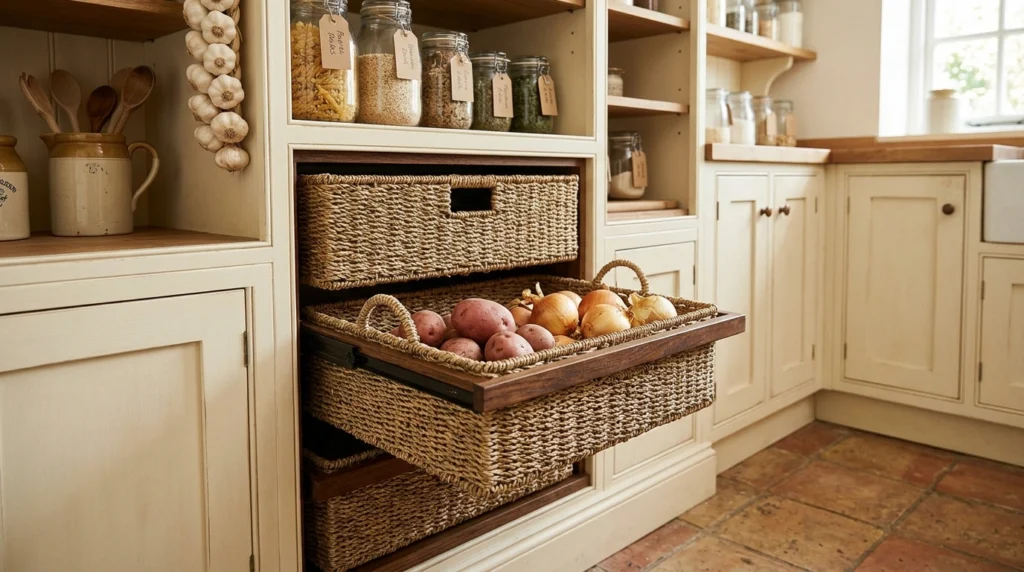
There is nothing quite like the warm, organic feel of woven natural materials to make a kitchen feel grounded and cozy. Replacing traditional wooden drawer fronts with deep, slide-out wicker or rattan baskets is an incredibly practical way to store bulky root vegetables like potatoes, onions, and squash. The woven gaps in the baskets allow fresh air to circulate, keeping your produce fresh for much longer, while adding a beautiful, soft, rustic texture that breaks up the hard lines of painted cabinetry.
You can easily recreate this look by purchasing sturdy, heavy-duty storage baskets that are designed to slide onto wooden runners or sit inside open cabinet cubbies. Look for baskets with built-in metal frames or thick woven handles so they can handle the weight of heavy potatoes without losing their shape over time. A common mistake is buying cheap, flimsy baskets that shed small pieces of wood or wicker every time you slide them open, creating a messy pile of dust on your pantry floor; spend a little extra on high-quality, tightly woven rattan or seagrass baskets.
15. The Hidden “Secret Passage” Walk-In Pantry
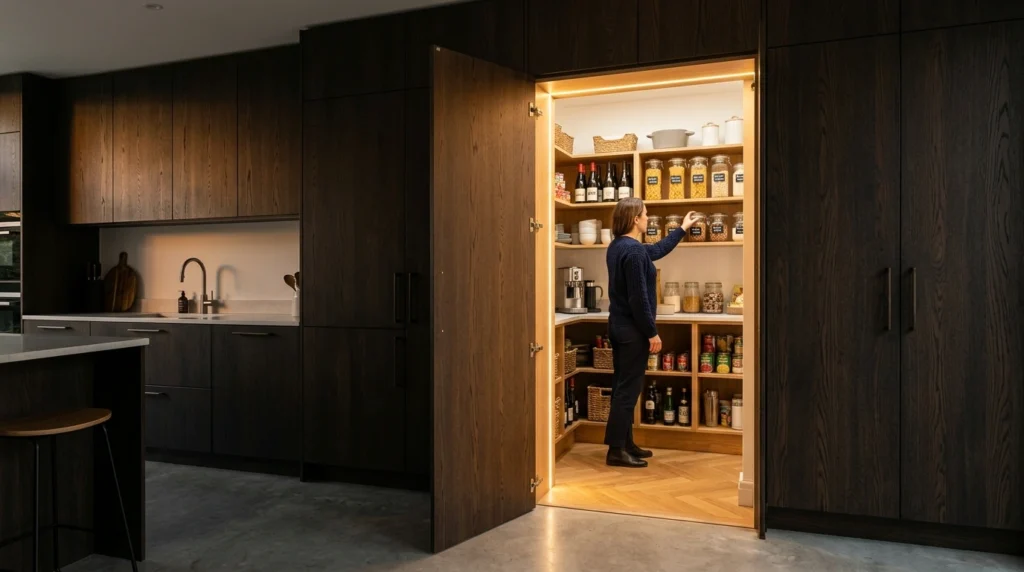
This is the ultimate luxury kitchen layout trick, and it is incredibly fun. Instead of a standard drywall door leading into your pantry, the entrance is completely camouflaged to look exactly like a tall run of kitchen cabinets. When you pull on what looks like a pantry cabinet handle, the entire cabinet door swings inward to reveal a secret, spacious walk-in butler’s pantry. It keeps the lines of your main kitchen completely clean, unbroken, and mysterious, while providing a massive, hidden workspace just steps away.
This setup requires precise planning and high-quality, heavy-duty pivot hinges that can support the weight of a full-sized cabinet door swinging open and closed multiple times a day. If you are building a new home or doing a major remodel, talk to your cabinet designer early in the process to ensure the cabinet run is engineered correctly to support the hidden doorway. The biggest mistake here is choosing cheap hardware that sags over time, causing the secret door to scrape against your kitchen floors and ruining the clean, seamless illusion.
Designing a Space That Works for Real Life
At the end of the day, creating a beautiful butler’s pantry isn’t about spending a fortune on luxury materials or making sure every single jar of pasta is perfectly labeled. It is about understanding how you and your family actually live, cook, and host, and then building a space that supports those daily routines. Whether you simply add a small, cozy coffee station to a spare corner of your kitchen or remodel your home to include a dramatic secret-passage walk-in prep zone, the goal is always the same: to make your home feel a little more organized, comfortable, and peaceful.
I always recommend starting with just one or two small, practical ideas—like adding warm LED lighting under your shelves or organizing your dry goods into simple glass jars—to see how much of a difference it makes in your daily life. Remember, your home should serve you, not the other way around.
Which of these butler’s pantry ideas would you actually use in your own kitchen first? I’d genuinely love to know in the comments below!
Frequently Asked Questions
What is the main difference between a butler’s pantry and a regular pantry?
A standard pantry is designed almost entirely for storing dry food and canned goods. A butler’s pantry, on the other hand, is a highly functional extension of your kitchen that includes countertops for food prep, cabinetry for storing dishware, and often appliances like prep sinks, wine coolers, or coffee stations.
How much space do I need to build a functional butler’s pantry?
You don’t need a massive room to make this work. A highly functional butler’s pantry can be created in a space as small as 4 feet wide by 5 feet deep. The key is maximizing vertical storage with tall shelving and keeping the countertops clear for actual prep work.
What is the most durable countertop material for a prep pantry?
For a hard-working prep pantry, I highly recommend quartz or high-quality granite. These materials are incredibly durable, scratch-resistant, and non-porous, meaning they won’t stain if you accidentally spill red wine, lemon juice, or coffee while prepping meals.
How do I keep an open-shelf pantry from looking cluttered and messy?
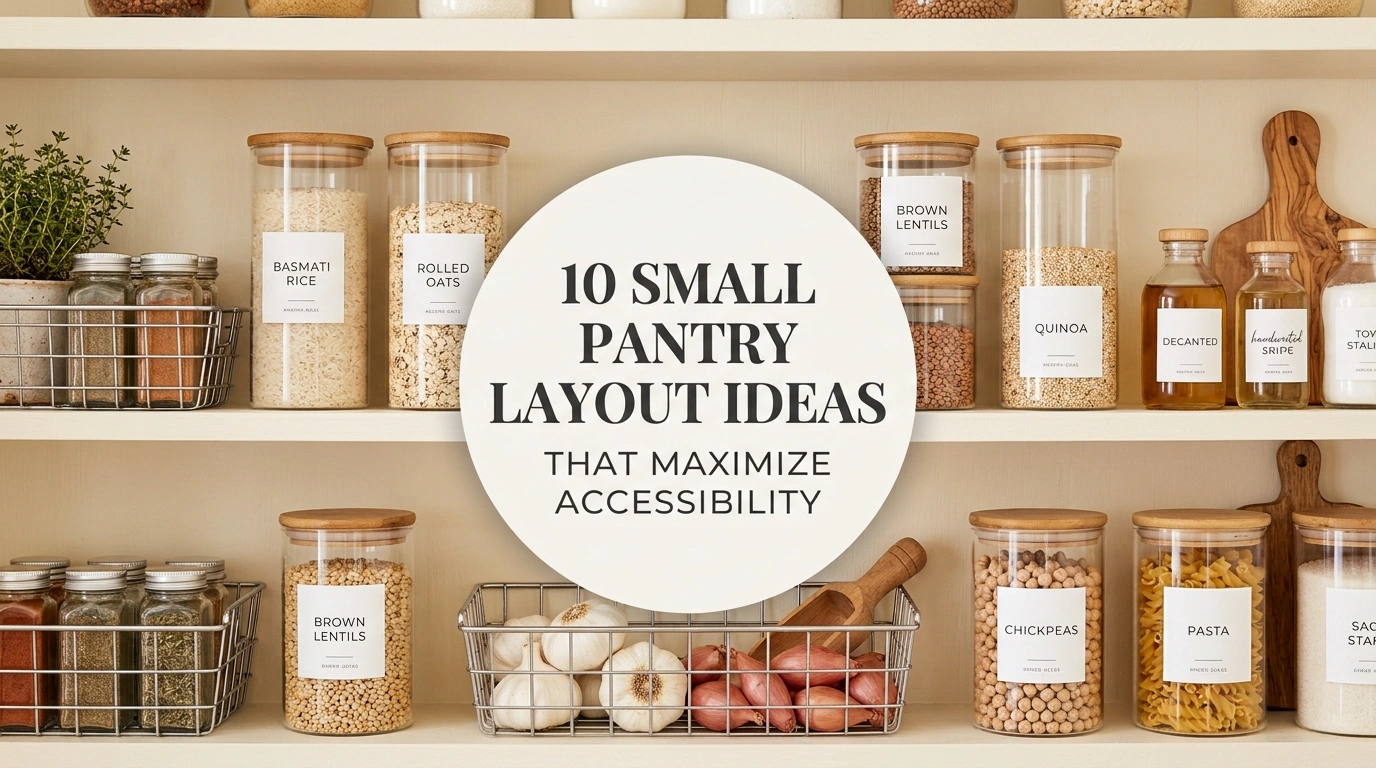
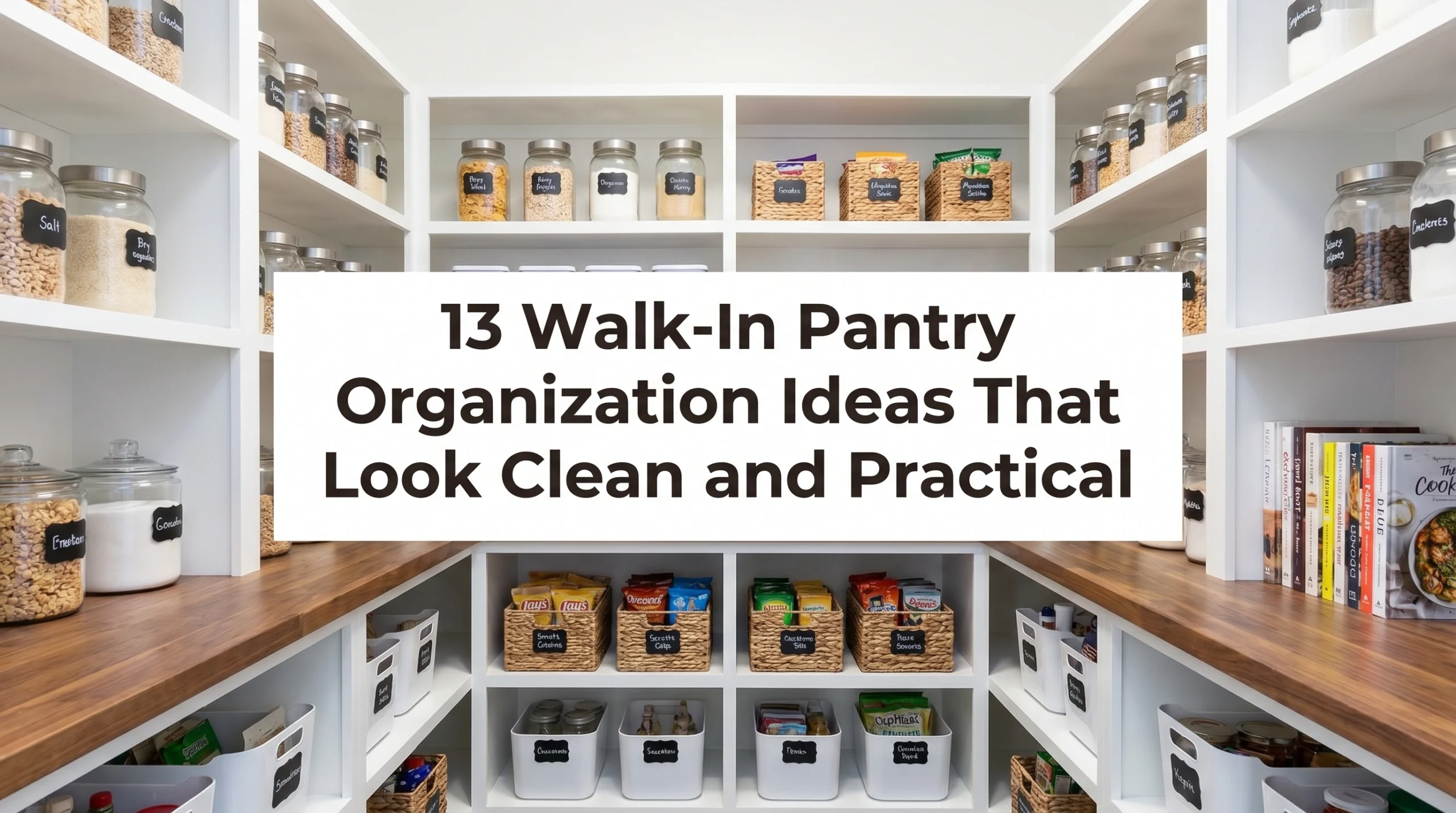
The easiest trick is to use matching storage containers. Grouping dry goods like flour, sugar, and pasta into simple, clear glass jars instantly makes shelves look uniform and tidy. You can also use woven baskets or wooden crates to hide smaller, mismatched items like snack bags and seasoning packets.
Should my butler’s pantry match my main kitchen cabinets exactly?
Not necessarily! While matching them creates a very cohesive look, painting your butler’s pantry a different, coordinating color—like a deep charcoal or a soft sage green—can turn the space into a gorgeous design feature that feels like a special destination in your home.