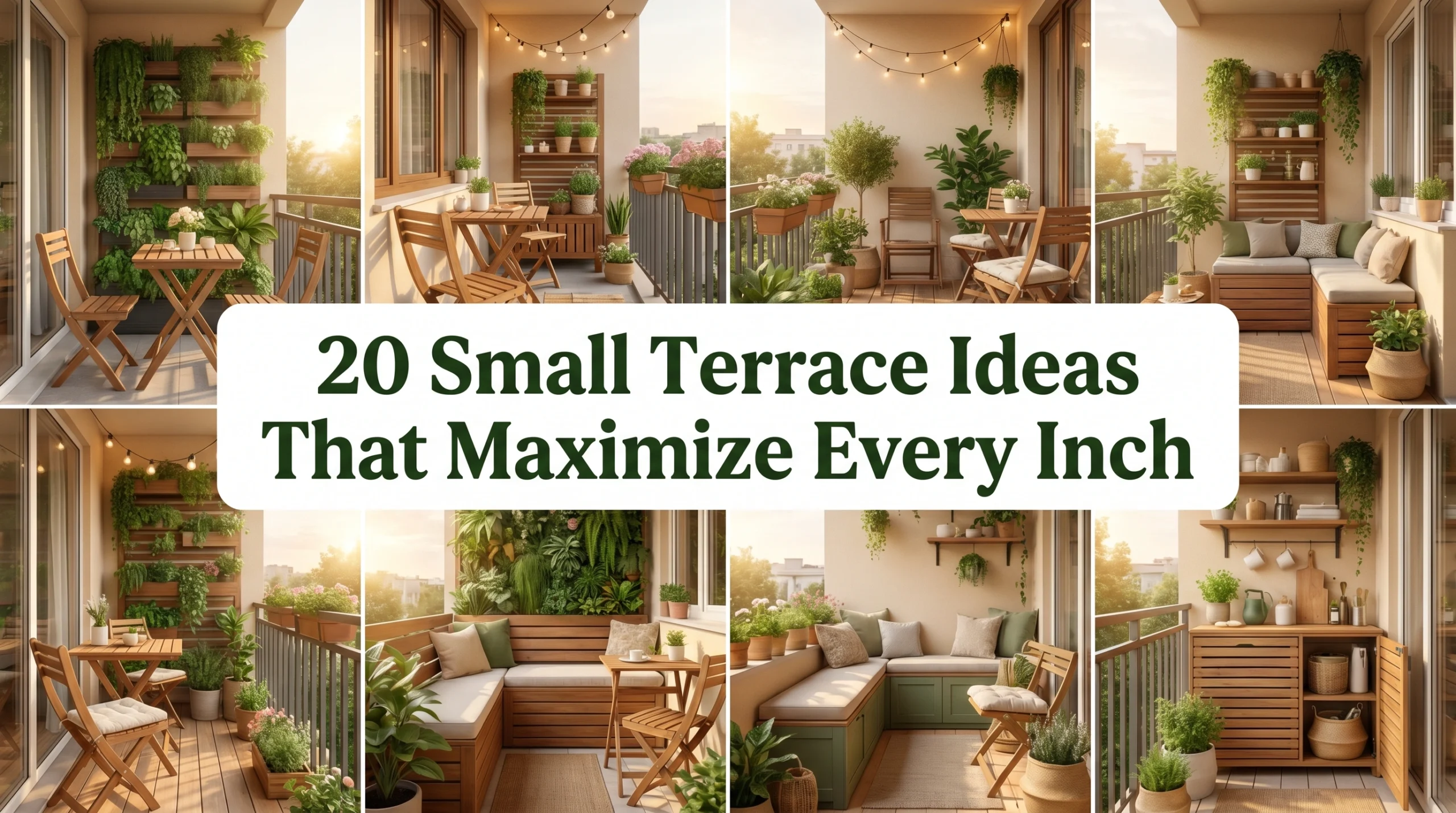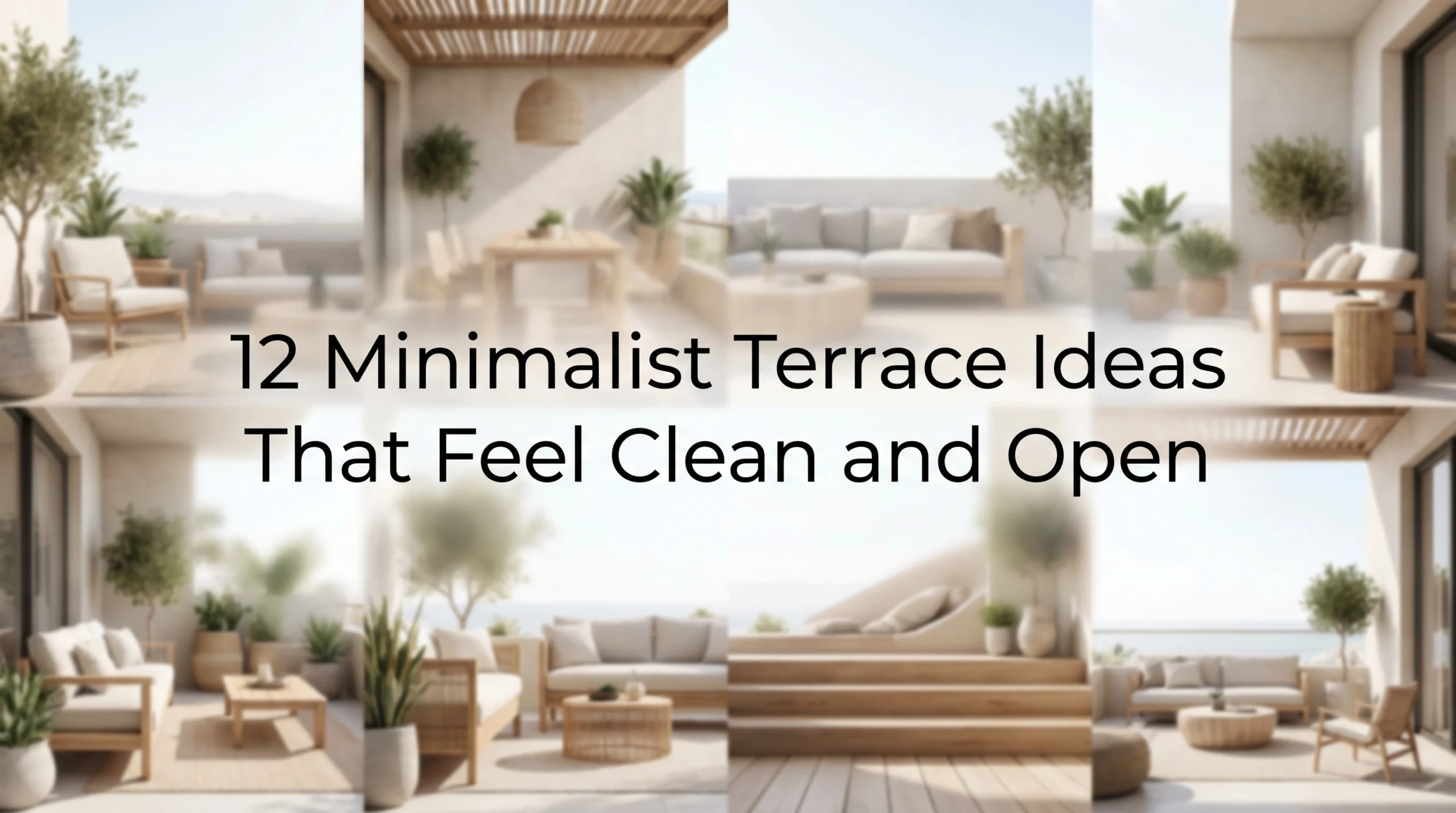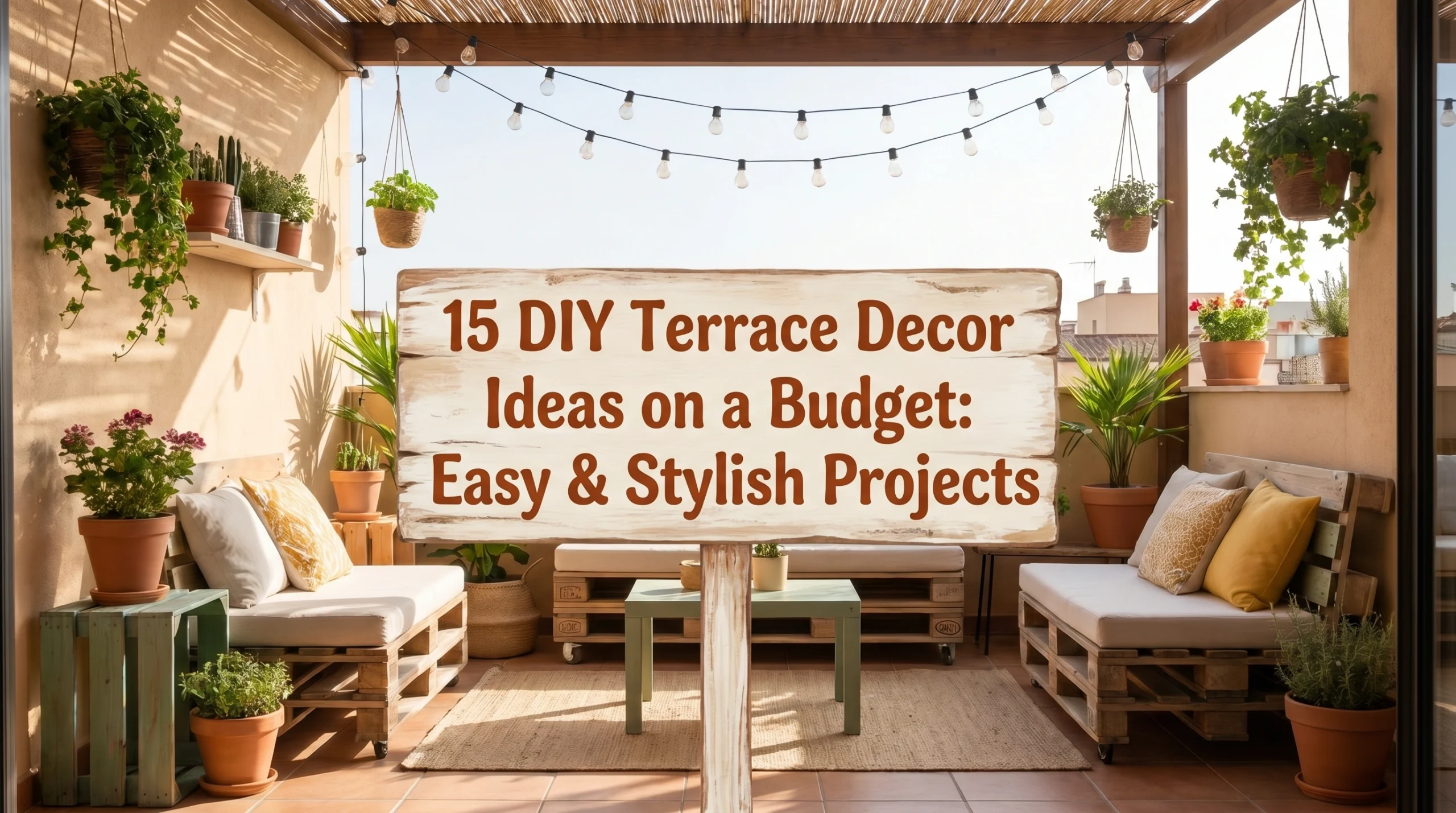
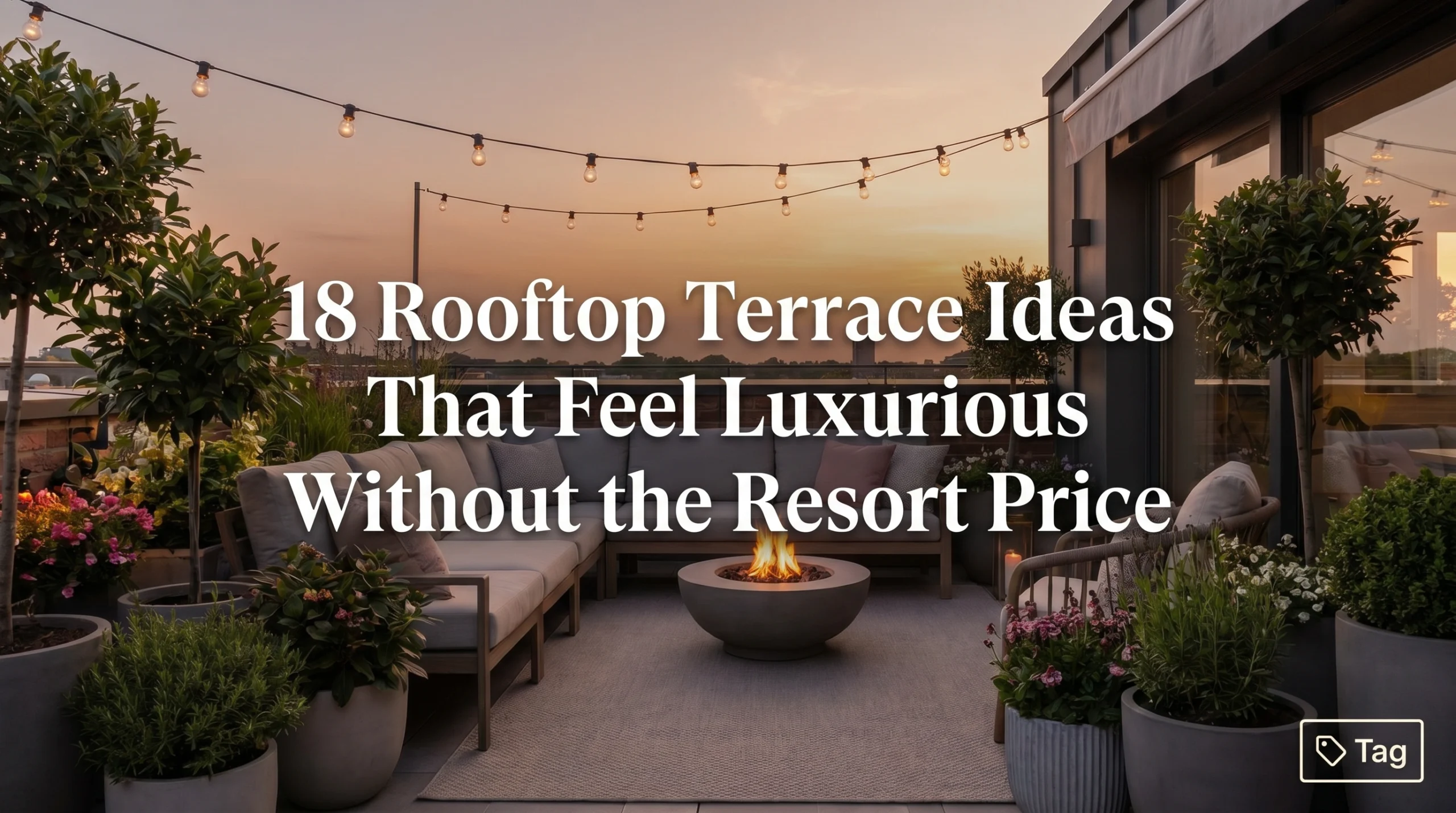
I’ve stood on a lot of bare rooftops that felt more like a concrete prison than a sanctuary.
You know the feeling—you have this incredible outdoor potential, but it’s currently home to a rusty AC unit and some patchy gravel. It’s frustrating because you see those glossy magazine spreads of Mediterranean penthouses and think, “I could never do that here.” But in my experience, the biggest mistake people make is thinking luxury requires a contractor and a six-figure budget. It really doesn’t. What actually makes a space feel high-end is the layering of textures, the smart use of lighting, and a few key pieces that anchor the “room” outdoors.
Whether you’re working with a tiny urban balcony or a sprawling flat roof, these 18 rooftop terrace ideas that feel luxurious are designed to shift the energy of your home completely. We’re moving away from plastic folding chairs and toward spaces that invite you to linger with a glass of wine at sunset. I’m going to walk you through exactly how to create a lived-in, stylish retreat that feels personal rather than staged. You’ll get 18 actionable, deep-dive concepts that bridge the gap between “empty roof” and “private oasis.” Let’s stop looking at that gray concrete and start building your favorite room in the house.
1. Oversized Floor Cushions for a Low-Profile Lounge
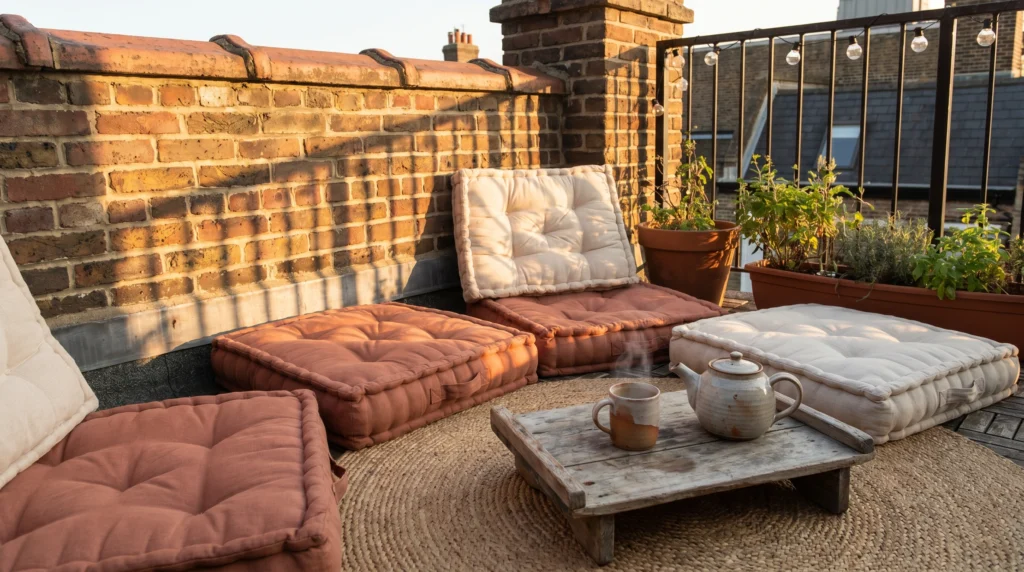
There is something inherently relaxing about being closer to the ground; it strips away the formality of a dining room and makes a rooftop feel like a true getaway. When you use large, high-quality floor cushions, you create a conversational nook that feels cozy and intimate, even if you’re surrounded by city skyscrapers. What I personally love about this is how much it softens the hard edges of a rooftop’s architecture, replacing cold stone with plush, inviting surfaces.
To do this right, don’t just throw down thin pillows. You want structured outdoor floor poufs or deep-tufted cushions at least 20 inches wide. Look for Sunbrella fabrics or heavy-duty canvas in muted terracotta or sage green. Layer them in a corner on top of an outdoor rug to define the zone. A common mistake is using indoor pillows; they’ll get moldy in a week. Invest in moisture-resistant inserts. You can find great outdoor poufs for $45–$90 each, or DIY them by stuffing outdoor-rated fabric covers with poly-fill.
2. A Vertical Herb Wall for Organic Texture
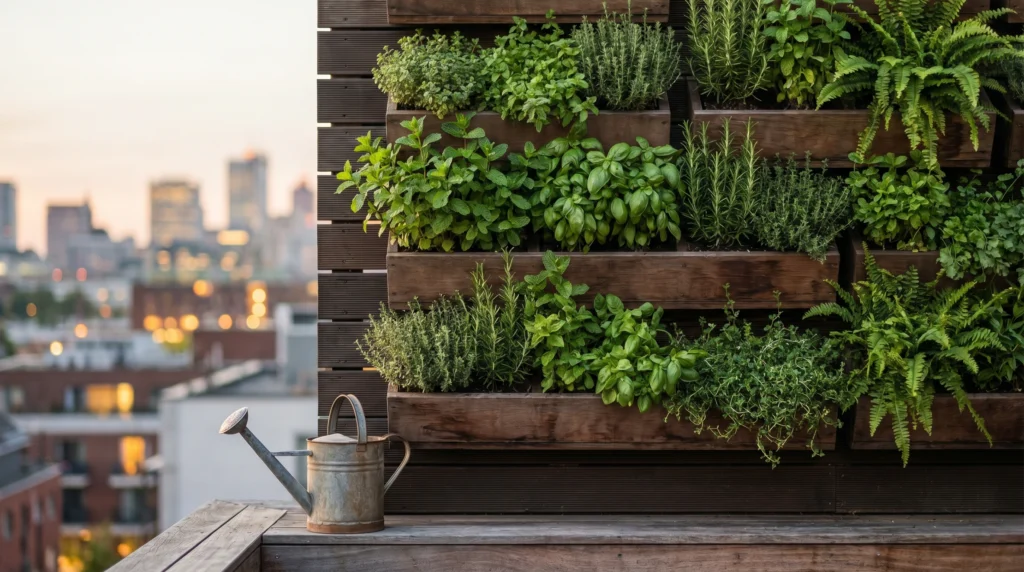
One of the hardest things about rooftops is the lack of greenery at eye level. A vertical herb wall adds that “living” element that is essential for a luxury feel, while also providing fresh scents like rosemary and mint. It breaks up the monotony of flat walls and brings a sense of life to the space. I always recommend this to anyone who asks me about small spaces because it uses zero floor real estate but provides a massive visual impact.
You can use a simple wooden pallet (sanded and stained) or a dedicated hanging planter system. Secure it firmly to a wall or a sturdy railing—remember that wet soil is heavy! Mix textures: trailing rosemary, bushy mint, and delicate thyme. A pro tip: install a simple drip irrigation line if you’re in a high-wind area, as rooftop plants dry out twice as fast as garden plants. Budget-wise, a DIY pallet wall costs maybe $20 for materials plus plants, while a sleek modular system might run you $100–$200.
3. Warm String Lights with Edison Bulbs
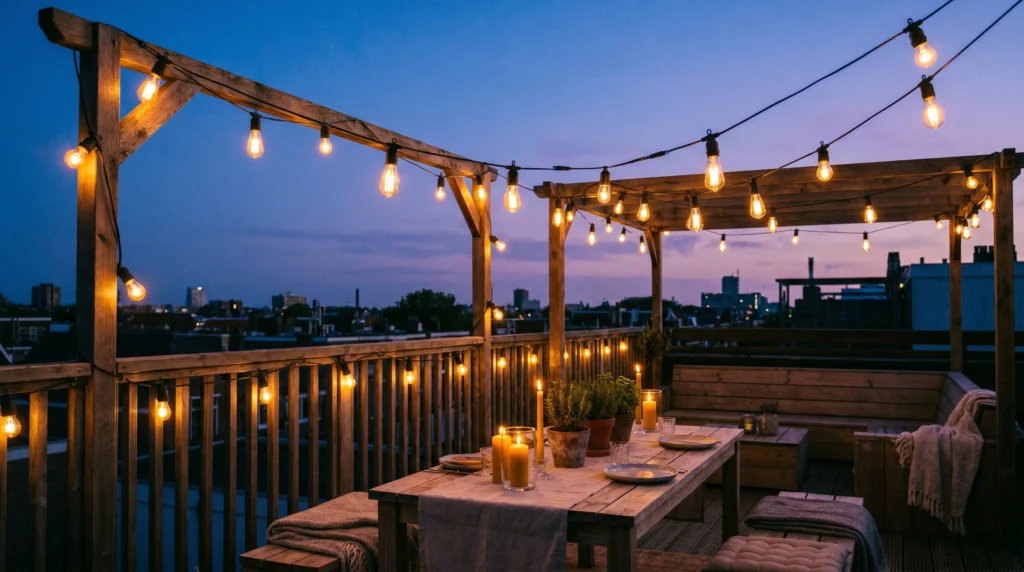
Lighting is the “make or break” element for any outdoor space. If you use a single bright floodlight, your rooftop will feel like a parking lot. Warm, dimmable string lights—specifically those with large Edison bulbs—cast a soft, golden glow that makes everything look more expensive and inviting. A lot of people skip the dimmers, but it makes all the difference when you’re trying to transition from a dinner party to a quiet night under the stars.
Avoid those tiny “fairy lights” which can look a bit juvenile on a large terrace. Opt for commercial-grade black wire bistro lights. Criss-cross them above your main seating area, but don’t pull them too tight; a little bit of “swag” or drape feels more relaxed. Secure the ends to sturdy posts or the building’s exterior. Expect to pay $30–$60 for a high-quality 50-foot strand. A common mistake is hanging them too low where they’ll hit people’s heads—aim for at least 8 feet of clearance.
4. Weathered Wood Decking Tiles
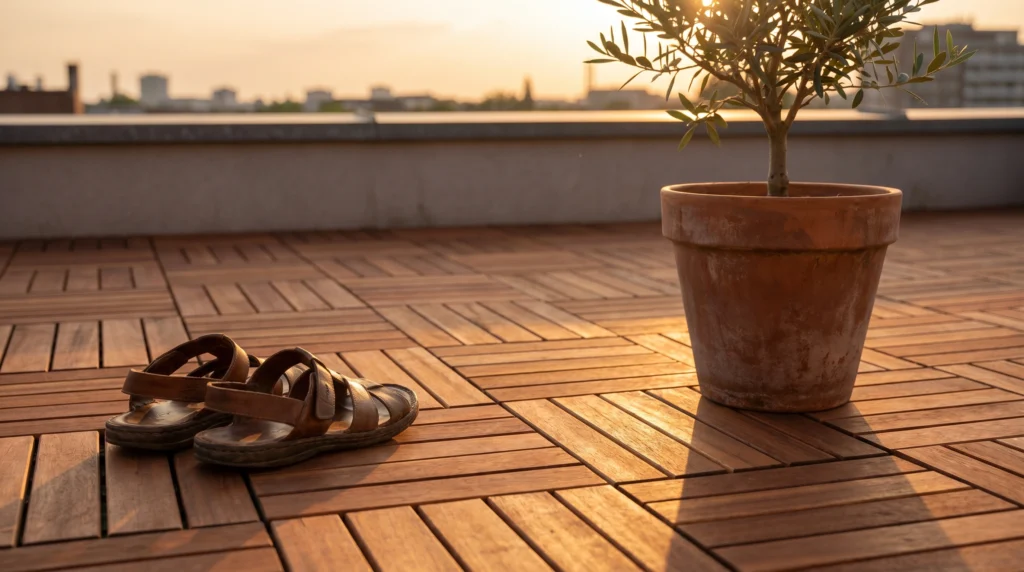
If your rooftop is currently gray concrete or ugly roofing membrane, you need to cover it. Interlocking wood deck tiles are the fastest way to get that “luxury spa” look without a permanent construction project. They feel amazing underfoot and instantly warm up the visual temperature of the space. I’ve found that the contrast between the organic wood grain and the industrial surroundings is what creates that high-end “urban oasis” vibe.
These tiles usually come in 12×12 inch squares that snap together. Acacia wood is a great mid-range choice that holds up well to the elements. Make sure your surface is flat before starting, and leave a tiny gap at the edges for drainage. Tip: apply a UV-resistant sealer once a year to keep the color from fading to a dull gray. You can usually cover a standard seating area for $150–$300 depending on the square footage. It’s much cheaper than a poured deck and you can take them with you if you move.
5. The “Secret Garden” Privacy Screen
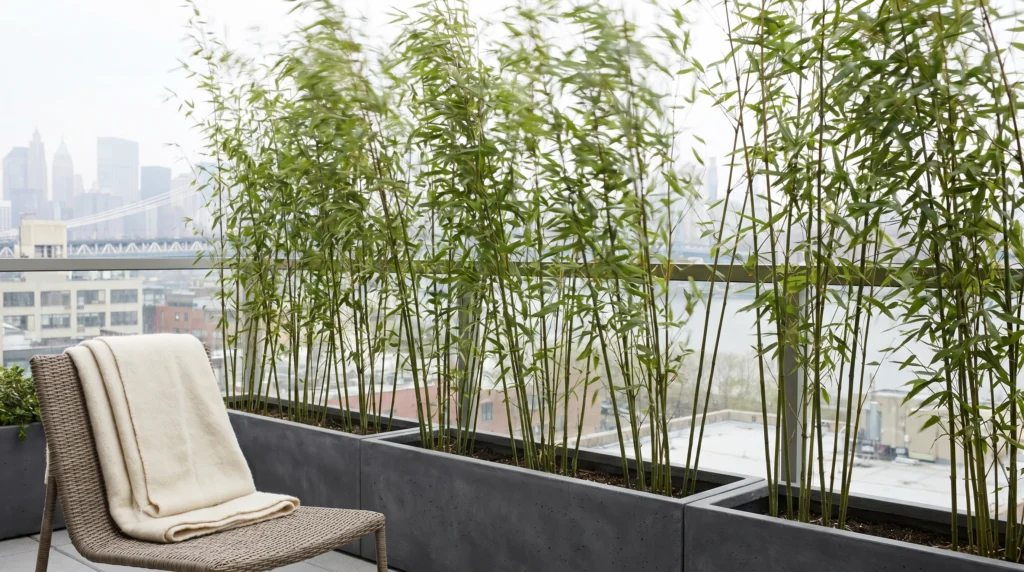
Luxury is often synonymous with privacy. If your rooftop is overlooked by neighbors, it’s hard to feel relaxed. Instead of a boring plastic fence, use tall, narrow planters filled with clumping bamboo or ornamental grasses. It creates a “living wall” that rustles in the wind and provides a sense of seclusion. What I love about this is that it provides a sound buffer too, which is huge in city environments.
Use long rectangular troughs in a dark charcoal or muted navy to ground the space. Bamboo is great because it grows fast, but make sure it’s a non-invasive, clumping variety. If you’re on a budget, use a simple cedar trellis and grow climbing jasmine or ivy. Avoid flimsy lattice that might blow away in a storm. A set of three large planters and plants will likely run you $200–$400, but the “room” feel it creates is priceless.
6. A Statement Outdoor Fire Pit
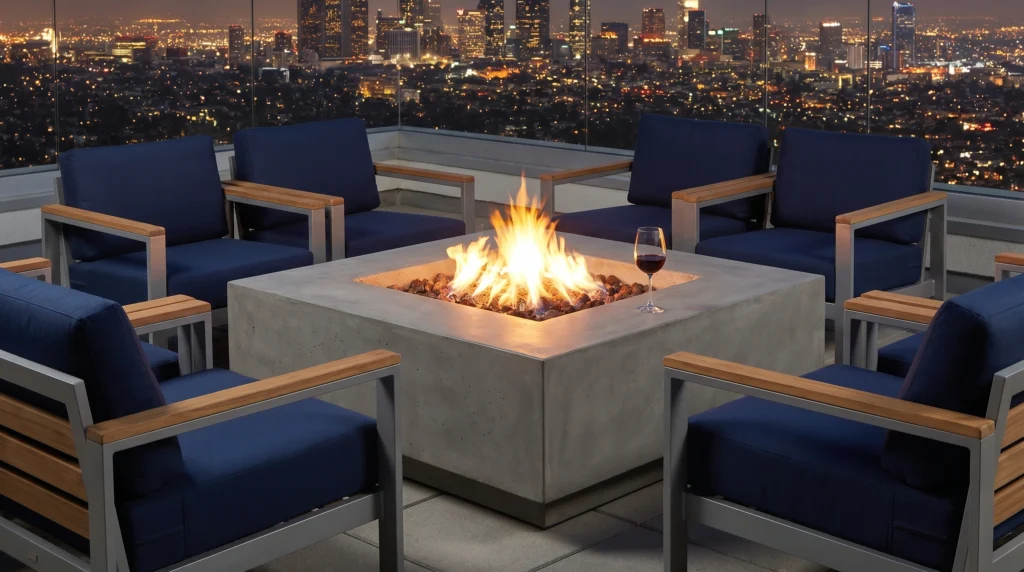
A fire pit is the ultimate focal point. It draws people in and extends the usability of your rooftop into the cooler autumn months. A sleek, propane-powered fire table feels much more “resort-style” than a wood-burning bowl, and it’s usually much safer for rooftop use. The flicker of the flame against the night sky is the pinnacle of luxury home decor.
When choosing one, look for a model that hides the propane tank inside the base so you don’t have a messy hose running across the floor. Place it in the center of your seating arrangement with at least 3 feet of clearance on all sides. Avoid wood-burning units if you have neighbors nearby—the smoke is a nuisance and often against fire codes. You can find decent propane fire tables for $180–$350. Tip: get a weather-proof cover for it, or the burner will clog with debris within a season.
7. Layered Outdoor Rugs for Texture
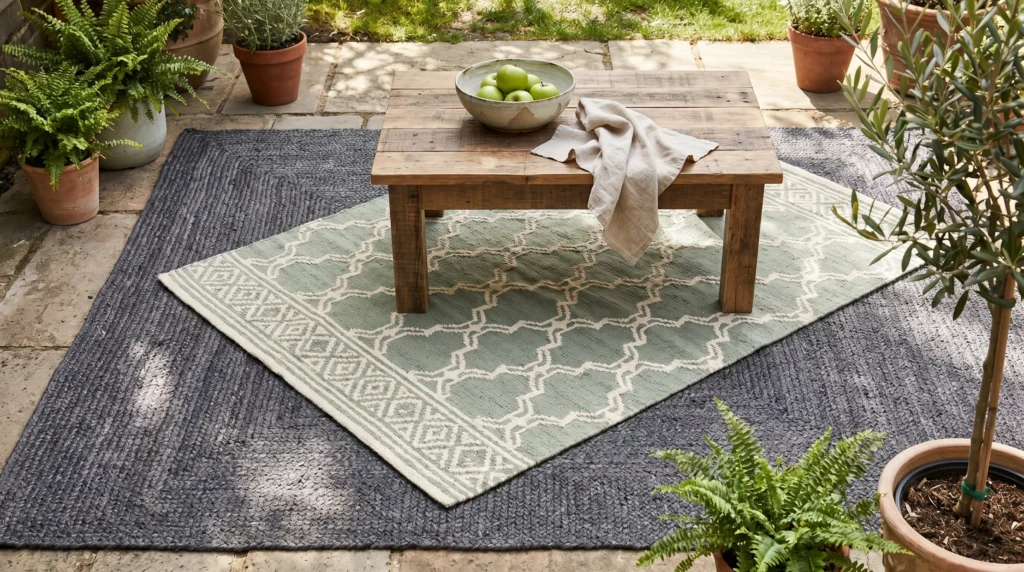
Just like indoors, layering rugs outdoors adds an incredible amount of depth. I always suggest a large, neutral base—like a flat-weave polypropylene rug in a sand or slate color—topped with a smaller, more intricate rug. This defines the “living room” area of your terrace and makes it feel like a finished thought, not just a collection of furniture. It’s the easiest way to inject color like sage or dusty rose into a gray space.
The base rug should be large enough that all the legs of your furniture sit on it. The top rug should be a different texture; maybe a faux-sisal base with a patterned Turkish-style outdoor rug on top. Avoid rugs with a high pile as they trap water and take forever to dry. You can get a great layered look for about $80–$150. A common mistake is choosing rugs that are too small, which makes the whole space feel cramped and disconnected.
8. Potted Olive Trees for Mediterranean Vibes
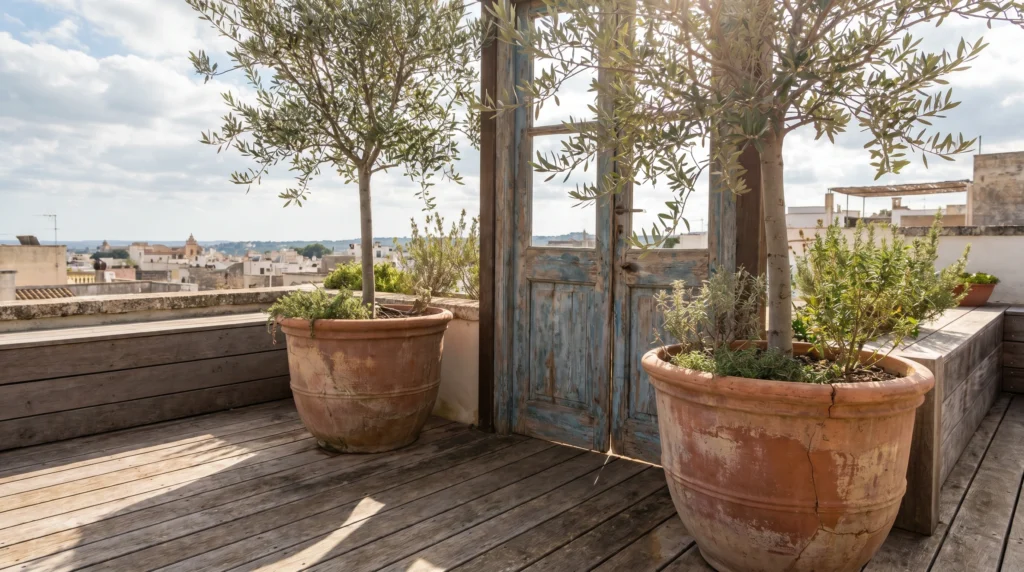
Nothing screams “luxury terrace” like a couple of potted olive trees. They have that beautiful, silvery-green foliage that feels sophisticated and timeless. They thrive in the heat and sun that rooftops provide, and they don’t require constant watering like delicate flowers. They bring a touch of the Italian coast to even the grittiest urban environment.
Choose large, heavy terracotta or stone-finish pots to prevent them from tipping over in high winds. If you live in a climate with harsh winters, you’ll need to bring them inside or wrap them. Tip: use “pot feet” or a rolling base to allow for drainage and prevent staining on your deck. A mid-sized olive tree will cost $70–$150, but it’s a “hero piece” that does a lot of the heavy lifting for your decor style.
9. Integrated Bench Seating with Storage
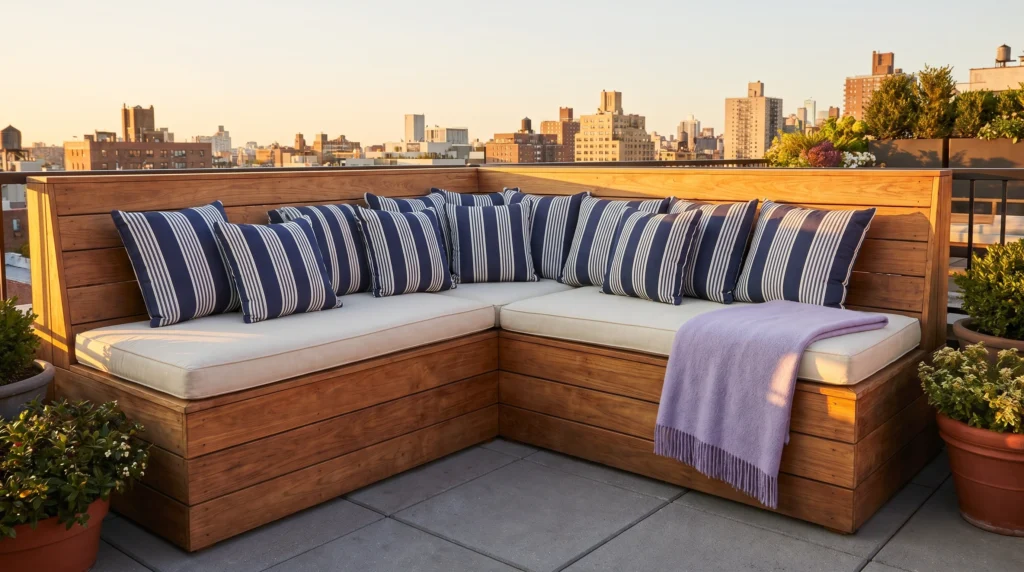
Custom-built (or “faux-built”) bench seating makes a space feel permanent and architectural. By wrapping a bench around a corner, you maximize seating without cluttering the floor with chair legs. What I love about this is the opportunity for hidden storage—rooftops are notorious for needing a place to put cushions when it rains. It keeps the space looking clean and “curated.”
You can DIY this using cedar 2x4s and plywood. Make sure the seat is at least 18 inches deep for comfort. Use long, custom-made bench pads in a neutral cream or navy. A common mistake is making the bench too high; 17–18 inches (including the cushion) is the sweet spot for relaxation. Building this yourself might cost $100 in lumber, while buying modular outdoor storage benches would be around $200–$400.
10. The Outdoor Bar Cart
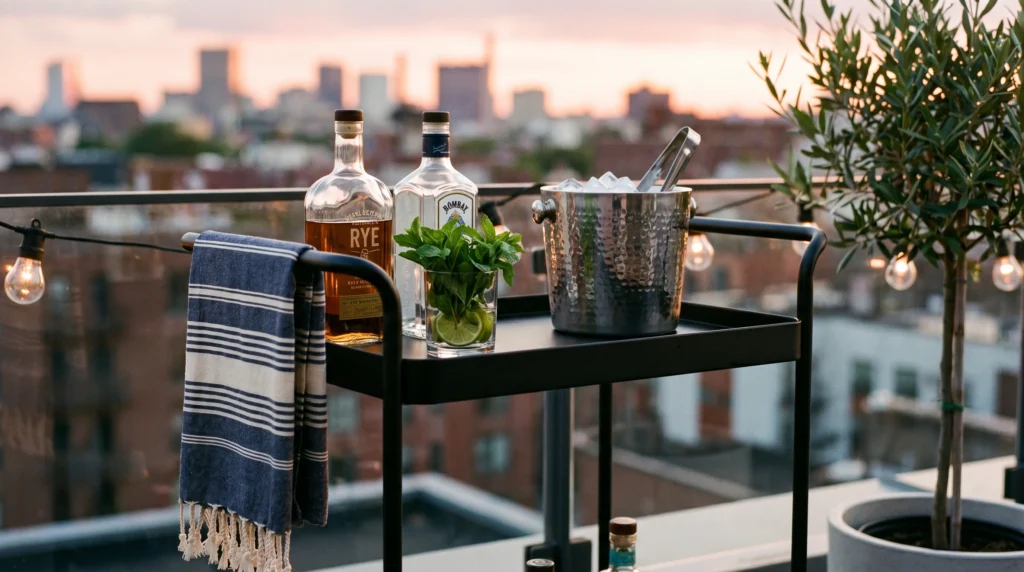
A bar cart isn’t just for cocktails; it’s a styling station. Having a dedicated spot for drinks, ice, and snacks prevents you from running back and forth to the kitchen, which breaks the flow of a relaxing evening. It’s a small addition that makes the space feel like it was designed for entertaining. It’s that extra 10% of effort that makes a space feel truly luxurious.
Look for a cart with large wheels if your rooftop surface is uneven. Style it with a few acrylic glasses (no glass near the pool or roof edges!), a tray, and maybe a small potted succulent. Tip: keep it under a covered area or bring it inside when not in use to prevent rust, even if it’s “outdoor rated.” You can find stylish metal bar carts for $60–$120.
11. Sheer Outdoor Curtains for Drama
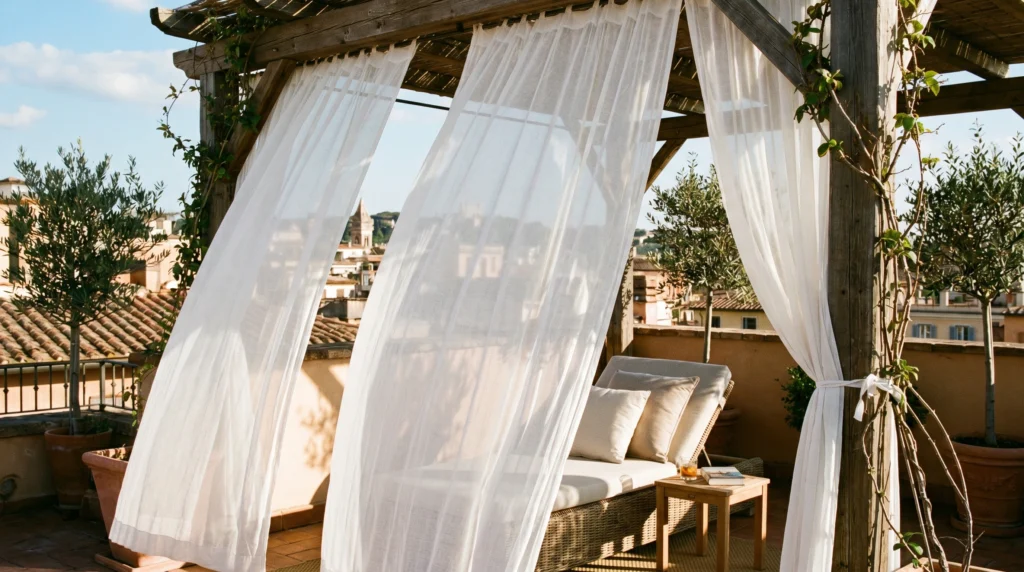
This is the ultimate “Pinterest” move. Hanging sheer, white outdoor curtains from a pergola or a simple tension wire creates a dreamlike, ethereal quality. They catch the breeze and provide a soft filter for the sun. It’s an incredibly inexpensive way to add vertical interest and a sense of “enclosure” to an open roof.
Use high-quality outdoor-rated polyester sheers that are mildew-resistant. Use weighted hems so they don’t flap violently in the wind. A mistake I see often is people using thin indoor sheers—they’ll shred in the first storm. You can get a set of outdoor sheers for $30–$50. They add so much movement and softness to a space that is usually dominated by hard surfaces.
12. Oversized Floor Lanterns
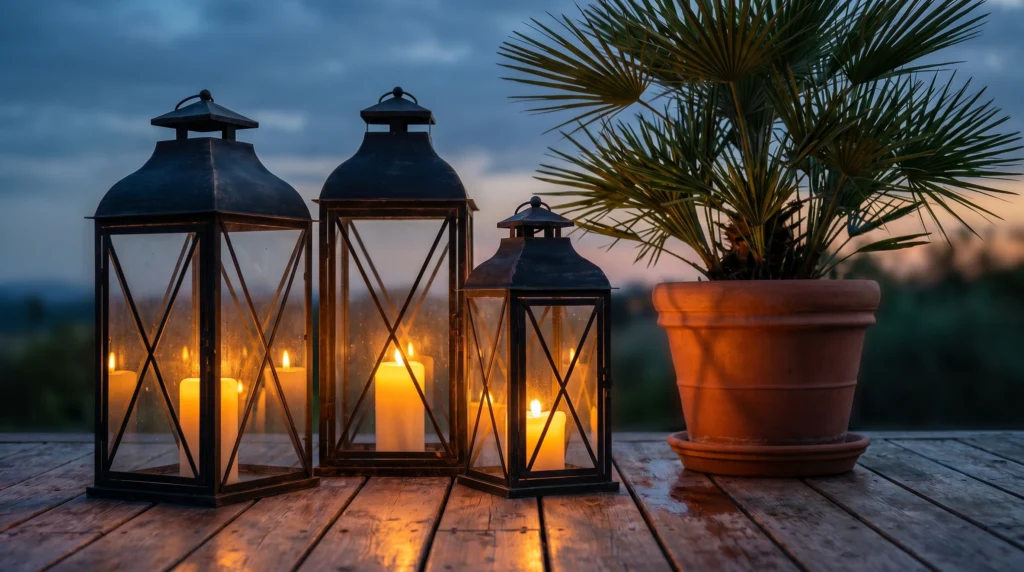
Don’t rely on just string lights; you need “anchor” lighting. Large floor lanterns (we’re talking 2 feet tall or more) placed in corners or next to the sofa create a layered light effect. They act as decor pieces during the day and glow beautifully at night. I always recommend using high-quality LED candles with timers so the space “wakes up” on its own every evening.
Choose lanterns in mixed materials—maybe one in black metal and one in weathered wood. Cluster them in groups of two or three of varying heights. Avoid small, dinky lanterns that get lost in the scale of the outdoors. You can find large lanterns for $35–$70 each. Tip: if you use real candles, make sure the glass is thick and the lantern is heavy enough not to blow over.
13. A Hammock or Hanging Chair
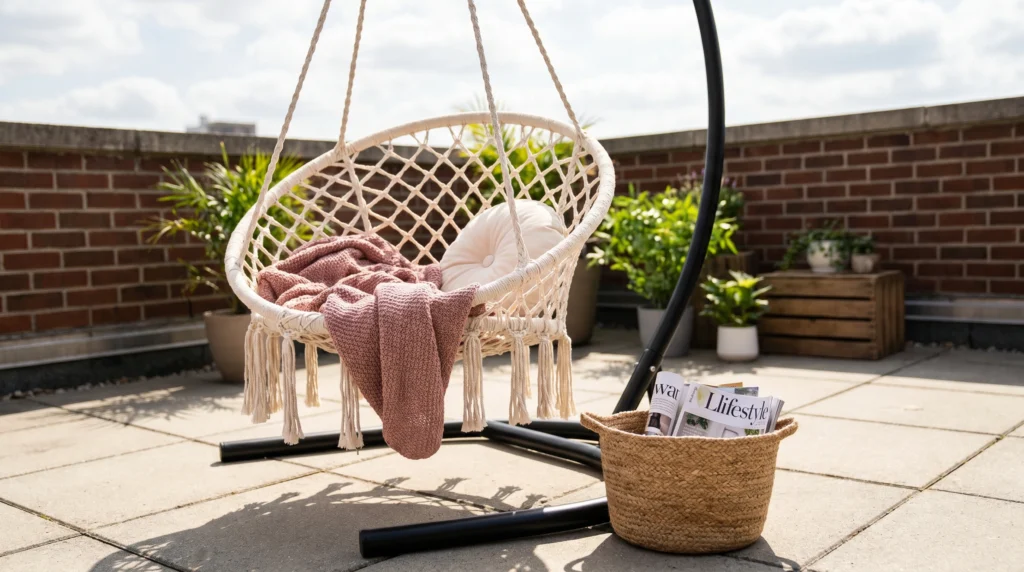
Nothing says “vacation mode” like a hanging chair. It’s a playful, high-design element that instantly makes a rooftop feel more relaxed. Whether it’s a macramé swing or a sleek egg chair, it creates a dedicated “me time” spot. In my experience, this is always the first seat people gravitate toward when they come over.
If you don’t have a beam to hang it from, buy one with a dedicated stand. Make sure the stand is heavy-duty and powder-coated to prevent rust. Add a weather-proof cushion and a textured throw. A good hanging egg chair usually costs $200–$400, but a simple macramé swing can be found for $50–$80. Tip: ensure you have enough “swing radius” so you don’t hit the wall or other furniture.
14. A Monochromatic Color Palette
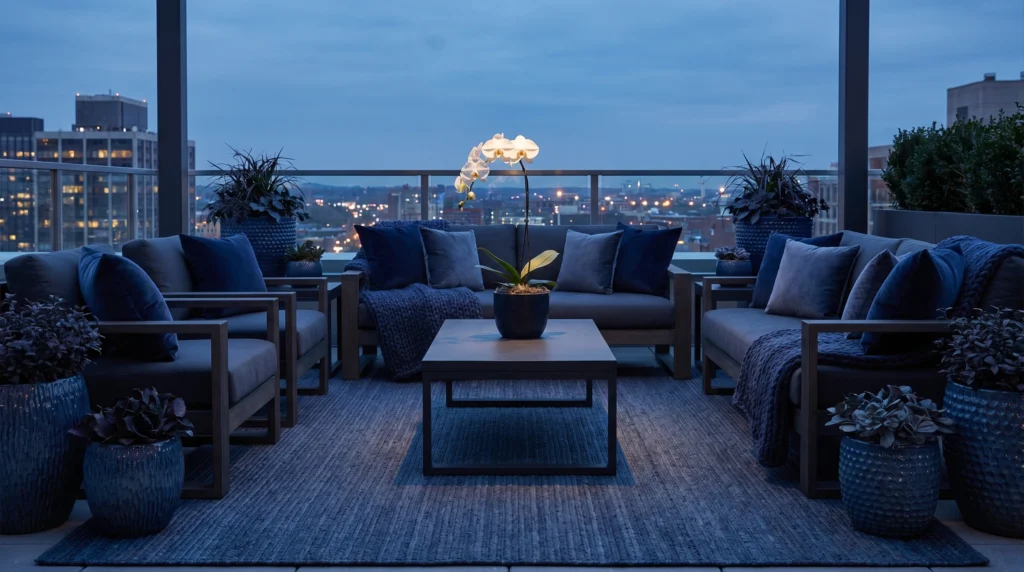
If you’re unsure how to make things look expensive, go monochromatic. Picking one color—like shades of gray, beige, or navy—and using it throughout your furniture, rugs, and pots creates a high-end, designer look effortlessly. It feels very intentional and calm. A lot of people mix too many colors, which can make a rooftop look like a yard sale.
Start with your largest piece (usually the sofa) and match your rugs and planters to that tone. Use different textures—linen, wood, stone—to keep it from looking flat. For example, use slate gray cushions, charcoal pots, and a light gray rug. This costs nothing extra but makes a huge difference in the “luxury” feel.
15. The “Sky Bar” Counter
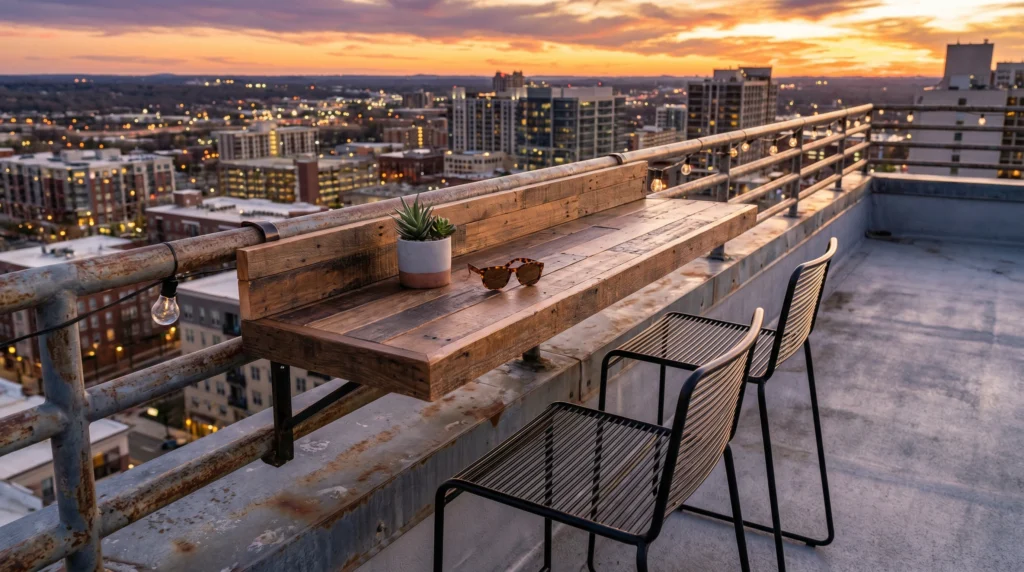
If you have a railing with a great view, don’t just put a chair in front of it. Install a “bar top” that clips onto the railing. It creates a perfect spot for morning coffee or evening drinks while looking out at the city. It’s a space-saving genius move that feels like a private balcony at a luxury hotel.
You can buy pre-made railing tables or DIY one with a single piece of live-edge wood and some heavy-duty brackets. Just make sure it’s extremely secure—falling objects from a roof are a major hazard. A clip-on bar usually costs $60–$150. Tip: pair it with two sleek bar stools that can tuck underneath to save space when not in use.
16. A Pop of “Desert Chic” with Cacti
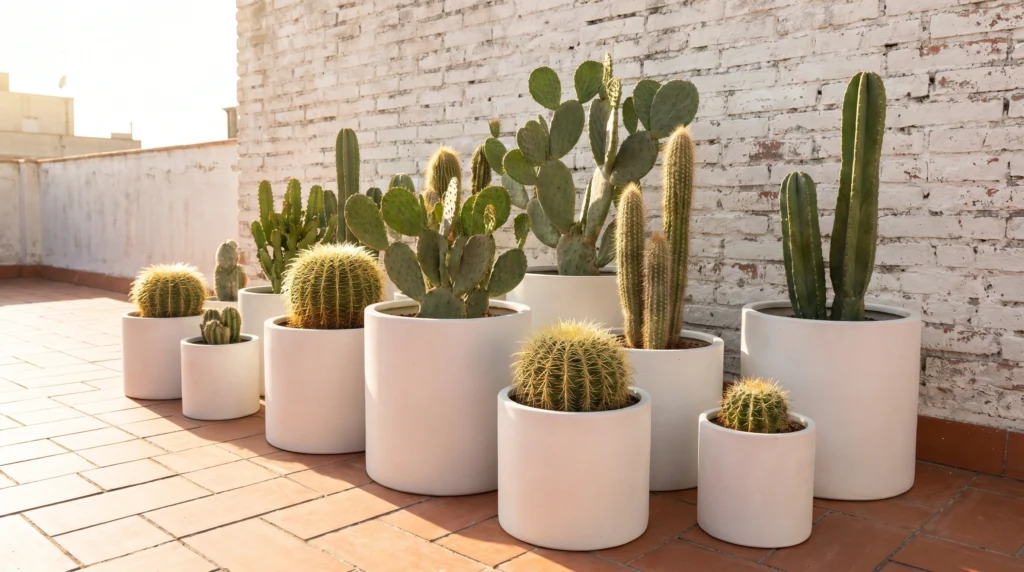
Rooftops are often hot and dry, making them the perfect environment for a “desert chic” aesthetic. Using large barrel cacti or tall structural succulents adds a modern, architectural element. They look incredibly stylish in simple white or terracotta pots and require almost zero maintenance. It’s a very “Palm Springs” look that feels premium.
Mix heights and shapes. Use one tall “totem” cactus and a few smaller, rounder ones. Use white gravel as a top-dressing in the pots for a clean, finished look. A large cactus can be an investment ($100+), but you can start small for $20–$40. Tip: if you have kids or pets, opt for “thornless” succulents like Agave to avoid accidents.
17. Mirrors to Double the View
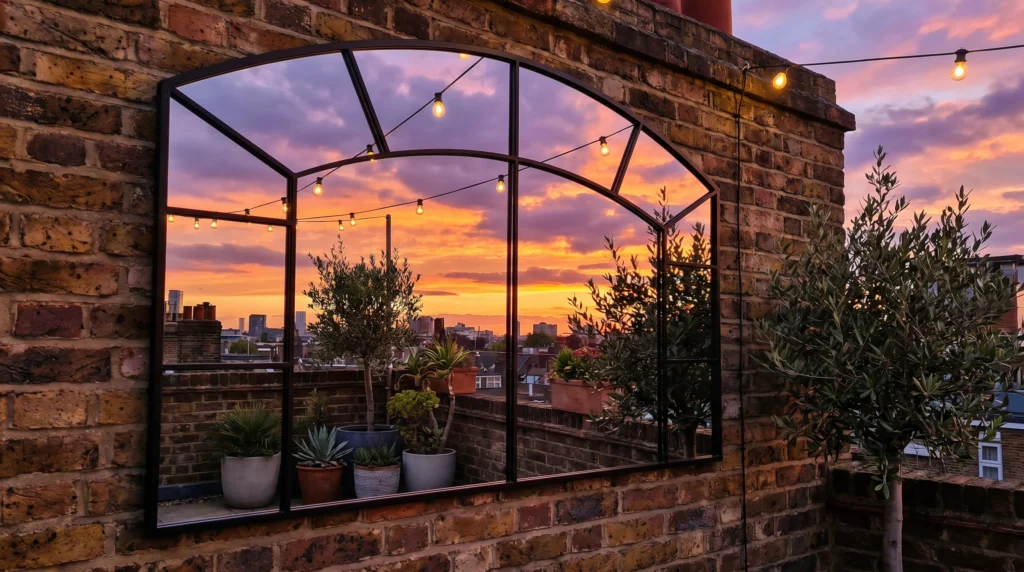
This is a secret designer trick for outdoor spaces. Hanging a large, weather-proof mirror on a rooftop wall makes the space feel twice as big and reflects the sky or the city lights. It breaks up the “dead space” of a brick or concrete wall and adds an unexpected indoor-vibe to the outdoors.
Choose a mirror with a sturdy metal frame (avoid wood unless it’s specifically treated for outdoors). Secure it tightly to the wall so the wind can’t get behind it. A common mistake is using a cheap mirror that will “silver” or peel; look for outdoor-rated glass. You can find great statement mirrors for $80–$200.
18. Solar-Powered Path Lighting
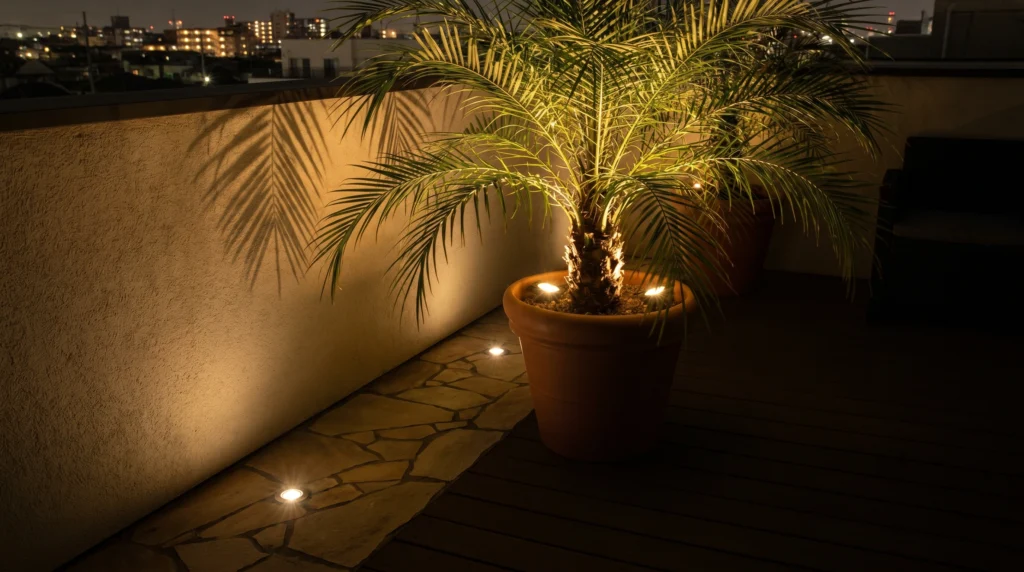
Luxury is in the details, like having a lit “pathway” even on a roof. Tucking small, warm solar lights into your planters or along the base of your decking tiles creates a high-end, architectural lighting feel. It guides the eye through the space and ensures there are no dark, forgotten corners.
Avoid the cheap plastic stakes. Look for “puck” lights that sit flat or small metal spotlights that you can hide in the foliage of your plants. Aim them upward into the leaves of your trees (like the olive trees mentioned earlier) for a dramatic “up-lighting” effect. A pack of 4–6 lights usually costs $30–$60. It’s a small price for a huge upgrade in evening ambiance.
Conclusion
Building a rooftop that actually feels like a home takes a bit of patience, but as you can see, it’s mostly about the layers. You don’t need to do all 18 of these at once. In fact, I usually tell people to start with the rug and the lighting—those two things alone will do about 70% of the work. From there, you can add the plants and the personal touches that make it yours. Luxury isn’t about how much you spent; it’s about how much you want to stay in the space once it’s finished.
Remember to check your building’s weight limits and fire codes before you start dragging up heavy planters or fire pits. Once the safety stuff is out of the way, just have fun with it! Your rooftop should be your favorite escape, a place where the city feels far away even if it’s right under your feet. Which of these ideas are you trying first? Drop it in the comments—I’d love to know!
FAQs About Rooftop Terrace Decor
What is the best flooring for a rooftop terrace?
In my experience, interlocking deck tiles (often made of acacia wood or composite) are the best option. They are DIY-friendly, allow for proper water drainage underneath, and can be removed if you are renting. If you want something softer, a high-quality outdoor polypropylene rug is a great secondary layer to add warmth and color.
How do I protect my rooftop furniture from wind?
Wind is the biggest enemy of rooftop decor. I always recommend choosing heavy furniture (like wrought iron or heavy teak) or securing lighter pieces with sandbags hidden inside the frames. Additionally, avoid using glass-topped tables which can shatter if blown over, and always use heavy-duty bungee cords to secure covers when you aren’t using the space.
Can I have a real fire pit on a rooftop?
This depends entirely on your local city fire codes and your building’s rules. In most urban areas, wood-burning fire pits are strictly prohibited due to smoke and ember risks. However, propane or bio-ethanol fire pits are often allowed because they are “clean-burning.” Always check with your HOA or local fire department before purchasing one.
What plants grow best on a sunny rooftop?
You need plants that are drought-tolerant and can handle high heat and wind. Olive trees, lavender, rosemary, and ornamental grasses like Mexican Feather Grass are fantastic choices. Succulents and cacti also thrive in these conditions. Just remember that rooftop pots dry out very quickly, so you’ll need to water them more frequently than garden plants or install an irrigation system.